JB Insights
Anglo American may opt to for De Beers IPO


Anglo American may opt to float De Beers rather than sell it, because of the ongoing weak demand for natural diamonds.A spokesman for De Beers said it was working on a potential listing and a sale of the business, according to the UK’s Mail on Sunday newspaper, as “both options are very much on the table”. Sources say Anglo American is exploring an initial public offering of its diamond business De Beers with London as the preferred venue.
Raj Ray, analyst at BMO Capital Markets, who said public markets had been challenging for diamond firms, and the near to medium-term outlook remained muted.Anglo’s CEO, Duncan Wanblad has indicated previously that it would consider a trade sale, a demerger, or an initial public offering (IPO) to maximize value for shareholders.
De Beers financials tell a story of troubled times : De Beers reported a 21% decline in total revenue from $2.8bn in H1 2023 to $2.2bn in H1 2024. The company also experienced a 22% year-on-year decrease in total rough diamond sales. Whilst the worldwide realised price remained stable, market conditions greatly affected the company’s results.
Economic challenges in China led to low consumer confidence in the diamond market. The US is experiencing similar economic uncertainty that is preventing diamond purchases. Competition from lab-grown diamonds is also affecting De Beers’ dominance in the market, although in India, their strong economic growth has underpinned positive natural diamond jewellery growth.
The other option is selling De Beers. The mining conglomerate has held conversations with potential buyers for the diamond unit in recent weeks, “including luxury houses and Gulf sovereign-wealth funds,” The Wall Street Journal said, citing unnamed sources.
The situation touches on key questions many in the industry have had in the past year: Was the 2023 slump in the diamond market another cyclical downturn or the sign of a more somber future for the industry? Have lab-grown diamonds had a permanent impact on natural? In case of a sell out the question is : who will become the new owner of this legendary company. This buyer will have to solve several non-trivial tasks that traditional diamond market players, including Anglo buyer management, have so far failed to tackle. How can new generations of consumers be made interested in natural diamonds? How can a marketing duel be won against LGD (Lab-Grown Diamonds)? What should be done about Russian sanctioned diamonds and gems? The new owner of De Beers will have to provide answers to these questions.






JB Insights
Silver Wholesale Goes Digital: How India’s 925 Silver Trade Is Changing The Way It Buys and Sells
The buyers on the wholesale side have changed too. Alongside the traditional jeweller, the trade now serves Instagram and WhatsApp sellers working from home, marketplace sellers, and first-time founders building their own jewellery brands online

By BanwariLal Bamalwa CEO | Director, GlamBug Mart Pvt Ltd

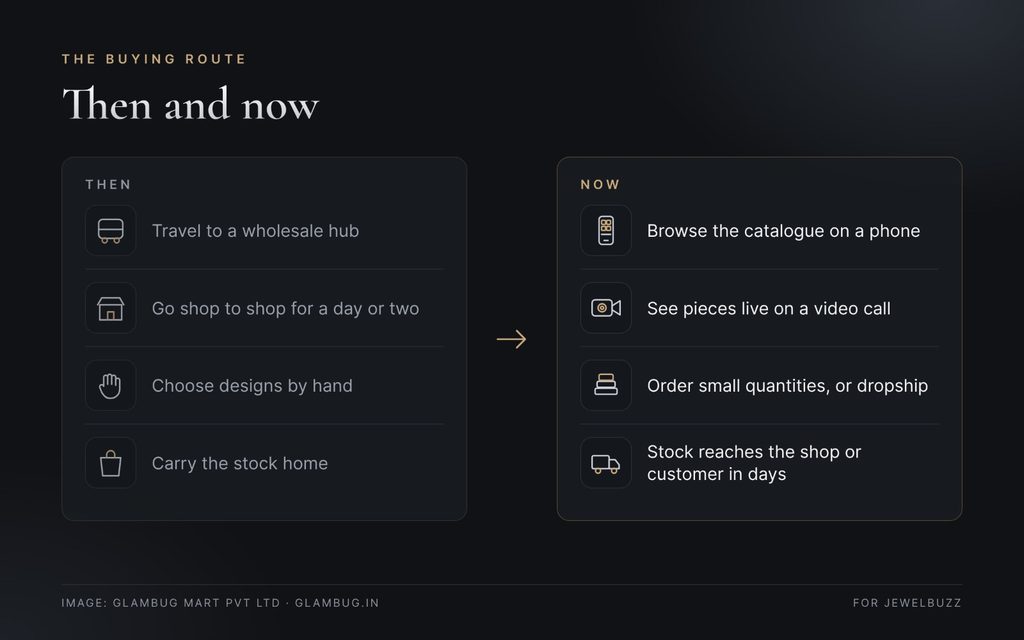
For decades, buying silver jewellery wholesale in India followed a familiar route. A retailer from a smaller town would travel to a wholesale hub, spend a day or two going from shop to shop, choose designs by hand, settle the price by weight, and carry the stock home. The model worked, but it favoured buyers with time, travel budgets and the capital to hold inventory.
That route is now changing quickly.
A New Kind Of Buyer
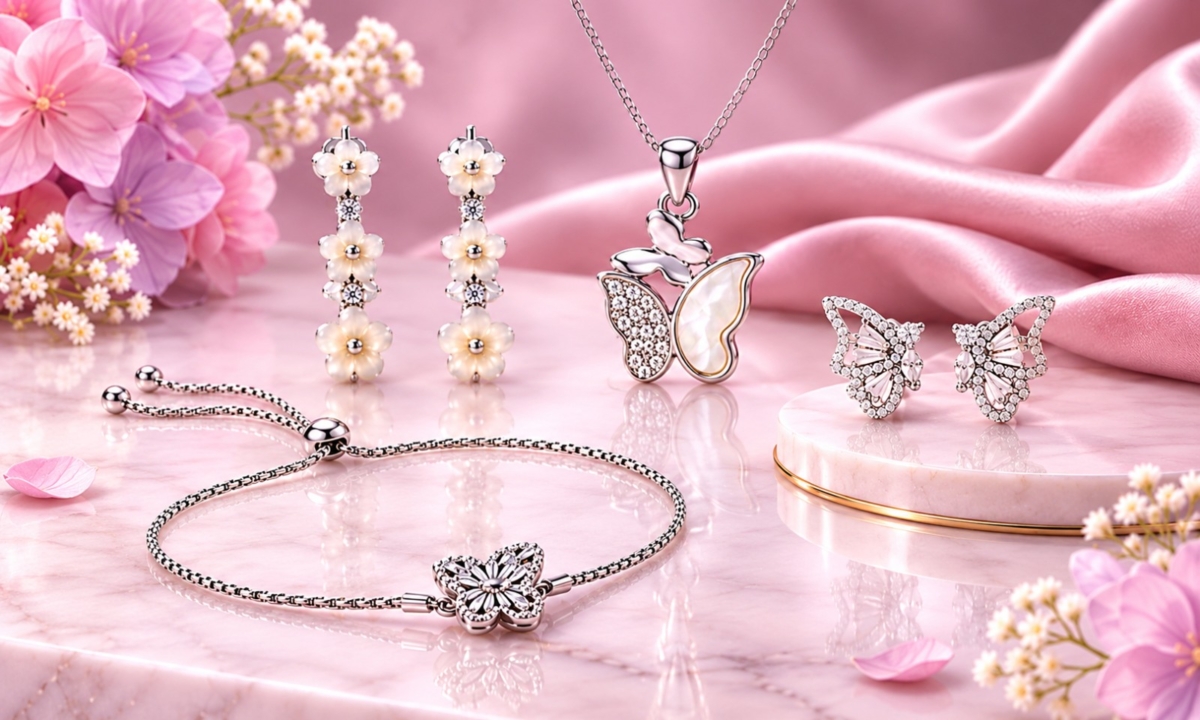
925 sterling silver has become one of the most active categories in Indian jewellery. As gold has grown more expensive, silver has found a wider audience in everyday fashion, gifting and festive wear, especially among younger customers.
The buyers on the wholesale side have changed too. Alongside the traditional jeweller, the trade now serves Instagram and WhatsApp sellers working from home, marketplace sellers, and first-time founders building their own jewellery brands online. Many of them have never visited a wholesale market. They want to see designs on a phone, order in small quantities, and have stock reach them, or their customer, within days.
Four Shifts In How The Trade Works
1. Catalogue apps are replacing market visits. Wholesalers are moving their catalogues into B2B apps where approved buyers can see designs, weights and per-gram rates, and send an enquiry for a quotation. Pricing by weight, once negotiated at the counter, is becoming visible and consistent.
2. Video calls are replacing the showroom. For buyers who still want to see a piece before ordering, live video selection lets them check finish, size, clasps and hallmarks on camera without travelling.
3. Dropshipping is lowering the cost of entry. A growing number of small sellers start with no inventory. They list designs online, and the wholesaler packs and ships each order directly to the end customer. For a home-based reseller, this removes the biggest barrier to starting: the cost of stock.
4. Integration is replacing manual updates. Online brands on platforms such as Shopify increasingly expect a supplier’s catalogue, stock levels and order flow to connect directly to their store, rather than copying product details and updating stock by hand.
Trust Becomes The Product
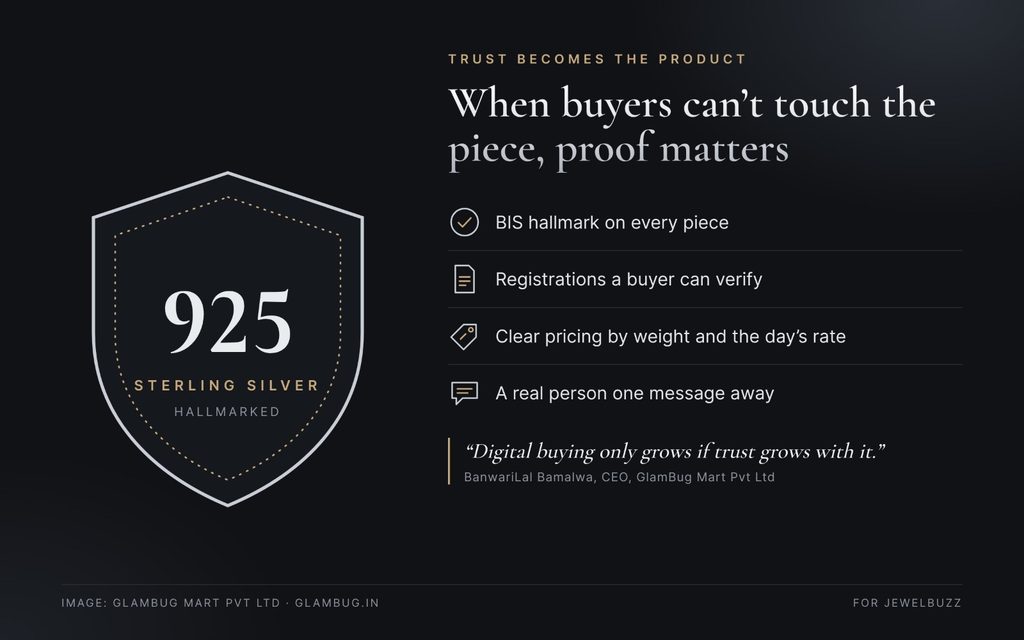
When buyers can no longer hold a piece before paying for it, trust becomes the deciding factor. Purity concerns are among the biggest worries for online jewellery shoppers and new resellers, and this is pushing hallmarking and verifiable registrations to the front of the buying decision.
Online, a buyer cannot touch the piece, so the first question is whether the silver is genuine. A supplier who openly shares their BIS registration and other credentials makes that question easy to answer. Digital buying only grows if trust grows with it.
GlamBug’s own path reflects the wider shift. The company, which imports from Italy, Turkey and Hong Kong and has held BIS hallmark registration since 2020, has over the past two years added a B2B catalogue app, video-call selection, dropshipping, a Shopify app and an API for partners, alongside its traditional wholesale business.
Our buyers changed before we did.A jeweller in a smaller town and a reseller working from home both want the same thing: to order quickly, with clear pricing and genuine silver. Technology is simply how we meet them where they already are.
The Challenges Ahead
The shift is not without friction. Silver prices can move sharply, which makes quotations harder to hold. Many traders now attach a validity window to each quote and price strictly by weight and the day’s rate. Small orders and direct shipping add packaging and logistics costs. And as more sellers enter the market, discounting can quickly erode thin margins.
Industry participants also point out that technology does not replace relationships. Many jewellers still value a call with a trusted supplier, and the most successful digital models keep a human contact a message away.
What It Means For The Trade
Digital wholesale is not replacing the traditional jeweller. It is widening the market. The same retailer who once bought only at the counter can now reorder from an app, and sellers who could never afford a showroom can build a business on hallmarked silver.
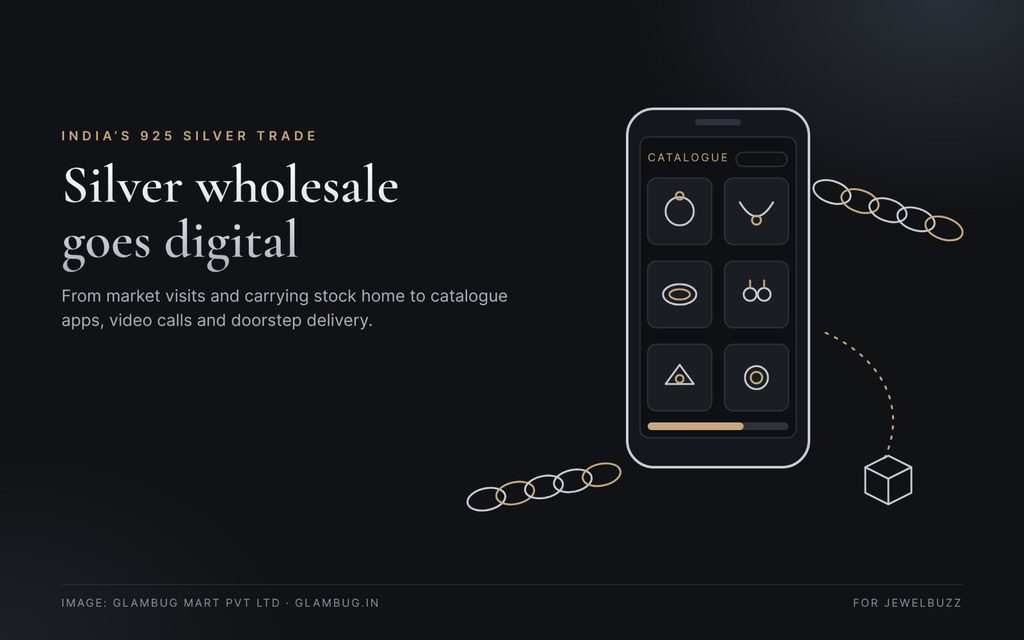
For wholesalers, the message is becoming clear: digitise the catalogue, make purity and registrations easy to verify, lower the barriers for small buyers, and connect to the platforms buyers already use. The buyers have already moved online. The trade is now catching up.



Rhenium, Iridium In Gold Under Scrutiny; GJC Urges Industry To Stay Calm and Alert, BIS Assures Vigilance and Action

GJEPC Conducts IIJS Bharat Retailers’ Connect In Kozhikode

CaratLane’s Retail Network Reaches 400 Stores In India With Chennai’s 16th Store In Pallikaranai
CaratLane’s Retail Network Reaches 400 Stores In India With Chennai’s 16th Store In Pallikaranai

Bengaluru Based Inventor Claims To Turn Elements Into Gold & Silver Using GNT
Rhenium, Iridium In Gold Under Scrutiny; GJC Urges Industry To Stay Calm and Alert, BIS Assures Vigilance and Action
-
 New Premises18 hours ago
CaratLane’s Retail Network Reaches 400 Stores In India With Chennai’s 16th Store In Pallikaranai
-
 National News22 hours ago
Bengaluru Based Inventor Claims To Turn Elements Into Gold & Silver Using GNT
-
 National News15 hours ago
Rhenium, Iridium In Gold Under Scrutiny; GJC Urges Industry To Stay Calm and Alert, BIS Assures Vigilance and Action
-
 JB Insights2 days ago
Silver Wholesale Goes Digital: How India’s 925 Silver Trade Is Changing The Way It Buys and Sells