
DiamondBuzz
Anglo American cuts book value of De Beers to $2.3bn, reflects a convergence of structural and cyclical pressures

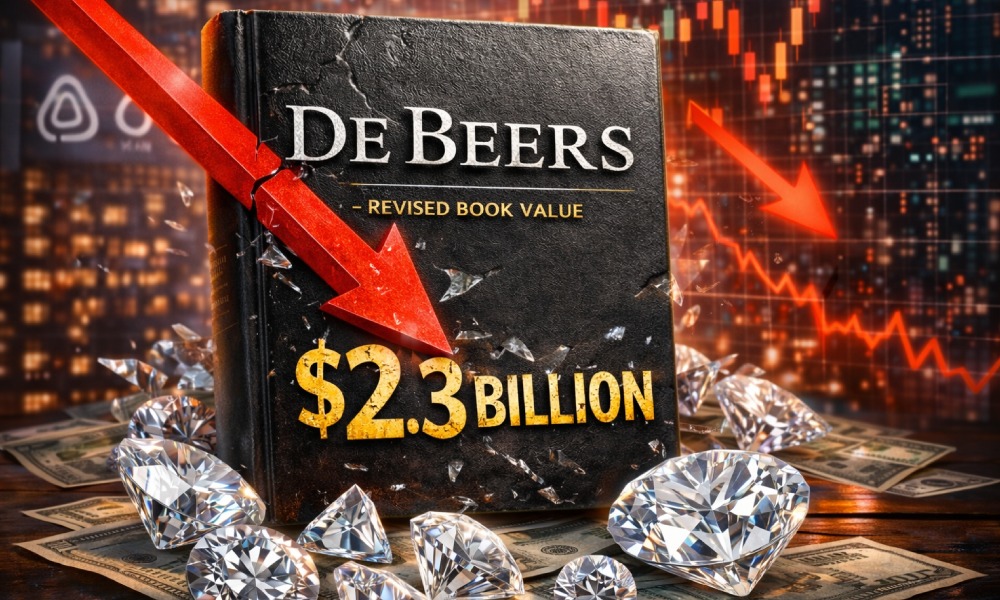
Anglo American has written down the book value of De Beers for the third consecutive year, slashing it from $4.1bn to $2.3bn — a 44% reduction — as the diamond miner reported a catastrophic swing from a $25m EBITDA profit in 2024 to a $511m loss in 2025. This impairment brings the cumulative destruction of De Beers’ book value to approximately $6.9bn since 2023, when it stood at $9.2bn.
The deterioration reflects a convergence of structural and cyclical pressures: weak consumer demand, falling rough diamond prices, inventory overhang, growing competition from lab-grown diamonds, and the headwinds of US tariffs on Indian exports — the world’s primary diamond cutting and polishing hub. Anglo American’s CEO Duncan Wanblad has confirmed De Beers is in advanced sale discussions, with the possibility of a staged divestment in two or three tranches.
A central paradox defines De Beers’ 2025 results: revenue grew 6% to $3.5bn, yet the business collapsed into deep loss. This disconnect is explained by the composition of sales. Sales volumes surged 17% to 20.9m carats as the company executed stock rebalancing initiatives — essentially clearing accumulated high-cost inventory at sharply discounted prices. The average per-carat realised price fell 7% from $152 to $142, reflecting both weaker market prices and the deliberate sale of lower-quality, lower-value stones.
The stock rebalancing programme alone generated $424m in trading losses, as diamonds acquired and cut at higher cost were sold at prices below their carrying value. This single line item accounts for the overwhelming majority of the $536m swing in EBITDA.
Anglo American CEO Duncan Wanblad confirmed in the February 2026 earnings call that the company is in advanced discussions with a select group of interested parties regarding the sale of De Beers. This follows Anglo’s strategic decision to simplify its portfolio by divesting non-core assets, a process accelerated by a hostile takeover approach from BHP in 2024.
Wanblad’s indication that the sale may occur in two or three tranches — rather than a single transaction — is significant. A staged divestment could reflect:
• difficulty in finding a single buyer willing to take the full stake at an acceptable valuation
• a desire to maximise aggregate proceeds by selling to different buyers with different strategic motivations
• regulatory constraints in relevant jurisdictions
With the book value now at $2.3bn and the business generating a $511m EBITDA loss, prospective buyers face the challenge of pricing an asset through the trough of a cycle in a structurally disrupted sector. Potential buyers may include:
- Sovereign wealth funds seeking long-duration commodity exposure
- Private equity consortia with a turnaround thesis
- Industry consolidators, potentially including Government of Botswana (which holds a 15% stake) or luxury conglomerates
- Strategic investors from emerging market diamond consumer nations



DiamondBuzz
Botswana Looks Beyond Rough Diamond Sales, Eyes U.S. Jewelry Market
The Duty Exemption By US Presents An Opportunity For Domestic Jewelry Manufacturers In Gaborone To Bypass Traditional Middle-Market Hubs and Establish A Direct Pipeline To American Consumers


Grappling with a painful downturn in global rough-diamond demand, Botswana is pivoting its economic strategy: expanding up the supply chain directly into American retail shelves while leveraging its resource wealth to fund conservation and diversification.
Speaking on the sidelines of New York Climate Week, Bogolo Joy Kenewendo, Botswana’s Minister of Minerals and Energy, highlighted the southern African nation’s plan to capitalize on a 0% import-tariff rate to the U.S. market. The duty exemption presents an opportunity for domestic jewelry manufacturers in Gaborone to bypass traditional middle-market hubs and establish a direct pipeline to American consumers.
shift The push into value-added manufacturing comes as the world’s top diamond producer by value navigates a broader structural Diamond revenues have long formed the bedrock of Botswana’s post-independence balance sheet, underwriting universal secondary education and tuition-free university funding. However, recent market volatility has underscored the vulnerabilities of a mono-sectoral economy.
Under the Botswana Economic Transformation Programme (BETP)—an initiative spearheaded directly by President Duma Boko and his vice president—the government is directing resources toward manufacturing, agriculture, and broader mining sectors to reduce its heavy reliance on rough diamond sales.
To support its luxury exports, Botswana is recalibrating its brand narrative around origin, environmental stewardship, and social impact. The country recently announced a five-year extension of the “Okavango Eternal” partnership alongside De Beers Group and the National Geographic Society. The initiative aims to protect the ecological integrity of the Okavango River Basin while tying diamond purchases to conservation efforts.
With De Beers currently facing an impending ownership change, officials remain optimistic that any capital restructuring could bring additional funds into Botswana to accelerate its domestic economic transition.



The Solitaire Festival Of India Concludes; Bumper Prize Winner At Ranka Jewellers Wins XUV 7XO

GJEPC Promotes Key Trade Events At IGI Dubai Event

MCX Gold Silver Futures See Dip

P N Gadgil Jewellers Limited – Quarterly Update Q2FY27

ABARAN Commemorates The 125th Birth Anniversary Of Founder Shri Burde Sadananda Kamath With Special Gold Coin Launch
The Solitaire Festival Of India Concludes; Bumper Prize Winner At Ranka Jewellers Wins XUV 7XO
-
 National News3 days ago
P N Gadgil Jewellers Limited – Quarterly Update Q2FY27
-
 National News4 hours ago
The Solitaire Festival Of India Concludes; Bumper Prize Winner At Ranka Jewellers Wins XUV 7XO
-
 National News5 hours ago
ABARAN Commemorates The 125th Birth Anniversary Of Founder Shri Burde Sadananda Kamath With Special Gold Coin Launch
-
 International News4 hours ago
GJEPC Promotes Key Trade Events At IGI Dubai Event
