
International News
US gold reserves revaluation not under consideration


U.S. gold reserves are offiially valued at around $11 billion, but their market value has surged to over $1 trillion due to soaring gold prices. Revaluing the gold at market prices could create a “windfall” that could be used to address the budget deficit. The official valuation of US gold reserves has been fixed at $42.22 per ounce since 1973.
The world’s largest economy holds the world’s largest gold reserves and on last count, they crossed an estimated $1 trillion in value. Yet, America’s most prized physical asset is unbelievably undervalued on official ledgers at just $11 billion.
Even though the price of gold is witnessing remarkable appreciation, shooting up 54% so far this year to cross $4,000 per ounce, the US’ official value remains fixed at the 1973 Congressional price of $42.22 per ounce, a figure established through the Par Value Modification Act of 1973.
In other words, there’s a significant disparity between the official accounting value and the actual market value and a potential revaluation of gold reserves at current market prices could inject nothing less than $1 trillion into the Treasury’s accounts and address nearly half of the nation’s $1.973 budget deficit. Such a move, though, may cause substantial implications for dollar, inflation, and above all the global monetary, financial and currency markets.
That said, given the US’s rising national debt, which currently stands at a staggering $37 trillion, there’s simply no appetite for further borrowing. At the same time, the government isn’t in a position to rein in spending at will, and it’s this financial quandary that has forced it into a shutdown for nearly two weeks now.
Repricing gold at current market prices is a quick fix to reset finances, as tapping into gold’s undervalued accounting resource could add substantial assets to the national balance sheet without requiring any physical gold sales or additional debt issuance.
In fact, the government wheeled out the idea earlier this year when Treasury Secretary Scott Bessent casually suggested: ‘We’re going to monetise the asset side of the US balance sheet.’ His remark set off a wave of discussions, and though Bessent walked back, the prospect of a $1 trillion windfall continues to linger.
Incidentally, the US Federal Reserve too released a note in August, where it reviewed the rare cases when countries used proceeds from valuation gains on gold and foreign exchange reserves. According to the Fed paper, over the past 30 years, only five economies have done so — Germany, Italy, Lebanon, Curacao and Sint Maarten, and South Africa.
It reasoned that the cash infusion from the revalued gold could be used to pay down debt or finance new spending. It also noted the recent US legislation proposed by Wyoming Senator Cynthia Lummis’s idea of using revaluation proceeds to create a sovereign wealth fund or a strategic bitcoin reserve, which President Donald Trump has talked about.
However, critics see it as a backdoor money printing exercise or, even, as plain old accounting manipulation. They argue that gold revaluation would implicitly devalue the dollar relative to gold, erode confidence in the fiat system, and fuel inflation by enabling unchecked government spending.
There have been precedents where the US’s prior gold revaluation exercises led to a sharp increase in the money supply, fueling inflation and profoundly impacting both domestic and global economies.


International News
US Holiday Shopping Expected To Top $1 Trillion For The First Time: NRF
While Overall Buying Power Remains High, Ongoing Inflation and Rising Household Costs Mean Some Families Will Have To Watch Their Spending More Carefully Than Others

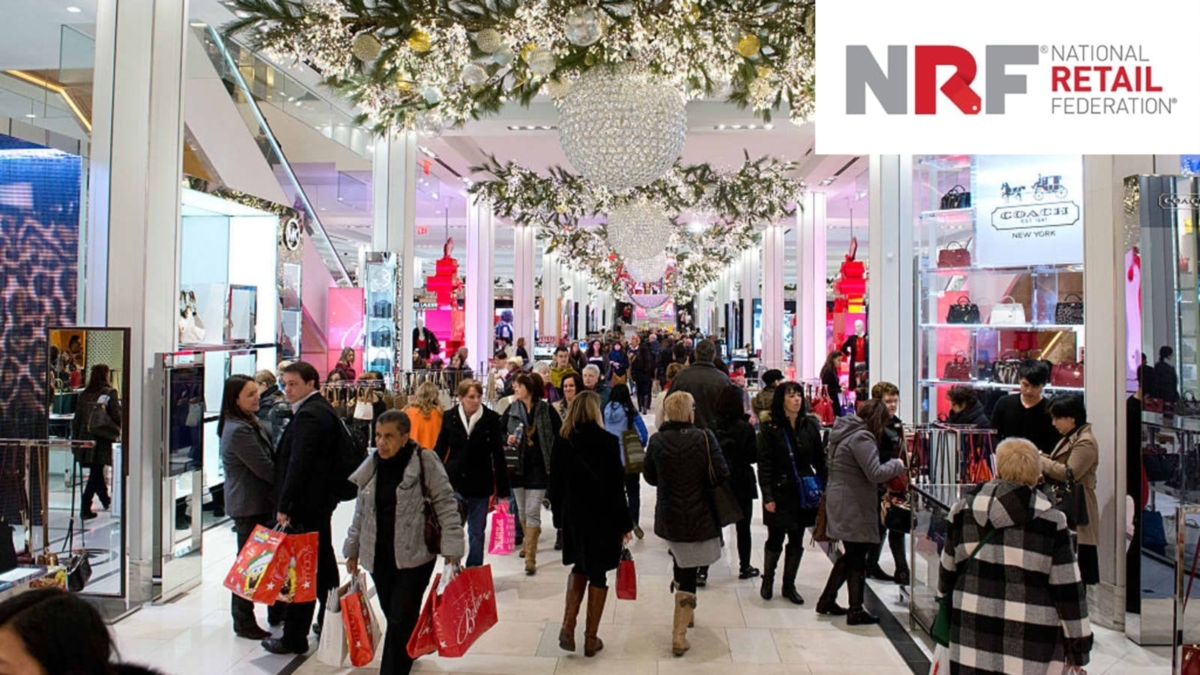
The National Retail Federation (NRF) predicts Americans will spend $1.01 trillion on holiday shopping in November and December. That is a 4.2% jump from $972 billion last year.
NRF said its forecast was based on economic modeling that incorporates consumer spending, employment, wages and historical retail sales data. It excludes automobile, gasoline and restaurant sales
Extra Hiring: To handle the surge in shoppers, stores plan to hire 325,000 to 375,000 temporary holiday workers.
Mixed Budget Impact: Higher gas prices and inflation could still strain some family budgets, affecting low- and high-income shoppers differently.
Retailers expect a strong shopping season because people continue to make holiday spending a priority.
Store owners are ready to attract shoppers by offering competitive prices, deals, and choices for every budget.
While overall buying power remains high, ongoing inflation and rising household costs mean some families will have to watch their spending more carefully than others.



Belgian Consul General H. E. Mr. Pierre Stverlynck Graces BDB Annual Day

Limelight Lab Grown Diamonds Crosses 100 Stores Milestone This Dussehra: Targets 200 In 2027

Joyalukkas Opens Its 2nd Bengaluru Showroom in Jayanagar

US Holiday Shopping Expected To Top $1 Trillion For The First Time: NRF
Belgian Consul General H. E. Mr. Pierre Stverlynck Graces BDB Annual Day
Limelight Lab Grown Diamonds Crosses 100 Stores Milestone This Dussehra: Targets 200 In 2027
-
 International News17 hours ago
US Holiday Shopping Expected To Top $1 Trillion For The First Time: NRF
-
 National News11 hours ago
Belgian Consul General H. E. Mr. Pierre Stverlynck Graces BDB Annual Day
-
 National News11 hours ago
Limelight Lab Grown Diamonds Crosses 100 Stores Milestone This Dussehra: Targets 200 In 2027
-
 New Premises12 hours ago
Joyalukkas Opens Its 2nd Bengaluru Showroom in Jayanagar
