
National News
Union Budget FY 2025-26
GJEPC welcomes new Export Promotion Mission, National Manufacturing Mission & the National Centres of Excellence Skilling
Budget Reaction by Mr. Vipul Shah, Chairman, GJEPC


“Union Budget presented by Hon. Finance Minister Smt. Nirmala Sitharaman puts India in the growth path to Viksit Bharat. The Budget reforms will help to realise India’s domestic growth potential and unveil a new trade roadmap to navigate global uncertainties.
GJEPC welcomes the recognition of exports as the 4th engine of growth and the new Export Promotion Mission with sectoral and ministerial targets, driven jointly by Union Commerce, Finance & MSME Ministries. This will facilitate easy access to export credit cross border and factor support to MSMEs to tackle non-tariff barriers in exports. GJEPC welcomes the digital public infrastructure, ‘BharatTradeNet’ (BTN) for international trade to be set-up as a unified platform for trade documentation and financing solutions.
GJEPC further welcomes the proposal of creating of new tariff items in Chapter 71 so as to distinguish precious metals – containing 99.9% or more by weight of silver, containing 99.5% or more by weight of gold, containing 99% or more by weight of platinum under headings 7106, 7108 and 7110 respectively. This move aligns with the representation made by GJEPC for addressing the issue of classification of alloys of Platinum (pre-dominantly containing gold), which was invariably leading to claim of unwarranted customs duty exemptions for import of Platinum under India-UAE CEPA .
Gem & Jewellery sector comprises of 85%-90% of MSMEs. The revision in classification criteria of MSMEs especially with those with turnover from Rs. 250 crore to Rs. 500 crore will help them achieve higher efficiencies of scale, technological upgradation and better access to capital. The extension of credit guarantee cover to MSMEs leading to additional credit of Rs. 1.5 lakh crore in the next 5 years will benefit and provide boost to the MSMEs in the sector.
The Government’s stable approach on duties and levies across gem & jewellery products will enhance ease of doing business. The Basic Customs duty rate has been reduced from 25% to 5% on platinum findings classified under 7113 will enable consumers to get a new product and increase affordable jewellery sales..
GJEPC welcomes the Government’s labour intensive focus enhancing productivity, quality manufacturing and global competitiveness. G & J industry is labour intensive with 5 million people employed in Exports. The announcement of National Manufacturing Mission & the National Centres of Excellence Skilling furthering ‘Make for India ‘Make for the World’ is positive and is set to have direct benefit to the sector.
GJEPC welcomes income tax relief incentives to boost consumer demand. Overall, Union Budget presented by Hon. Finance Minister Smt. Nirmala Sitharaman puts India in the growth path to Viksit Bharat. The Budget reforms will help to realise India’s domestic growth potential and unveil a new trade roadmap to navigate global uncertainties.
GJEPC remains committed to collaborating with the Government of India to ensure the sector continues to contribute significantly to the nation’s economy. Council requests the issuance of FAQs on Safe Harbour Taxation. We seek Hon. FM’s support for co-funding global diamond promotion campaigns, the inclusion of jewellery parks in the harmonised infrastructure list, and an Infrastructure Support Fund to develop a Gem Bourse in Jaipur.
GJEPC urges the Government to align regulations with global benchmarks, to set up a policy that promotes exports, innovation, use of technology, and incentivises sustainable practices.






National News
IBJA, SAARTHI 360 Sign MoU To Launch ‘NextGen CEO: Leadership for the Future’
Executive Education Initiative To Equip The Next Generation Of Jewellery Manufacturers With The Leadership Capabilities, Strategic Perspective and Decision-Making Skills Required To Lead Family Businesses.

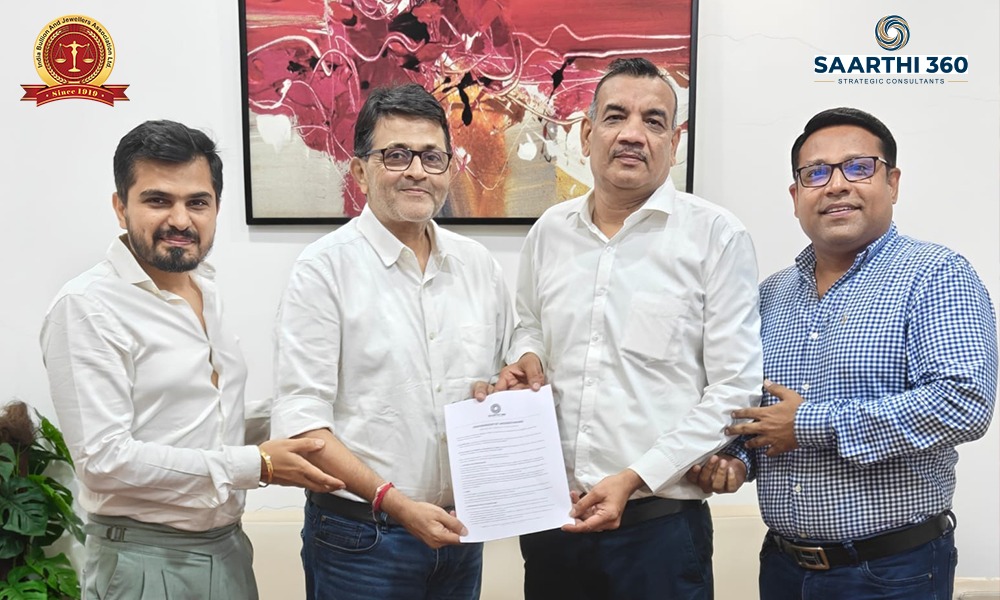
The India Bullion and Jewellers Association (IBJA) and SAARTHI 360 have signed a Memorandum of Understanding (MoU) to launch ‘NextGen CEO: Leadership for the Future’, an executive education programme designed to prepare the next generation of jewellery manufacturers for CEO and senior leadership roles in family-owned businesses.
The programme will help emerging leaders move beyond day-to-day operations by strengthening their strategic thinking, leadership judgement and managerial capabilities to improve organisational performance and support sustainable growth.
Building the Next Generation of Jewellery Business Leaders
Centred on ‘NextGen CEO — Becoming the CEO of a Family Jewellery Business’, the programme addresses leadership succession and executive decision-making in family-owned jewellery enterprises.
- Understanding the CEO’s role: Defining a CEO’s responsibilities and expectations in a jewellery business.
- Clarifying leadership and governance roles: Distinguishing among an owner, promoter, director, managing director and CEO.
- Strategic leadership versus daily operations: Moving from routine management to long-term business direction and priorities.
- Decision-making and strategic thinking: Applying structured frameworks to complex business situations.
- Managing stakeholders: Navigating relationships with family members, shareholders, employees and other stakeholders.
- Performance measurement: Using a CEO dashboard to monitor performance and support informed decisions.
- The first 100 days as CEO: Establishing priorities for the transition into executive leadership.
- Second-generation leadership challenges: Addressing succession, authority, accountability and organisational change.
- Ethics and integrity: Building trust through responsible leadership, sound governance and ethical decision-making.
Surendra Mehta, National Secretary, IBJA, said:
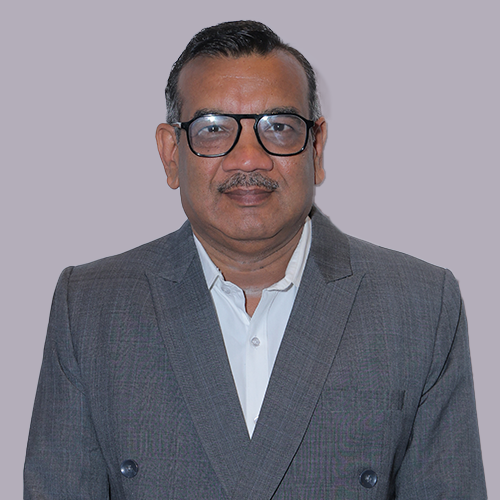
“Family-owned jewellery businesses play a significant role in India’s gems and jewellery industry. As these businesses grow and prepare for generational transitions, developing capable and confident future leaders becomes increasingly important. Through this initiative, we aim to help the next generation build the clarity, discipline and leadership capabilities needed to take their businesses forward while preserving the strengths of their family legacy.”
Binit Bhatt, Partner, SAARTHI 360, said:
“Becoming a CEO is about much more than inheriting a title. It requires a fundamental shift in mindset—from managing day-to-day operations to setting direction, making informed decisions, building accountability and earning the confidence of family members, employees and other stakeholders. The NextGen CEO programme is designed to equip emerging leaders with practical frameworks and perspectives that they can apply to the realities of their own businesses.”
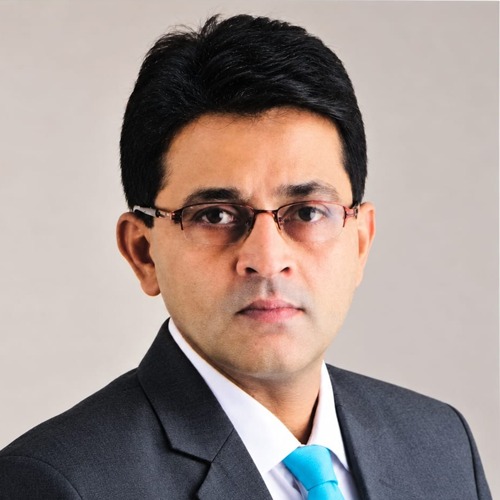
Hitesh Khandelwal, Partner, SAARTHI 360, said:

“Jewellery businesses are navigating an important generational transition, where preserving a strong legacy must go hand in hand with professional management and strategic thinking. Through NextGen CEO, we aim to help emerging leaders develop the confidence, capabilities and business perspective required to lead effectively, drive sustainable growth and prepare their organisations for the future.”



Gargi By P N Gadgil & Sons Invites Women To #GETNOTICED This Diwali In New Campaign With Mithila Palkar

IBJA, SAARTHI 360 Sign MoU To Launch ‘NextGen CEO: Leadership for the Future’

Jos Alukkas Unveils New Website For A Seamless Online Jewellery Shopping Experience

Dhanteras Shopping Guide 2026:Gold, Silver, Diamonds & Festive Jewellery Trends To Watch

The Solenne Collection: A Celebration Of Diwali By Bharti Bangur Fine Jewels

From Diya Puja To Diwali Soirées: Jewellery Designed To Go Beyond The Festive Season
-
 JB Insights4 days ago
Dhanteras Shopping Guide 2026:Gold, Silver, Diamonds & Festive Jewellery Trends To Watch
-
 BrandBuzz4 days ago
The Solenne Collection: A Celebration Of Diwali By Bharti Bangur Fine Jewels
-
 BrandBuzz4 days ago
From Diya Puja To Diwali Soirées: Jewellery Designed To Go Beyond The Festive Season
-
 National News4 days ago
Indriya, Aditya Birla Jewellery Unveiled India’s Largest Sustainable Jewellery Rangavalli
