JB Insights
Titanium Jewellery Manufacturing: Convergence Of Advanced Manufacturing, AI, and Surface Chemistry
For Trade Professionals, Understanding The Tech Powering This Trend Isn’t Just Academic—It’s The Key To Navigating The Next Decade Of Luxury Design.

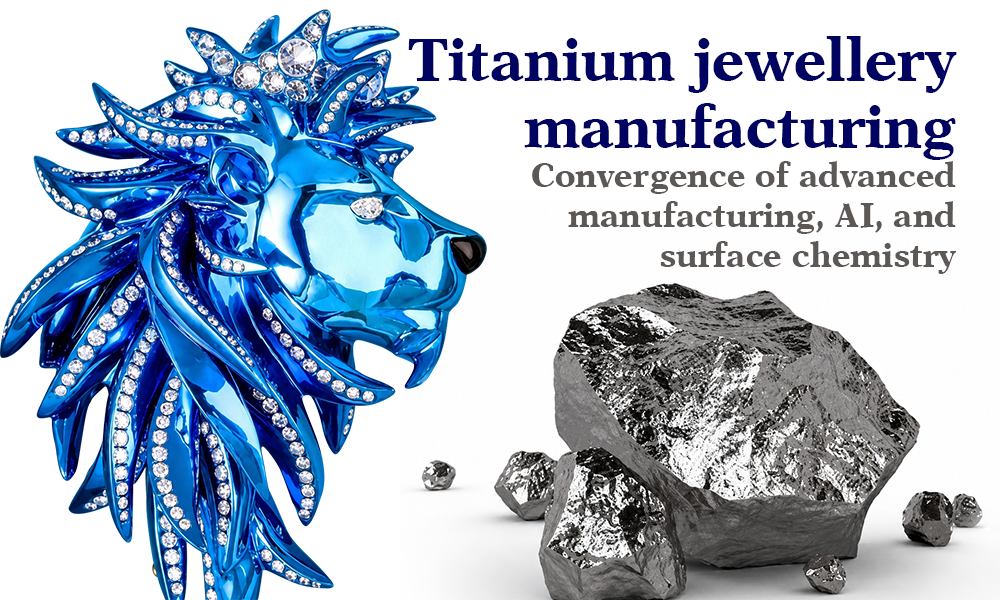
Titanium has officially broken free from its industrial roots. Long reserved for aerospace engineering and medical implants, this ultra-tough metal has been repositioned at the pinnacle of luxury watchmaking and high jewelry. Driven by a convergence of advanced manufacturing, AI, and surface chemistry, titanium is giving traditional precious metals a run for their money.
For trade professionals, understanding the tech powering this shift isn’t just academic—it’s the key to navigating the next decade of luxury design. Here are the core innovations driving the titanium revolution.
1. 3D Printing & Direct Metal Laser Sintering (DMLS)
Working with titanium presents a notorious metallurgical hurdle: its extreme melting point () makes traditional casting and soldering nearly impossible. Enter Direct Metal Laser Sintering (DMLS).
By using high-powered lasers to fuse microscopic titanium powder layer by layer, designers can bypass traditional workbench limitations entirely. This additive manufacturing capability allows ateliers to produce complex, hollow, and lattice-like organic structures. The result? Massively oversized, avant-garde statement pieces that remain remarkably lightweight and structurally indestructible.
2. Precision via AI-Driven CNC Machining
Titanium’s legendary hardness routinely destroys standard bench tools, making traditional hand-carving or standard machining painfully slow and cost-prohibitive. To solve this, forward-thinking manufacturers are deploying AI-driven Computer Numerical Control (CNC) machining.
AI algorithms optimize tool paths in real-time, reducing tool wear while carving intricate geometries at unprecedented speeds. Furthermore, these smart CNC systems achieve an ultra-refined grain size on the metal’s surface—a crucial prerequisite for achieving a flawless, mirror-like finish and vibrant color differentiation.
3. Electrochemical Anodization: Painting with Electricity
One of titanium’s most disruptive luxury features is its ability to take on vivid coloration without the use of fragile paints, platings, or enamels. Through electrochemical anodization, jewelers submerge the metal in an electrolytic bath and apply precise electrical currents.
Rather than adding a pigment, this process alters the thickness of the titanium’s natural oxide layer, changing how light refracts off the surface. Ateliers can consistently achieve fade-resistant, biocompatible hues ranging from deep electric blues and magentas to striking rainbow gradients.
[Electric Current Applied] ➔ [Oxide Layer Thickens/Shifts] ➔ [Light Refraction Alters] ➔ [Vibrant, Fade-Resistant Color]
4. Next-Gen Wearable Tech Integration
The booming smart jewelry sector demands materials that are bio-friendly, exceptionally durable, and featherlight. Aerospace-grade titanium has become the gold standard for this niche.
Market leaders like Ultrahuman utilize titanium chassis to house highly sensitive, medical-grade sensors. Because titanium acts as a rugged, hypoallergenic shield, it seamlessly protects internal components tracking Heart Rate Variability (HRV), skin temperature, and sleep cycles, all while offering the comfort of a traditional wedding band.
5. High-Jewelry’s “Stealth Wealth” Aesthetic
In the high-jewelry circuit, “heavy” no longer automatically equates to “valuable.” Elite international ateliers are embracing raw and black titanium as the ultimate canvas for haute joaillerie.
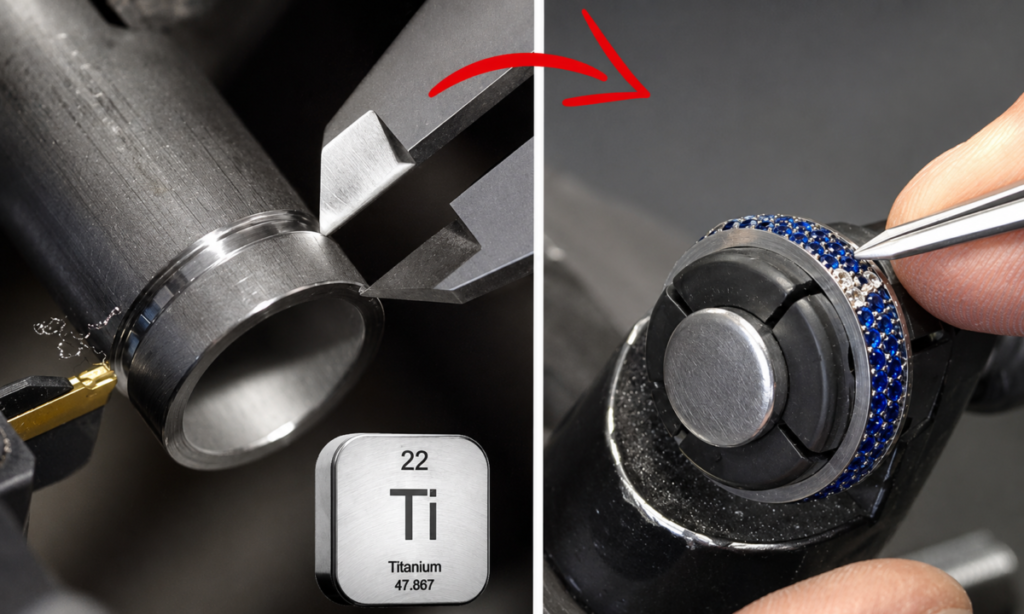
Weighing 45% lighter than stainless steel and a fraction of the weight of platinum, titanium allows designers to set massive, multi-carat precious gemstones into expansive designs without weighing down the wearer. Its deep, muted tones offer a stark, contemporary contrast to diamonds and colored gems, perfectly capturing the minimalist, “stealth wealth” aesthetic coveted by modern collectors.


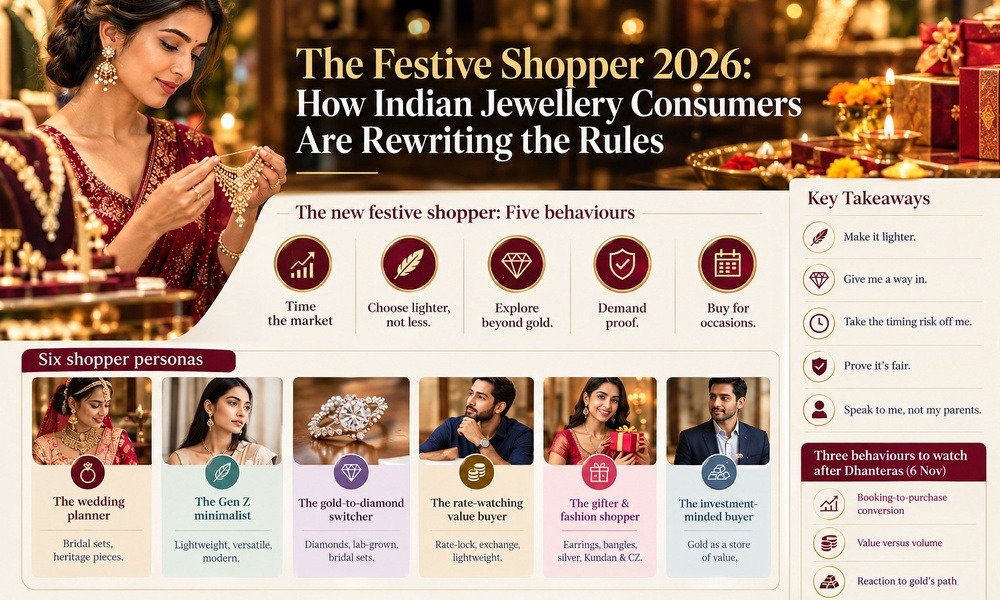
JewelBuzz spoke to jewellers across the country to check out the consumer mindset. Indian jewellery buyers this Diwali are not abandoning gold; they are shopping it differently. Reading 23 industry voices through the buyer’s eyes, one picture emerges: shoppers watch the gold rate like a stock ticker, shrink the piece rather than skip the purchase, hunt for proof of fairness, and plan their buying around weddings and festivals, with Dhanteras on 6 November the next big test.
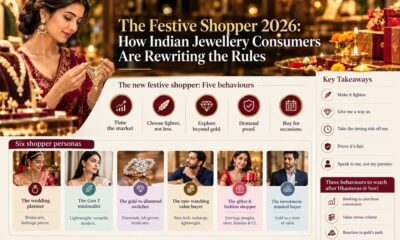
The new festive shopper: Five behaviours
- They time the market. Buyers hold back when rates swing, rush in when prices dip, and lock in early through rate-booking and advance orders.
- They trade down in weight, not in aspiration. Lighter, versatile pieces let them keep the purchase while spending fewer rupees per piece.
- They trade sideways. Diamonds (natural and lab-grown), platinum, silver and fashion jewellery absorb buyers who find heavy gold a stretch.
- They demand proof. Shoppers compare design, quality, purity and price, and reward certification, transparency and genuine offers.
- They buy around occasions. Weddings, Dhanteras and Diwali still set the calendar, and emotion keeps gold at the centre.
Watching the rate: how price swings shape timing
For the 2026 buyer, the question is less “should I buy gold?” than “is now the right moment?” Shoppers have not lost faith in the metal. Aman Talla of Talla Jewellers says that when gold rises, trust in gold rises with it, and John Alukka of Jos Alukkas says consumer trust has grown because of the higher value. What has changed is the timing and the quantity.
Four behaviours show up in the quotes:
- Freezing under volatility. John Alukka notes slight hesitation and confusion because of rate variations. Prithviraj Kothari of IBJA reports volumes down about 15% year-on-year around Ganesh Chaturthi, and a subdued Dussehra, before footfall picked up as gold held between Rs 1.42 and Rs 1.44 lakh.
- Pouncing on dips. NAC Jewellers’ N. Anantha Padmanaban expects a lift as prices come down around Navratri and Diwali, and jewellers such as Shringar and HPJ describe the recent fall as drawing buyers in. Khandelwal Jewellers is running a lucky-draw campaign to help customers take advantage of it.
- Buying early out of fear. Nikhil Parekh of HPJ notes that concern about future price rises may push purchases forward.
- Locking in the price. Khandelwal reports customers securing their rate through rate-booking programmes, and Kothari expects rate-lock schemes to support Dhanteras.
The volume effect follows. Jayantilal Challani of the Challani Group expects sales value to grow in single or low-double digits while physical volume stays subdued, and Jos Alukkas and Ranka Jewellers also expect volume to dip or fall.
Who is buying: six shopper personas
The quotes describe at least six distinct kinds of buyer. They are composites assembled from what jewellers report, not formal market segments, but each has a different trigger and a different basket.
| Persona | What they buy | What moves them |
| The wedding-planning family | Elaborate bridal necklaces, rani haars, statement sets; early orders | A grand look for the bride within budget; heritage craft |
| The Gen Z minimalist | Thin chains, studs, understated rings; lightweight diamonds and platinum | Self-purchase, everyday wear, meaning over weight |
| The gold-to-diamond switcher | Diamond jewellery, lab-grown solitaires and bridal sets | Larger, better stones for the money; investment feel; certification |
| The rate-watching value buyer | Gold on rate-lock, old-gold exchange, lightweight pieces | Price protection; comparing design, quality and price |
| The gifter and fashion shopper | Earrings, bangles, silver, Kundan and CZ pieces | Diwali gifting, design variety, affordability |
| The investment-minded buyer | Gold as store of value | Gold as an emotional asset and a symbol of prosperity |
Three of these personas deserve a closer look.
The Gen Z minimalist buys for themselves, and does so deliberately. Challani describes a preference for thin chains, stud earrings and understated rings. Pokharna sees room for platinum in everyday luxury and self-purchase. Bafna says younger, first-time buyers now choose lab-grown diamonds on purpose, with sentiment shifting from curiosity to conviction. Gupta adds that digital engagement is boosting confidence, and Gulechha reports high online traffic alongside store footfall.
The switcher shows how price pressure redirects rather than removes demand. Surana says people who wanted gold are now also investing in diamond jewellery, driven by rising disposable incomes, the influence of Gen Z and millennials, and a preference for meaningful investments.
The returning family is the emotional heart of Diwali. Talla Jewellers built its Diwali Homecoming Polki collection for people who live far from home and return only at this time of year, a reminder that occasion and belonging move buyers as much as trend.
Planned purchases: weddings and tradition
While everyday buying turns light, weddings keep the traditional end of the market alive. Rakhal Gontla of Vaibhav Jewellers expects marriage-related sales to stay healthy, supported by gold’s place in Indian weddings. Dr. Pratap Kamath of ABARAN calls gold both an emotional asset and a symbol of prosperity, and Nikhil Parekh of HPJ says weddings still create demand for elaborate bridal necklaces and rani haars, because families want the bride to look grand while keeping value within budget.
The wedding shopper behaves differently from the casual buyer:
- Plans early. Aman Talla says customers are choosing old gold exchange and early bridal jewellery, and Prithviraj Kothari points to early bridal orders supporting Dhanteras.
- Wants a statement. Aisshpra reports bridal customers seeking statement pieces with multiple styling options.
- Values heritage craft. HPJ expects its Kolkata-style handcrafted jewellery to draw strong bridal interest, and Nemichand Bamalwa’s Eden collection targets bridal occasions.
- Shops across metals. Wedding season is also expected to lift lab-grown solitaires, engagement rings and bridal sets, and Kushals expects bridal and guest-wear sets in Kundan, Polki-look, antique, temple and jadau-inspired designs from mid-November.
Gold’s cultural role sits at the root of all this. No one in this set of quotes predicts weddings moving away from it.
How shoppers decide: compare, verify, lock in
The 2026 jewellery buyer is a comparer. Chetan Thadeshwar of Shringar says customers remain value-conscious and compare designs, quality and price before deciding. Aisshpra describes purchases as more thoughtful than discretionary, and Saiyam Mehra of Unique Chains & Jewells says shoppers want the right balance of design, quality, purity and affordability.
Five decision rules appear in the quotes:
- Compare before committing. Shoppers weigh designs, quality and price across stores, which is why Shringar says a well-curated range across budgets converts interest into sales.
- Look for proof. Akoirah names IGI and SGL certification and transparent pricing as the trust anchors for lab-grown buyers.
- Lock in the price. Rate-booking and rate-lock schemes (Khandelwal, Kothari) answer the fear of rising rates.
- Recycle old gold. Talla Jewellers cites old-gold exchange among the choices of buyers who are buying with purpose.
- Test the offer for fairness. Dr. C. Vinod Hayagriv of C. Krishniah Chetty Jewellers warns that inflating prices and then discounting artificially erodes consumer confidence, and says promotions must be genuine.
What shoppers are telling the industry
Shoppers are not retreating; they are renegotiating. They still want gold, but in a lighter form, bought at a moment they trust, from a seller they believe. Read as signals, their behaviour says five things:
- “Make it lighter.” Lightweight, versatile designs are where demand is moving across gold, diamonds and silver.
- “Give me a way in.” Silver, platinum, lab-grown and fashion pieces keep price-sensitive buyers in the store.
- “Take the timing risk off me.” Rate-lock schemes, bookings and old-gold exchange help buyers act despite volatility.
- “Prove it’s fair.” Certification, transparent pricing and genuine promotions matter more when every rupee is scrutinised.
- “Speak to me, not my parents.” Minimalist designs, self-purchase occasions and digital engagement win younger buyers.
Three behaviours to watch after Dhanteras on 6 November:
- Booking-to-purchase conversion. Prithviraj Kothari says how many advance bookings become actual purchases will decide the final number.
- Value versus volume. Whether value growth of 15–25% materialises while grams stay flat or fall.
- Reaction to gold’s path. Whether prices stay in the Rs 1.42–1.44 lakh band Kothari cites, since shoppers have shown they respond to dips and hesitate on swings.


IGM’s RamMudra : Kuberdev Ka Sona Lights Up The Festive Gold Market

The Festive Shopper 2026: How Indian Jewellery Consumers Are Rewriting The Rules

P N Gadgil Jewellers Delivers Q2 FY27 Revenue Of 26,663.8 Mn; With 22.4% Revenue Growth, 57.1% EBITDA Growth & 52.7% PAT Growth; You

Dhanteras Shopping Guide 2026:Gold, Silver, Diamonds & Festive Jewellery Trends To Watch

From Diya Puja To Diwali Soirées: Jewellery Designed To Go Beyond The Festive Season

The Solenne Collection: A Celebration Of Diwali By Bharti Bangur Fine Jewels
-
 JB Insights1 week ago
Dhanteras Shopping Guide 2026:Gold, Silver, Diamonds & Festive Jewellery Trends To Watch
-
 BrandBuzz1 week ago
From Diya Puja To Diwali Soirées: Jewellery Designed To Go Beyond The Festive Season
-
 BrandBuzz1 week ago
The Solenne Collection: A Celebration Of Diwali By Bharti Bangur Fine Jewels
-
 National News1 week ago
Indriya, Aditya Birla Jewellery Unveiled India’s Largest Sustainable Jewellery Rangavalli