

By Invitation
The Importance of Ergonomics in Jewellery Design

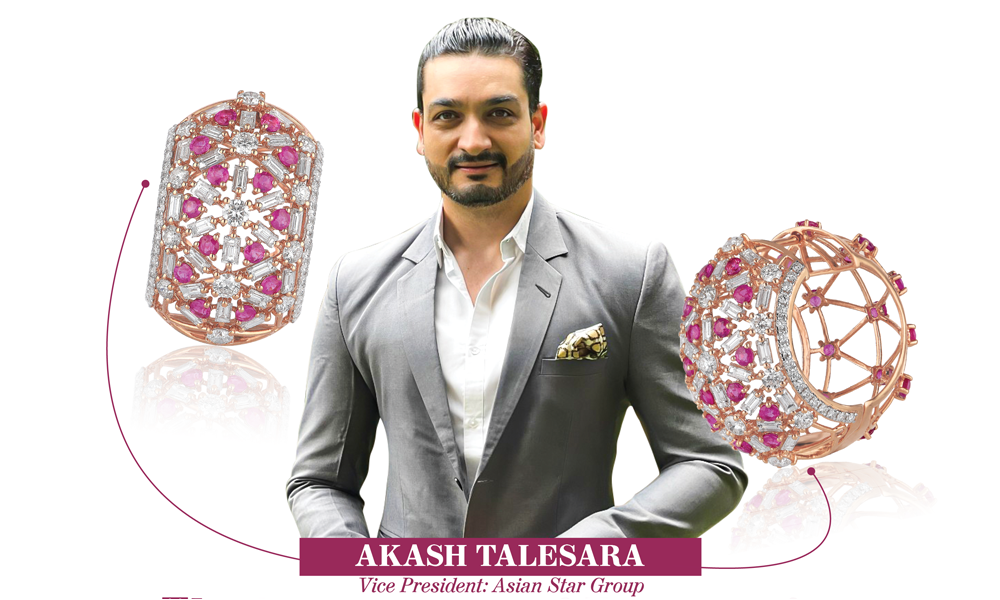
What is Ergonomics?
Ergonomics is the science of designing and arranging things so that they interact efficiently and safely with people. It’s about creating products, environments, and systems that fit the people who use them, aiming to improve comfort, performance, and overall well-being. Ergonomics creates environments to optimize human well-being and performance. It is focused on creating products and spaces that are comfortable, efficient, and safe for people to use. In essence, ergonomics is all about making human experience better.
Why Ergonomics is such an important part of jewellery design?
Ergonomics is all about designing products to fit the people who use them, making them more comfortable and efficient. In jewellery, ergonomics is important for several reasons. It involves creating pieces that are comfortable and functional for the wearer while also having a pleasing aesthetic.

How can it benefit the customer?
Ergonomically designed jewellery fits better and feels more comfortable to wear. For example, rings won’t pinch your fingers, necklaces won’t irritate your neck, and earrings won’t pull on your earlobes. This ensures that customers can wear their jewellery all day without discomfort. Understanding how ergonomics can be applied to diamond jewellery design is essential for creating durable, long-lasting pieces that will be worn with delight. Factors such as weight, shape, size, and materials must be taken into account to create pieces that are both beautiful and comfortable for the wearer.

How Ergonomics plays an important role in jewellery design?
By designing jewellery that is comfortable and functional, designers can create pieces that are not only beautiful but also practical for everyday use. Ergonomic design can also help to ensure the longevity and durability of the jewellery by reducing the risk of damage or breakage. Overall, ergonomics is an essential aspect of diamond jewellery design that ensures the well-being and satisfaction of the wearer.
When jewellery is designed with ergonomics in mind, it is more likely to withstand the wear and tear of daily use. For example, if a necklace is designed to be lightweight and properly balanced, it is less likely to break or become damaged due to excessive strain on the chain or clasp. Additionally, ergonomics can also affect the placement and security of the stones in the jewellery. If the jewellery is designed to fit comfortably on the wearer’s body, the stones are less likely to become loose or fall out. This can help to ensure the longevity and durability of the jewellery.

What are the effects of poor ergonomics on jewellery sales?
If jewellery is uncomfortable to wear, customers are less likely to buy it. Rings that pinch, earrings that are too heavy, or necklaces that irritate the skin will deter potential buyers. Customers who experience discomfort or problems with poorly designed jewellery are likely to leave negative reviews online or share their dissatisfaction with friends and family. This can damage the brand’s reputation and discourage new customers from purchasing. Customers who have a bad experience with a piece of jewellery are less likely to make repeat purchases from the same brand. This affects customer retention and long-term sales. So it’s very important to design jewellery that is made with Ergonomics in mind.

What are the challenges and solutions in Ergonomic diamond jewellery design?
Designing diamond jewellery that is both ergonomic and aesthetically pleasing can present several challenges for designers. Here are some of the challenges that designers may face and some solutions to help overcome them.
One of the biggest challenges in ergonomic diamond jewellery design is balancing the aesthetic appeal of the jewellery with its functional aspects. A piece of jewellery may look stunning, but if it is not comfortable to wear, it may not be practical. Size is another challenge that can affect the ergonomics of diamond jewellery. Jewellery that is too large or too small for the wearer can be uncomfortable and may not sit properly on the body.
A solution to this is to create adjustable pieces of jewellery that can be resized to fit the wearer’s body. Clasps and closures are other challenges in ergonomic diamond jewellery design. Closures that are difficult to use or that cause discomfort can make the jewellery less functional and less enjoyable for the wearer. A solution to this is to use closures that are easy to use and that do not cause discomfort.







By Invitation
A fun, practical New Year note for jewellery business owners
Wishing You a Healthier, Happier & Wiser 2026 – By Shivaram A
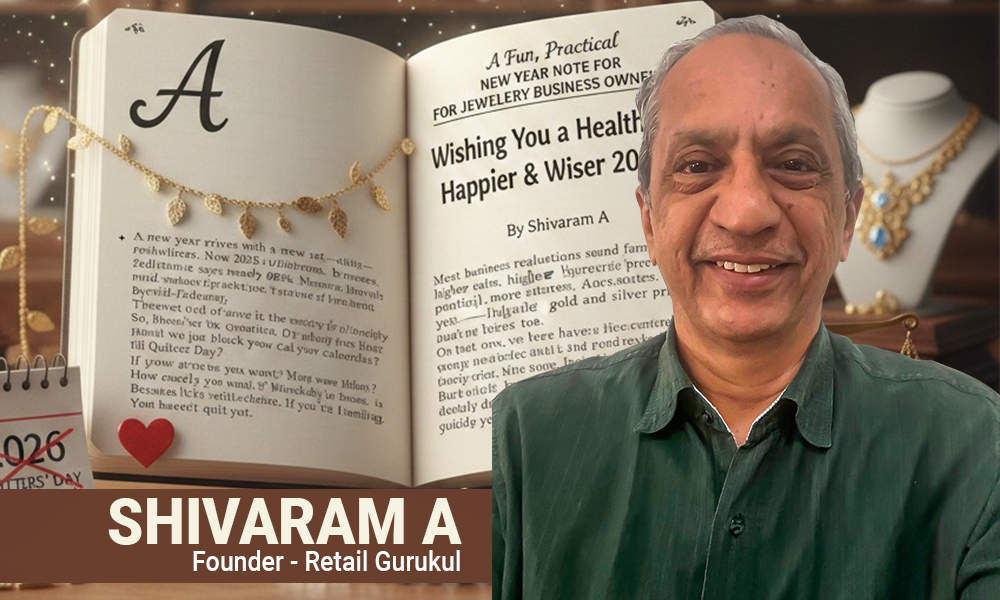
A new year arrives with a new set of—what else—New Year resolutions. And 2026 is no different.
Resolution makers, beware. Research says nearly 80% of New Year resolutions collapse by mid-February. There’s even a name for it: the second Friday of January is officially called Quitters’ Day.
So, here’s the uncomfortable question: Do you want 2026 to be any different, or should we just block your calendar till Quitters’ Day?
If your answer is a serious yes, then it boils down to two things:
- What exactly do you want?
- How badly do you want it?
Because let’s be honest intentions are cheap. Discipline is expensive.
If you’re still reading, congratulations. You haven’t quit yet.
Most business resolutions sound familiar: higher sales, higher profits (or much higher profits), more stores, more customers. And yes—higher gold and silver prices too. On that one, we have very little control… though prayers are always welcome!
But for 2026, let’s look beyond only business numbers and focus on three areas that quietly decide your long-term success.
1. A Healthier You in 2026
A typical day before 2025 (you may recognise this): Late wake-up. Late breakfast. Reaching the store by 11 am—or noon on a “busy” day. Vendor meetings. Lunch at 3 pm. Evening snacks at 6 pm. Endless cups of chai. Store closes at 9 pm. Dinner at 10:30 pm. Netflix or phone scrolling. Sleep well past midnight.
Not everything applies—but enough of it does to make you uncomfortable.
The result? Low energy, rising health reports, and a body that protests quietly… until it doesn’t.
Resolution for a Healthier 2026
Start with a complete health check-up. Think of it as your personal P&L statement—it shows your condition on one specific day.
Identify what I like to call “golden furniture” in the body—parts that have stopped moving but still occupy space.
Then act:
- Better food (not fancy diets)
- Regular movement (not heroic gym resolutions)
- Better sleep (yes, even for business owners)
Warning: Change will be uncomfortable. But so is ignoring the problem.
Set SMART health goals—Specific, Measurable, Achievable, Realistic, Time-bound.
2. A Happier You in 2026
Let’s admit it—becoming happier has rarely featured on a jeweller’s resolution list.

Resolution for a Happier 2026
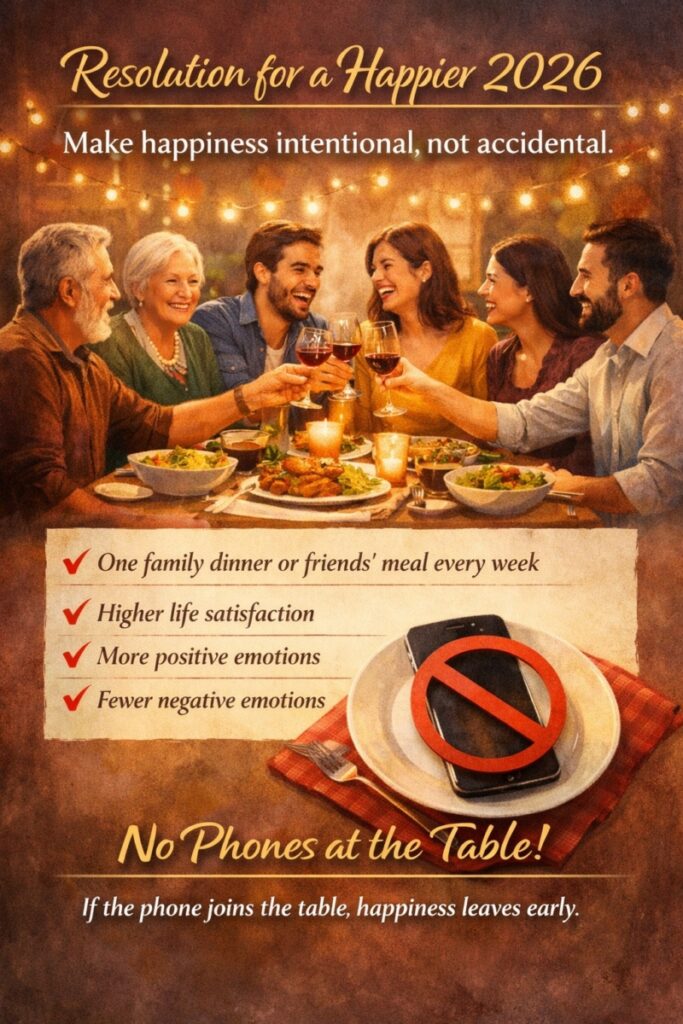
Make happiness intentional, not accidental.
Start with something simple: one family dinner or friends’ meal every week.
According to the World Happiness Report (based on over 1,50,000 people), those who regularly eat with others report:
- Higher life satisfaction
- More positive emotions
- Fewer negative emotions
One strict rule: phones stay away. If the phone joins the table, happiness leaves early.
3. A Wiser You in 2026
You’ve built a successful business. The numbers prove it. Experience, instinct, and industry knowledge have served you well.
But the world is shifting—fast.
AI. Agentic AI. AI Agents. (And yes, everyone is still figuring out the difference.)
People deep in this space believe AI may have a bigger impact than the internet itself.
The real question is not whether AI will affect jewellery retail—but whether you’ll learn early or catch up late.
For traditional business owners, the willingness to learn and apply new tools is the new unfair advantage.
A Simple 2026 Resolution Action Plan
| Action Area | Example | Final Status – 31.12.2026 |
| Healthier | 30 minutes movement daily | Achieved / Not Achieved |
| Happier | Weekly family dinner | Achieved / Not Achieved |
| Wiser | One AI implementation | Achieved / Not Achieved |
No overthinking. No complex dashboards. Just honest tracking.
Ready to make 2026 different?
If you want help converting good intentions into clear action plans—for health, happiness, or business wisdom—I’m happy to help you think it through.
Let’s ensure you’re still on track after Quitters’ Day.
Here’s wishing you a Healthier, Happier & Wiser 2026.
Call or WhatsApp on 90360 36524
Email: RetailGurukul.com
Jb Exclusive : Digital View


-
 BrandBuzz10 hours ago
The Pearl Edit: Thoughtful Women’s Day Gifting by GIVA
-

 BrandBuzz10 hours ago
Augmont Launches SPOT 2.0: One Platform. Every Product. Efficient Business
-
 BrandBuzz14 hours ago
Senco Gold & Diamonds Launches “SHAPE OF YOU”- AI Application for Women’s Day Celebration
-
 National News14 hours ago
Kushals Fashion Jewellery Curates Special Women’s Day Edit Celebrating Strength, Style and Self-Expression
