
International News
Silver touches record high, doubling in 11 months AUGMONT BULLION REPORT

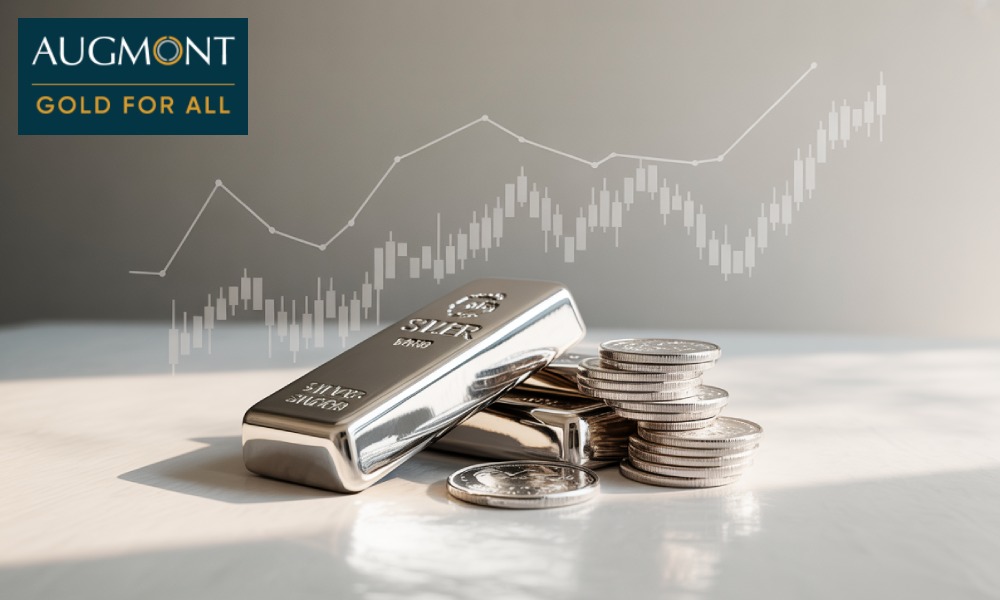
Silver price has nearly doubled in just 11 months and risen more than gold, even though gold was the most popular commodity in 2025. Over the past 12 months, silver has climbed significantly higher than gold, rising 100% in 2025, whereas gold has only increased by 60%. After several U.S. central bank policymakers indicated support for a third rate cut this year during their December 9–10 meeting, gold ended last week 6% higher and silver increased 17%.
It is anticipated that the economy would continue to slow down until 2026 and that the Federal Reserve will probably drop interest rates, which is attracting some investors back. Expectations that the central bank will lower interest rates next month have increased due to recent dovish comments from Fed Governor Christopher Waller and New York Fed President John Williams, as well as weakening economic statistics following the recent U.S. government shutdown.
In the face of growing supply concerns and rising prospects of additional rate cuts by the Federal Reserve, silver continued to rise, approaching a record $58. Due to a short squeeze, silver increase this year surprised a lot of investors. The 2025 silver bubble, in contrast to previous investment waves, was dependent on a combination of low supply, high Indian demand, industrial demand, and tariffs.While China silver exports reached an all-time high of more than 660 tonnes in October, Chinese inventories fell to their lowest level in ten years as a result of strong shipments to London brought on by a supply squeeze.
Shanghai has entered backwardation, a state in which near-term contracts trade at higher prices than longer-dated ones, implying immediate physical scarcity,underscoring the strain on China silver market. Silver surge last week was fueled by rising expectations of monetary policy easing in addition to the actual market tightening. The likelihood that the Federal Reserve will decrease interest rates by 25 basis points at its meeting on December 10 increased dramatically from around 50% to over 90%.
Reports that White House National Economic Council Director Kevin Hassett is the front-runner for the next Fed chair, which is thought to be in line with President Donald Trump desire for lower interest rates, have heightened expectations.
Gold has started its upward journey again, next target is $4345 (~Rs 130,000) and $4400(~Rs 132,000) with strong support at $4170 (~Rs 125,000).
Given that silver prices have already increased by more than 100% in 2025, many investors are wondering if the boom may continue until December. It seems plausible based on seasonal patterns. After July 3.2% and January 2.7% average returns, December has been the third-strongest month for silver during the past 30 years, with an average gain of 2.12%.
Silver typically ends December in positive territory 60% of the time. Silver had its biggest December returns in 1997 and 2020, with gains of roughly 17% over the month. This seasonal tailwind may intensify the present price trend for the December target of $60 (~Rs 180,000) and $62 (~Rs 186,000), with firm support at $53 (~Rs 161,000), assuming tight supply conditions continue.


International News
US Holiday Shopping Expected To Top $1 Trillion For The First Time: NRF
While Overall Buying Power Remains High, Ongoing Inflation and Rising Household Costs Mean Some Families Will Have To Watch Their Spending More Carefully Than Others

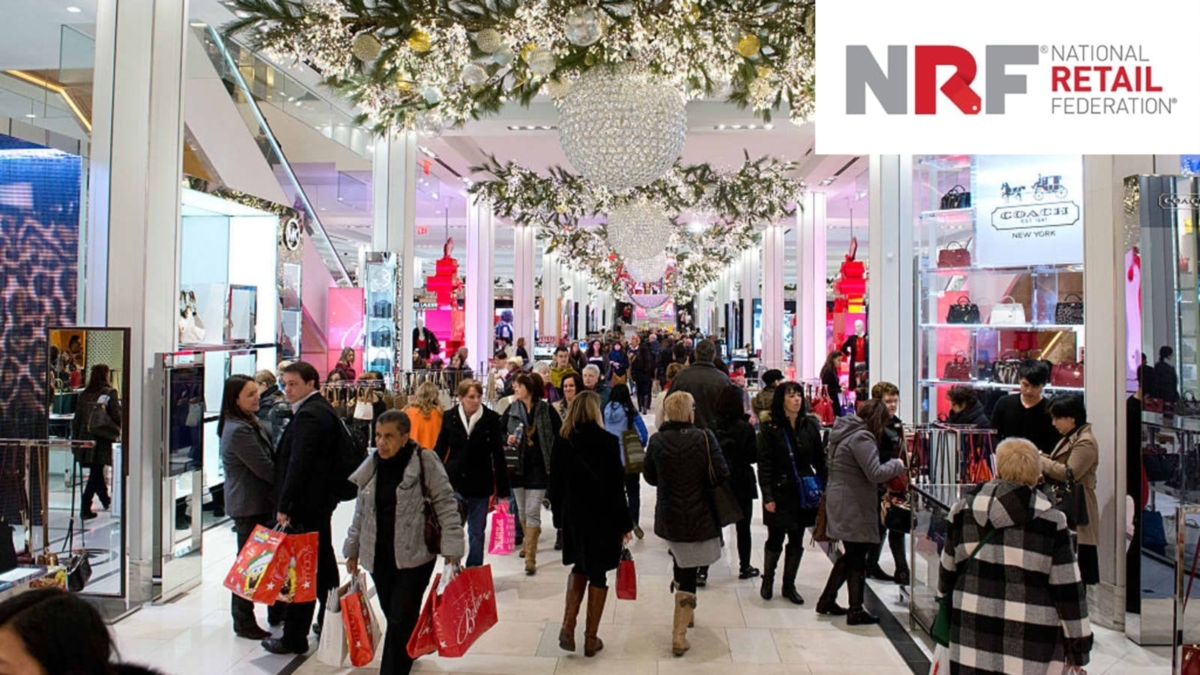
The National Retail Federation (NRF) predicts Americans will spend $1.01 trillion on holiday shopping in November and December. That is a 4.2% jump from $972 billion last year.
NRF said its forecast was based on economic modeling that incorporates consumer spending, employment, wages and historical retail sales data. It excludes automobile, gasoline and restaurant sales
Extra Hiring: To handle the surge in shoppers, stores plan to hire 325,000 to 375,000 temporary holiday workers.
Mixed Budget Impact: Higher gas prices and inflation could still strain some family budgets, affecting low- and high-income shoppers differently.
Retailers expect a strong shopping season because people continue to make holiday spending a priority.
Store owners are ready to attract shoppers by offering competitive prices, deals, and choices for every budget.
While overall buying power remains high, ongoing inflation and rising household costs mean some families will have to watch their spending more carefully than others.



Belgian Consul General H. E. Mr. Pierre Stverlynck Graces BDB Annual Day

Limelight Lab Grown Diamonds Crosses 100 Stores Milestone This Dussehra: Targets 200 In 2027

Joyalukkas Opens Its 2nd Bengaluru Showroom in Jayanagar

US Holiday Shopping Expected To Top $1 Trillion For The First Time: NRF
Belgian Consul General H. E. Mr. Pierre Stverlynck Graces BDB Annual Day
Limelight Lab Grown Diamonds Crosses 100 Stores Milestone This Dussehra: Targets 200 In 2027
-
 International News20 hours ago
US Holiday Shopping Expected To Top $1 Trillion For The First Time: NRF
-
 National News14 hours ago
Belgian Consul General H. E. Mr. Pierre Stverlynck Graces BDB Annual Day
-
 National News15 hours ago
Limelight Lab Grown Diamonds Crosses 100 Stores Milestone This Dussehra: Targets 200 In 2027
-
 New Premises16 hours ago
Joyalukkas Opens Its 2nd Bengaluru Showroom in Jayanagar
