
International News
Rio Tinto Unveils Rare 158ct Yellow Diamond from Diavik Mine in Canada
One of the largest gem-quality yellow diamonds ever discovered in Canada, the 158.20-carat gem is a remarkable find as Diavik Mine nears closure.

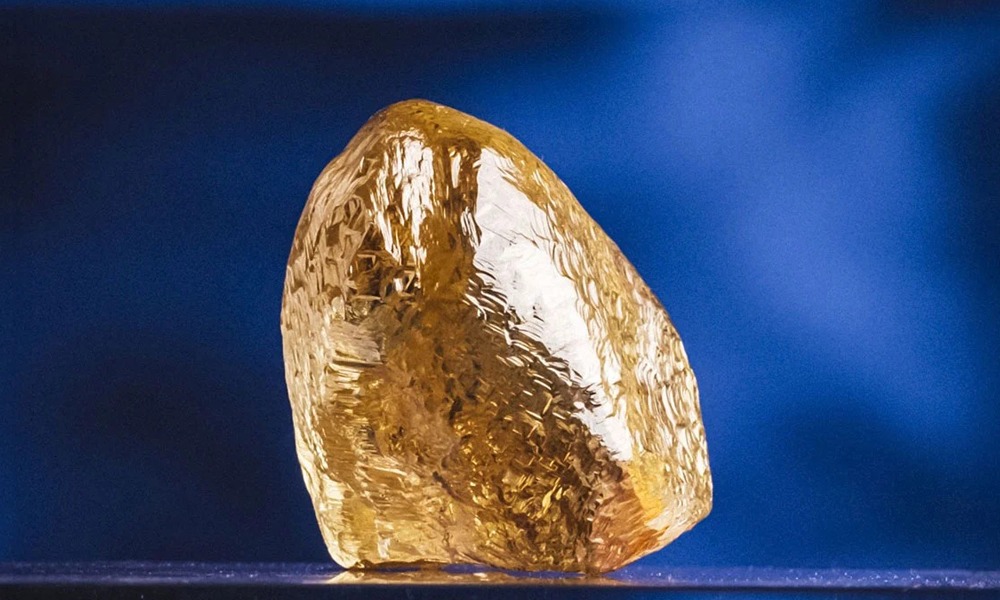
Rio Tinto has uncovered a rare and exceptional 158.20-carat yellow diamond at its Diavik Mine in Canada, marking one of the largest gem-quality yellow diamonds ever found in the country. This stunning discovery is also among only five yellow diamonds weighing over 100 carats to be unearthed by the company at Diavik throughout its 22-year history. Notably, Diavik is primarily known for producing white diamonds, with less than 1% of its output being yellow stones.
The Diavik Mine, which is set to close next year, is also responsible for several significant yellow diamond finds, including Canada’s largest yellow diamond, a 552.74-carat gem discovered in 2018, and the 187.7-carat Diavik Foxfire found in 2015.
With the closure of the Argyle mine in Australia in 2020, Diavik is now Rio Tinto’s sole diamond asset. Patrick Coppens, General Manager of Sales and Marketing for Rio Tinto’s diamond business, expressed excitement over the unique beauty and purity of the Diavik diamonds, eagerly anticipating the future of this extraordinary find.








International News
Indian Consulate In New York Hosts India-USA Virtual Jewellery Exhibition; Facilitated By GJEPC
The Exhibition Brought Together 35 Indian Companies, Many Of Them Micro, Small and Medium Enterprises (MSMEs), Offering US Buyers An Opportunity To Explore Indian Jewellery Collections and Establish Direct Business Connections.


The Consulate General of India in New York, in collaboration with the Gem & Jewellery Export Promotion Council (GJEPC), organised the India-USA Virtual Exhibition on Gems & Jewellery on 23 October 2026, connecting Indian exporters with American buyers through a digital platform.
The inaugural ceremony featured welcome remarks by Ambassador HE . Binaya S. Pradhan, Consul General of India in New York, an inaugural address by Kirit Bhansali, Chairman, GJEPC, and closing remarks by Rajlakshmi Kadam, Consul (Trade), Consulate General of India, New York.
The exhibition brought together 35 Indian companies, many of them micro, small and medium enterprises (MSMEs), offering US buyers an opportunity to explore Indian jewellery collections and establish direct business connections. The event was designed to help exporters reach new customers and develop partnerships in one of India’s most important markets.
Addressing participants, Kirit Bhansali, Chairman, GJEPC, highlighted the importance of the US market, which accounted for around 30% of India’s gem and jewellery exports, worth nearly US$10 billion, in FY2024-25. He noted that tariff uncertainty had affected trade significantly, with India’s gem and jewellery exports to the US falling by more than 44% between April and December 2025.
However, trade has begun to recover. Between April and September 2026, India’s gem and jewellery exports to the US grew nearly 6% year-on-year to almost US$3 billion, compared with US$2.77 billion in the corresponding period of 2025.
Kirit Bhansali also referred to progress on the proposed India-US Bilateral Trade Agreement, expressing hope that it would provide greater clarity and predictability for exporters and buyers once its terms are finalised.
With the US holiday season approaching, followed by Valentine’s Day and retailers’ sourcing plans for 2027, he urged American buyers to explore India’s manufacturing capabilities across diamonds, coloured gemstones and gold jewellery. He also encouraged buyers to engage directly with participating MSMEs, highlighting their skills, flexibility and ability to meet varied sourcing requirements.



Gargi By P N Gadgil & Sons Invites Women To #GETNOTICED This Diwali In New Campaign With Mithila Palkar

IBJA, SAARTHI 360 Sign MoU To Launch ‘NextGen CEO: Leadership for the Future’

Jos Alukkas Unveils New Website For A Seamless Online Jewellery Shopping Experience

Dhanteras Shopping Guide 2026:Gold, Silver, Diamonds & Festive Jewellery Trends To Watch

The Solenne Collection: A Celebration Of Diwali By Bharti Bangur Fine Jewels

From Diya Puja To Diwali Soirées: Jewellery Designed To Go Beyond The Festive Season
-
 JB Insights4 days ago
Dhanteras Shopping Guide 2026:Gold, Silver, Diamonds & Festive Jewellery Trends To Watch
-
 BrandBuzz4 days ago
The Solenne Collection: A Celebration Of Diwali By Bharti Bangur Fine Jewels
-
 BrandBuzz4 days ago
From Diya Puja To Diwali Soirées: Jewellery Designed To Go Beyond The Festive Season
-
 National News4 days ago
Indriya, Aditya Birla Jewellery Unveiled India’s Largest Sustainable Jewellery Rangavalli
