
International News
53-Carat Yellow Diamond to Headline Phillips Geneva Auction, Expected to Fetch $3.5 Million
A stunning fancy-vivid-yellow diamond pendant will lead the May 12 auction, part of a prestigious collection celebrating 100 years of Art Deco design.


A remarkable 53.14-carat yellow diamond, set in a pendant and expected to reach up to CHF 3.1 million ($3.5 million), will be the star attraction at Phillips’ upcoming Geneva Jewels Auction IV on May 12. The internally flawless, fancy-vivid-yellow diamond, suspended from a round brilliant diamond, will lead the auction’s offerings, which will mark the 100th anniversary of Art Deco with a curated selection of rare and valuable pieces.
Alongside this extraordinary yellow diamond, the auction will feature items from prestigious design houses such as Van Cleef & Arpels, Cartier, Bulgari, Graff, and Buccellati, as well as pieces from renowned collections. Phillips will preview select items in cities including Hong Kong, New York, Singapore, and London.
Benoit Repellin, worldwide head of jewelry for Phillips, expressed excitement about the auction, highlighting the superb collection of colored gemstones and Art Deco masterpieces. Other standout items in the sale include a pair of D-Flawless diamond earrings, a Van Cleef & Arpels ring featuring a 7.10-carat Kashmir sapphire, and a heart-shaped fancy-vivid-orangey-pink diamond ring, among others.
The auction will also offer a range of rare gemstones, including a 122.77-carat Paraiba tourmaline, Burmese rubies, and a Serpenti wristwatch by Bulgari, all of which are expected to attract strong interest from collectors.






International News
Diamond Price Gains In Sept Led By Small, High-Quality Stones
US Retail Demand Strengthened, Particularly For 1–2 Ct (F–I, VS2–SI2) and 2+ Ct Stones. Lower-Quality Smaller Goods Remain Under Pressure From Lab-Grown Diamond Competition.

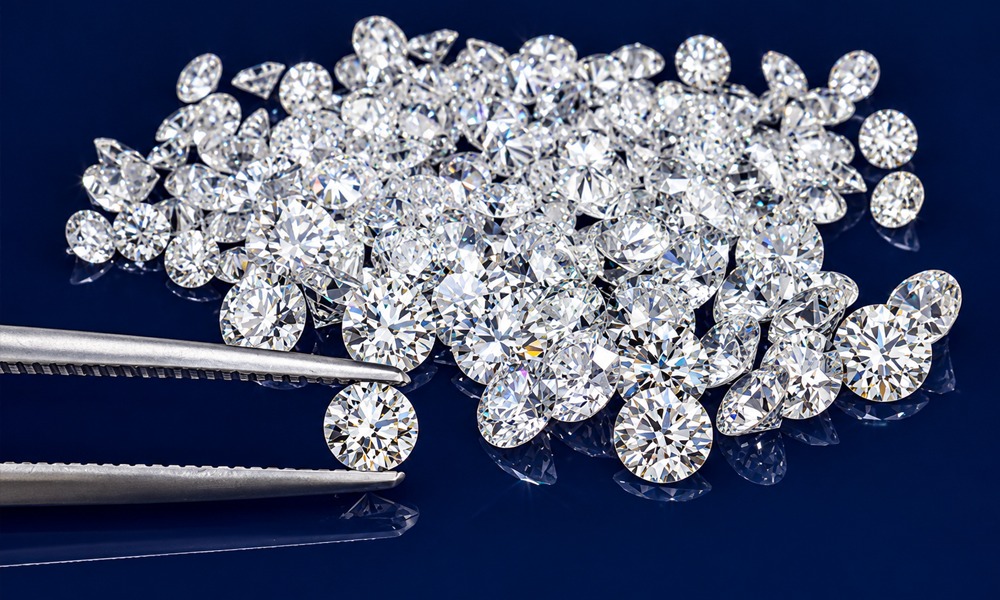
Diamond prices continued their upward trajectory in September—traditionally a slow month—driven by reduced production and rising demand. Round diamonds consistently outperformed fancy shapes.
US Market & Trading Sentiment: US retail demand strengthened, particularly for 1–2 ct (F–I, VS2–SI2) and 2+ ct stones. Lower-quality smaller goods remain under pressure from lab-grown diamond competition. Holidays in the US, Belgium, Israel, and India temporarily slowed regional trading.
Trade Show Trends (Hong Kong JGW): Show results were mixed: strong demand for finished jewelry and 2+ ct natural diamonds offset weak interest from Chinese buyers and sluggish movement in smaller, low-clarity goods.
Corporate & Supply Restructuring:
- De Beers is set to acquire Mountain Province’s 49% stake in the Gahcho Kué mine under a debt-restructuring agreement.
- Anglo American’s ongoing process to sell De Beers maintains broad market uncertainty, while recent De Beers rough sights indicate cautious buying.
- Petra Diamonds is evaluating strategic options, including potential asset sales.



Sky Gold & Diamonds To Acquire Purvi Gems In Strategic Move To Drive Growth, Achieve Scale and Product Diversification

ZOYA Rewrites The Language Of High Jewellery, Inspired By India’s Spices As Keepers Of Memory, With Anoushka Shankar As Its Muse

Diamond Price Gains In Sept Led By Small, High-Quality Stones

Pandora Unveils $150 Million Mega-Factory In Vietnam

GIVA Celebrates The Many Expressions Of Navratri With Its New Campaign, ‘Tyohar Anek, Feeling Ek’
Sky Gold & Diamonds To Acquire Purvi Gems In Strategic Move To Drive Growth, Achieve Scale and Product Diversification
-
 International News14 hours ago
Pandora Unveils $150 Million Mega-Factory In Vietnam
-
 BrandBuzz12 hours ago
GIVA Celebrates The Many Expressions Of Navratri With Its New Campaign, ‘Tyohar Anek, Feeling Ek’
-
 National News9 hours ago
Sky Gold & Diamonds To Acquire Purvi Gems In Strategic Move To Drive Growth, Achieve Scale and Product Diversification
-

 National News14 hours ago
Precious Metal Futures Show Renewed Momentum
