
Education
Natural and Lab-Grown Diamonds: Two Sparkling Paths Defining the Future of Luxury Jewellery”

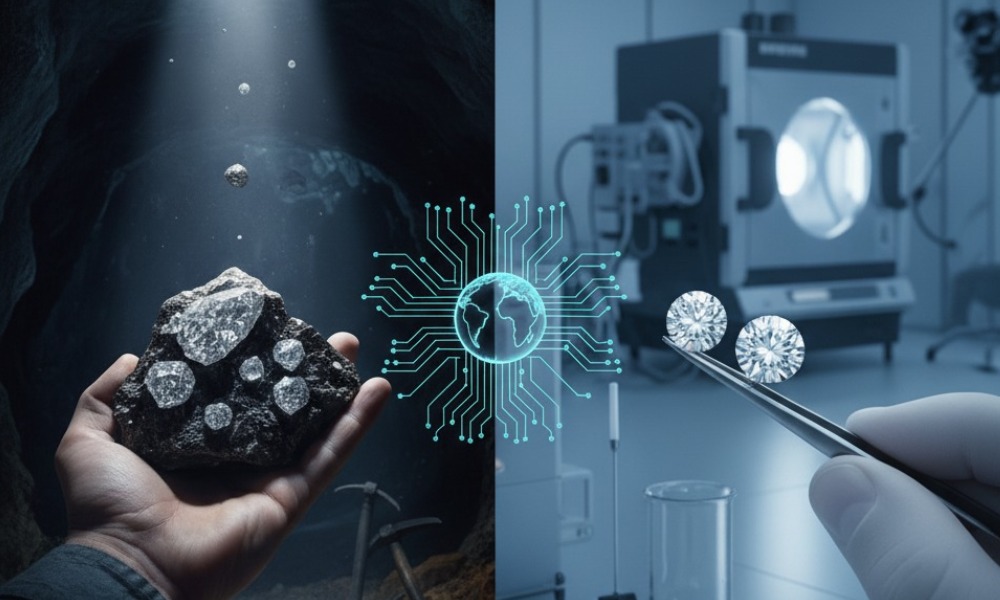
The diamond landscape is evolving faster than ever. As technology meets tradition, Natural and Lab-Grown Diamonds are redefining how consumers, retailers, and brands perceive luxury. Both share identical chemical and optical properties, yet their origins, pricing, sustainability factors, and emotional appeal set them apart.
With the global diamond market at a turning point, understanding these distinctions helps both jewellery buyers and industry professionals make informed decisions in 2025 and beyond.
From the Earth’s Depths to Cutting-Edge Labs
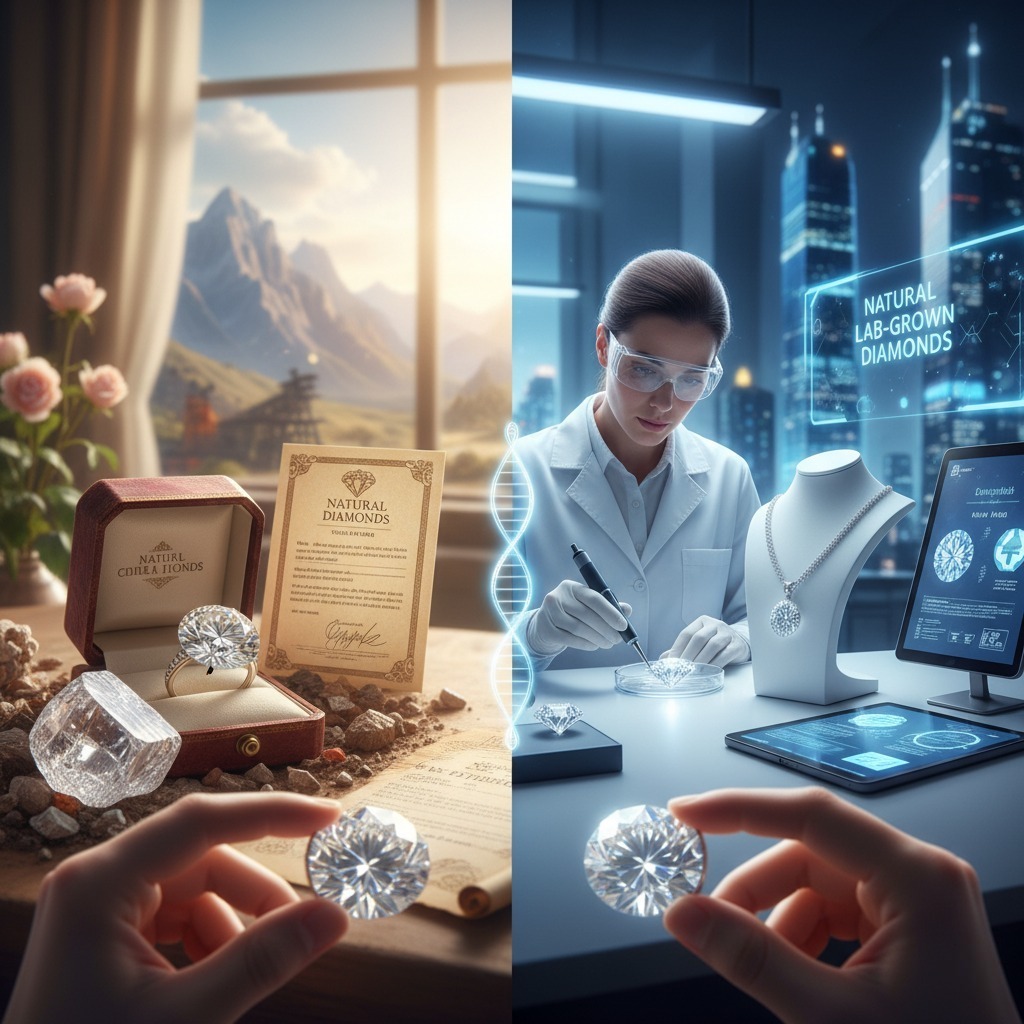
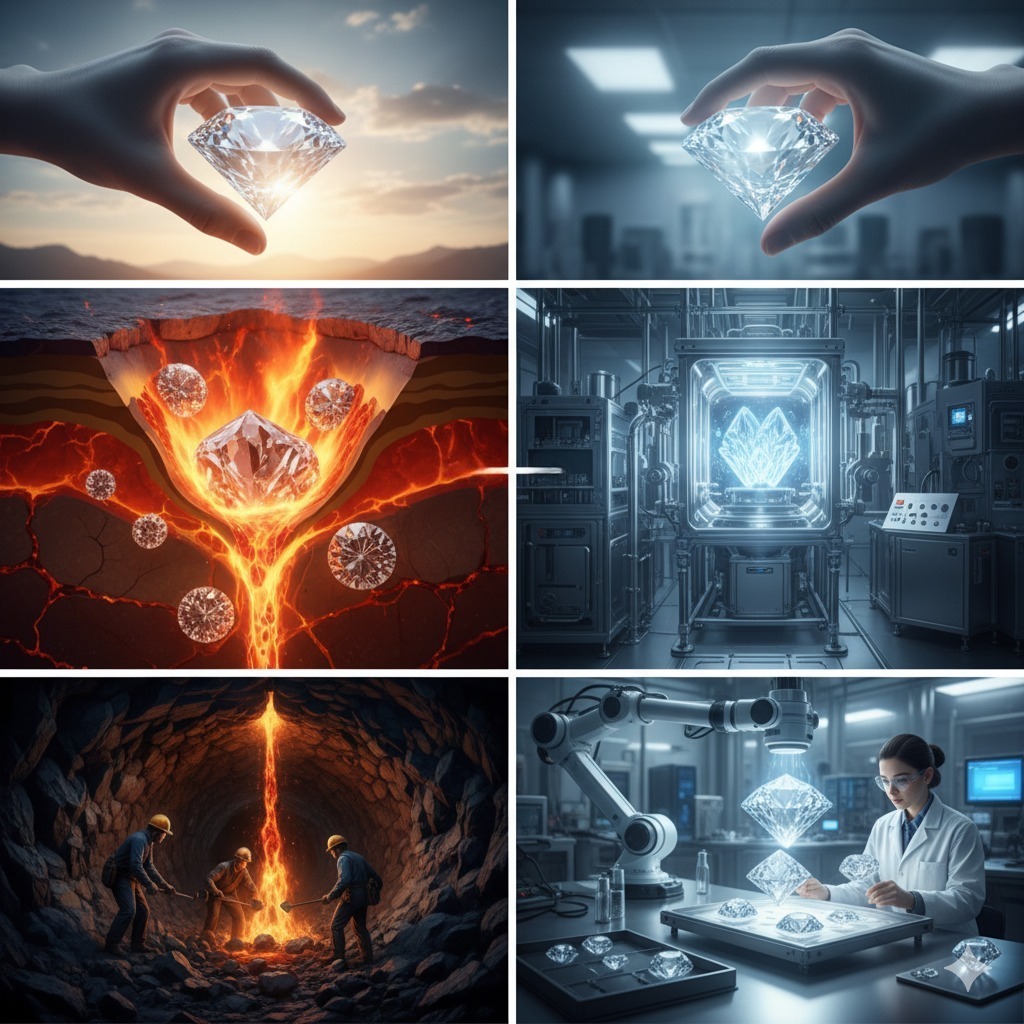
Natural diamonds are formed over billions of years deep within the Earth’s mantle under immense heat and pressure. They emerge through volcanic activity and are then mined, cut, and polished before reaching the consumer.
In contrast, lab-grown diamonds (LGDs) are created inside advanced laboratories using High Pressure High Temperature (HPHT) or Chemical Vapor Deposition (CVD) technology. These processes replicate natural conditions, producing diamonds that are chemically, physically, and optically identical to those mined from the Earth — but grown in a matter of weeks.
Appearance and Durability: Identical in Every Sparkle
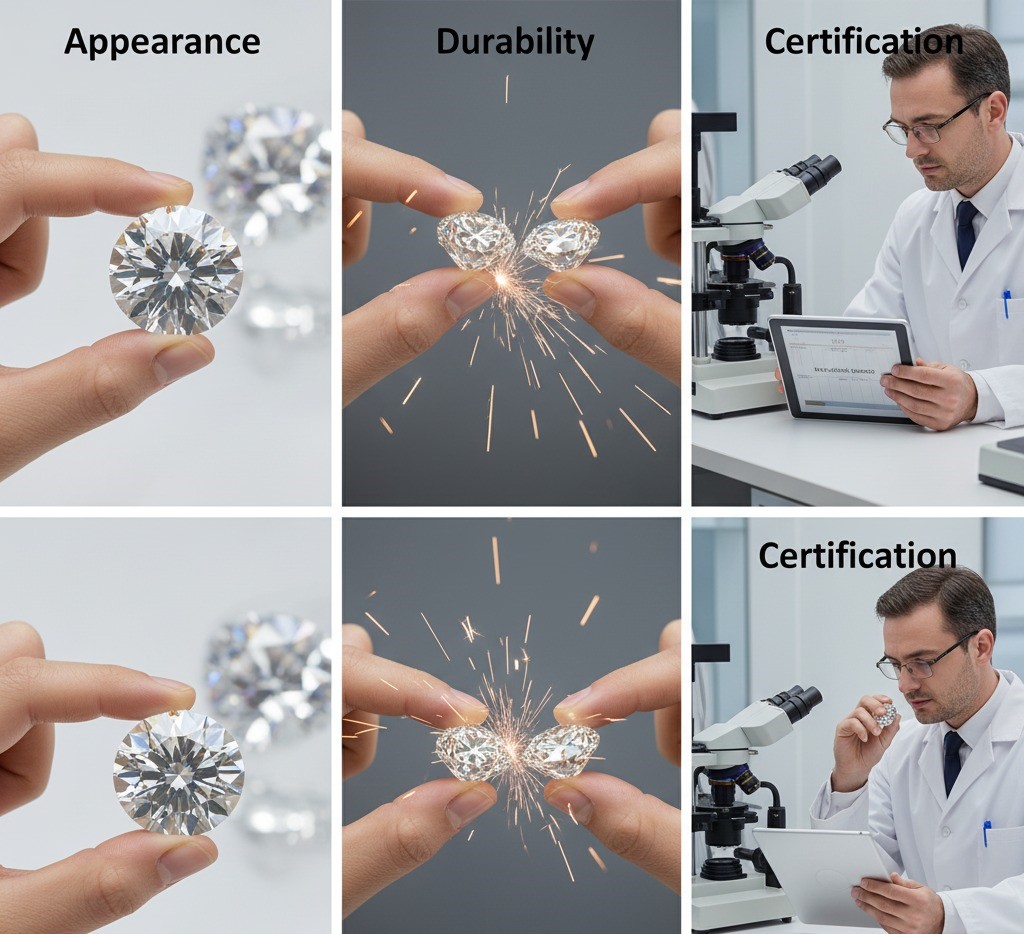
Both natural and lab-grown diamonds score a perfect 10 on the Mohs hardness scale, meaning they are equally durable, brilliant, and suitable for everyday wear. Even expert gemologists require specialized instruments to distinguish between the two.
Modern certification authorities such as GIA, IGI, and SGL ensure complete transparency by clearly mentioning whether a diamond is natural or lab-created on its grading report — maintaining consumer trust and industry integrity.
Pricing and Market Accessibility
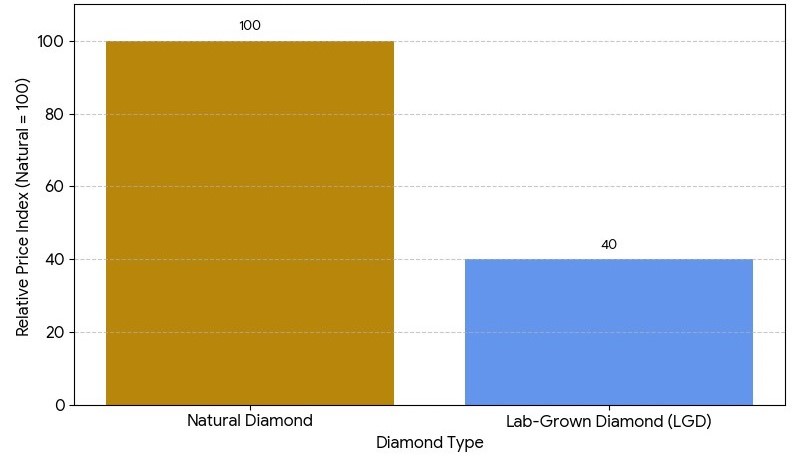
One of the most defining aspects of lab-grown diamonds is affordability. On average, they cost 50–80% less than natural diamonds of similar size and quality. This has opened the luxury jewellery market to younger, value-conscious consumers, particularly Millennials and Gen Z, who view LGDs as sustainable and budget-friendly choices.
However, natural diamonds continue to command premium value due to their rarity, heritage, and perceived emotional depth — making them a timeless investment for collectors and traditional buyers.
Sustainability and Ethics in Focus
In today’s conscious consumer era, sustainability and ethical sourcing play a critical role in purchase decisions. Lab-grown diamonds have gained popularity for their minimal environmental footprint and traceable production methods.
Meanwhile, leading natural diamond mining companies have advanced significantly in eco-restoration, carbon reduction, and community programs, ensuring responsible mining practices. As both sectors innovate, the diamond industry as a whole is moving toward greater transparency and social responsibility.
India’s Pivotal Role in the Diamond Evolution
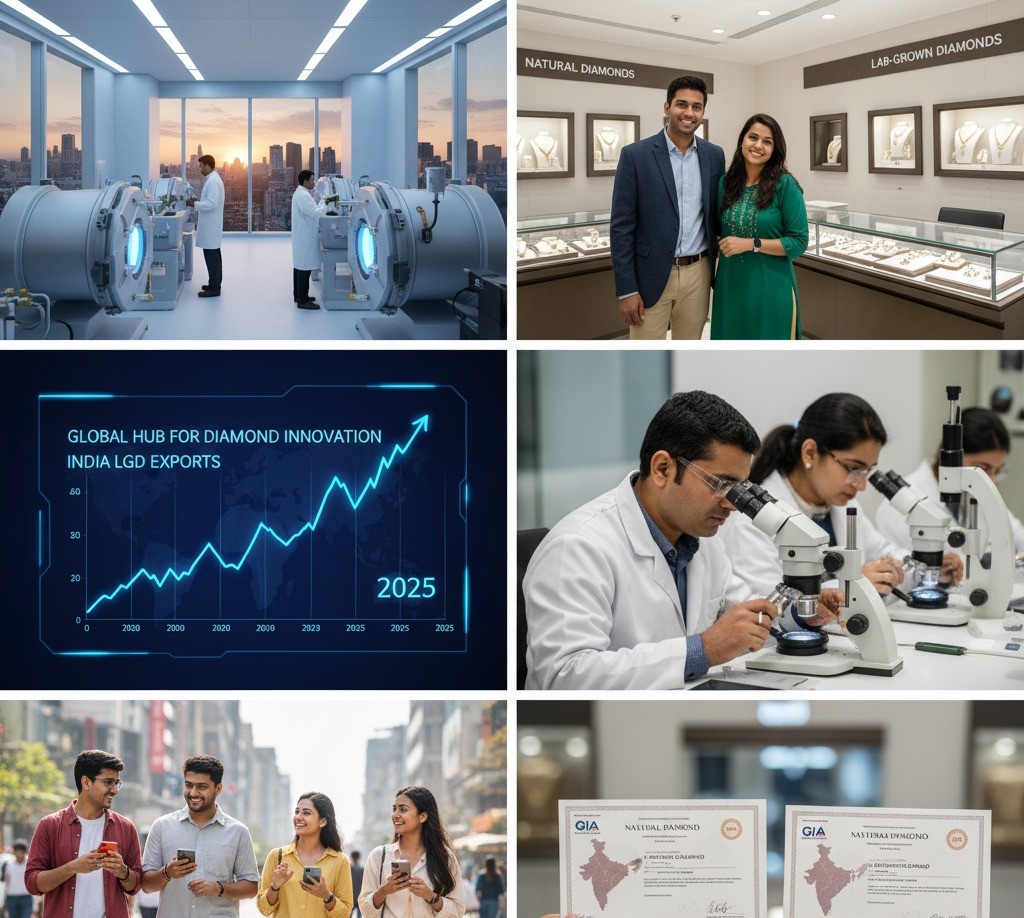
India, particularly Surat, has emerged as the global hub for lab-grown diamond production, driving exports and technological innovation. According to trade data, lab-grown diamond exports from India have surged sharply in 2025, solidifying the nation’s role as a world leader in both natural and synthetic diamond expertise.
Retailers across India are now offering dual counters — one for natural diamonds and another for lab-grown — to cater to the evolving preferences of modern consumers.
Changing Consumer Perceptions

The perception of lab-grown diamonds has shifted dramatically. Once viewed as “alternatives,” they are now celebrated as symbols of modern luxury and sustainability. However, natural diamonds continue to represent heritage, emotion, and exclusivity — values deeply rooted in the cultural and emotional fabric of jewellery buying.
The brilliance of a diamond, whether mined from the Earth or grown in a lab, remains eternal. The difference lies not in its sparkle, but in the story it tells — one of timeless beauty versus technological innovation.
As the jewellery industry embraces both, the future of diamonds is not about choosing one over the other — it’s about celebrating diversity, transparency, and conscious luxury.


Education
GIA To Open London Campus In August, Enrolling Students For Classes Beginning In August 2026
Campus in London’s Canary Wharf Will Place GIA Students In One Of The World’s Most Influential Centers For Luxury and Business.

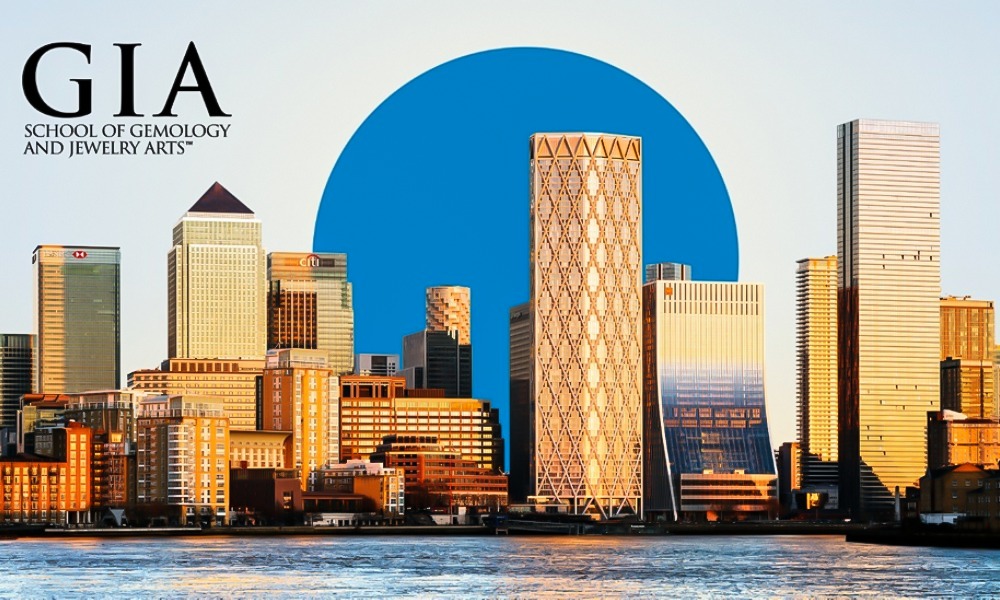
The soon-to-open GIA (Gemological Institute of America) campus in London is now enrolling students for classes beginning in August 2026. The new GIA School of Gemology and Jewelry Arts campus in London’s Canary Wharf will place GIA students in one of the world’s most influential centers for luxury and business.
The new London campus in the iconic and vibrant Canary Wharf district will offer increased capacity and, for the first time in London, the GIA Jewelry Design & Technology program. The campus will be conveniently located near transport, cultural and social attractions. Historically, enrolment at GIA’s London campus has included students from more than 50 countries with unique and diverse backgrounds.
GIA President and CEO, Pritesh Patel said:

“GIA takes great pride in providing premier education through our programs. Our new London campus will allow us to further advance our mission to ensure confidence in gems and jewelry by making education more globally accessible and offering the highest quality gem and jewelry education.”
GIA’s London school was established in 2002, providing education in gemmology and jewellery design. The school is accredited by the British Accreditation Council (BAC) and Independent Schools Inspectorate (ISI).



Sky Gold & Diamonds To Acquire Purvi Gems In Strategic Move To Drive Growth, Achieve Scale and Product Diversification

ZOYA Rewrites The Language Of High Jewellery, Inspired By India’s Spices As Keepers Of Memory, With Anoushka Shankar As Its Muse

Diamond Price Gains In Sept Led By Small, High-Quality Stones

Pandora Unveils $150 Million Mega-Factory In Vietnam

GIVA Celebrates The Many Expressions Of Navratri With Its New Campaign, ‘Tyohar Anek, Feeling Ek’
Sky Gold & Diamonds To Acquire Purvi Gems In Strategic Move To Drive Growth, Achieve Scale and Product Diversification
-
 International News11 hours ago
Pandora Unveils $150 Million Mega-Factory In Vietnam
-
 BrandBuzz10 hours ago
GIVA Celebrates The Many Expressions Of Navratri With Its New Campaign, ‘Tyohar Anek, Feeling Ek’
-
 National News7 hours ago
Sky Gold & Diamonds To Acquire Purvi Gems In Strategic Move To Drive Growth, Achieve Scale and Product Diversification
-

 National News11 hours ago
Precious Metal Futures Show Renewed Momentum
