
National News
Priority Jewels files DRHP with SEBI; IPO consists entirely of a fresh issue of 54 lakh


On April 30, 2025, Priority Jewels submitted its DRHP to the market regulator SEBI, intending to raise funds through an Initial Public Offering (IPO).
Priority Jewels Limited, a Mumbai-based gold and diamond jewellery company, has filed its Draft Red Herring Prospectus (DRHP) with SEBI for an Initial Public Offering (IPO) of up to 54,00,000 equity shares of face value ₹10 each.
The proceeds from the IPO will be used to fund working capital requirements, invest in technology upgradation, and expand manufacturing facilities. The company also proposed to utilise Rs. 75 crore of the net proceeds to repay part of its debt, which stands at a total of Rs. 147.1 crore.
According to the DRHP, the company reported a profit after tax of Rs. 7.14 crore on revenue of Rs.410.5 crore in FY24. The same year, the company reported domestic sales of Rs. 236.7 crore and export sales of Rs. 173.7 crore. The IPO consists entirely of a fresh issue of 54 lakh shares with no offer-for-sale component.
The proceeds raised from the fresh issue, out of which ₹75 crore will be utilized for the payment and repayment of the existing debt, while the remaining funds will be used for the company’s general corporate usage.
The retail quota is 35%, QIB is 50%, and HNI is 15% as per DRHP. The IPO to list on NSE and BSE.
Priority Jewels was founded in 2007 and is involved in the designing, manufacturing, and selling of a comprehensive range of lightweight, affordable, and diamond-studded gold and platinum fine jewellery. The company is engaged in supplying gold and platinum jewellery directly to independent jewellers and jewellery chains in India, such as CaratLane Trading, Kalyan Jewellers, Malabar Gold & Diamonds, Tribhovandas Bhimji Zaveri, and Senco Gold.
Priority Jewels was originally incorporated in 2007 as a private limited company and recently converted into a public company in February 2025. The promoters include Shailesh Sangani, Manisha Sangani, Tushar Mehta, Aditi Karan Motla, Aashna Sangani Parikh, and Priority Retail Ventures Pvt. Ltd.





National News
KISNA Diamond and Gold Jewellery Rolls Out Nationwide ‘Shop Sparkle Win’ Campaign Across 218 Cities, With 823 Vehicles Up For Grabs
The campaign will run through the first week of December 2026, with customers eligible to participate on diamond jewellery purchases worth ₹25,000 and gold jewellery purchases worth ₹75,000


KISNA KISNA Diamond and Gold Jewellery, one of India’s foremost jewellery brands, has rolled out its nationwide KISNA Shop Sparkle Win Campaign ’26 across 218 cities in 24 states, offering customers the opportunity to win 823 vehicles, comprising 247 cars and 576 scooters, during the festive season.
Customers receive one lucky draw coupon on diamond jewellery purchases worth Rs. 25,000 and one coupon on gold jewellery purchases worth Rs. 75,000. The campaign comprises three lucky draws and will continue through the first week of December 2026, culminating in the final draw for the car prizes.
Timed around one of the country’s key jewellery-buying periods, Shop Sparkle Win adds an element of excitement to festive purchases. Eligible coupon holders are invited to their respective KISNA stores, where winners are selected through a live ballot process, bringing the celebration closer to customers across markets.
Speaking on the campaign, Ghanshyam Dholakia, Founder & Managing Director, Hari Krishna Group, said,
“Festivals are moments when families come together to celebrate traditions, relationships and new beginnings, and jewellery has always been an integral part of these occasions. At KISNA, we have consistently looked at ways to make these moments more memorable and rewarding. Following the strong response to our previous Bumper Lucky Draw, KISNA Shop Sparkle Win Campaign ’26 takes this approach forward at a wider scale, enabling us to celebrate with customers across the country.”
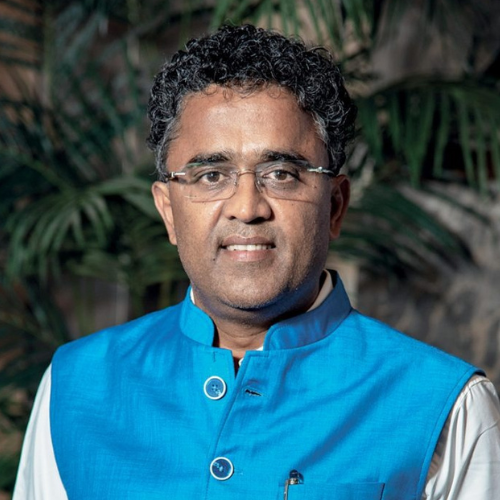
Parag Shah, CEO, KISNA Diamond & Gold Jewellery, added,
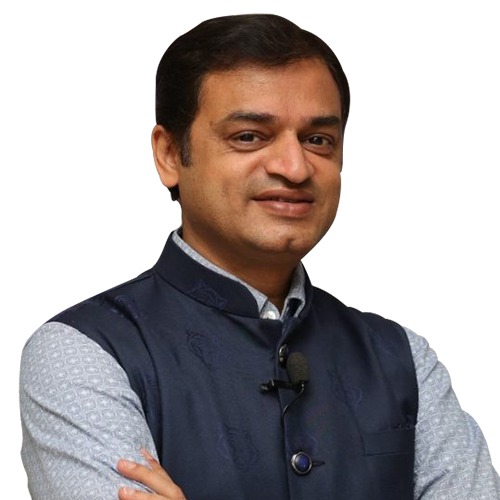
“Jewellery purchases today are shaped not only by design and craftsmanship, but also by the value, flexibility and assurance customers receive through the buying journey. Our proposition addresses these considerations through initiatives such as the Gold Rate Protection Scheme, old gold exchange options and our diamond jewellery buyback programme. Customers can avail up to 95% exchange value on diamond jewellery, including making charges, providing greater flexibility and long-term value beyond the initial purchase.”
The campaign is being amplified through BTL activations, social media and digital campaigns across markets. Building on KISNA’s earlier customer reward initiatives, including the Bumper Lucky Draw and #Shop_Sparkle_Win reflects the brand’s continued focus on strengthening its retail proposition and creating more engaging jewellery-buying experiences across India.



KISNA Diamond and Gold Jewellery Rolls Out Nationwide ‘Shop Sparkle Win’ Campaign Across 218 Cities, With 823 Vehicles Up For Grabs

Nemichand Bamalwa Creates Nav Avatar Necklace For Maa Durga At Indian Museum’s Durga Puja

Kangana Ranaut Unveils PNG Jewellers New Showroom In Ayodhya~

GGJS 2026 Concludes With High-Volume Trade and Strategic Focus On Next-Gen Leadership
Nemichand Bamalwa Creates Nav Avatar Necklace For Maa Durga At Indian Museum’s Durga Puja
KISNA Diamond and Gold Jewellery Rolls Out Nationwide ‘Shop Sparkle Win’ Campaign Across 218 Cities, With 823 Vehicles Up For Grabs
-
 National News11 hours ago
GGJS 2026 Concludes With High-Volume Trade and Strategic Focus On Next-Gen Leadership
-
 National News7 hours ago
Nemichand Bamalwa Creates Nav Avatar Necklace For Maa Durga At Indian Museum’s Durga Puja
-
 National News7 hours ago
KISNA Diamond and Gold Jewellery Rolls Out Nationwide ‘Shop Sparkle Win’ Campaign Across 218 Cities, With 823 Vehicles Up For Grabs
-

 National News16 hours ago
MCX Gold Silver Futures See Dip
