
International News
Precious Metals Under Pressure Amid Ceasefire Collapse and Dollar Strength AUGMONT BULLION REPORT
Increased Inflation Risks, Further Central Bank Interest Rate Increases — Both Of Negative Factors For Precious Metals

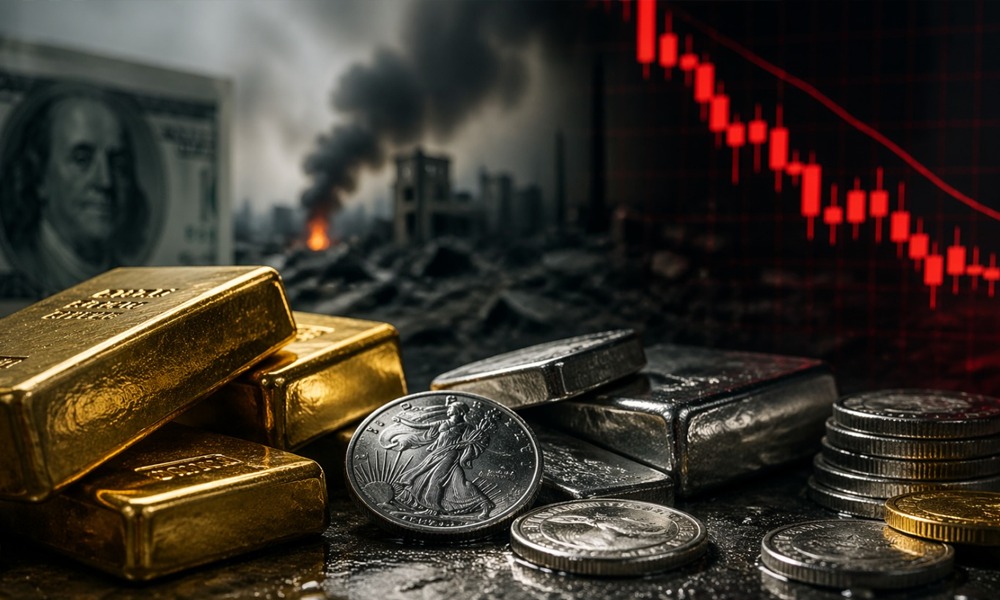
Gold and silver prices weakened at the start of the week as the U.S.-Iran ceasefire, which markets had welcomed, began to unravel. The U.S. seized an Iranian cargo ship attempting to break through its blockade, prompting Iran to threaten retaliation. This raised serious doubts about whether the two-day ceasefire could hold at all.
Specifically, President Trump confirmed that the U.S. Navy intercepted an Iranian-flagged vessel in the Gulf of Oman after it ignored stop orders near the Strait of Hormuz. Iran, in turn, targeted ships in the region and reasserted control over the Strait, arguing the U.S. blockade violated ceasefire terms. While Trump signaled room for diplomatic progress ahead of talks in Pakistan, Iran ruled out participating in a second negotiation round before the Tuesday deadline.
The extended conflict has disrupted energy supply significantly, increasing inflation risks and raising expectations of further central bank interest rate increases — both of which are negative factors for precious metals.
The U.S. dollar strengthened to a one-week high against major currencies on Monday, though gains faded as U.S.-Iran tensions resurfaced and Middle East peace prospects dimmed, prompting investors to seek safer assets.
On monetary policy, market expectations for a U.S. Federal Reserve rate cut by year-end dropped sharply to 21%, from 40% just weeks earlier. This shift followed stronger-than-expected inflation data and a resilient labor market, pushing 10-year Treasury yields past 4.5%. The Fed kept rates steady at 3.50–3.75%, with virtually no probability of a cut in April.
The Indian rupee stabilised near 93 per dollar after briefly touching a three-week low. The Reserve Bank of India intervened by directing lenders to reduce large arbitrage positions in onshore and offshore markets, which lowered dollar demand and helped stabilise the currency.
Global gold ETFs attracted 21 tonnes of net inflows in the first few days of April alone — a level the World Gold Council described as broad-based and regionally diverse. Notably, these inflows occurred during a stable market environment, not a crisis, indicating a deliberate shift toward physical gold-backed funds at the portfolio level.
Chinese gold ETFs attracted $8.1 billion year-to-date in net inflows, a stark contrast to over $2.0 billion in outflows from U.S. gold ETFs over the same period. Indian gold ETFs also drew continued interest, supported by seasonal buying ahead of Akshaya Tritiya.
Central bank gold buying remained strong in Q1 2026, with emerging market nations — primarily China and India — collectively adding over 200 tonnes year-to-date, according to World Gold Council estimates. Previously inactive buyers such as Malaysia and South Korea resumed gold reserve accumulation, signaling broader institutional confidence in gold. However, the Bank of Russia was an outlier, recording 9 tonnes in sales during January.
China’s silver imports reached 206.76 tonnes in the first two months of 2026 — the highest in eight years — tightening global supply and supporting prices. The Silver Institute and Metals Focus have flagged a sixth consecutive year of structural supply deficit, with 762 million troy ounces drawn from existing stockpiles since 2021, increasing the risk of a physical supply squeeze.
However, industrial demand for silver in 2026 is forecast to decline 3% to 640 million ounces, partly offsetting supply concerns. Additionally, India’s temporary halt on silver imports raised concerns about near-term domestic supply disruptions.
Gold continues to face resistance at $4,850 (~Rs. 1,55,000). A sustained move above this level could push prices toward $5,000 (~Rs. 1,60,000). Key support remains at $4,600 (~Rs. 1,51,000).
Silver has met its prior target of $82 (~Rs. 2,58,000). Prices are expected to consolidate in the near term before advancing toward $84 (~Rs. 2,65,000) and subsequently $90 (~Rs. 2,80,000).


International News
US Holiday Shopping Expected To Top $1 Trillion For The First Time: NRF
While Overall Buying Power Remains High, Ongoing Inflation and Rising Household Costs Mean Some Families Will Have To Watch Their Spending More Carefully Than Others
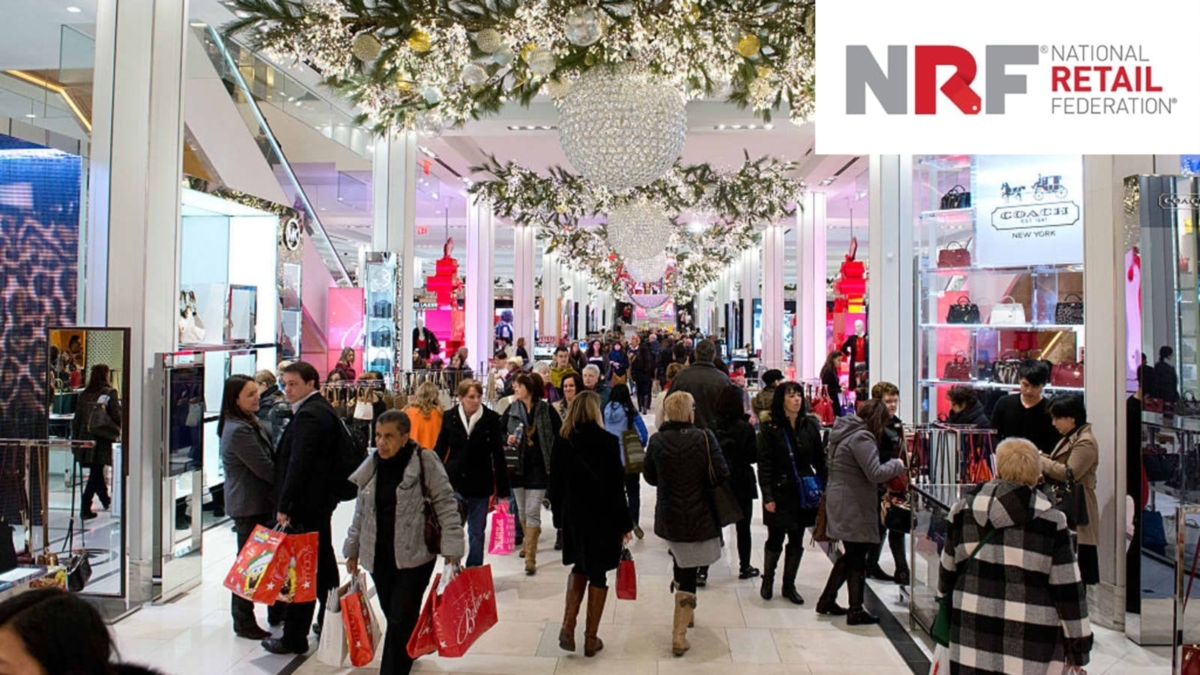
The National Retail Federation (NRF) predicts Americans will spend $1.01 trillion on holiday shopping in November and December. That is a 4.2% jump from $972 billion last year.
NRF said its forecast was based on economic modeling that incorporates consumer spending, employment, wages and historical retail sales data. It excludes automobile, gasoline and restaurant sales
Extra Hiring: To handle the surge in shoppers, stores plan to hire 325,000 to 375,000 temporary holiday workers.
Mixed Budget Impact: Higher gas prices and inflation could still strain some family budgets, affecting low- and high-income shoppers differently.
Retailers expect a strong shopping season because people continue to make holiday spending a priority.
Store owners are ready to attract shoppers by offering competitive prices, deals, and choices for every budget.
While overall buying power remains high, ongoing inflation and rising household costs mean some families will have to watch their spending more carefully than others.



Belgian Consul General H. E. Mr. Pierre Stverlynck Graces BDB Annual Day

Limelight Lab Grown Diamonds Crosses 100 Stores Milestone This Dussehra: Targets 200 In 2027

Joyalukkas Opens Its 2nd Bengaluru Showroom in Jayanagar

US Holiday Shopping Expected To Top $1 Trillion For The First Time: NRF
Belgian Consul General H. E. Mr. Pierre Stverlynck Graces BDB Annual Day
Limelight Lab Grown Diamonds Crosses 100 Stores Milestone This Dussehra: Targets 200 In 2027
-
 International News22 hours ago
US Holiday Shopping Expected To Top $1 Trillion For The First Time: NRF
-
 National News16 hours ago
Belgian Consul General H. E. Mr. Pierre Stverlynck Graces BDB Annual Day
-
 National News17 hours ago
Limelight Lab Grown Diamonds Crosses 100 Stores Milestone This Dussehra: Targets 200 In 2027
-
 New Premises17 hours ago
Joyalukkas Opens Its 2nd Bengaluru Showroom in Jayanagar
