National News
PGI’s new global brand proposition “Metal of Truth”, underscores platinum as symbol of authenticity and enduring value

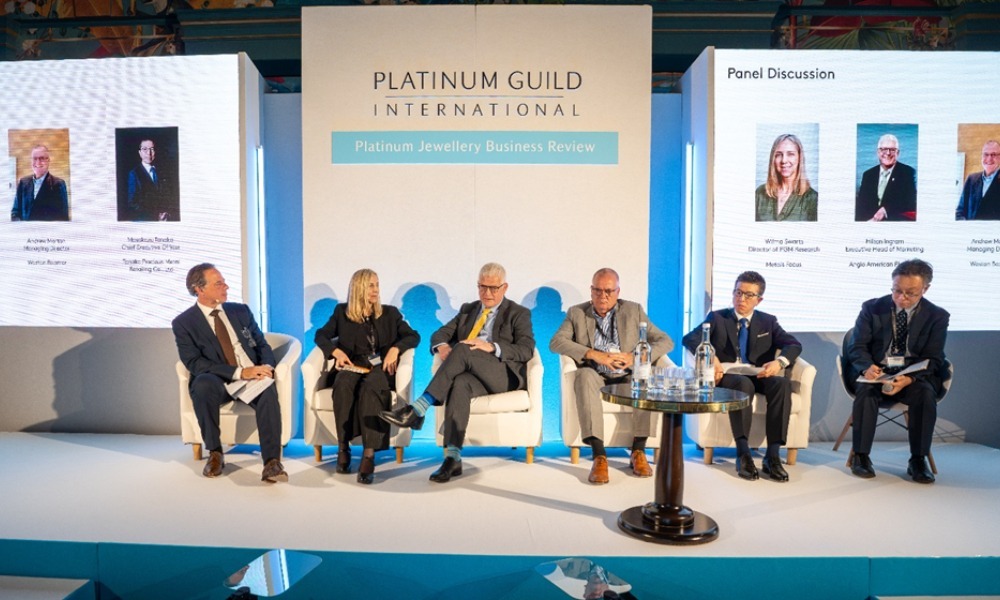
Platinum Guild International (PGI) successfully hosted the 2025 Platinum Jewellery Business Review (PJBR) on May 21, 2025, in London. Themed “Platinum Jewellery – Ready to Shine in a New Era of Demand”, the event convened leading stakeholders from across the platinum value chain—including producers, industry experts, investors, analysts, and marketing professionals—to assess market trends and explore new growth opportunities for platinum in the global jewellery sector.
Tim Schlick, CEO of PGI, opened the event by presenting a comprehensive review of the global platinum jewellery market. He highlighted the emerging opportunity for platinum to gain market share from white gold, particularly in light of favourable price differentials.
Schlick also unveiled PGI’s new global brand proposition for platinum jewellery: “Metal of Truth.” This positioning reaffirms platinum as a symbol of authenticity, rarity, and lasting value, and aims to strengthen its emotional resonance with consumers during life’s most meaningful moments. As a naturally white metal with a high purity level (typically 95%), platinum continues to distinguish itself as the ultimate material for fine jewellery.
Industry Panel Discussion
Tim Schlick moderated a panel discussion featuring:
- Wilma Swarts, Director of PGM Research, Metals Focus
- Hilton Ingram, Executive Head of Marketing, Valterra Platinum
- Andrew Morton, Managing Director, Weston Beamor
- Masakazu Tanaka, CEO, Tanaka Precious Metal Retailing Co., Ltd.
The panel explored how platinum jewellery could capitalise on the widening price gap with gold, particularly by targeting substitution opportunities in white gold segments (14-karat and above). Insights were shared from various points of the value chain, underscoring collaborative efforts required to drive growth.
Market Outlook and Strategic Insights
Zhenzhen Liu, Director of Global Corporate Marketing at PGI, presented an analysis of 2024 market performance and the 2025 outlook. Liu outlined how PGI’s strategic, consumer-led initiatives are stimulating demand and reshaping perceptions of platinum across core markets.
Regional Market Highlights
India and the Middle East
- Despite disruptions due to national elections in Q2 2024, platinum jewellery fabrication in India rose by 14% year-on-year.
- The Men of Platinum brand, including the MS Dhoni signature collection, has emerged as the top retail sales contributor across PGI brands.
- PGI successfully piloted branded jewellery initiatives in the UAE, targeting Indian expatriates, other South Asians, and local Emiratis.
- Double-digit growth is forecast for both India and the UAE in 2025, led by increasing demand for men’s jewellery.
United States
- Retail sales of platinum jewellery increased 7% year-on-year, driven by a strategic shift from white gold to platinum, supported by price advantages and trade engagement.
- The rise of lab-grown diamonds has incentivised retailers to adopt platinum to increase average transaction values and margins.
- PGI USA introduced Inoveo Platinum, a new alloy developed by Valterra Platinum and Alloyed, which enhances manufacturing efficiency. Over 30 manufacturers have adopted the alloy since its launch in June 2024.
Japan
- Substitution from gold to platinum intensified, with gold fabrication declining by 7%, while platinum fabrication increased 11%.
- Retail ounce demand rose 6%, driven by asset-based jewellery, bridal rings, and inbound tourism.
- Platinum’s share of white metal jewellery increased to 28%, continuing to outpace white gold (down to 19%), with further gains expected in 2025.
China
- Platinum jewellery fabrication rebounded by 10% year-on-year in Q4 2024, accelerating to 50% growth in Q1 2025.
- The market benefited from rising gold prices, prompting manufacturers to pivot towards platinum.
- New dedicated platinum wholesale showrooms opened in Shenzhen, and several gold manufacturers converted production lines to platinum.
- PGI’s industry partnerships and interventions are expected to help sustain this upward momentum in 2025.







National News
NPCI Defers Rollout Of UPI Merchant Discount Rate Until After Diwali
Given Typical Retail Margins Of 2%–6% On Bullion and Plain Gold Jewellery, Absorbing A 0.4% Fee—Or Up To ₹300 Per Large Transaction—Would Have Directly Eaten Into Festive Profitability. The Deferral Keeps Bottom Lines Protected Through Dhanteras and Diwali.

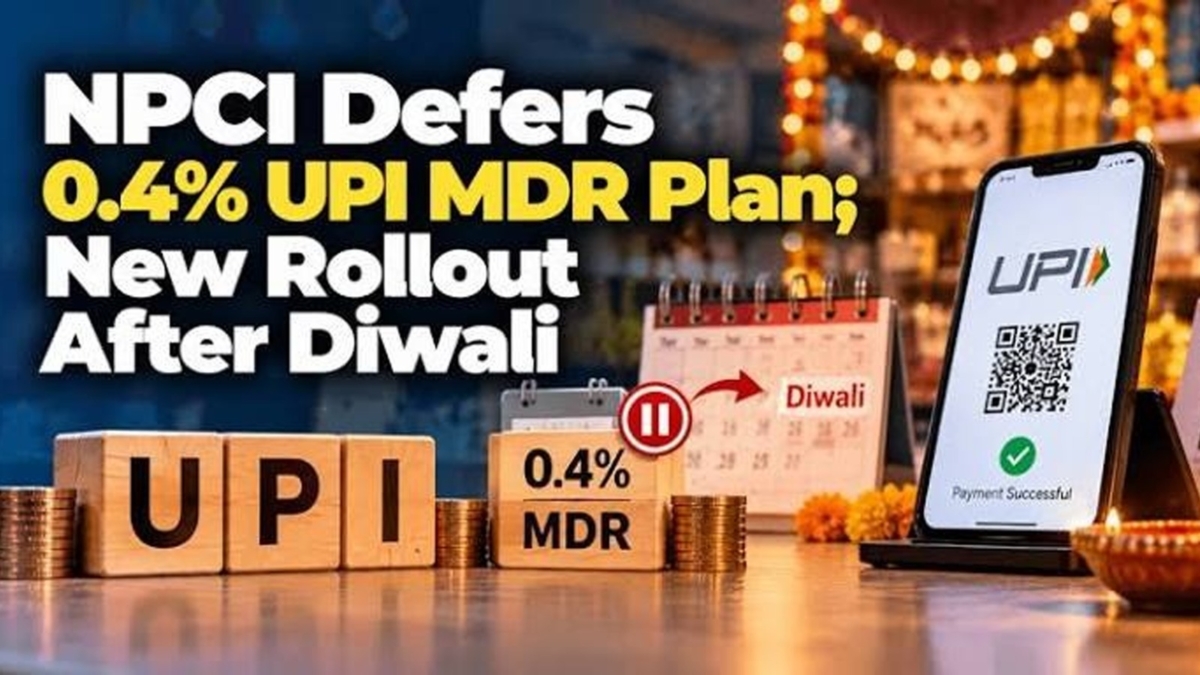
The National Payments Corporation of India’s (NPCI) UPI and Services Steering Committee has deferred the implementation of Merchant Discount Rates (MDR) on select person-to-merchant (P2M) UPI transactions until immediately after Diwali.
The move aims to protect consumer sentiment and keep operational costs steady for businesses during the peak festive shopping season. A specific implementation date will be announced separately.
Key Highlights
- Festive Relief for Retail: The deferment ensures merchants face no additional payment processing costs during peak festive demand, helping avoid disruptions to consumer spending.
- The Approved MDR Structure:
- Applies only to eligible P2M transactions above Rs 2,000 at a rate of 0.4%.
- Capped at Rs 300 for high-value transactions of Rs 75,000 and above.
- Everyday low-value payments and small merchants remain fully exempt, preserving zero-cost digital transactions for general consumers.
- Timeline Adjustment: Originally notified on September 15 for an October 15 rollout, the framework will now take effect post-Diwali, giving banks, payment aggregators, and merchants additional runway to align their systems and communicate terms clearly.
Jewellery purchase values routinely exceed the Rs 2,000 threshold and frequently touch or surpass the Rs 75,000 cap. Given typical retail margins of 2%–6% on bullion and plain gold jewellery, absorbing a 0.4% fee—or up to Rs 300 per large transaction—would have directly eaten into festive profitability. The deferral keeps bottom lines protected through Dhanteras and Diwali.
Introducing transaction fees just as footfall surges would have forced retailers to decide whether to absorb the cost or pass it on to buyers (via checkout surcharges or selective discounts). Avoiding this choice prevents awkward billing counter negotiations and cart abandonment during rush hours.



NPCI Defers Rollout Of UPI Merchant Discount Rate Until After Diwali

Mutual Engagement Ring-Wearing On The Rise, Insurance Lagging: Jewelers Mutual Group 2026 Engagement Ring Study

GJEPC Partners With The Leela To Offer Exclusive Hospitality Benefits To Members
-
 National News18 hours ago
GJEPC Partners With The Leela To Offer Exclusive Hospitality Benefits To Members
-

 JB Insights18 hours ago
CIBIL Score Plays A Key Role In Festive Financing
-

 DiamondBuzz18 hours ago
Richemont and Signet Jewelers Could Join Global Diamond Consortium In Bid For De Beers
-

 National News18 hours ago
MCX Gold, Silver Surge Ahead On US Inflation Data, Crude Price Dip