

National News
NITI Aayog and GJEPC Collaborate on enhancement of competitiveness and export potential

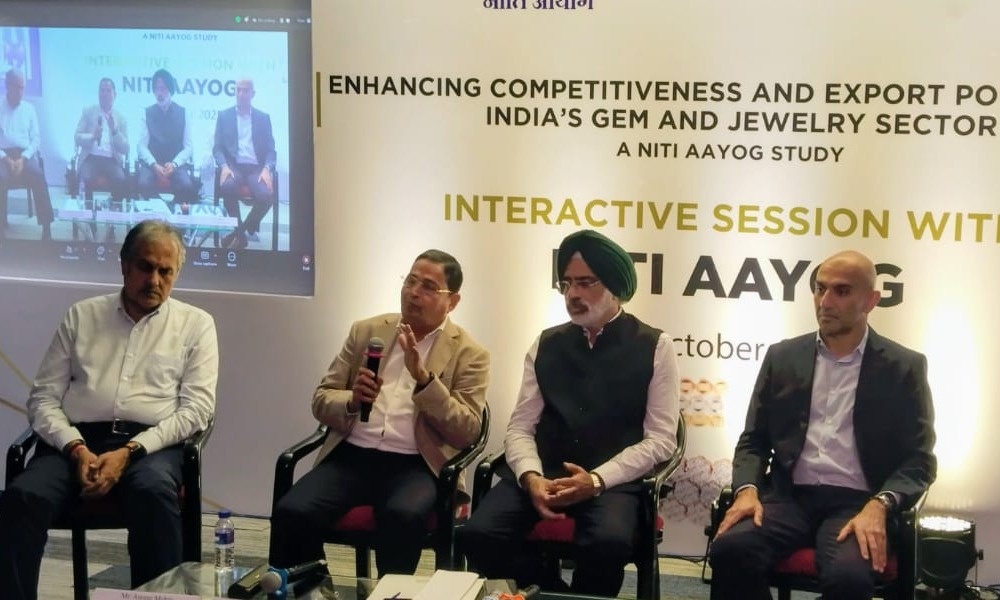
India’s gems and jewellery sector, a key contributor to the nation’s exports, received a strong policy impetus on October 7, 2025, as NITI Aayog joined hands with the Gem & Jewellery Export Promotion Council (GJEPC) to initiate a comprehensive study aimed at strengthening the industry’s global competitiveness and export resilience.
The hybrid consultation session, held at the Bharat Diamond Bourse (BDB), brought together senior policymakers and industry leaders. Among the key participants were Sanjeet Singh, Senior Advisor, NITI Aayog; Kirit Bhansali, Chairman, GJEPC; Shaunak Parikh, Vice Chairman, GJEPC; Anoop Mehta, Convener, Audit & Finance Sub-committee; and Sabyasachi Ray, Executive Director, GJEPC. The session served as a collaborative platform to exchange views on the challenges and opportunities shaping the sector’s export performance.
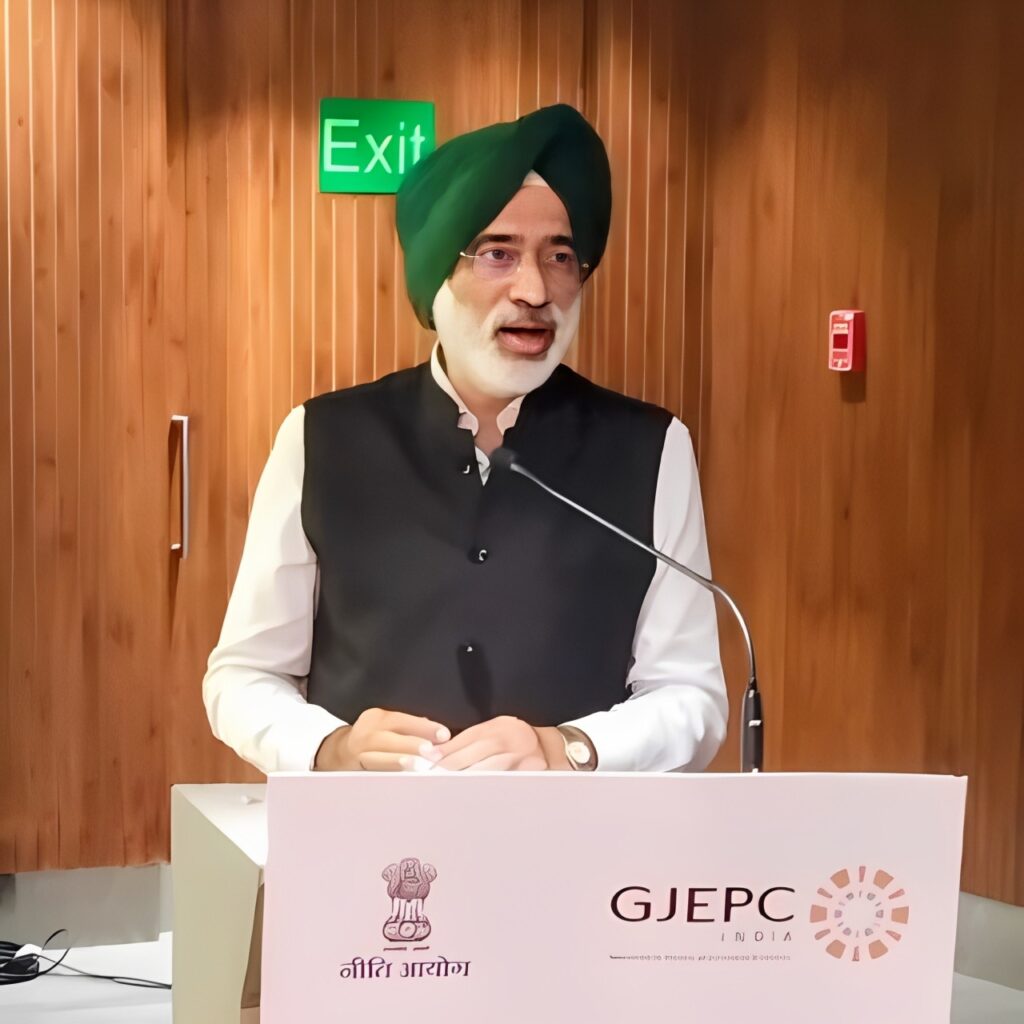
Sanjeet Singh underscored the need to tackle structural bottlenecks that affect India’s competitiveness. “Given this sector’s export potential, our study will focus on regulatory and taxation challenges that impede growth,” he said, emphasizing the goal of aligning India’s trade framework with global best practices. Singh also called for industry-led recommendations to enhance “Brand India” visibility in international markets.
Highlighting diversification as a strategic priority, Singh referenced GJEPC’s successful SAJEX initiative in Saudi Arabia, encouraging the sector to explore emerging markets in the Middle East, Africa, and Latin America. He invited suggestions to identify non-tariff barriers and policy gaps that constrain market access.
The upcoming NITI Aayog–GJEPC study aims to develop a data-driven roadmap to reinforce India’s export position across the gems and jewellery value chain. By addressing taxation anomalies, easing compliance frameworks, and fostering branding initiatives, the study is expected to inform policy reforms that could catalyse India’s ambition to become a global hub for value-added jewellery exports.









India’s appetite for borrowing against gold is reshaping the country’s credit landscape. Outstanding gold-backed loans have surged 128% from a year earlier, crossing Rs.4 lakh crore ($48 billion) for the first time, according to data from the Reserve Bank of India. As of Jan. 31, loans secured by gold jewellery stood at Rs.4,00,517 crore, marking one of the fastest expansions in retail credit in recent years.
The boom in gold loans has helped propel overall non-food bank credit growth to 14.4% year-on-year. Personal loans now account for 34.5% of total bank lending, outpacing other segments and underscoring a broader shift toward consumer-driven credit expansion
Gold loans alone contributed roughly 9% of incremental bank credit during the period. Between January 2024 and January 2026, outstanding gold-backed credit rose by nearly Rs.3.1 lakh crore—an increase of about 338% over two years—more than quadrupling the size of the portfolio.
Two factors are driving the surge. First, gold prices have climbed roughly 152% over the past two years, increasing the collateral value of household holdings. Second, regulatory guidance requiring banks to classify loans secured by gold explicitly as gold loans has sharpened reporting and accelerated balance-sheet growth in the segment.
The trend highlights a distinctive feature of India’s financial system: households’ vast stock of physical gold, long viewed primarily as a store of wealth, is increasingly being mobilized as collateral for formal credit.
While personal lending and credit to nonbank financial companies within the services sector continue to expand rapidly, industrial credit remains uneven. Loans to micro, small and medium enterprises are growing steadily, but borrowing by large corporations has stayed relatively muted.
Since March 21, 2025, banks have added Rs.21.8 lakh crore to their non-food loan books, translating into 12% growth for the financial year to date. Yet it is gold—rather than factories or infrastructure—that is emerging as one of the most dynamic engines of India’s current credit cycle.


-
 National News4 days ago
IIBS-11: Navigating the ‘New Gold Rush’ in a fragmenting global economy
-

 International News4 days ago
Oroarezzo 2026, with Italian Exhibition Group, Manufacturing Explores New Markets
-

 International News4 days ago
Gemfields nets $53m in Bangkok ruby auction
-

 New Premises4 days ago
Limelight Diamonds Unveils Exclusive Visakhapatnam Store in the Presence of Union Minister of Civil Aviation Shri Kinjarapu Ram Mohan Naidu
