
National News
More Indian Women Are Choosing Diamonds For Themselves As Natural Diamond Ownership Rises To 15%
~ Rising Incomes and Greater Financial Independence Are Driving A New Generation Of Indian Women To Invest In Diamonds For Themselves ~

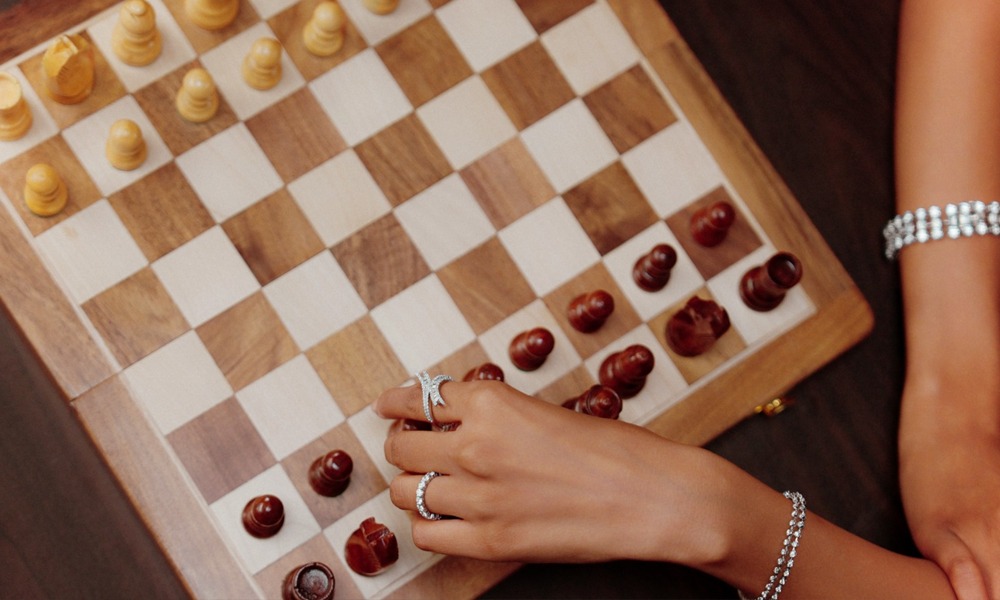
The domestic natural diamond jewellery market continues to witness strong growth momentum, with India emerging as the world’s second-largest diamond jewellery market. India now contributes 12% of global diamond jewellery demand, up from 10% in 2019, surpassing both China and Japan.
According to a recent study, ownership of natural diamond jewellery among Indian women has increased from 11% in 2022 to 15% in 2025, reflecting rising aspiration, accessibility, and desirability for natural diamonds in India. The category’s resilience is being driven significantly by younger consumers, with Gen Z and Millennials now accounting for 86% of India’s total natural diamond market value. This demographic increasingly views natural diamonds as symbols of individuality, authenticity, and emotional meaning, with consumers spending an average of INR 198,000 per piece. The market is further projected to grow at a strong 12% CAGR, reaching INR 1,520 Billion by 2030. (Source – De Beers India Diamond Acquisition Study 2025)
This upward trajectory is further validated by the recent performance of leading jewellery retailers, who reported that the natural diamond category is consistently outpacing overall market growth. Chairman Saurabh Gadgil of P N Gadgil Jewellers recently noted that their diamond segment grew by a remarkable 61% year-on-year, significantly higher than their gold segment’s growth. Similarly, Malabar Gold & Diamonds reported a massive global sales surge during the 2026 Akshaya Tritiya period, where Chairman M.P. Ahammed highlighted a 45% growth in studded jewellery specifically. These results confirm that Indian consumers are redefining the category as an essential expression of individuality and lasting value in an era of fleeting trends.
This growth comes even as the broader jewellery sector navigates macroeconomic headwinds. Rajesh Rokde, Chairman of the All India Gem and Jewellery Domestic Council, recently clarified that the government’s advisory urging citizens to temporarily pause gold purchases is a macroeconomic measure aimed at easing import pressures and not a reflection of any domestic supply concern. He stressed that there is no shortage of gold in the country and the domestic market remains stable.
India’s growing affinity towards diamonds is also reflected in evolving consumer preferences. A recent Deloitte study found that diamonds are second only to gold in jewellery material preference among 20–25-year-olds, with 58% of respondents in the age group choosing diamonds. This signals a significant cultural shift where natural diamonds are increasingly becoming part of everyday luxury and self-expression for younger Indian consumers.
Over the past few years, the Natural Diamond Council (NDC) has played a key role in driving these conversations and strengthening the relevance of natural diamonds among Indian consumers through education-led campaigns, cultural storytelling, regional media outreach, retailer collaborations, and trend-led lifestyle narratives. From positioning natural diamonds as symbols of modern luxury and self-expression to driving conversations around authenticity, rarity, and emotional value, NDC has consistently worked towards evolving the category beyond traditional occasion-led purchases.
Richa Singh, Managing Director of the Natural Diamond Council, said:
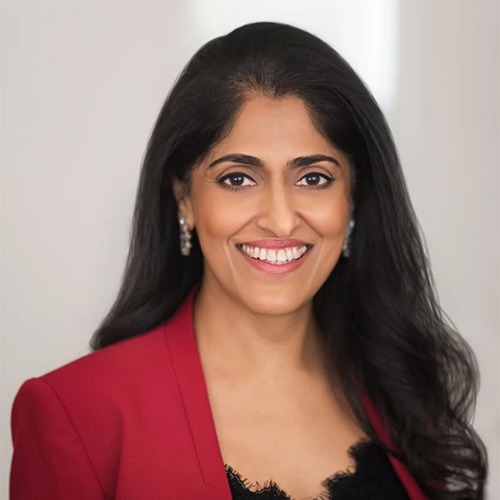
“Diamonds have never struggled for glamour — the red carpets, the fashion moments — and we embrace all of it. But the most powerful thing about this year’s results isn’t glamorous at all, it’s a number. Natural diamond ownership among Indian women has risen from 11% to 15% in just three years. A four-point gain at national scale, in that short a window, is a clear statement of belief and one our entire trade community built together.
Indian consumers are choosing the natural diamond because it is real, rare, and carries emotional and heirloom value that endures long after a trend has passed. For every retailer, craftsperson, and partner who helped move this market, these numbers are hard proof that the category’s growth is real, measurable, and ours to build on.”
As India’s personal disposable income is projected to grow by 11% annually, the natural diamond is uniquely positioned to remain the definitive standard for luxury. As the industry moves forward, the focus remains on maintaining a consistent annual acquisition rate and a growing consumer base that views natural diamonds as an essential, high-value asset in an evolving retail landscape.



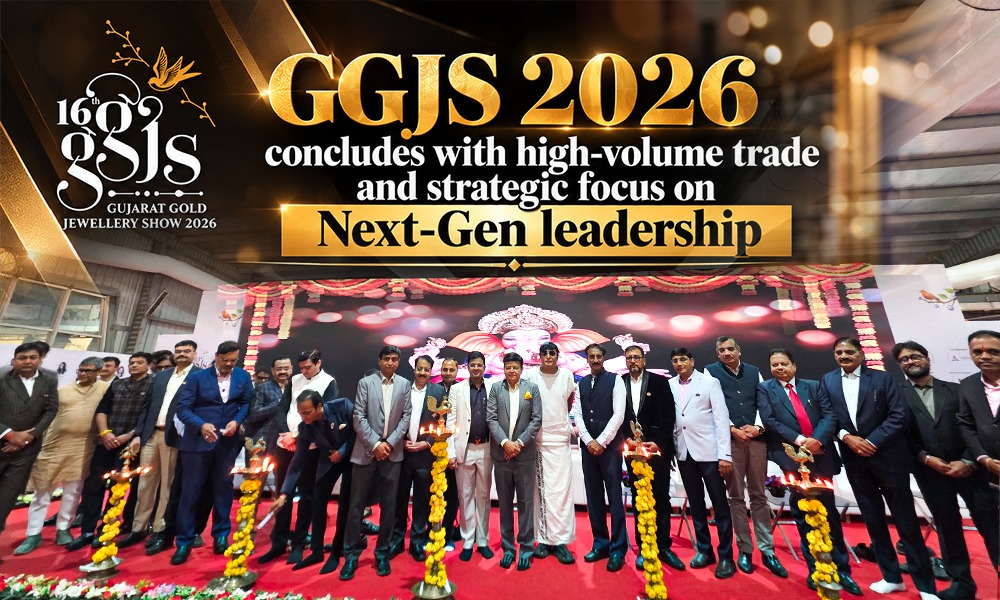
– The 16th edition of the Gujarat Gold Jewellery Show (GGJS 2026), jointly organized by GGJS and the Gold Ornaments Jewellers Wholesalers Association (GOWJA), successfully concluded its three-day B2B trade exhibition at the Helipad Exhibition Centre in Gandhinagar. The landmark event reinforced its position as a premier national platform for business networking, product sourcing, design innovation, and trade collaboration.
Under the leadership of GOWJA President Hiteshbhai Soni, Vice President Akshaybhai Mehta, and the organizing committee, GGJS 2026 recorded unprecedented trade visitor footfall, substantial bulk order placements, and strong participation from leading jewellers, manufacturers, wholesalers, and retail delegations across India.
Jointly organized by GGJS (Gujarat Gold Jewellery Show) & GOWJA (Gold Ornaments Jewellers Wholesalers Association), the B2B exhibition is creating a strong platform for business networking, product sourcing, market opportunities and industry collaboration, with a special focus on the participation and aspirations of the young jeweller’s community.
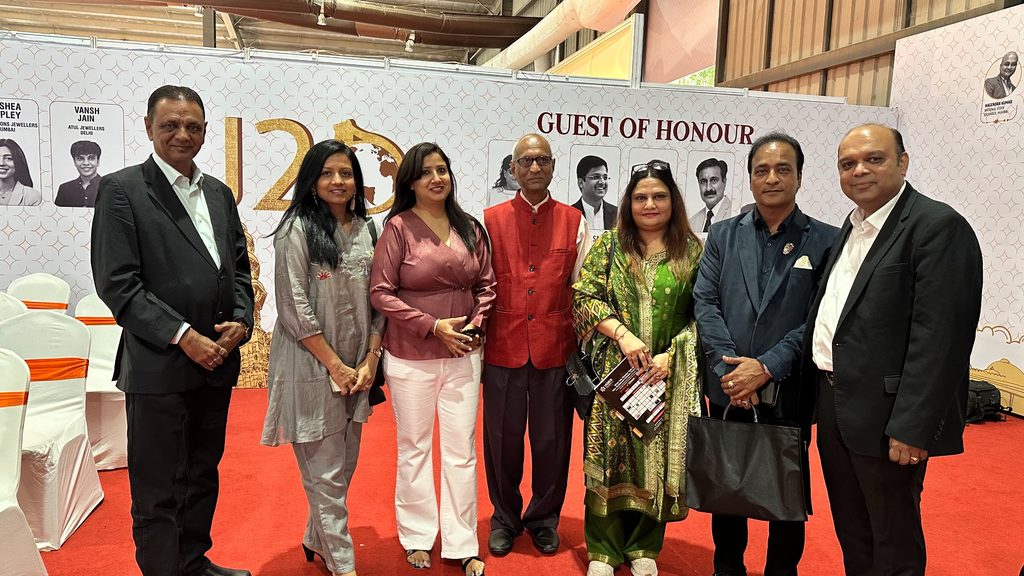
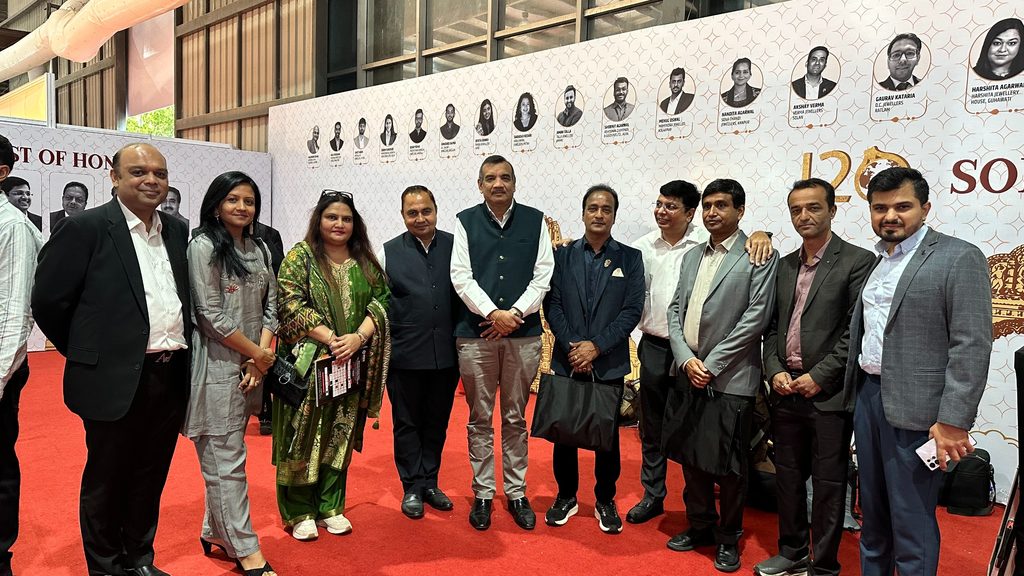
The grand inauguration was graced by Guests of Honour boCHE (Dr. Boby Chemmanur), Chemmanur International Jewellers, A.B.S. Sanjjay, AVR Swarna Mahal Jewellers, Pramod Dugar, India Gem & Jewellery Creation, , Anil Kataria, DP Abhushan Ltd, Ajay Talla, Talla Jewellers, along with Special Guests Surendra Mehta, National Secretary-IBJA, Ankit Vaidya, Founder & CEO- Jewel Partner, Dharmendra Soni,Past President -GOWJA, Shampatlal Jain, President -Shree Manekchowk Sona Chandi Dagina Jewellers Association and dignitaries and leaders from the GJ industry.Present at the inauguration were GOWJA President Hitesh Soni and Vice President Akshay Mehta and GOWJA committee members.
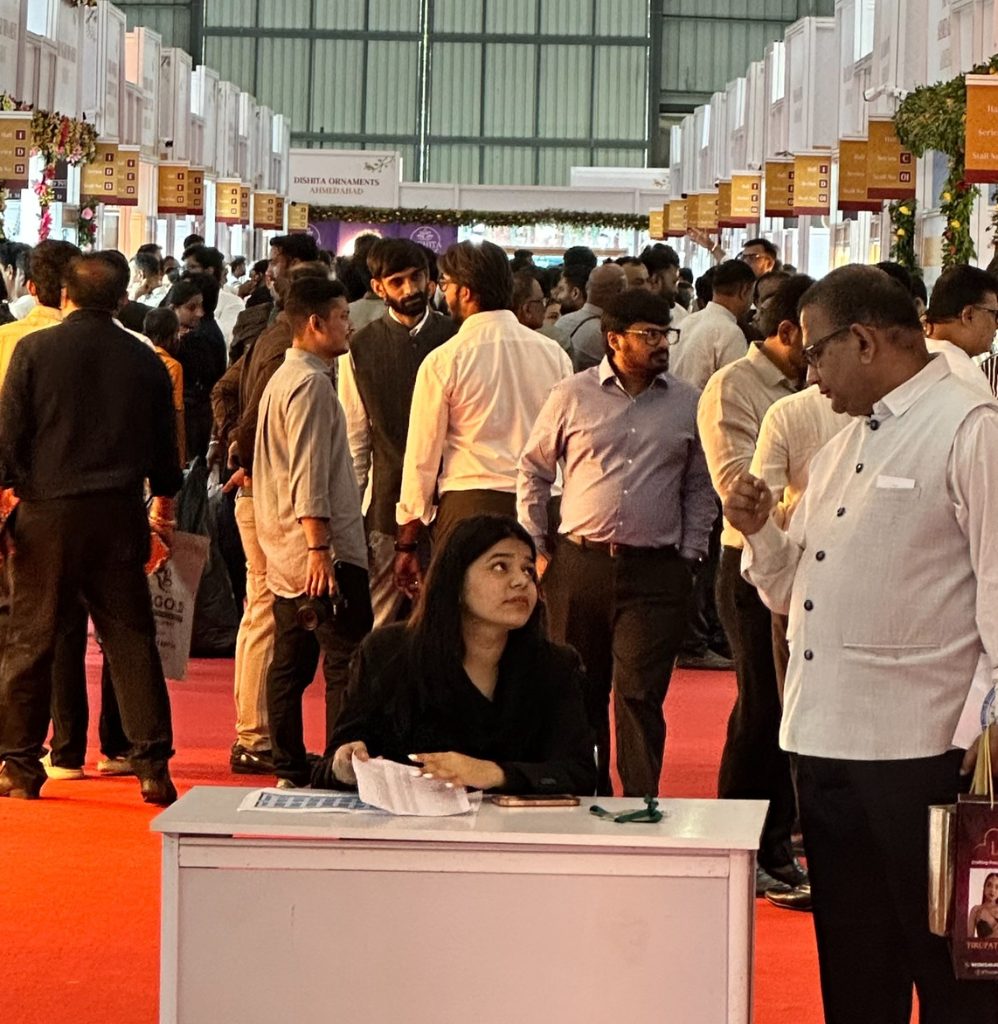
Following the opening ceremony, Day 1 featured the Young Jewellers Summit (J20), highlighting the next generation of industry leaders. Designed to empower young entrepreneurs looking to scale emerging ventures or modernize legacy businesses, the summit presented actionable insights into modern retail strategies, technology integration, and sustainable growth.
The summit featured two flagship panel discussions:
- The New Rules of Jewellery Growth – Focused on modern scaling strategies, digital expansion, and evolving consumer preferences.
- Building a Business That Can Outlive You – Explored legacy preservation, professionalization, and tech-driven business transformation.
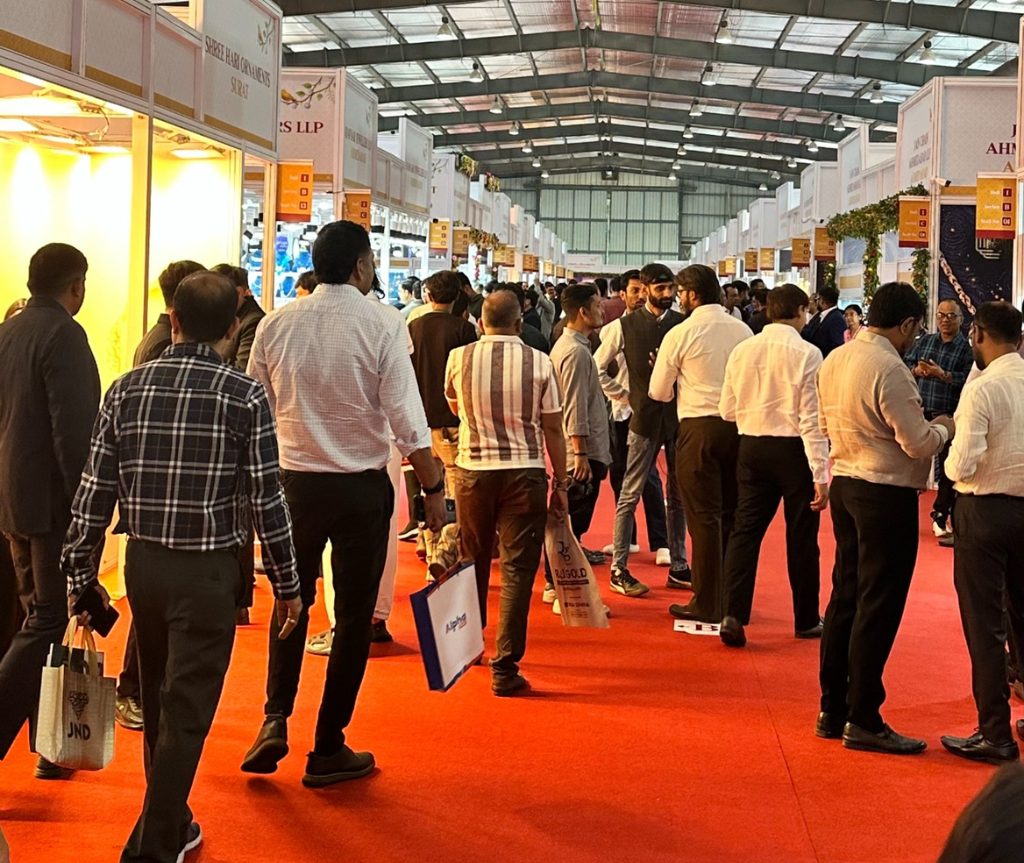
Day 2 saw accelerated commercial momentum as thousands of regional wholesalers, elite retail buyers, and trade delegates visited the exhibition halls. Exhibitors presented an extensive range of collections, spanning cutting-edge craftsmanship, lightweight daily wear, and heavy bridal jewellery.
Key highlights of Day 2 included:
- High-Volume B2B Engagement: Nationwide buyers placed substantial bulk orders, reflecting strong retail demand rebound ahead of the upcoming festive and wedding seasons.
- Operational Excellence: Streamlined visitor hospitality and floor management facilitated efficient business negotiations and trade deals.
- Knowledge Sharing: Industry seminars and walkthroughs addressed BIS hallmarking compliance, sustainable trade practices, and the integration of AI-driven inventory management tools.
GGJS 2026 wrapped up on a high note, delivering measurable business value to exhibitors and attendees alike. The event bridged classic craftsmanship with modern enterprise management, serving as an incubator for long-term partnerships and market growth. From empowering young entrepreneurs at the J20 Summit to facilitating high-value commercial transactions, this edition has demonstrated the resilience, dynamism, and future-readiness of the Indian jewellery sector.



GGJS 2026 Concludes With High-Volume Trade and Strategic Focus On Next-Gen Leadership

The Solitaire Festival Of India Concludes; Bumper Prize Winner At Ranka Jewellers Wins XUV 7XO

GJEPC Promotes Key Trade Events At IGI Dubai Event
-
 National News3 days ago
P N Gadgil Jewellers Limited – Quarterly Update Q2FY27
-
 National News44 minutes ago
GGJS 2026 Concludes With High-Volume Trade and Strategic Focus On Next-Gen Leadership
-

 National News5 hours ago
MCX Gold Silver Futures See Dip
-
 National News5 hours ago
ABARAN Commemorates The 125th Birth Anniversary Of Founder Shri Burde Sadananda Kamath With Special Gold Coin Launch
