
International News
Middle East conflict halts India-UAE diamond trade
Industry leaders warn of prolonged caution in markets, with potential shifts to alternative routes like Hong Kong under scrutiny.


Iran has launched over 1,300 drones and 229 missiles at the UAE since February 28, 2026, in retaliation for US and Israeli strikes that killed over 1,000 people, including Iran’s Supreme Leader Ali Khamenei. UAE air defenses intercepted most threats, but the attacks caused 3 deaths and 112 injuries, with debris damaging civilian areas.
Trade Dependencies
The UAE supplies more than two-thirds of India’s rough diamond imports, making it the dominant source for the country’s diamond processing industry. India, in turn, provides over 90% of the UAE’s polished diamond imports, underscoring the bilateral trade’s critical role in global diamond flows.
Logistics Breakdown
Nearly all flights between India and the UAE stand cancelled amid the conflict, except limited repatriation services, crippling air cargo routes. Daily diamond export parcels—typically 400 to 500 from India to UAE—have stopped entirely due to airspace closures and flight suspensions.
Industry Impact
Exports and imports from the Middle East have ground to a standstill, with no logistics available to move goods,
The Dubai Multi Commodities Centre (DMCC), hub of the Dubai Diamond Exchange, shifted to remote operations and declined further comment on disruptions.
Broader Implications
The Middle East accounts for nearly a quarter of India’s $30 billion annual gems and jewellery exports, amplifying the economic fallout for Mumbai’s diamond trade ecosystem. Industry leaders warn of prolonged caution in markets, with potential shifts to alternative routes like Hong Kong under scrutiny.


International News
Fluorescent Diamonds: GIA to Introduce Clearer Guidance
According to GIA, around 25% to 35% of all diamonds show some level of fluorescence. Greater transparency about this significant segment of the market could help improve confidence among both consumers and the jewellery trade.

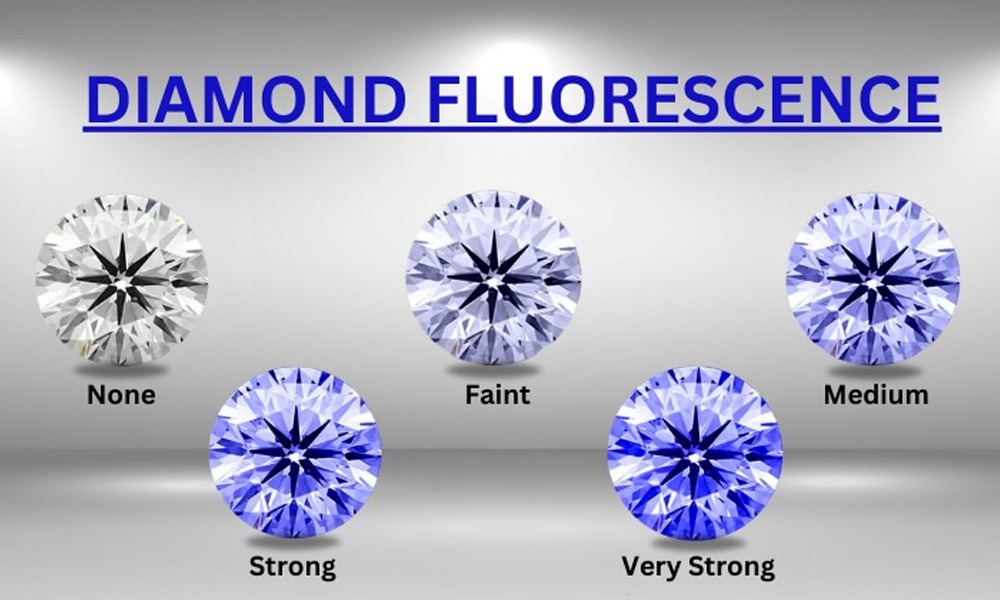
Later this year, the Gemological Institute of America (GIA) will introduce new wording in its diamond grading reports to reduce confusion about fluorescent diamonds. The update, expected in the fourth quarter, is one of the most important steps taken by a grading laboratory to explain this feature more clearly to both the jewellery trade and consumers.
Rapaport Intelligence Report explores what this change could mean for the diamond market. Fluorescence has had a long and complicated history. In the past, fluorescent diamonds often sold at premium prices. However, attitudes changed during the diamond boom of the 1970s and again after a grading controversy in South Korea in the early 1990s. Although later gemological research helped improve confidence in fluorescent diamonds, many buyers still view them negatively, and they often sell at discounted prices.
The report also looks at how these discounts have changed over the past six years through both strong and weak market conditions. In addition, the report explains two key questions: how fluorescence affects a diamond’s appearance and whether it influences its color grade. It also considers whether GIA’s new report comments could change how buyers view fluorescent diamonds.
The report revisits a long-debated issue—does fluorescence really affect a diamond’s beauty, or are today’s concerns mainly based on old perceptions that continue to influence buying decisions?
According to GIA, around 25% to 35% of all diamonds show some level of fluorescence. Greater transparency about this significant segment of the market could help improve confidence among both consumers and the jewellery trade.



Reimagining Luxury Jewellery Retail: How Technology Is Empowering The New-Age Indian Consumer

Regal Jewellers appoints Vijay Sethupathi and Simran as brand ambassadors for Tamil Nadu

Fluorescent Diamonds: GIA to Introduce Clearer Guidance
Regal Jewellers appoints Vijay Sethupathi and Simran as brand ambassadors for Tamil Nadu
Reimagining Luxury Jewellery Retail: How Technology Is Empowering The New-Age Indian Consumer
Fluorescent Diamonds: GIA to Introduce Clearer Guidance
-
 GlamBuzz17 hours ago
Regal Jewellers appoints Vijay Sethupathi and Simran as brand ambassadors for Tamil Nadu
-
 JB Insights25 minutes ago
Reimagining Luxury Jewellery Retail: How Technology Is Empowering The New-Age Indian Consumer
-
 International News17 hours ago
Fluorescent Diamonds: GIA to Introduce Clearer Guidance
-
 National News18 hours ago
India’s Consul General to Dubai, Shri V V Reddy, Interacts with BDB Committee
