
International News
Middle East Conflict Halts Global Diamond Trade in Dubai and Israel
Market instability and airspace closures force major rough-diamond tenders to postpone as trading hubs enter emergency mode.


A sharp escalation in the conflict between Iran and Israel has sent shockwaves through the global gemstone industry, effectively paralyzing trade in the world’s most vital diamond corridors. Following a weekend of military strikes that impacted both Israel and the United Arab Emirates, major auction houses and exchanges have moved to suspend operations indefinitely.

Dubai Tenders Postponed as Airspace Closes
The city of Dubai, which serves as the primary transit point for over 70% of the world’s rough diamonds, has seen its trading calendar dismantled by regional instability.
- Tender Delays: Leading rough-diamond firms Koin International and Trans-Atlantic Gem Sales (TAGS) have officially postponed their upcoming March tenders. Koin, originally scheduled for March 3–5, has pushed its sale to March 9–11, citing flight cancellations and safety concerns.
- DMCC Emergency Protocols: The Dubai Multi Commodities Centre (DMCC) has transitioned to remote working as it monitors the security situation. Global traders from hubs like Surat and Mumbai have reportedly cancelled all travel to the emirate, fearing a prolonged “supply crunch” for the polishing industry.
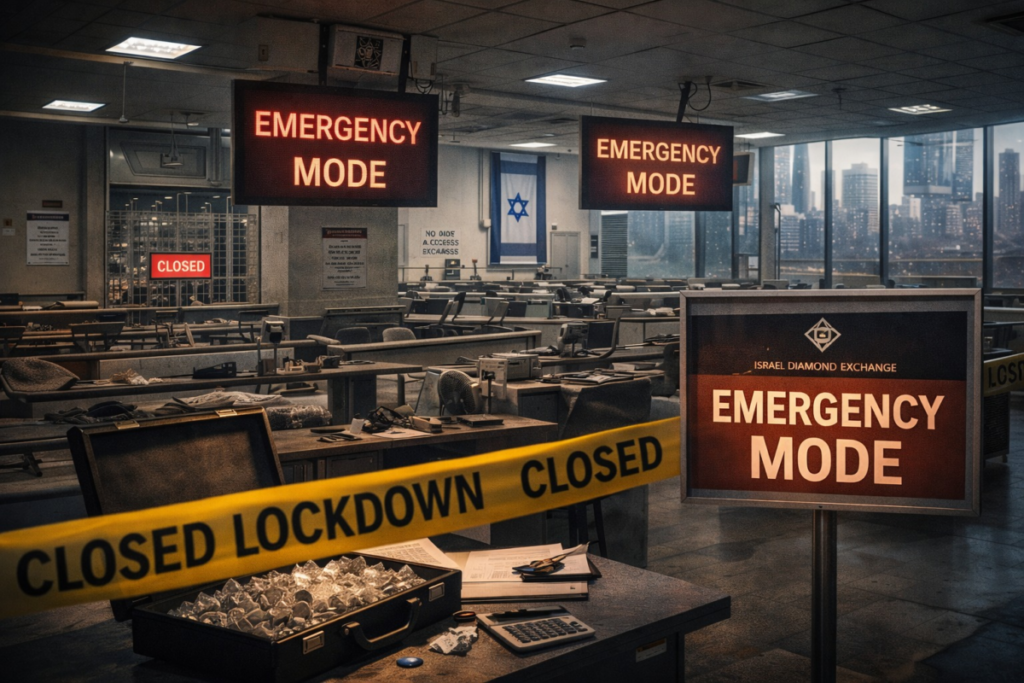
Israel Diamond Exchange Switches to ‘Emergency Mode’
In Israel, the Israel Diamond Exchange (IDE) in Ramat Gan has implemented strict emergency measures.
- Trading Floor Closure: The bustling central trading floor has been shut down to ensure the safety of members and international visitors.
- Restricted Access: The exchange complex is operating on a “critical-only” basis, with all non-essential services halted until further notice.
Broader Economic Impact
The disruption comes at a time of extreme volatility for precious commodities. Spot gold prices have already surged by nearly 2%, hitting four-week highs as investors flee to safe-haven assets. With UAE airspace restricted and maritime routes through the Strait of Hormuz under threat, the $50 billion annual flow of gems and gold is facing its most severe logistical hurdle in decades.


International News
Consortium Led By Former De Beers CEO Gareth Penny Selected As The Preferred Bidder To Acquire De Beers
Botswana is expected to play a pivotal role in the transaction. The country, together with Namibia, Angola and other shareholders, already owns a 15% stake in De Beers

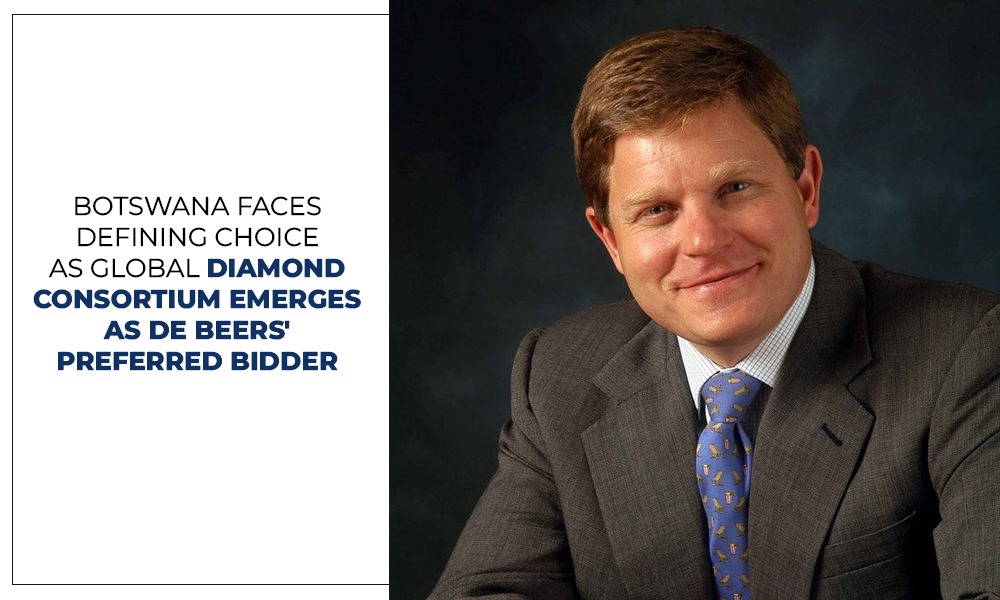
A consortium headed by former De Beers CEO Gareth Penny has been selected as the preferred bidder to acquire De Beers, according to Botswana’s Minister for State President, Defence and Security, Moeti Mohwasa.
Speaking on the development, Mohwasa said Anglo American conducted a competitive sale process involving three shortlisted bidders before identifying the Global Diamond Consortium as its preferred choice.
Anglo American announced plans to divest De Beers in May 2024 as part of a broader restructuring strategy, driven by prolonged weakness in the diamond market and other business priorities.
The sale process has attracted significant interest from industry leaders and investors. Among those previously linked to the bidding were former De Beers CEO Bruce Cleaver, Australian mining executive Michael O’Keeffe, Indian billionaire Anil Agarwal, and Indian diamond companies KGK Group and Kapu Gems.
Botswana is expected to play a pivotal role in the transaction. The country, together with Namibia, Angola and other shareholders, already owns a 15% stake in De Beers and retains important rights under the shareholder agreement. Mohwasa emphasized that Botswana has the flexibility to either join the preferred bidder as a strategic partner or exercise its pre-emptive rights independently or with another investor.
Industry observers believe the eventual owner will seek to preserve De Beers’ vertically integrated business model, spanning diamond mining, trading and global natural diamond marketing, while positioning the company to benefit from a potential recovery in natural diamond demand and prices.



Bollywood Star Rakul Preet Singh Unveils Senco Gold & Diamonds’ Flagship Store in Bhubaneswar

Rajiv Jain Elected Chairman Of Jaipur Jewellery Show

Vinsmera Jewels Expands UAE Presence With Soft Opening Of New Al Barsha Showroom In Dubai
Bollywood Star Rakul Preet Singh Unveils Senco Gold & Diamonds’ Flagship Store in Bhubaneswar

Nature’s Elegance, Reimagined: Lotus Arts De Vivre’s Cape Gooseberry Earrings Continue To Captivate
Vinsmera Jewels Expands UAE Presence With Soft Opening Of New Al Barsha Showroom In Dubai
-
 New Premises1 hour ago
Bollywood Star Rakul Preet Singh Unveils Senco Gold & Diamonds’ Flagship Store in Bhubaneswar
-
 BrandBuzz23 hours ago
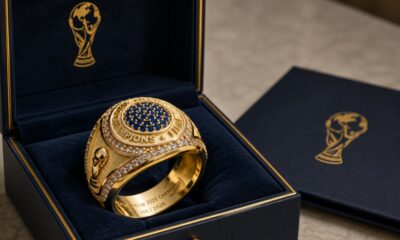
FIFA Unveils First-Ever 18K Gold Diamond Championship Rings to celebrate Spain’s World Cup Victory
-
 National News22 hours ago
Nature’s Elegance, Reimagined: Lotus Arts De Vivre’s Cape Gooseberry Earrings Continue To Captivate
-
 New Premises21 hours ago
Vinsmera Jewels Expands UAE Presence With Soft Opening Of New Al Barsha Showroom In Dubai
