

JB Insights
LGD prices tumble; “green, sustainability” hype is fading out
New 18K Lightweight Designer Brand Launches in Trivandrum, Blending Style, Comfort, and Ethical Luxury


The man-made diamond boom is over, and prices for ultra-trendy lab-grown diamonds are set to tumble this year, industry veterans say. Paul Zimnisky, a leading diamond analyst, foresees jewellers scaling back their business in lab-grown diamonds while ramping up their focus on natural diamonds over the next year. In fact, most jewellers aren’t even bothering to stock lab-grown diamonds in inventory, and are only purchasing them on consignment, he told Business Insider.

Some of the shine behind lab-grown gems has diminished, largely because they’re so widely available. Lab-grown stones now make up around 20% of the total diamond market, Zimnisky estimates, up from nearly zero percent in 2015.
It’s the exact opposite of what jewellers have seen since 2018, when the hype around lab-grown diamonds took off. “Some of the fad is starting to fade a bit,” Zimnisky said. Retailers now “aggressively” push lab-grown stones. “I think it’s become a lot more mainstream.”
Lab-grown diamond prices, already a fraction of natural diamonds, could see an additional 80% decline, according to industry expert Cormac Kinney, CEO of Diamond Standard. Since their mainstream introduction in 2018, the price gap between lab-grown and natural diamonds has expanded, with some lab-grown diamonds now priced at just 10% of their natural counterparts. Kinney believes there is still significant room for prices to drop, anticipating a further 50% to 80% reduction.

“Fashion jewellery is always a very small fraction of real jewellery. Only real is rare.” He added: “Jewellers will tell me that a growing number of couples are coming in one to three years after buying an engagement ring and replacing it with a natural diamond.”
The hype about LGDs being “green and sustainable” seems to be dying out. Pandora’s CEO Alexander Lacik says consumers don’t buy LGDs because they’re “sustainable”. They buy them because they’re cheap.
Alexander Lacik told Fortune magazine: “When we talk about product choice, there are only two things that actually drive behaviour,” he said. Price and design. “ESG (environmental, social, and corporate governance) is a nice feature and for the people that are interested, we have a good story to tell, but it’s not the driver of the business.”
Gen Zs and millennials may claim they’re driven by environmental concerns, said Lacik, but at the end of the day they want the biggest stone they can get for their budget.
LGDs are mostly produced in factories by machines that require constant power. While there is a substantial range of outcomes depending on where the factory is located, the notion that lab-grown diamonds are “more environmentally friendly” is debatable.






Education
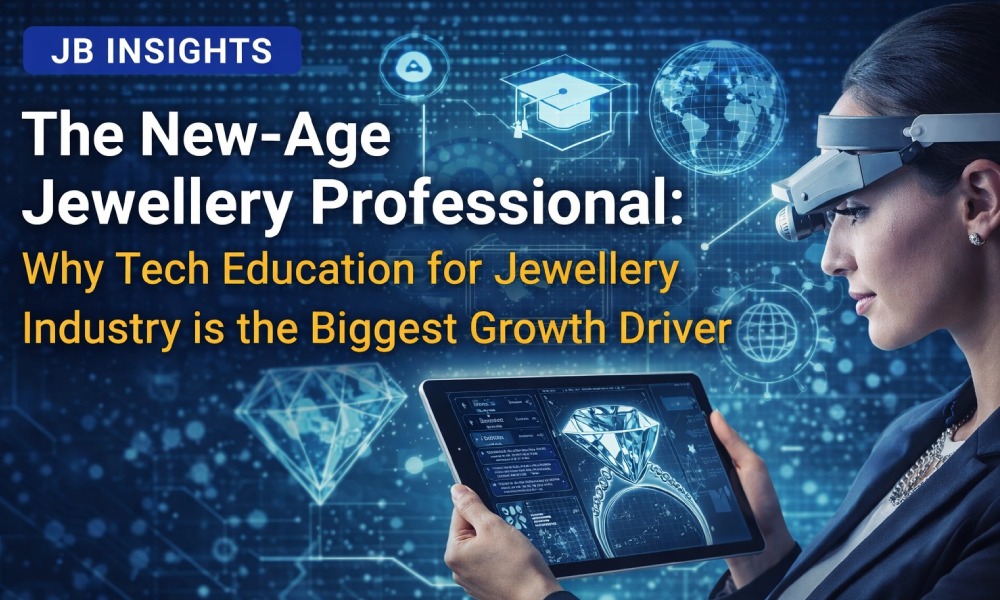
The New-Age Jewellery Professional: Why Tech Education for Jewellery Industry is the Biggest Growth Driver
#JbExclusive
The jewellery industry is no longer defined by craftsmanship alone. Today, it sits at the intersection of design, technology, sustainability, finance, branding, and global trade. As consumer expectations evolve and competition intensifies, structured education and continuous skill development are emerging as the most powerful growth catalysts for the sector.
For a dynamic industry like India’s jewellery market, education is not optional — it is strategic.
From Karigar to Knowledge Professional
For decades, the backbone of the industry has been generational craftsmanship. While this legacy remains invaluable, modern jewellery businesses now demand professionals who understand:
- Gemology and diamond grading
- CAD and 3D jewellery design
- Retail management and consumer psychology
- Digital marketing and brand storytelling
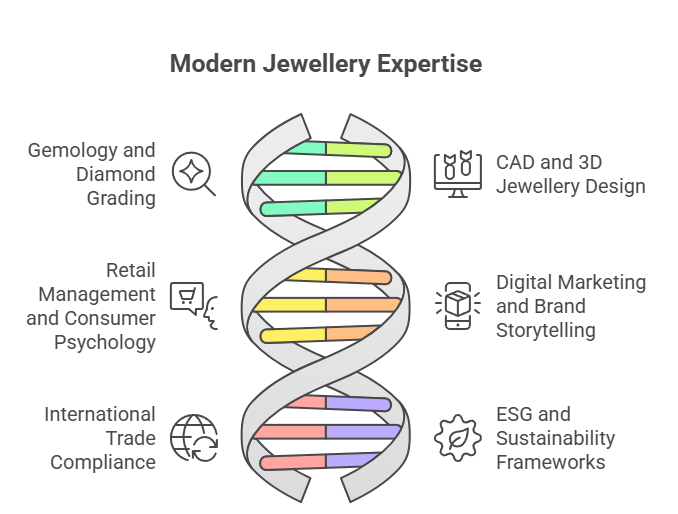
- International trade compliance and tariffs
- ESG and sustainability frameworks
Institutions such as the Gemological Institute of America and the Indian Institute of Gems and Jewellery have played a key role in formalising education pathways, helping transform traditional artisans and retailers into globally competitive professionals.
Trend Watch: Rise of Tech-Integrated Learning
One of the strongest education trends shaping the industry is technology integration.
- CAD & CAM Training: Digital prototyping reduces costs and speeds up product development cycles.
- AI in Retail Forecasting: Data-driven inventory planning is replacing intuition-based buying.
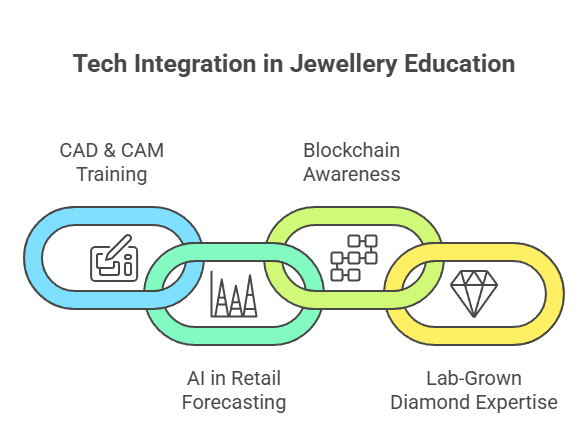
- Blockchain Awareness: Traceability in diamonds and coloured gemstones is becoming a compliance requirement rather than a luxury.
- Lab-Grown Diamond Expertise: As lab-grown diamonds gain market share, understanding grading, pricing dynamics, and consumer positioning has become critical.
Educational programs now increasingly blend online modules with hands-on workshops, enabling faster upskilling for working professionals.
The Bridal Economy & Consumer Education
India’s bridal jewellery segment continues to drive demand, but the modern bride is informed and research-oriented. She compares:
- Natural vs lab-grown diamonds
- Hallmarking standards
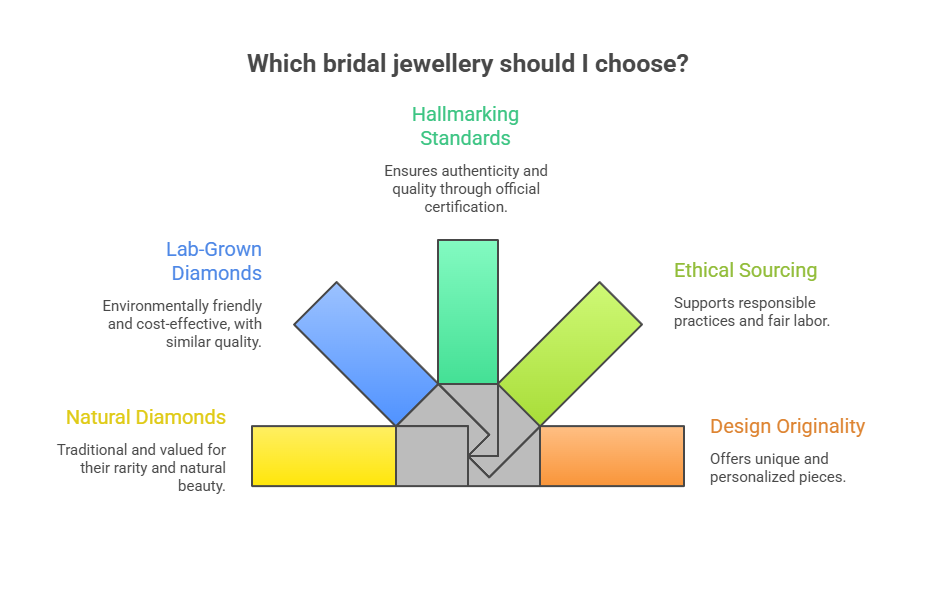
- Ethical sourcing claims
- Design originality
Retailers who invest in staff education see higher trust conversion rates. Well-trained sales professionals are no longer “salespeople” — they are consultants guiding life-defining purchases.
Financial Literacy in Jewellery
Another emerging area is financial education within the industry itself. With gold functioning as both adornment and asset, professionals must understand:
- Gold monetisation frameworks
- Hedging strategies
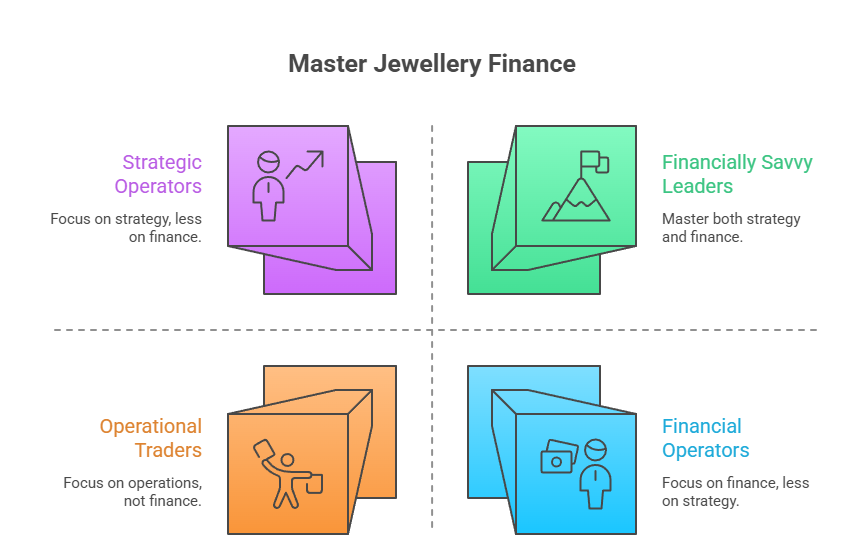
- Commodity price cycles
- Working capital management
Structured knowledge helps businesses move from being inventory-heavy traders to strategically managed enterprises.
Sustainability & Responsible Sourcing
Global buyers increasingly demand proof of ethical sourcing and environmental compliance. Education around responsible mining practices, supply-chain transparency, and ESG reporting is becoming central to export competitiveness.
Industry bodies such as the Gem & Jewellery Export Promotion Council regularly conduct seminars and workshops to align Indian exporters with evolving global standards.
The Future: Hybrid Skills Will Win
The next generation jewellery professional will not be defined by a single skill. The future belongs to those who combine:
- Design sensibility
- Technical expertise
- Business acumen
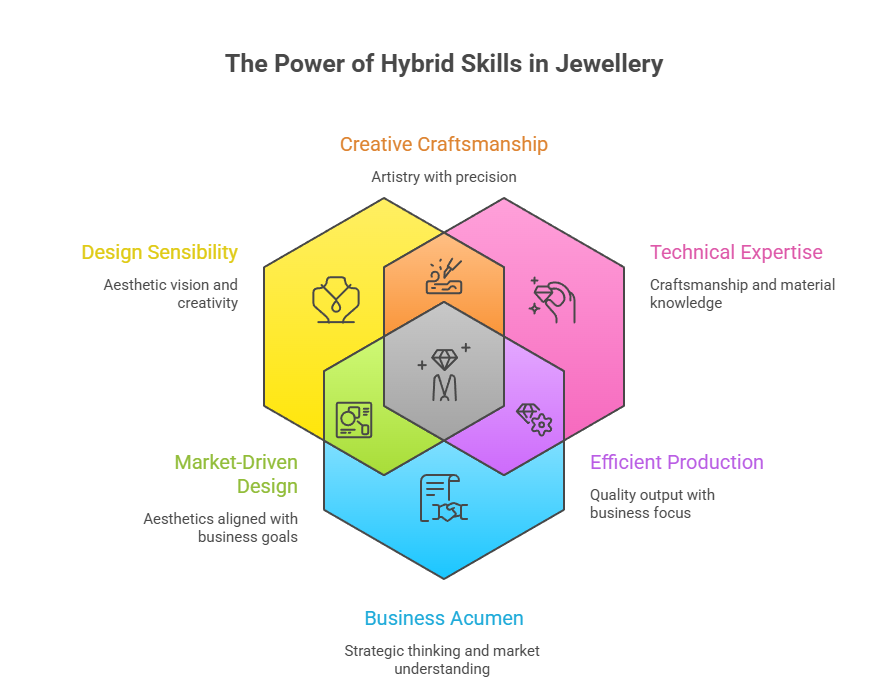
- Digital fluency
- Ethical awareness
For a sector contributing significantly to India’s exports and employment, education is the bridge between heritage and high growth.
Knowledge is the new luxury. As the jewellery industry transitions into a more organised, tech-enabled, and globally integrated ecosystem, continuous learning will determine who leads and who lags. The sparkle of the future will not just come from diamonds — it will come from informed minds shaping the industry.



Gold Rebounds in India After Five-Day Slide; Dollar Strength Keeps Pressure Intact

Kumari Fine Jewellery Celebrates the “Modern Indian Original” with Exclusive Women’s Day Showcase

This Women’s Day, Dhirsons Jewellers Celebrates the Milestones in a Woman’s Journey
Gold Rebounds in India After Five-Day Slide; Dollar Strength Keeps Pressure Intact
Kumari Fine Jewellery Celebrates the “Modern Indian Original” with Exclusive Women’s Day Showcase
This Women’s Day, Dhirsons Jewellers Celebrates the Milestones in a Woman’s Journey
-
 National News4 hours ago
Gold Rebounds in India After Five-Day Slide; Dollar Strength Keeps Pressure Intact
-
 National News5 hours ago
Kumari Fine Jewellery Celebrates the “Modern Indian Original” with Exclusive Women’s Day Showcase
-
 National News8 hours ago
This Women’s Day, Dhirsons Jewellers Celebrates the Milestones in a Woman’s Journey
-
 BrandBuzz1 day ago
The Pearl Edit: Thoughtful Women’s Day Gifting by GIVA
