
National News
India’s Gems & Jewellery Exports Drop 15.8% in May Amid U.S. Tariff Impact: GJEPC


India’s overall gems and jewellery exports dropped by 15.81% to $2,263.42 million (₹19,260.81 crore) in May 2025, compared to $2,688.38 million (₹22,414.02 crore) during the same month in 2024, as per the latest data released by the Gems and Jewellery Export Promotion Council (GJEPC).
According to GJEPC, the decline was largely due to the tariff announcements by the United States, which significantly impacted outbound shipments. Among the segments, exports of cut and polished diamonds experienced a sharp fall of 35.49%, standing at $949.70 million (₹8,089.81 crore) in May 2025, down from $1,472.08 million (₹12,272.03 crore) in the corresponding period last year.
Similarly, exports of polished lab-grown diamonds saw a decline of 32.7%, falling to $80.90 million (₹689.71 crore) from $120.32 million (₹1,003.06 crore) recorded in May 2024.
On a positive note, gold jewellery exports witnessed a significant rise of 17.24% to $997.50 million (₹8,482.61 crore), compared to $850.81 million (₹7,094.52 crore) during the same period in the previous year. This growth is attributed to rising global demand for gold amid ongoing geopolitical tensions in the Middle East.
Meanwhile, gross silver jewellery exports during April–May dropped by 17.59% to $150.08 million (₹1,281.92 crore), down from $182.11 million (₹1,518.69 crore) in the same period last year. Coloured gemstone exports also saw a minor dip of 1.13%, totalling $62.51 million (₹533.08 crore) compared to $63.22 million (₹527.36 crore) during April–May 2024.

GJEPC Chairman Kirit Bhansali stated, “The overall exports continue to decline and in May the dip was 15.81% mainly due to the tariffs announcement by the US. However, gold jewellery exports have gone up due to the continuing geopolitical tensions in the Middle East, which has increased the demand for the precious metal as a safe haven.”








National News
Cosmos Diamonds Makes History With World’s First LGD Jewellery Launched Into Space
The Launch Also Reinforces India’s Emergence As A Global Innovation Hub Where Startups From Diverse Sectors Are Forging Unconventional Partnerships.

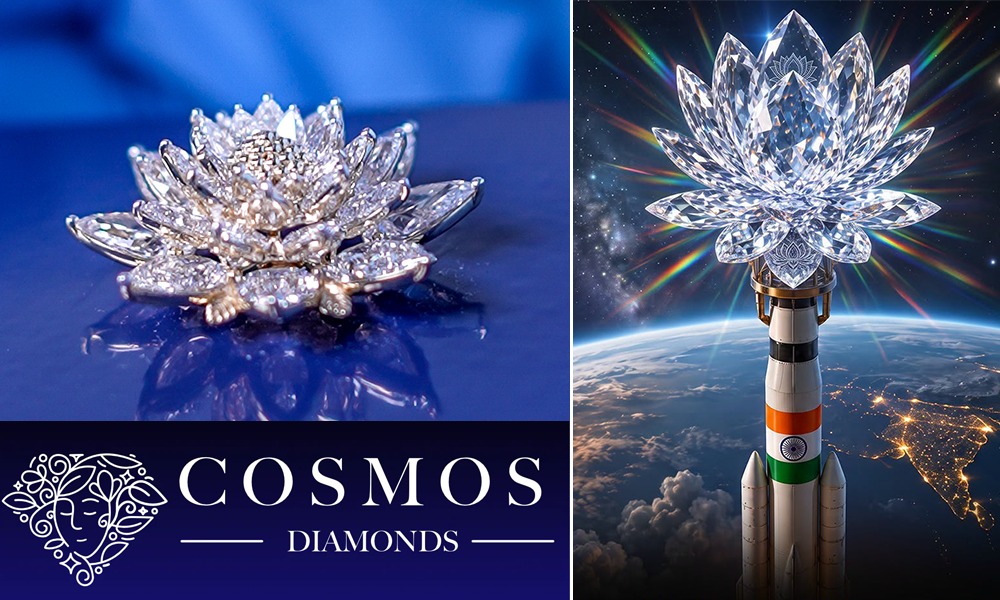
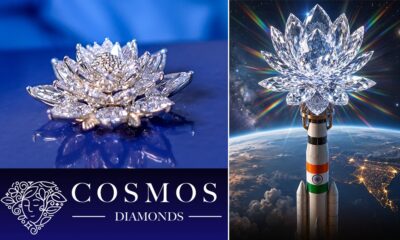
In a landmark moment where luxury, science and space exploration converged, Sanjana Tripuramallu, founder of Bengaluru-based Cosmos Diamonds, has achieved a global first by collaborating with private space company Skyroot Aerospace to send Cosmos Bloom, the world’s first lab-grown diamond (LGD) jewellery creation into space aboard the Vikram-1 rocket.
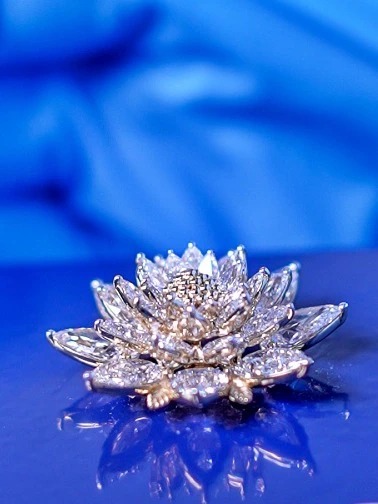
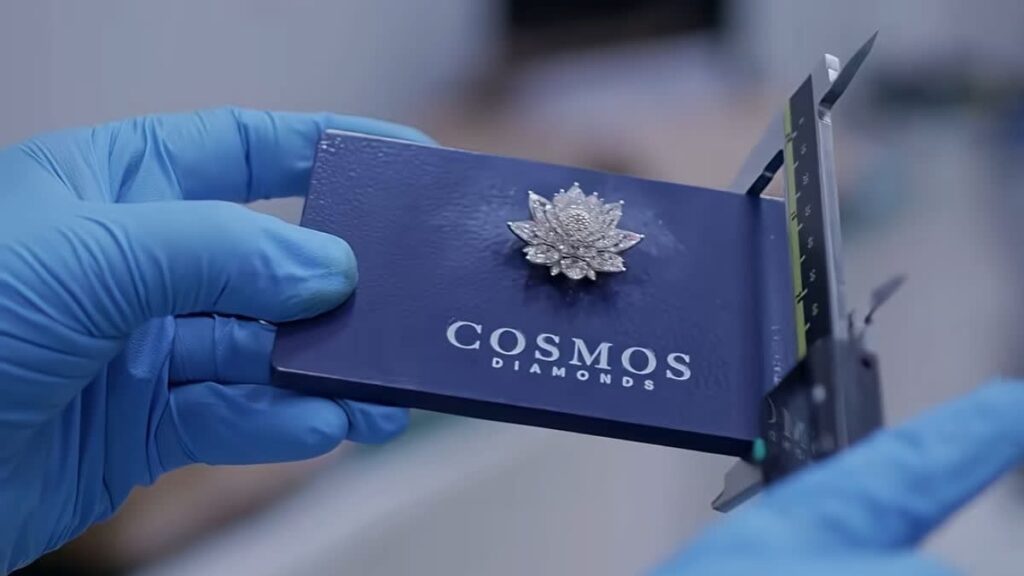
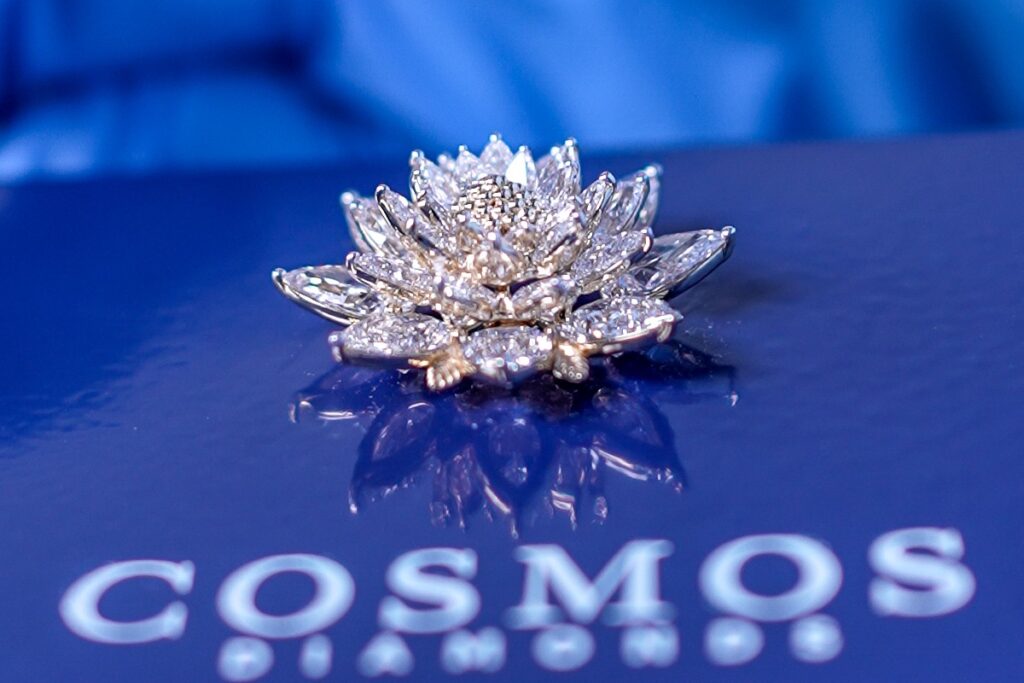
The Cosmos Bloom Diamond is handcrafted in 18 kt gold using 32 pear-cut LGDs arranged in the form of a blooming lotus and mounted on a specially engineered aluminium base plate. It is designed to withstand the extreme conditions of launch and spaceflight. The space-bound jewel is valued at Rs 11 lakh and combines Indian craftsmanship, technology, and innovation.

Sanjana Tripuramallu, Founder- Cosmos Diamonds
The launch also reinforces India’s emergence as a global innovation hub where startups from diverse sectors are forging unconventional partnerships. While Skyroot Aerospace showcased the country’s private launch capabilities through Vikram-1, Cosmos Diamonds used the mission to tell a powerful story of Indian design and scientific ambition on an international stage. With the successful launch of the world’s first lab-grown diamond jewel into orbit, Sanjana Tripuramallu and Cosmos Diamonds have etched their names into both jewellery and space history, demonstrating that the future of luxury may well extend beyond Earth itself.



Precious Metals Bounce Back As Iran Ceasefire Hopes Rise, But Fed Rate Fears Loom: AUGMONT BULLION REPORT

Bvlgari Revives Its Iconic Gold & Steel Legacy With Bold New Jewellery Creations

Cosmos Diamonds Makes History With World’s First LGD Jewellery Launched Into Space

MCX Gold, Silver Futures For August Delivery Rise On Renewed Geopolitical Tensions
Precious Metals Bounce Back As Iran Ceasefire Hopes Rise, But Fed Rate Fears Loom: AUGMONT BULLION REPORT
Cosmos Diamonds Makes History With World’s First LGD Jewellery Launched Into Space
-
 National News4 hours ago
MCX Gold, Silver Futures For August Delivery Rise On Renewed Geopolitical Tensions
-
 National News1 hour ago
Cosmos Diamonds Makes History With World’s First LGD Jewellery Launched Into Space
-
 International News15 minutes ago
Precious Metals Bounce Back As Iran Ceasefire Hopes Rise, But Fed Rate Fears Loom: AUGMONT BULLION REPORT
-
 International News4 hours ago
London Diamond Bourse Announces Launch Of Its New Coloured Gemstone Course
