National News
India restricts plain silver jewellery imports to protect local manufacturers

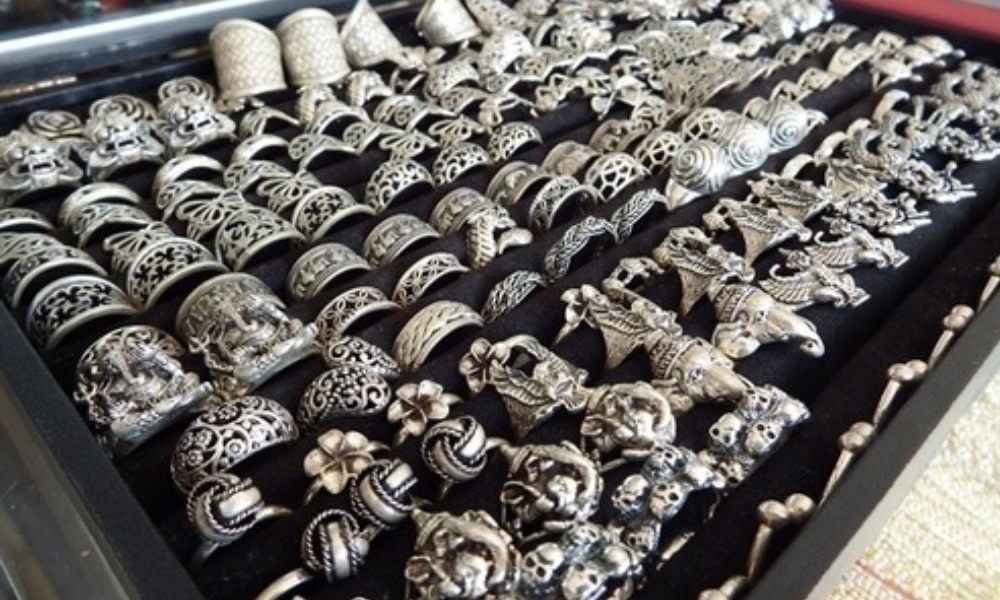
As per a notification issued by the Directorate General of Foreign Trade (DGFT), plain silver jewellery has been been placed in a restricted category, which means that importers will require a valid authorization from the DGFT to bring in such consignments. the government has moved to restrict imports of plain silver jewellery to protect domestic manufacturers and safeguard jobs in the sector at a time of high demand.
The Commerce Ministry noticed a surge in unstudded silver jewellery imports from some Asean countries, including Thailand, over the past three months (April-June 2025). Much of the imported jewellery was entering India in the guise of finished products, undercutting domestic prices and threatening employment in the labor-intensive silver jewellery sector.
Goods under the restriction category need a licence from the government.The restricted products include articles of jewellery of precious metal, silver, and unstudded and other jewellery, which were free earlier.Asean, or the Association of Southeast Asian Nations, comprises 10 countries – Brunei, Cambodia, Indonesia, Laos, Malaysia, Myanmar, the Philippines, Singapore, Thailand and Vietnam.



– Kirit Bhansali, Chairman, GJEPC

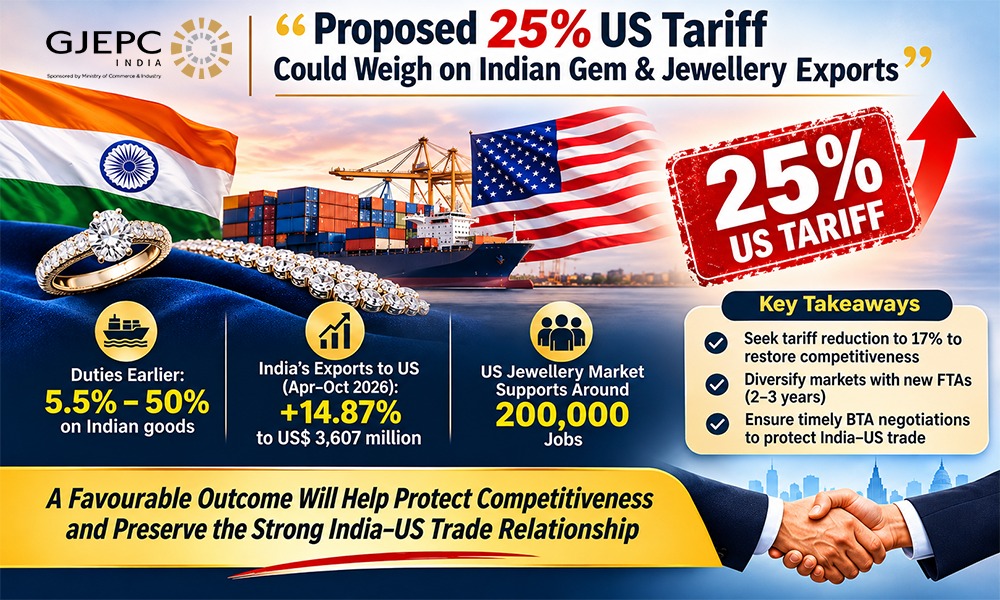
“India’s gem and jewellery sector has faced prolonged uncertainty from US tariff measures, with duties ranging from 5.5% to 50%, straining exports, payment cycles and logistics costs. Tariffs raise landed costs and retail prices, potentially dampening US consumer demand and affecting jobs and businesses across the value chain in both countries. The US remains a major jewellery market, supporting roughly 200,000 jobs.
Although the situation had begun to improve—with India’s gem and jewellery exports to the US growing 14.87% to US$3,607 million during April–October 2026 year-on-year—the proposed 25% US tariff on Indian goods could again weigh on the sector. Any increase in tariffs, or continued uncertainty over market access, would affect the competitiveness of Indian exports, disrupt order flows and compress exporters’ margins in this key market.
The industry is hopeful that the agreement will provide meaningful relief by reducing the tariff to 17%, restoring price competitiveness and creating a more favourable environment for exporters to sustain and grow their business in the US market.
While India’s new FTAs will help diversify export markets over time, building alternative buyer relationships could take two to three years, whereas the impact of proposed tariffs could be felt within 45 days to two months. Higher proposed tariffs on competitors such as Thailand, Vietnam and China may offer Indian exporters a relative advantage, though the benefit will depend on the final tariff structure. The industry remains resilient and hopeful that timely BTA negotiations will secure a favourable outcome, protect competitiveness and preserve the strong India–US trade relationship.”



GJEPC Quote On Proposed 25% Tariff By US

Make A Statement This Black Friday With Palmonas’ Top Jewellery Picks

5 Solitaire Mangalsutra Designs By Divine Solitaires For Every Style and Occasion
5 Solitaire Mangalsutra Designs By Divine Solitaires For Every Style and Occasion
Make A Statement This Black Friday With Palmonas’ Top Jewellery Picks

Reva By PNGS – This Festive Season, Maharashtra Didn’t Wait For An Occasion To Buy Diamonds
-
 National News3 hours ago
5 Solitaire Mangalsutra Designs By Divine Solitaires For Every Style and Occasion
-
 National News3 hours ago
Make A Statement This Black Friday With Palmonas’ Top Jewellery Picks
-
 National News4 hours ago
Reva By PNGS – This Festive Season, Maharashtra Didn’t Wait For An Occasion To Buy Diamonds
-

 National News7 hours ago
Precious Metals Open Lower On MCX In Response To Global Downward Pressure