
International News
Historic Mughal Emerald Jewels to Lead Christie’s Magnificent Jewels Auction in New York
Over 2,000 carats of rare Mughal-era emeralds and multi-gem treasures — including a 470-carat centerpiece — headline a landmark sale alongside prestigious pieces from Anne Bass and Lucille Coleman collections.

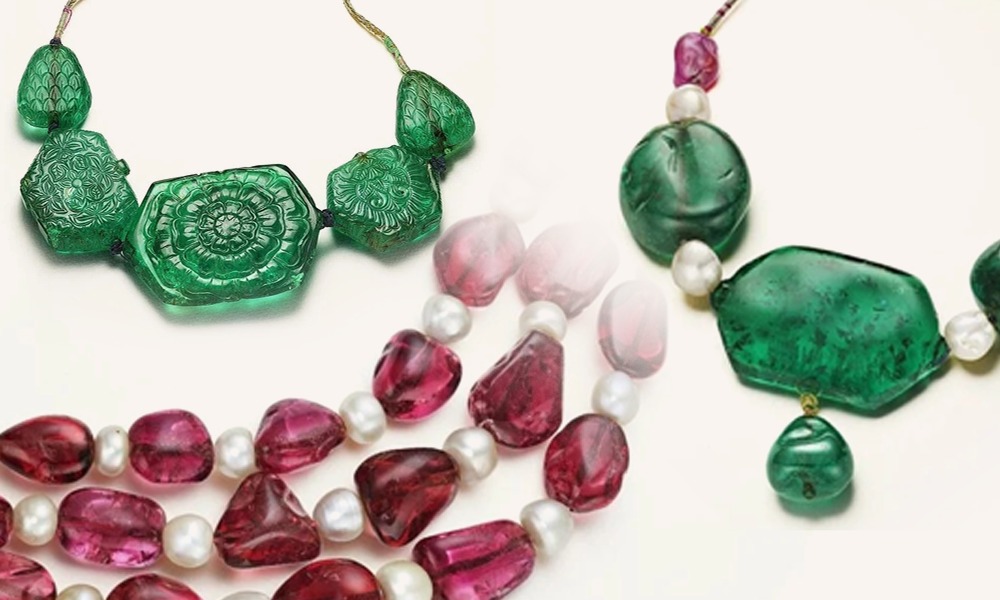
Christie’s will showcase an extraordinary array of Mughal jewels at its upcoming Magnificent Jewels auction in New York on June 17, led by a remarkable carved emerald necklace bearing over 1,150 carats of Colombian emeralds. The historic piece is inscribed with the name Ahmad Shah Durrani, founder of the Durrani Empire, and features a massive 470-carat central emerald. Dating back to 1612, this jewel is steeped in royal heritage and has been linked in historical records with other legendary gems such as the Timur Ruby and the Koh-i-Noor diamond. It carries a pre-sale estimate of up to $3 million.
Two additional Mughal masterpieces will also feature in the sale. One is a multi-gem necklace set with four Colombian emeralds totaling nearly 800 carats, expected to fetch up to $3 million. The other is a remarkable necklace strung with over 2,000 carats of spinel and natural pearls, with eight stones engraved with the names of influential rulers including Delhi Sultan Muhammad ibn Tughluq, Mughal emperors Babur, Jahangir, and Shah Jahan. That piece is estimated to sell for as much as $2 million.
These jewels will be presented alongside the personal collection of philanthropist Anne Hendricks Bass, which includes 26 pieces from esteemed design houses such as Van Cleef & Arpels, Bulgari, Cartier, and JAR. A standout from this collection is a pair of Van Cleef & Arpels diamond pendant earrings, estimated at up to $1.8 million, and a JAR sapphire, emerald, and diamond necklace, valued at up to $300,000.
Also featured in the auction is a group of nine Van Cleef & Arpels Mystery-Set jewels from the collection of philanthropist Lucille Coleman, described by Christie’s as a “significant” highlight of the sale.
With its blend of historical depth and iconic 20th-century design, the June auction promises to be one of the most compelling jewelry events of the year.







International News
Indian Consulate In New York Hosts India-USA Virtual Jewellery Exhibition; Facilitated By GJEPC
The Exhibition Brought Together 35 Indian Companies, Many Of Them Micro, Small and Medium Enterprises (MSMEs), Offering US Buyers An Opportunity To Explore Indian Jewellery Collections and Establish Direct Business Connections.


The Consulate General of India in New York, in collaboration with the Gem & Jewellery Export Promotion Council (GJEPC), organised the India-USA Virtual Exhibition on Gems & Jewellery on 23 October 2026, connecting Indian exporters with American buyers through a digital platform.
The inaugural ceremony featured welcome remarks by Ambassador HE . Binaya S. Pradhan, Consul General of India in New York, an inaugural address by Kirit Bhansali, Chairman, GJEPC, and closing remarks by Rajlakshmi Kadam, Consul (Trade), Consulate General of India, New York.
The exhibition brought together 35 Indian companies, many of them micro, small and medium enterprises (MSMEs), offering US buyers an opportunity to explore Indian jewellery collections and establish direct business connections. The event was designed to help exporters reach new customers and develop partnerships in one of India’s most important markets.
Addressing participants, Kirit Bhansali, Chairman, GJEPC, highlighted the importance of the US market, which accounted for around 30% of India’s gem and jewellery exports, worth nearly US$10 billion, in FY2024-25. He noted that tariff uncertainty had affected trade significantly, with India’s gem and jewellery exports to the US falling by more than 44% between April and December 2025.
However, trade has begun to recover. Between April and September 2026, India’s gem and jewellery exports to the US grew nearly 6% year-on-year to almost US$3 billion, compared with US$2.77 billion in the corresponding period of 2025.
Kirit Bhansali also referred to progress on the proposed India-US Bilateral Trade Agreement, expressing hope that it would provide greater clarity and predictability for exporters and buyers once its terms are finalised.
With the US holiday season approaching, followed by Valentine’s Day and retailers’ sourcing plans for 2027, he urged American buyers to explore India’s manufacturing capabilities across diamonds, coloured gemstones and gold jewellery. He also encouraged buyers to engage directly with participating MSMEs, highlighting their skills, flexibility and ability to meet varied sourcing requirements.



Gargi By P N Gadgil & Sons Invites Women To #GETNOTICED This Diwali In New Campaign With Mithila Palkar

IBJA, SAARTHI 360 Sign MoU To Launch ‘NextGen CEO: Leadership for the Future’

Jos Alukkas Unveils New Website For A Seamless Online Jewellery Shopping Experience

Dhanteras Shopping Guide 2026:Gold, Silver, Diamonds & Festive Jewellery Trends To Watch

The Solenne Collection: A Celebration Of Diwali By Bharti Bangur Fine Jewels

From Diya Puja To Diwali Soirées: Jewellery Designed To Go Beyond The Festive Season
-
 JB Insights4 days ago
Dhanteras Shopping Guide 2026:Gold, Silver, Diamonds & Festive Jewellery Trends To Watch
-
 BrandBuzz4 days ago
The Solenne Collection: A Celebration Of Diwali By Bharti Bangur Fine Jewels
-
 BrandBuzz4 days ago
From Diya Puja To Diwali Soirées: Jewellery Designed To Go Beyond The Festive Season
-
 National News4 days ago
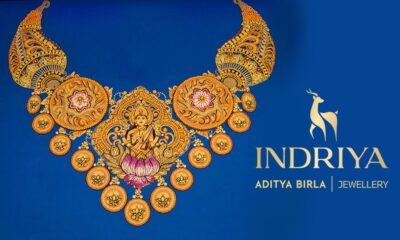
Indriya, Aditya Birla Jewellery Unveiled India’s Largest Sustainable Jewellery Rangavalli
