National News
Govt Extends Compliance Timelines for Gems & Jewellery Sector by 30 Days
Re-Export Timelines Extended and Procedural Relaxations Introduced To Support Exporters Facing Geopolitical Challenges

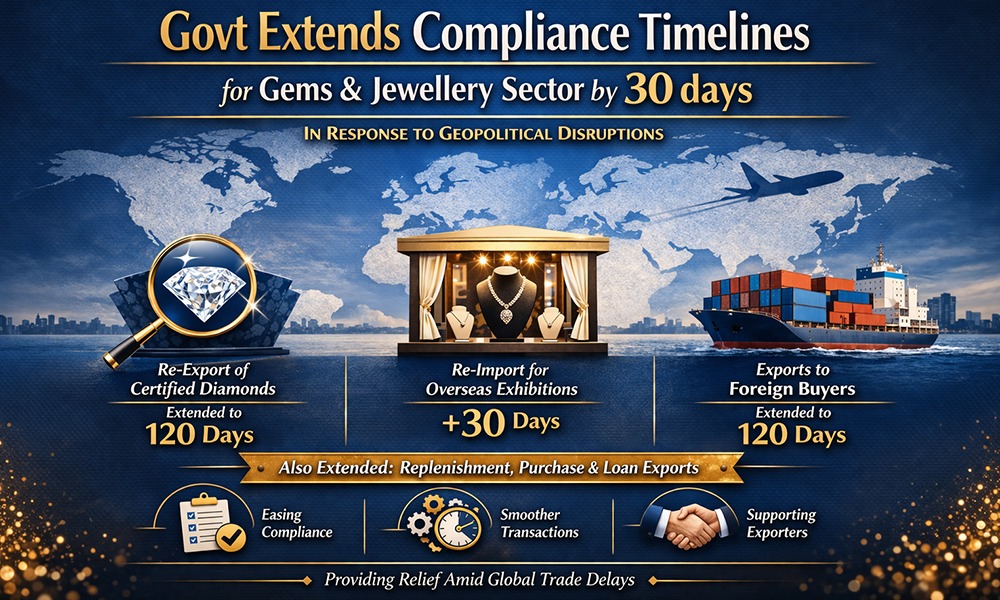
In response to geopolitical disruptions impacting global trade and logistics, the government has announced a one-time procedural relaxation for the gems & jewellery sector.
The re-export period for imported diamonds sent for certification/grading has been extended to 120 days from 90 days. Additionally, the timeline for re-import of gems and jewellery exported for overseas exhibitions has been increased by 30 days beyond the existing limit.
The export period for Foreign Buyer supplies has also been extended to 120 days, according to the Directorate General of Foreign Trade. Further, timelines under replenishment, outright purchase, and loan basis exports have been enhanced.
These measures aim to ease compliance requirements, reduce procedural stress, and ensure smoother export transactions amid delays caused by the ongoing West Asia conflict.
Importantly, exporters will not be required to file separate applications, nor pay any amendment or composition fees to avail this relief. Customs authorities have been directed to facilitate transactions subject to verification, ensuring business continuity and greater certainty for trade.

In response to geopolitical tensions in West Asia, the Directorate General of Foreign Trade (DGFT) has introduced facilitative provisions under HBP-2023, extending export and import timelines for the gems and jewellery sector by 30 days without requiring any fees or applications.
Key changes include extending the re-export period for diamonds sent for certification/grading from 90 to 120 days, along with similar relief for exports involving precious metals supplied by foreign buyers. Timelines have also been eased for the re-import of jewellery from overseas exhibitions and exports under replenishment, outright purchase, and loan schemes.
The one-time relaxation aims to ensure smooth transaction completion, reduce logistical disruptions, and maintain continuity in trade flows. Exporters can avail of the extension without filing fresh applications or paying additional charges, while customs authorities will process transactions after necessary verification.
Industry stakeholders attribute the disruptions to recent geopolitical tensions, including the US-Israel attack on Iran, which has impacted air and sea routes across the Middle East.
Welcoming the move, former Gems and Jewellery Export Promotion Council (GJEPC) chairman Colin Shah said the extension offers timely relief to exporters facing shipment challenges, expressing hope for improved conditions soon.


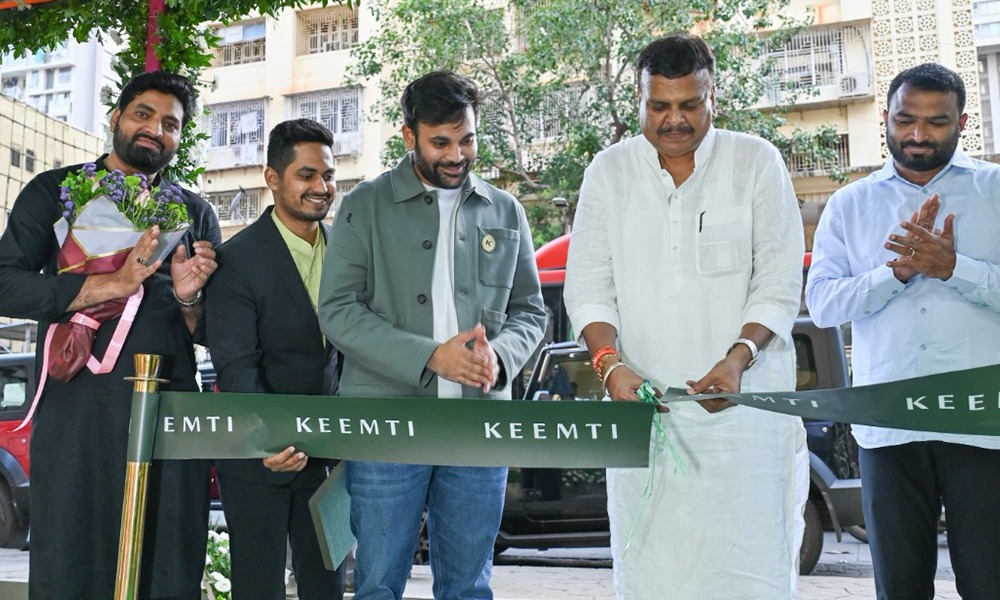
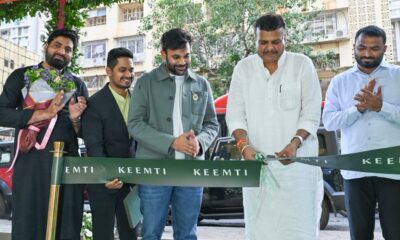
Keemti Jewels, India’s most trusted and price-efficient diamond jewellery brand, has further strengthened its presence in Mumbai with the inauguration of its second flagship store in the city, in Borivali West. The store was inaugurated in the presence of Shri Sanjay Upadhyay Ji, Hon’ble MLA – Borivali Vidhan Sabha, General Secretary, BJP Mumbai, and Hon’ble President, Mumbai BJP and Member of the Legislative Assembly, Maharashtra, marking another milestone in the brand’s rapidly expanding retail journey.
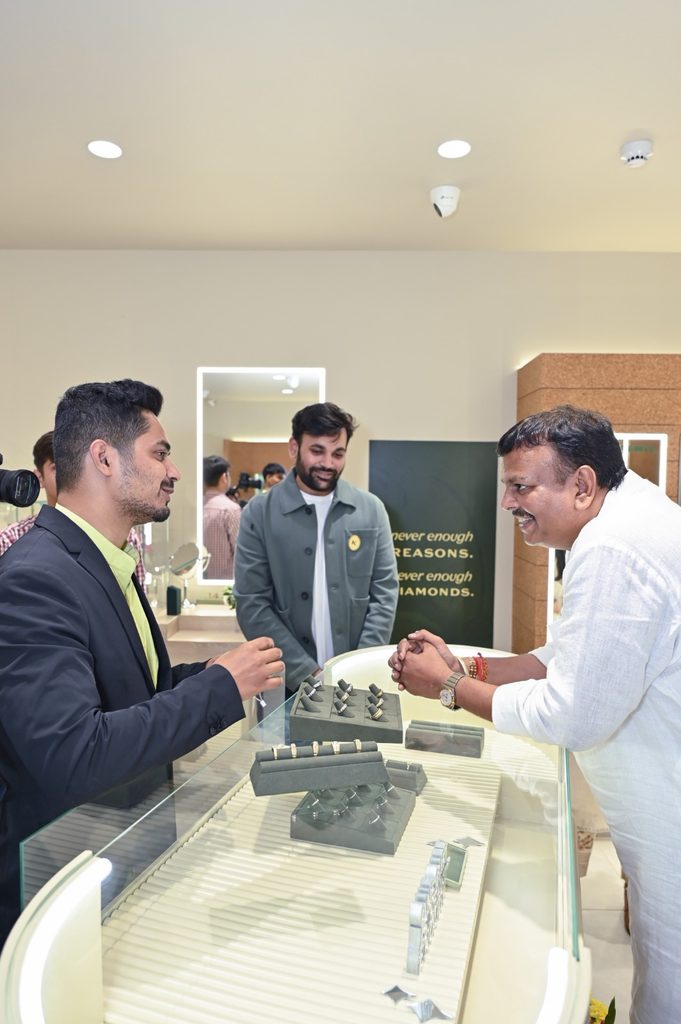
Located at Shop No. 1 & 2, Ground Floor, The Haveli Co-op Housing Society, Gulmohar Road, Sundar Nagar, Borivali West, Mumbai, Maharashtra 400092, the new store brings Keemti’s contemporary lab grown diamond jewellery experience to one of Mumbai’s established residential and retail markets.
The Borivali launch comes soon after the opening of Keemti’s first Mumbai flagship in Andheri, making it the brand’s second store in the city and another step in its strategy of building a strong retail presence across key markets. With stores opening back-to-back across India, Keemti is moving rapidly to establish a nationwide network and make its proposition accessible to a larger consumer base.
At the heart of Keemti’s proposition is its approach to disrupting the lab grown diamond jewellery buying experience. The brand operates through an in-house manufacturing setup and its own design capabilities, allowing it to have greater control over design, production and pricing. Its vertically integrated, factory-direct model reduces traditional layers between manufacturing and the consumer, enabling Keemti to offer certified lab grown diamond jewellery at significantly more price-efficient rates.
With diamonds available at approximately Rs 30,000 per carat, Keemti is challenging conventional pricing in the category while focusing on design, certification and craftsmanship.
The new Borivali store offers a wide selection across rings, earrings, bracelets and neckwear, alongside other diamond jewellery designed for everyday, workwear, wedding and occasion dressing. Customers can explore different designs, diamond sizes and styles, with Keemti also offering made-to-order options that allow them to customize their jewellery based on their preferences.
Speaking at the inauguration, Armaan Kothari, Founder & Managing Director, Keemti Jewels, said:
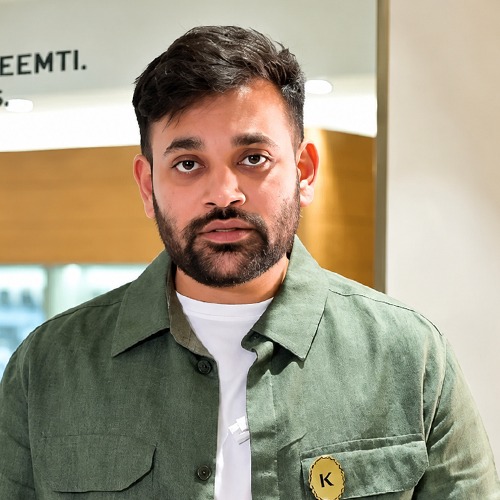
“Mumbai has been an important market for Keemti, and opening our second store here is an exciting milestone for us. Borivali has a strong and evolving consumer base, and we wanted to bring our jewellery closer to customers in this part of the city. Our aim has always been to change the way people experience and purchase diamond jewellery by bringing together good design, our own manufacturing capabilities and genuinely price-efficient offerings. As we continue to open stores across India, we are focused on building a brand that consumers can trust and return to for different jewellery needs.”
Keemti’s retail expansion reflects the growing momentum behind its business model. Built on the Kothari Group’s 45+ years of expertise in diamond manufacturing and jewellery, the brand combines this manufacturing heritage with its own design studio, in-house production and a contemporary retail experience. Backed by the Kothari Group, entrepreneur Nikhil Kamath and Kavin Shah, Keemti is building a new-age jewellery business focused on making diamond jewellery more accessible and relevant to today’s consumer.
The Borivali store is another step in Keemti’s rapid retail expansion, with the brand targeting 88 stores by December 2026. With consecutive store openings across cities, Keemti is building scale while strengthening its proposition of design-led, certified lab grown diamond jewellery at transparent and price-efficient prices.
As the brand continues to expand, Keemti’s larger ambition is to disrupt the way diamond jewellery is bought in India, bringing together in-house design, manufacturing, competitive pricing and a contemporary retail experience to create a more accessible and transparent way of buying fine jewellery.

-

 International News36 minutes ago
De Beers Assumes 100% Control Of Gahcho Kué Diamond Mine
-
 National News22 minutes ago
Keemti Jewels Unveils Second Lagship Store In Mumbai At Borivali-West
-
 New Premises4 hours ago
Malabar Gold & Diamonds Opens Its Second-Biggest Showroom In Goa
-
 National News42 minutes ago
Tanvi Exports Files DRHP For Proposed IPO