
JB Insights
Gold Slips, Sentiment Surges: Gudi Padwa, Ugadi Drive Robust Jewellery Sales
Buyers leaned towards lightweight, silver, and contemporary designs ahead of Akshaya Tritiya

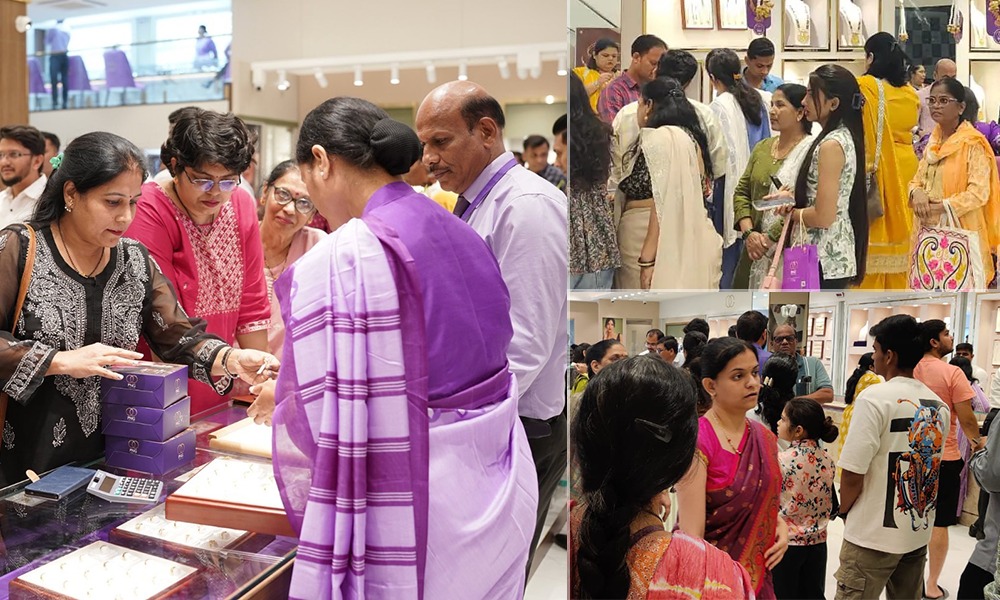
India’s jewellery sector delivered a landmark performance on Gudi Padwa and Ugadi 2026.India’s spring festival season opened on a firm retail note this year, as Gudi Padwa and Ugadi—celebrated across Maharashtra, Karnataka, Andhra Pradesh and Telangana—drove jewellery demand even as bullion prices remained volatile. A sharp correction in gold prices on the festival day — with 24-karat gold declining by over Rs. 3,000 per 10 g to approximately Rs. 1,53,800 and silver falling over Rs. 5,300 per kg to Rs. 2,48,170 — created a compelling buying environment even as absolute price levels remained historically elevated.
The simultaneous celebration of Gudi Padwa (Maharashtra New Year), Ugadi (Telugu/Kannada New Year in Andhra Pradesh, Telangana and Karnataka) and Chaitra Navratri on March 19 created a multi-region, multi-community auspicious window that no national brand could afford to ignore. This convergence is structurally supportive of Gudi Padwa becoming a tier-two festive occasion after Diwali and Akshaya Tritiya for the jewellery sector.
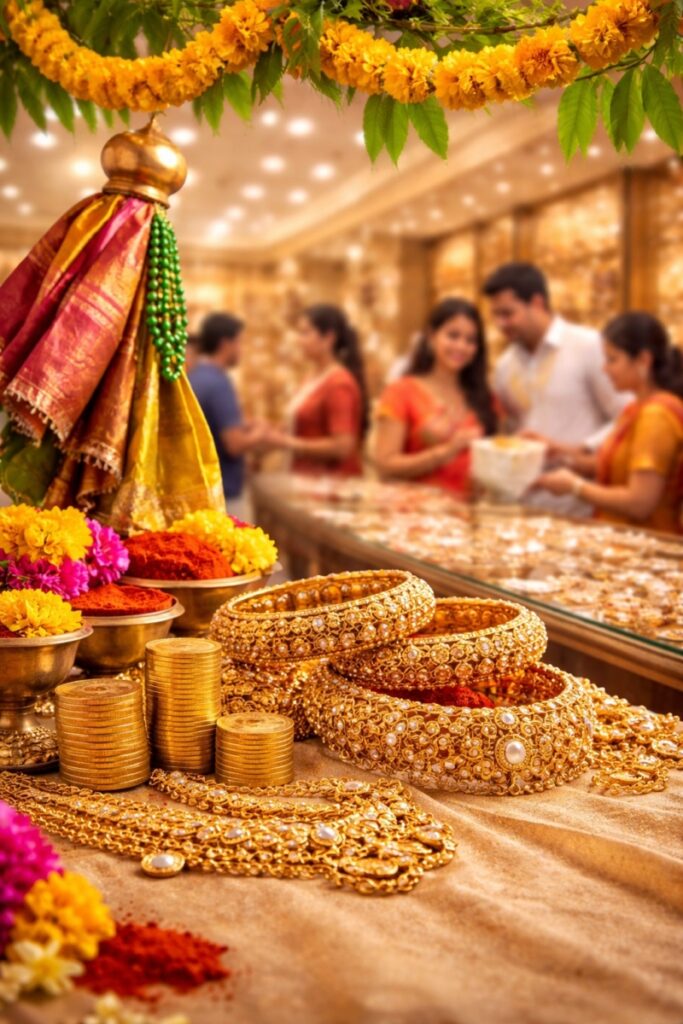
Price correction fuels sentiment
The price softening helped revive consumer sentiment, particularly in western and southern India where these festivals traditionally mark an auspicious start to new investments.
According to estimates by the GJC, overall jewellery sales during the festive period rose about 10% in value terms compared with last year.
Strong value growth, mixed volumes
Industry leaders pointed to a divergence between value and volume growth, a trend increasingly visible in India’s jewellery consumption story.

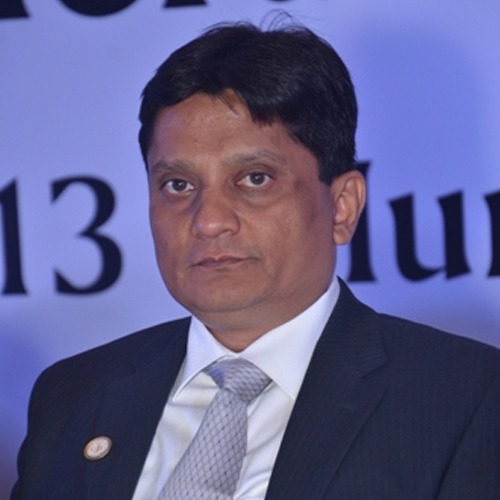
“Overall, today turned out to be a very good day. In terms of value, it was more than 10% higher compared to last year,” said Rajesh Rokde, Chairman of GJC. “Last year, gold was around Rs. 88,500, whereas this year it has reached approximately Rs.1,48,000+. Similarly, silver has nearly doubled. This clearly indicates that over the long term, prices tend to rise, and customers are well aware of this.”
He added that despite intra-day volatility, “customers were very enthusiastic and there was strong buying sentiment,” aided by promotional offers from jewellers nationwide.
However, not all segments saw uniform growth. “The jewellery sales this Gudi Padwa saw a dip in volume as compared to last year. Value wise it was on par,” noted Nitin Khandelwal, CMD of Khandelwal Jewellers Akola. “The dip in gold prices is driving consumers to purchase gold jewellery. I see this momentum continuing to Akshaya Tritiya.”
Changing consumer behaviour
Retailers highlighted an ongoing shift in consumer preferences, driven largely by price volatility and evolving lifestyle choices.
“The Indian jewellery sector is undergoing a transition in terms of consumer consumption,” said Paul Alukkas, MD- Jos Alukkas. “Jewellery sales across stores have been neutral this Ugadi and Gudi Padwa. Due to ongoing geopolitical tensions resulting in volatility in gold prices, sales are not encouraging. ” He added that while gold retains its appeal as a store of value, “there is a pivot in choices made by consumers based on price fluctuation. The trend for lightweight, daily-wear jewellery and contemporary designs remains steady.”
Alukkas also pointed to rising interest in alternative categories: “We are giving focused attention to our silver range, with refined and contemporary designs appealing to modern women. Families are also planning purchases in phases due to price fluctuations.”
Regional strength and wedding demand
Gudi Padwa, marking the Marathi New Year, continues to be one of the most significant gold-buying occasions in Maharashtra, while Ugadi plays a similar role in the southern states.
“Gudi Padwa is a key gold-buying occasion in Maharashtra, and we are seeing strong customer participation with gold continuing to be the preferred choice,” said Saurabh Gadgil, CMD, PNG Jewellers. He noted that the timing of the festival—coinciding with the start of the wedding season—further supported demand. “Bookings have remained encouraging despite elevated prices, and the recent correction has strengthened buying sentiment. We are also seeing good traction in diamond jewellery and coloured gemstones.”
He expects “around 20% year-on-year growth in value terms, led by wedding-related demand ahead of Akshaya Tritiya, while volume growth may remain in single digits due to the sharp rise in gold prices.”
Price Correction as Purchase Catalyst
The intra-day gold price decline of over Rs.3,000 on March 19 acted as a powerful trigger rather than a deterrent. Consumers who had been monitoring prices in anticipation of the festival interpreted the correction as a timely opportunity. This ‘buy-the-dip’ behaviour on auspicious occasions is becoming a discernible pattern in the Indian bullion market, where festive timing intersects with investment logic.
Wedding Season Convergence
Gudi Padwa 2026 coincided with the onset of the April–June wedding season, creating compounded demand. Wedding jewellery, particularly bridal sets, mangalsutras and gifting pieces, drove a meaningful share of festival-day purchases and advance bookings. PNG Jewellers specifically cited wedding-related demand as a key contributor to their 38 per cent growth figure.
Diamond & Coloured Gemstone Traction
Several retailers reported strong traction in diamond jewellery and coloured gemstone categories, indicating that consumers are diversifying beyond gold even during traditional gold-buying occasions. This is consistent with industry trends showing studded jewellery growing as a share of revenues, aided by higher margins and off-season demand potential.
Value-Conscious Purchasing Patterns
Lightweight daily-wear designs and contemporary styles continue to gain share as consumers optimise their jewellery budgets under an elevated absolute price environment. The volume-value divergence observed in 2025 persisted into 2026, with rupee-value growth outpacing gram-weight growth at most retailers.
The Volume-Value Divergence
A key structural theme emerging from this festive season is the divergence between value and volume growth. While aggregate sales in rupee terms were up approximately 10 per cent year-on-year, gram-weight volumes were broadly flat to negative at many retailers. This reflects the mathematical reality of a 67 per cent increase in gold prices — the same rupee outlay now buys significantly less gold by weight.
Shift Towards Lightweight & Contemporary Designs
Multiple industry leaders noted a decisive shift in consumer preferences towards lightweight, daily-wear jewellery and contemporary designs, driven by price sensitivity. Consumers are optimising their budgets by choosing pieces that offer aesthetic appeal without committing large capital sums. This trend is structurally supportive for jewellers who can offer design diversity across price points.
Silver as a Beneficiary
The price differential between gold and silver is leading consumers — especially younger, urban women — towards refined silver jewellery. Several brands, including Jos Alukkas, have proactively expanded their silver collections. Silver’s own year-on-year price appreciation of approximately 138 per cent, however, may moderate this substitution effect if sustained.
Outlook: Momentum into Akshaya Tritiya
With Akshaya Tritiya approaching—another key gold-buying festival—the industry remains cautiously optimistic. The recent correction in gold prices has improved affordability at the margins, but persistent volatility and elevated price levels continue to shape consumer behavior.
The broader takeaway from this festive season is clear: while India’s deep-rooted affinity for gold remains intact, purchasing patterns are becoming more calibrated—favoring lighter designs, phased buying, and diversification into silver and studded jewellery.
The underlying sentiment remains resilient: customers understand that “over the long term, prices tend to rise”—a belief that continues to anchor gold’s enduring appeal in Indian households.


JB Insights
The New Jewellery Shopper: Why Trust Is Becoming The New Retail Currency
As Shoppers Arrive More Informed and Digitally Connected, Jewellery Retailers Are Shifting From Product-Led Selling To Trust-Led Experiences, Where Transparency, Personalisation and Confident Decision-Making Shape The Path To Purchase.

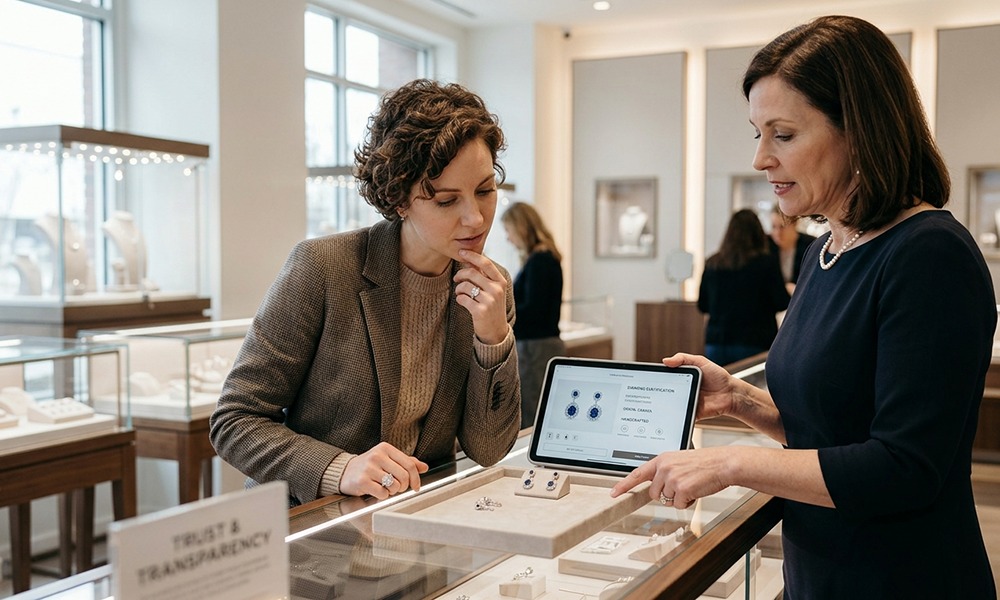
As jewellery consumers become more informed and value-conscious, retailers are discovering that the path from interest to purchase is increasingly shaped by trust, transparency and the quality of the buying experience.
There was a time when a customer walked into a jewellery showroom with a fairly simple expectation: find something beautiful, understand the price and make a purchase.
That equation is changing
The modern jewellery shopper may enter the store only after days or even weeks of digital research. Designs have already been compared, prices explored, brands evaluated and customer reviews considered. By the time the customer meets a salesperson, much of the discovery process may already have taken place online.
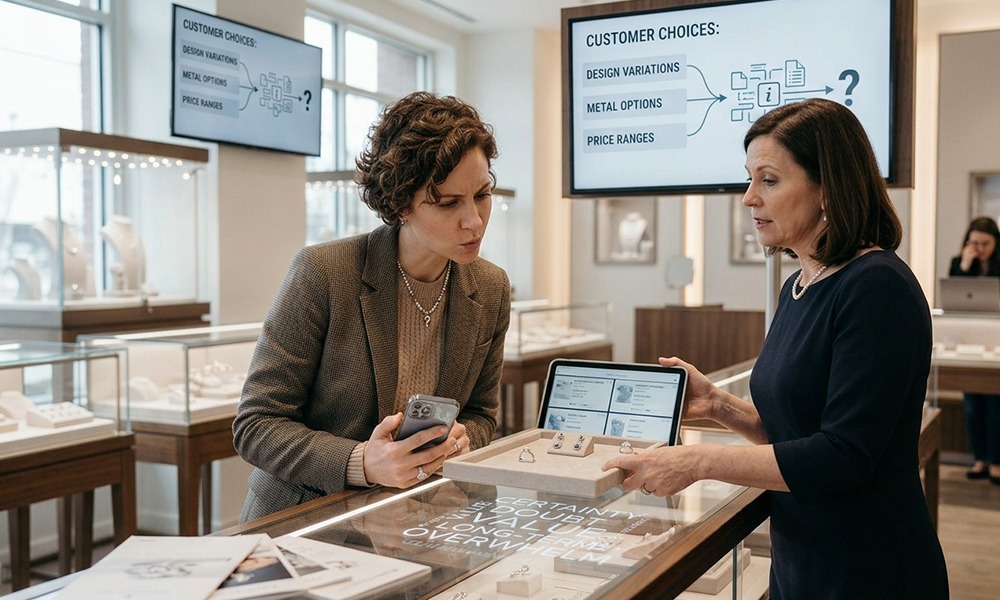
What remains is the more difficult part — making the customer feel certain.
This shift is quietly changing the dynamics of jewellery retail. The competitive advantage is no longer determined only by inventory, location or design assortment. Increasingly, it lies in how effectively a retailer can remove doubt and create confidence during the buying journey.
A Customer Who Arrives Informed
The jewellery customer of today is far more exposed to information than previous generations. Social media, brand websites, digital catalogues and online communities have made it easier to compare designs, materials, prices and brands before making a showroom visit.
But information does not always create certainty.
In fact, having too many choices and too much information can sometimes make the final decision more difficult. A customer may know exactly what they like but still hesitate over whether it represents the right value, the right style or the right long-term choice.
That gap between information and confidence is where the modern jewellery retailer increasingly has to operate.
The Retail Conversation Is Changing
The traditional sales conversation often begins with the product: its weight, design, stones, craftsmanship and price.
The emerging approach begins with the customer.
Why is the jewellery being purchased? Where will it be worn? What style does the customer normally choose? Is versatility important? What level of investment feels comfortable?
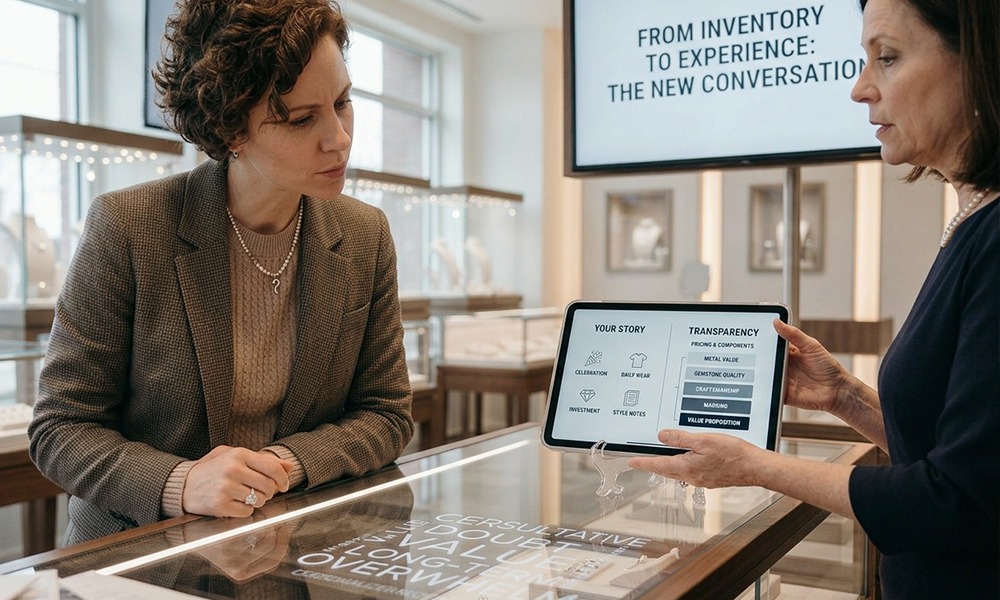
These questions can transform the interaction from a product presentation into a consultative buying experience.
For retailers, this requires sales teams to do more than know their inventory. They need to understand how to listen, curate and recommend.
Trust Has Become Part of the Product
A beautifully designed piece can attract attention, but uncertainty can stop the transaction.
Questions around making charges, gemstone valuation, diamond quality, exchange policies and long-term usability can influence the final decision.
This is why transparency is increasingly becoming a retail differentiator.
When the customer understands the components behind the price and the value attached to the product, the conversation becomes less about defending the price and more about explaining the value proposition.
The Digital Storefront Comes First
For many consumers, the first interaction with a jewellery brand does not happen inside a showroom.
It happens on a smartphone.
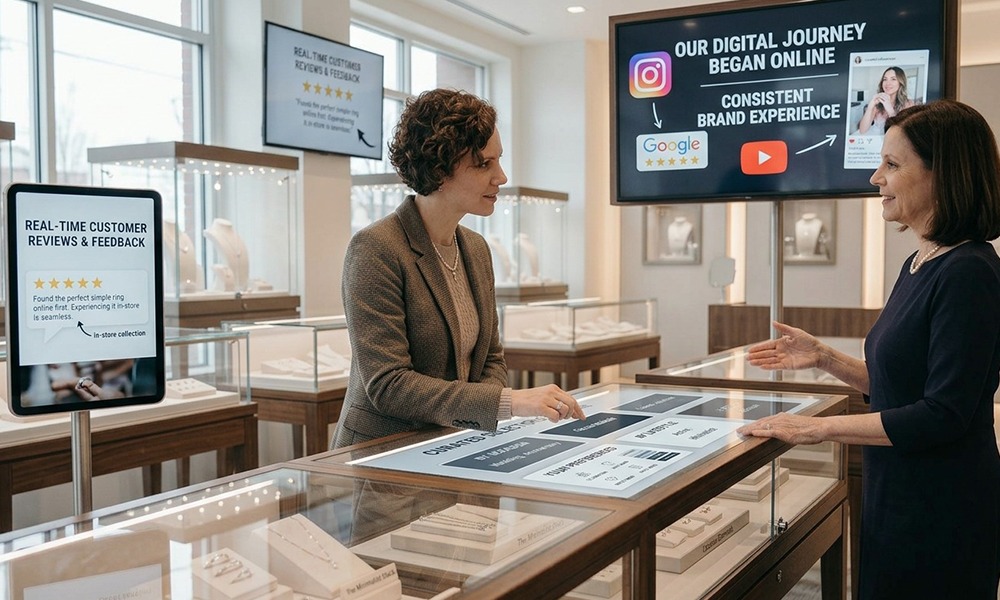
Instagram posts, websites, search results, influencer content, reviews and digital campaigns collectively create the first impression. By the time the customer walks into a store, the brand may already have been evaluated against several competitors.
This makes the digital presence an extension of the physical retail experience.
A retailer that promises premium craftsmanship offline but communicates inconsistently online creates a gap in customer confidence.
More Choice Does Not Always Mean More Conversion
Jewellery retailers have traditionally used extensive collections as a way of demonstrating scale and choice.
Yet an overwhelming assortment can create another problem: decision fatigue.
Curated selections based on occasions, lifestyles, price ranges and design preferences can help customers navigate the assortment more comfortably.
The role of the retailer is therefore gradually shifting from showing everything to showing what matters.
The Conversation Continues After the Customer Leaves
One of the most significant opportunities in jewellery retail may begin after the showroom visit.
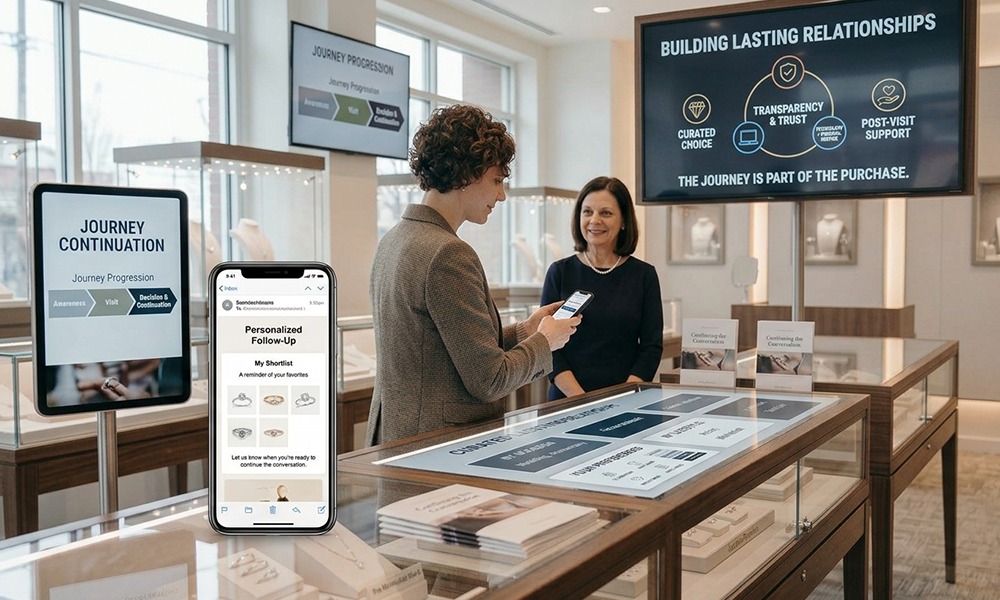
A customer who leaves without purchasing is not necessarily a lost customer. They may still be comparing options, discussing the purchase with family or simply taking time to decide.
A personalised follow-up featuring shortlisted designs, availability information, new arrivals or relevant styling suggestions can keep the conversation alive without turning it into aggressive selling.
The objective is simple: remain relevant while the customer is still making the decision.
Retail’s Next Competitive Advantage
The jewellery industry is entering an environment where customers can access more information than ever before. This makes the role of the retailer more important — not less.
The winning retail experience will increasingly depend on the ability to combine product expertise with transparency, technology with human interaction, and choice with curation.
Jewellery will always be emotional. But the journey towards owning it is becoming increasingly rational. In that journey, trust may become one of the most valuable assets a jewellery retailer can build.


-

 ShowBuzz2 hours ago
Silver Show Of India- Delhi 3rd Edition Unveiled At Yashobhoomi, Delhi
-

 ShowBuzz1 hour ago
Silver Trends To Watch At SSI Delhi 2026
-

 ShowBuzz5 hours ago
GJIIF 2026 Sets New Benchmarks As India’s Biggest-Ever Jewellery Trade Show Opens In Chennai
-

 DiamondBuzz5 hours ago
Divine Solitaires Named ‘Best Diamond Jewellery Brand’ At JewelZ South India 2026
