
International News
Gold, silver surge on Iran tensions, DOJ-US Fed crisis

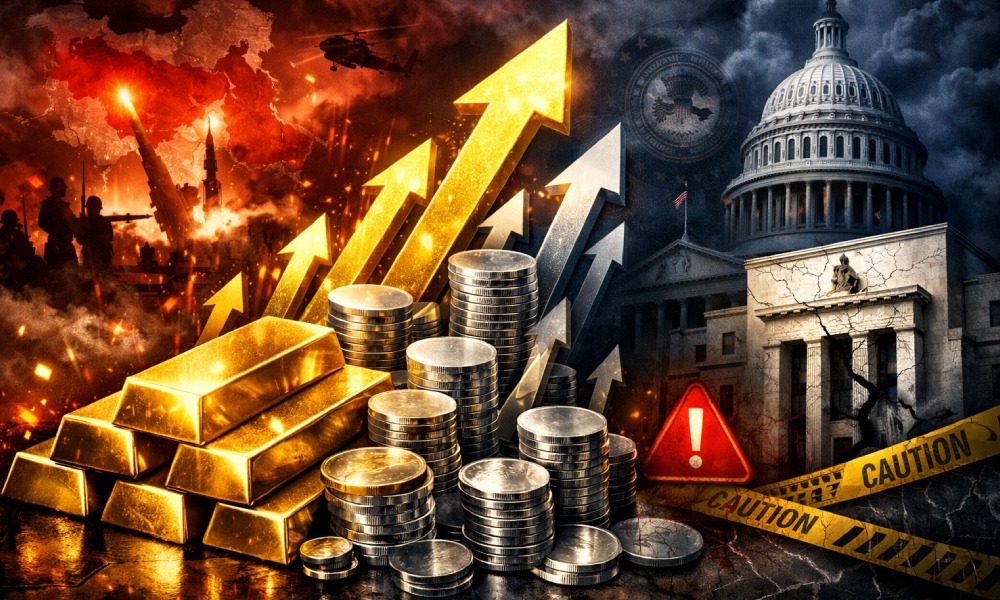
Gold and silver prices hit record high – with with MCX Silver breaching the Rs.2.71 lakh/kg mark and MCX Gold soaring past Rs.1.42 lakh per 10 grams.This historic rally is not merely a localized spike but the result of a “perfect storm” of institutional instability in the United States and escalating conflict in the Middle East. US gold futures rose 1.88% to $4,585.56/oz, while Spot gold price was up 1.45% at $4,575.82/oz, after hitting a fresh record high of $4,601.17 level. Silver prices jumped 4.85% to $83.19, after surging nearly 10% last week. Silver rate today hit a record high of $83.88 level.
1. The Fed Crisis: Subpoenas and Institutional Risk
The primary driver of this volatility is an extraordinary escalation between the U.S. Department of Justice (DOJ) and the Federal Reserve.
- The Subpoenas: Fed Chair Jerome Powell confirmed that the central bank has been served with grand jury subpoenas threatening a criminal indictment.3 This is ostensibly related to his June 2025 testimony regarding a $2.5 billion renovation of the Fed’s headquarters.
- The Market Interpretation: Investors have largely dismissed the “renovation” probe as a pretext. The market views this as a direct attack on Fed Independence, triggered by the bank’s refusal to align interest rate policies with the Trump administration’s demands.
- The Fallout: As the “institutional risk premium” usually reserved for emerging markets began to bleed into the U.S. dollar, the Dollar Index (DXY) snapped a five-day winning streak, retreating to 98.899. This weakened greenback made dollar-denominated bullion significantly cheaper for global buyers.
2. Geopolitical Ignition: The Iran Conflict
While the Fed crisis provided the monetary fuel, the “Safe Haven” bid was further intensified by deadly protests and military tensions in Iran.
- Domestic Unrest: Intensifying anti-government protests in Tehran, fueled by a collapsing currency and economic crisis, have raised the specter of regime instability.
- Trump Intervention: Looming threats of U.S. intervention in the Iranian conflict have heightened fears of a broader regional war. In times of such severe geopolitical friction, capital traditionally flees equities and currencies in favor of “hard assets.”


International News
US Holiday Shopping Expected To Top $1 Trillion For The First Time: NRF
While Overall Buying Power Remains High, Ongoing Inflation and Rising Household Costs Mean Some Families Will Have To Watch Their Spending More Carefully Than Others

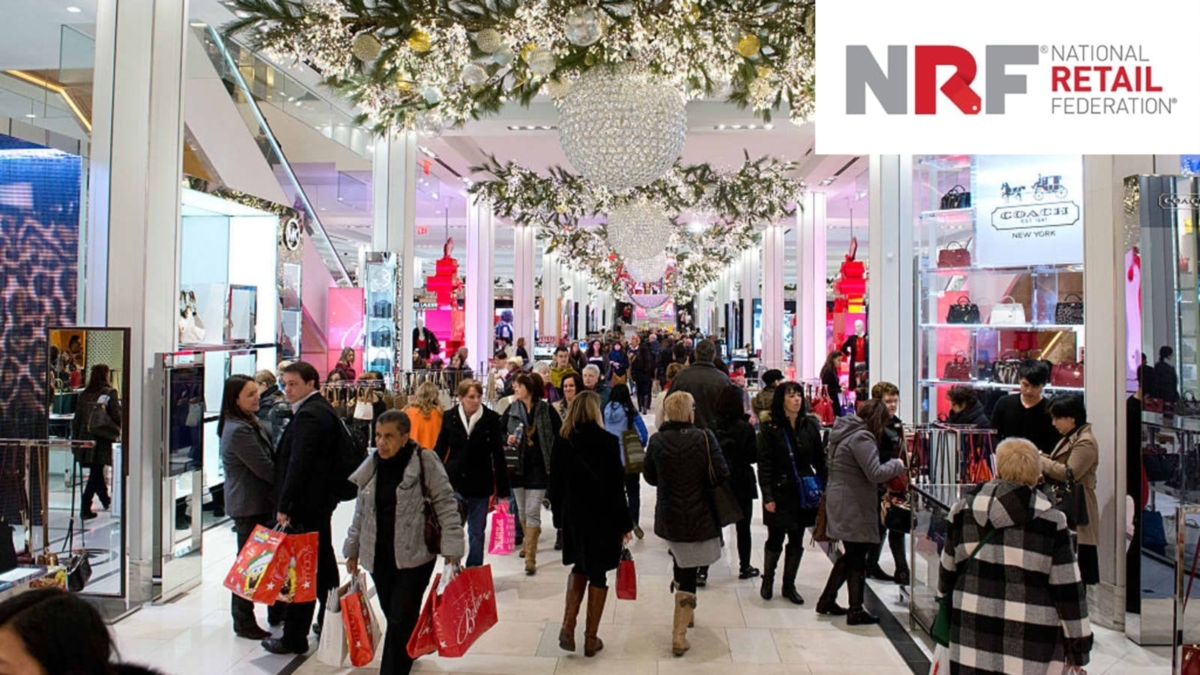
The National Retail Federation (NRF) predicts Americans will spend $1.01 trillion on holiday shopping in November and December. That is a 4.2% jump from $972 billion last year.
NRF said its forecast was based on economic modeling that incorporates consumer spending, employment, wages and historical retail sales data. It excludes automobile, gasoline and restaurant sales
Extra Hiring: To handle the surge in shoppers, stores plan to hire 325,000 to 375,000 temporary holiday workers.
Mixed Budget Impact: Higher gas prices and inflation could still strain some family budgets, affecting low- and high-income shoppers differently.
Retailers expect a strong shopping season because people continue to make holiday spending a priority.
Store owners are ready to attract shoppers by offering competitive prices, deals, and choices for every budget.
While overall buying power remains high, ongoing inflation and rising household costs mean some families will have to watch their spending more carefully than others.



Belgian Consul General H. E. Mr. Pierre Stverlynck Graces BDB Annual Day

Limelight Lab Grown Diamonds Crosses 100 Stores Milestone This Dussehra: Targets 200 In 2027

Joyalukkas Opens Its 2nd Bengaluru Showroom in Jayanagar

US Holiday Shopping Expected To Top $1 Trillion For The First Time: NRF
Belgian Consul General H. E. Mr. Pierre Stverlynck Graces BDB Annual Day
Limelight Lab Grown Diamonds Crosses 100 Stores Milestone This Dussehra: Targets 200 In 2027
-
 International News13 hours ago
US Holiday Shopping Expected To Top $1 Trillion For The First Time: NRF
-
 National News7 hours ago
Belgian Consul General H. E. Mr. Pierre Stverlynck Graces BDB Annual Day
-
 National News7 hours ago
Limelight Lab Grown Diamonds Crosses 100 Stores Milestone This Dussehra: Targets 200 In 2027
-
 New Premises8 hours ago
Joyalukkas Opens Its 2nd Bengaluru Showroom in Jayanagar
