International News
Gold, silver regain ground after a sharp fall on renewed safe-haven demand
Bullion rebounds as geopolitical risks revive safe-haven buying, even as higher oil prices delay expectations of Federal Reserve rate cuts.


Gold and silver regained ground on Wednesday (March 4) after a sharp fall on Tuesday (March 3), reflecting renewed safe-haven demand amid geopolitical tensions and market volatility.
Gold had retreated sharply overnight as markets moved beyond initial Middle East tensions and shifted focus to Federal Reserve policy repricing. While threats to the Strait of Hormuz lifted crude prices, the inflationary impact of higher energy costs complicated bullion’s outlook. Elevated oil prices challenge the Fed’s disinflation path, prompting traders to push expected rate cuts from June/July toward September.
The threat to the Strait of Hormuz has driven crude prices higher, but the implications for Gold are more complex than a simple risk-off rally. While geopolitical tensions typically support bullion, the resulting spike in energy costs also raises the prospect that global inflation could remain elevated for longer than previously expected.
Higher oil prices act as a direct challenge to the Fed’s disinflation narrative. Energy costs effectively operate as a tax on economic activity while simultaneously pushing headline inflation higher. As a result, traders have begun pushing back expectations for the next Fed rate cut from June or July toward September.
That shift implies a longer period of policy restraint as the Fed waits to assess how persistent the energy shock may prove. If inflation expectations begin to rise again, policymakers are likely to remain cautious, preferring to keep rates higher for longer until the second-round effects of oil prices become clearer.



International News
Consortium Led By Former De Beers CEO Gareth Penny Selected As The Preferred Bidder To Acquire De Beers
Botswana is expected to play a pivotal role in the transaction. The country, together with Namibia, Angola and other shareholders, already owns a 15% stake in De Beers

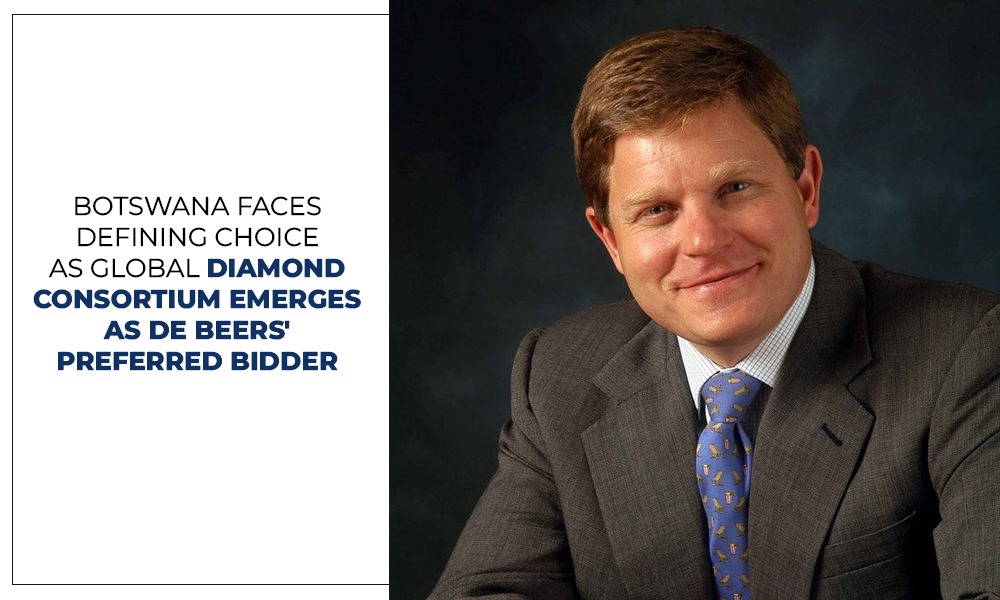
A consortium headed by former De Beers CEO Gareth Penny has been selected as the preferred bidder to acquire De Beers, according to Botswana’s Minister for State President, Defence and Security, Moeti Mohwasa.
Speaking on the development, Mohwasa said Anglo American conducted a competitive sale process involving three shortlisted bidders before identifying the Global Diamond Consortium as its preferred choice.
Anglo American announced plans to divest De Beers in May 2024 as part of a broader restructuring strategy, driven by prolonged weakness in the diamond market and other business priorities.
The sale process has attracted significant interest from industry leaders and investors. Among those previously linked to the bidding were former De Beers CEO Bruce Cleaver, Australian mining executive Michael O’Keeffe, Indian billionaire Anil Agarwal, and Indian diamond companies KGK Group and Kapu Gems.
Botswana is expected to play a pivotal role in the transaction. The country, together with Namibia, Angola and other shareholders, already owns a 15% stake in De Beers and retains important rights under the shareholder agreement. Mohwasa emphasized that Botswana has the flexibility to either join the preferred bidder as a strategic partner or exercise its pre-emptive rights independently or with another investor.
Industry observers believe the eventual owner will seek to preserve De Beers’ vertically integrated business model, spanning diamond mining, trading and global natural diamond marketing, while positioning the company to benefit from a potential recovery in natural diamond demand and prices.



Van Cleef & Arpels Unveils ‘Fascinating Egypt’ High Jewellery Collection Inspired By Ancient Civilisation

Bollywood Star Rakul Preet Singh Unveils Senco Gold & Diamonds’ Flagship Store in Bhubaneswar

Rajiv Jain Elected Chairman Of Jaipur Jewellery Show
Van Cleef & Arpels Unveils ‘Fascinating Egypt’ High Jewellery Collection Inspired By Ancient Civilisation
Bollywood Star Rakul Preet Singh Unveils Senco Gold & Diamonds’ Flagship Store in Bhubaneswar

Vinsmera Jewels Expands UAE Presence With Soft Opening Of New Al Barsha Showroom In Dubai
-
 BrandBuzz2 minutes ago
Van Cleef & Arpels Unveils ‘Fascinating Egypt’ High Jewellery Collection Inspired By Ancient Civilisation
-
 New Premises2 hours ago
Bollywood Star Rakul Preet Singh Unveils Senco Gold & Diamonds’ Flagship Store in Bhubaneswar
-
 BrandBuzz23 hours ago
FIFA Unveils First-Ever 18K Gold Diamond Championship Rings to celebrate Spain’s World Cup Victory
-

 National News22 hours ago
Nature’s Elegance, Reimagined: Lotus Arts De Vivre’s Cape Gooseberry Earrings Continue To Captivate