National News
GJNRF Receives Prestigious Award for Outstanding Contribution to Social Consciousness
.


The Gem & Jewellery National Relief Foundation (GJNRF) was honored with the “Award for Outstanding Contribution to Social Consciousness” at the World CSR Day event held at Taj Lands End, Bandra. Presented by the World CSR Congress and Awards, this accolade celebrates GJNRF’s impactful work in corporate social responsibility, sustainability, and community development. The foundation has been recognized for its tireless efforts in improving social welfare, promoting environmental sustainability, and driving positive change within the gem and jewelry industry.
GJNRF’s initiatives, ranging from education and healthcare to disaster relief, have made a lasting impact on marginalized communities and environmental preservation. This prestigious award reflects the foundation’s commitment to fostering social consciousness and creating a better future through corporate responsibility, collaborating with industry leaders, non-profits, and government bodies to create lasting, transformative change.








National News
CAG Flags Oversight Gaps In Gold Hallmarking
A Draft Report Finds Over 81% Of Registered Jewelers Went Uninspected Over A FiveYear Period, Prompting Industry Calls For Stricter Enforcement and Upgraded Anti-Counterfeiting Technology

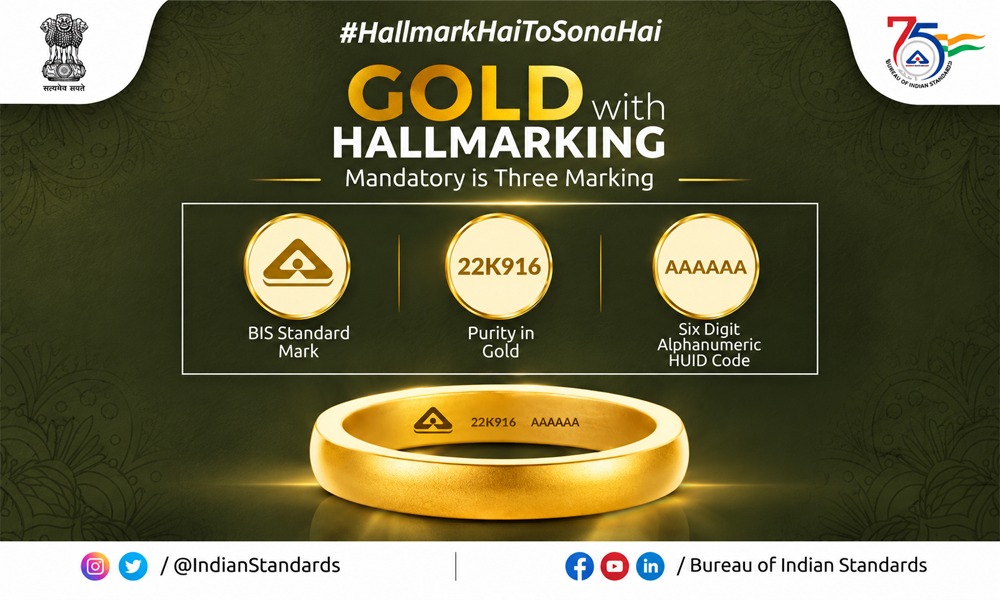
India’s top government auditor has uncovered sweeping enforcement lapses in the country’s mandatory gold hallmarking regime, finding that more than four-fifths of registered jewelry retailers went years without a regulatory inspection
In a draft audit report, the Comptroller and Auditor General of India (CAG) said more than 81% of licensed jewelry shops were not inspected by the Bureau of Indian Standards (BIS) over the preceding five years. Under existing protocols, the BIS—the national standards body—or its authorized assaying and hallmarking centers are expected to conduct annual compliance audits of license holders.
The findings highlight acute regulatory bottlenecks in the world’s second-largest gold-consuming market, where rapid formalization of the retail bullion sector has outpaced oversight infrastructure. According to the report, the BIS cited staffing shortages and inadequate testing facilities for the compliance backlog—an explanation the federal auditor rejected.
Currently, the BIS oversees more than 232,000 registered jewelers nationwide, supported by roughly 1,565 gold hallmarking centers across 392 districts, alongside 327 recognized centers for silver.
Jewelry industry executives said the audit underscores the need to overhaul enforcement logistics, expand testing infrastructure, and deploy stronger anti-counterfeiting technology to protect consumer trust.
Monitoring more than 232,000 registered jewelers with limited BIS resources is a significant challenge, retailers must also bolster internal quality controls and documentation to maintain buyer confidence.
Industry representatives noted that mandatory hallmarking currently covers only about half of India’s districts, leaving substantial geographic gaps.
The All India Gem and Jewellery Domestic Council (GJC) has lobbied regulators to shift mandatory hallmarking from the first point of sale to the final retail point of sale to tighten accountability. Following discussions with trade representatives, BIS officials indicated they plan to ramp up recruitment and market sampling, according to industry participants.
Market insiders also warned that weak physical oversight increases the risk of fraud, particularly regarding the Hallmark Unique Identification (HUID) system—a six-digit alphanumeric code stamped onto each piece of jewelry to allow digital tracking.
Trade body leaders warned of potential duplication of HUID codes and called for more frequent inspections and upgraded technological safeguards. Retailers added that while the hallmarking framework has resolved many legacy purity issues, it continues to face teething troubles that make store reputation critical.
To clear the inspection backlog, industry representatives and trade analysts have advocated for decentralizing the audit process, potentially bringing in third-party auditors and encouraging voluntary compliance disclosures from retailers.
Consumer Safeguards: Five Checks for Gold Buyers
Amid the regulatory scrutiny, jewelry executives and trade representatives outlined five verification steps consumers should take when purchasing gold:
Vet the Retailer: Prioritize established, reputable jewelers, as brand accountability remains a primary safeguard where regulatory inspections lag.
Inspect the Three Mandatory Marks: Confirm that the piece carries the official BIS triangular logo, the stated purity grade (such as 22K916), and a six-digit HUID code.
Verify via the BIS Care App: Cross-check the item’s six-digit HUID on the government’s official BIS Care mobile application to ensure the registered weight, purity, and article description match the physical piece
Audit the Invoice: Demand an itemized tax invoice detailing the HUID, purity, applicable making charges, and—for studded pieces—the net weight of the gold excluding stones.
Retain Documentation for Recourse: Keep the original receipt. Buyers who suspect a purity discrepancy can have the item tested at a BIS-recognized assaying center and file a formal regulatory complaint against the seller if the metal falls short of its stated grade.



Redefining Fine Jewellery: How Technological Innovation, Haute Couture Synergy, and Avant-Garde Palettes Are Shaping The Festive & Wedding Season

CAG Flags Oversight Gaps In Gold Hallmarking

ALROSA Recognizes Cinematic Excellence With Twelve Rare Natural Diamonds

Natural Diamond Prices Show Split Based On Carat Weight
Redefining Fine Jewellery: How Technological Innovation, Haute Couture Synergy, and Avant-Garde Palettes Are Shaping The Festive & Wedding Season
CAG Flags Oversight Gaps In Gold Hallmarking
-
 DiamondBuzz1 day ago
Natural Diamond Prices Show Split Based On Carat Weight
-
 JB Insights7 minutes ago
Redefining Fine Jewellery: How Technological Innovation, Haute Couture Synergy, and Avant-Garde Palettes Are Shaping The Festive & Wedding Season
-
 National News44 minutes ago
CAG Flags Oversight Gaps In Gold Hallmarking
-

 National News4 hours ago
Indians Bought Approx. 52 Tonnes Of Gold Worth ₹72,000 cr, 300 Tonnes Of Silver Valued At ₹5,400 cr During The Dhanteras–Diwali.