OurBuzz
GJIIF 2024- Akshaya Tritiya Edition inaugurated in Chennai

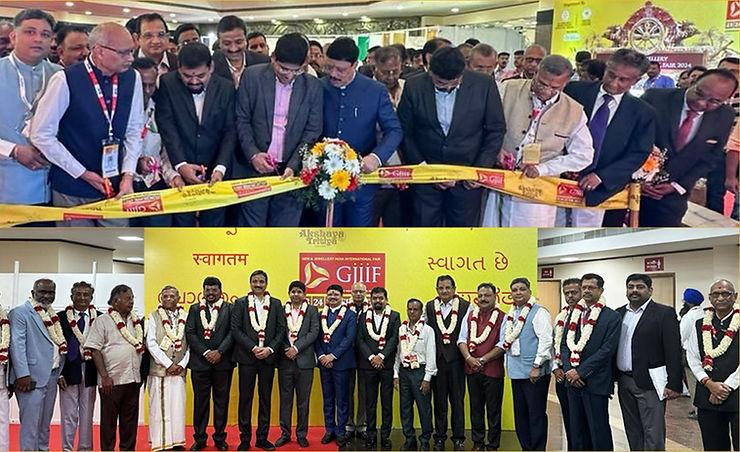
GJIIF 2024- Akshaya Tritiya Edition opened in Chennai today.GJIIF is India’s largest B2B expo for South Indian jewellery. The show runs from Feb 23 to 25.
The show was formally inaugurated by leaders and dignitaries of the GJ industry including Saiyam Mehra, Chairman- GJC, Jayantilal Challani, President – MJDTA, B. Sabarinath, President-TNJF, A.S. Sriram, Past President-TNJF, B.A.Ramesh, Joint MD-Thangamayil Jewellery, S.Santhakumar, Secretary-MJDTA, Yogesh Kothari, Treasurer- MJDTA and V.K Manoj of United Exhibitions .
GJIIF is jointly organized by The Jewellers & Diamond Traders Association –Madras (MJDTA) and TN Jewellers Federation (TNJF) and supported by NGJCI and IBJA.The Show Manager is United Exhibitions.








DiamondBuzz
Sarine Expands Indian Footprint, Unveils GCAL Laboratory In Mumbai
The facility is located in the SEEPZ, a major hub for India’s gem and jewelry export trade. By establishing a footprint directly within SEEPZ, the company aims to streamline logistics for local manufacturers and international exporters.


Israel-based diamond technology firm Sarine Technologies has officially inaugurated a new GCAL by Sarine jewelry certification and quality assurance laboratory in Mumbai, marking a key expansion in one of the world’s primary gem manufacturing markets. The opening of our SEEPZ lab expands GCAL by Sarine’s capabilities in India into jewelry certification and brings services closer to manufacturers and exporters
The facility is located in the Santacruz Electronics Export Processing Zone (SEEPZ), a major hub for India’s gem and jewelry export trade. By establishing a footprint directly within SEEPZ, the company aims to streamline logistics for local manufacturers and international exporters.
Key Takeaways for Investors and Industry Watchers:
- Strategic Positioning: Operating inside SEEPZ cuts turnaround times for major manufacturers, addressing growing industry demand for localized supply chain efficiency.
- Global Network: The Mumbai lab complements existing GCAL by Sarine grading facilities in Surat—India’s diamond-cutting epicenter—and New York, linking crucial production pipelines directly to the U.S. consumer market.
- Service Expansion: The new center broadens Sarine’s core offerings in the region beyond rough and polished diamond analysis to include full-scale finished jewelry certification.



Palmonas Celebrates Its 101st Store, Marking A Journey Built On Trust, Community and A New Way Of Experiencing Jewellery

Imposition Of MDR On UPI Transactions Imposes Additional Financial Burden On Gold Trade Sector — KGSMA

GJC Is Concerned and Disappointed With The Introduction Of MDR On UPI Merchant Transactions Above ₹2,000
Palmonas Celebrates Its 101st Store, Marking A Journey Built On Trust, Community and A New Way Of Experiencing Jewellery
GJC Is Concerned and Disappointed With The Introduction Of MDR On UPI Merchant Transactions Above ₹2,000
Imposition Of MDR On UPI Transactions Imposes Additional Financial Burden On Gold Trade Sector — KGSMA
-
 National News2 hours ago
Palmonas Celebrates Its 101st Store, Marking A Journey Built On Trust, Community and A New Way Of Experiencing Jewellery
-
 National News2 hours ago
GJC Is Concerned and Disappointed With The Introduction Of MDR On UPI Merchant Transactions Above ₹2,000
-
 National News2 hours ago
Imposition Of MDR On UPI Transactions Imposes Additional Financial Burden On Gold Trade Sector — KGSMA
-

 National News2 hours ago
High-Value UPI Payments To Attract 0.4% MDR From October 15