National News
GJEPC Urges RBI To Ease Banking Norms To Boost GJ Exports
The GJEPC’s Proposals Focus Heavily On Optimizing Working Capital, Resolving Systemic Bottlenecks, and Updating Rules To Align With Modern Trading Realities

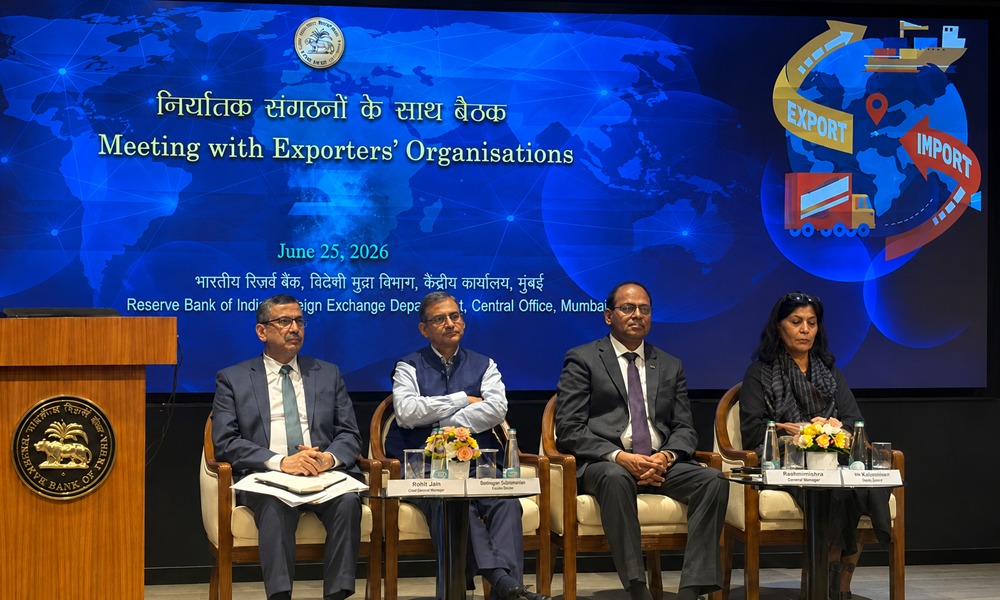
In a high-level meeting at the Reserve Bank of India (RBI) Central Office in Mumbai, the Gem & Jewellery Export Promotion Council (GJEPC) urged the central bank to ease banking norms and regulatory frameworks. Led by Executive Director Sabyasachi Ray and BITC Convener Mital Doshi, the GJEPC delegation met with RBI Governor Sanjay Malhotra and Deputy Governor Rohit Jain to present a comprehensive roadmap aimed at boosting India’s gem and jewellery exports, lowering transaction costs, and enhancing global competitiveness.
The GJEPC’s proposals focus heavily on optimizing working capital, resolving systemic bottlenecks, and updating rules to align with modern trading realities:
- Easing Import & Advance Remittances: To secure easier access to raw materials, the Council requested a calibrated relaxation allowing advance remittances of up to US$500,000 for gold imports from OECD- and LBMA-approved suppliers. They also requested permission for advance payments on critical manufacturing inputs like findings and mountings.
- Systemic and Digital Integration: Highlighting persistent operational issues within the IDPMS and EDPMS systems (specifically legacy entries affecting credit access), GJEPC proposed a deeper integration between RBI, DGFT, and Customs systems to eliminate delays.
- Support for MSMEs and Standardized Banking: The Council urged the RBI to mandate reasonable banking service charges for MSME exporters. Furthermore, they called for uniform implementation across Authorised Dealer (AD) Banks regarding the regularisation of low-value export shipping bills (up to Rs. 10 lakh) and the revised FEMA regulations.
- E-commerce and Returns Framework: To support the rapid rise of online jewellery retail, GJEPC requested clear, uniform guidelines for handling returned overseas goods and refunding export proceeds, especially for low-value items or items warehoused abroad.
- Extension of Realisation Periods: GJEPC advocated for restoring the export proceeds realisation period for Special Economic Zone (SEZ) units from 9 months back to 12 months. The Council noted that shorter timelines weaken India’s position against rival hubs like the UAE, Hong Kong, and Thailand, which accommodate the industry’s inherently longer credit cycles.
- Dual-Framework for Gold: A key proposal involves creating a clear regulatory distinction between domestic gold and export gold. GJEPC suggested that export-linked Gold Metal Loans operate under a separate framework to protect export production.
In response, RBI officials highlighted several ongoing and upcoming initiatives designed to facilitate smoother trade and improve credit flow:
Key RBI Takeaways:
- FEMA Overhaul: Revised FEMA (Export and Import of Goods and Services) Regulations are set to take effect on 1 October 2026.
- Trade Liberalization: Continued enhancements to EDPMS, liberalized norms for overseas warehouses, and the active promotion of INR trade settlements.
- MSME & Credit Support: Implementation of a revised interest subvention scheme, lower risk weights, and enhanced prudential norms to boost export credit availability while ensuring bank charges remain fair.


National News
Augmont-NSE Partnership Drives Strong Start for India’s Gold EGR Market, with Over 1,60,357 Units Traded in First Few Hours
Electronic Gold Receipts segment witnesses active two-way trading on day one, with 1,60,375 units traded, representing approximately 6 kg of gold and a traded value of ₹23.34 crore as of 04:25 PM

India’s gold market took an important step towards greater integration with the commencement of live trading in the Electronic Gold Receipts (EGR) segment on the National Stock Exchange of India (NSE) today. Enabled through the collaboration between NSE and Augmont Enterprises Limited, the launch brings together NSE’s regulated exchange infrastructure and Augmont’s integrated physical gold ecosystem, creating a new avenue for investors to trade physically backed gold.
On its opening day, the EGR segment witnessed active two-way trading, with 1,60,357 units traded by approximately 04:25 PM, representing around 6 kg of gold. The trading activity translated into a cumulative traded value of approximately Rs.23.34 crore during the first session. The segment also demonstrated orderly price discovery, with prices remaining within a narrow intraday range of Rs.1,450.50 to Rs.1,460.00. The bid-ask spread remained between Rs.0.50 and Rs.1.00, indicating continuous two-way quotations and an active order book.
Each EGR represents 100 mg of physical gold, with the underlying gold held in SEBI-regulated vaults. Investors can buy and sell EGRs through their demat accounts on the exchange, while retaining the option of converting their holdings into physical gold, subject to the applicable framework. The segment follows a T+1 settlement cycle, under which trades executed on a particular day are settled on the next business day, facilitating the transfer of securities and funds through the exchange’s regulated clearing and settlement mechanism.
Under the strategic collaboration, Augmont serves as a key physical gold and infrastructure partner for NSE’s EGR segment, supporting the creation, vaulting, redemption and liquidity ecosystem. The gold backing the EGRs is sourced through Augmont’s integrated refining infrastructure, bringing together physical gold processing and exchange-based trading within a regulated framework.
The commencement of live trading marks an important step towards building a more transparent and accessible gold market in India. By enabling standardised gold to be traded through an exchange-based mechanism, EGRs have the potential to strengthen price discovery, improve market participation and create a more integrated ecosystem for physical gold.
Ketan Kothari, Whole-time Director, Augmont Enterprises Limited, said:

“The commencement of EGR trading marks the transition of our collaboration with NSE from building the underlying infrastructure to enabling a live, exchange-traded gold market. The day-one trading activity, continuous two-way quotations and orderly price discovery are important initial milestones for a new market segment.
At Augmont, we have brought together our refining capabilities and physical gold infrastructure to support the creation, vaulting and redemption of EGRs. We believe this initiative can play an important role in making physical gold more accessible, transparent and integrated with India’s formal financial ecosystem. Our focus remains on strengthening the ecosystem and supporting its wider adoption among investors, brokers and other market participants.“



Gauri Khan in ZOYA High Jewellery Collection Her Again

DP Jewellers Emerges As The First Choice Of Millions Of Customers On The Auspicious Occasion Of Dhanteras

Augmont-NSE Partnership Drives Strong Start for India’s Gold EGR Market, with Over 1,60,357 Units Traded in First Few Hours

Dhanteras Gold Business Across India Estimated at Approximately ₹60,000 Crore – A Promising Start for the Jewellery Industry: GJC
Augmont-NSE Partnership Drives Strong Start for India’s Gold EGR Market, with Over 1,60,357 Units Traded in First Few Hours
Gauri Khan in ZOYA High Jewellery Collection Her Again
-
 JB Insights11 hours ago
Dhanteras Gold Business Across India Estimated at Approximately ₹60,000 Crore – A Promising Start for the Jewellery Industry: GJC
-
 National News7 hours ago
Augmont-NSE Partnership Drives Strong Start for India’s Gold EGR Market, with Over 1,60,357 Units Traded in First Few Hours
-
 BrandBuzz3 hours ago
Gauri Khan in ZOYA High Jewellery Collection Her Again
-
 BrandBuzz4 hours ago
DP Jewellers Emerges As The First Choice Of Millions Of Customers On The Auspicious Occasion Of Dhanteras