
JB Insights
GJC’s Preferred Manufacturer of India enhances brand image and expansion of market share
PMI at Goa ends on a high note with 42 participants, 180+ select retailers, 2127+ successful meetings


GJC’s Preferred Manufacturer of India (PMI) held at Grand Hyatt Goa from 12th – 14th June 2024 underscored the programme’s positioning as GJC’s exclusive B2B marketing platform for manufacturers & wholesalers, providing 360° solutions to participants by fulfilling several business objectives.
PMI concluded on a successful note with 42 participating manufacturers and 180+ select retailers visiting the show. 2127+ successful meetings were conducted and two Networking Nights were held – a glorious mixture of business and entertainment.
PMI works to enhance the brand’s image and expansion of market share by establishing and reinforcing business relationships with prominent retailers of India. PMI enables businesses to focus on increasing profitability by offering them a competitive advantage, serve as well as reduce marketing and promotional costs.

Sayyam Mehra, Chairman, GJC, said:“We have received an overwhelming response for the Goa PMI. Our deepest thanks to the industry for their incredible support. In response to this enthusiasm, we are excited to announce the next 7 PMI shows, scheduled between November 2024 and November 2026, along with the dates and cities. We assure our participants and retailers that they will find significant value in these upcoming events.”
Rajesh Rokde, Vice Chairman, GJC, said: “Goa PMI has significantly impacted the buyer-seller networking format, creating valuable connections and opportunities. To continue this legacy, we are excited to announce 7 shows over the next two years. We are confident that these upcoming shows will further enhance the benefits for all participants and stakeholders, that they will find significant value in these upcoming events.”


Madan Kothari, Convener, PMI, said:“The faith shown by over 42 participants and over 180 retailers is the cornerstone of Goa PMI’s success. To maintain this momentum, we are excited to announce seven upcoming shows. The November 2024 event in Chennai will conclude our 26th edition, and the first show of our 27th edition will kick off in February 2025. Thank you for your continued support and trust in our journey!”
Chetan Thadeshwar, Joint Convener, PMI, said:“The PMI continues to improve with each show, and Goa PMI is a perfect example of this progress. The positive feedback from our participants and retailers has greatly boosted our confidence. We promise that the upcoming shows will be even more exceptional, delivering greater value and opportunities for everyone involved.”
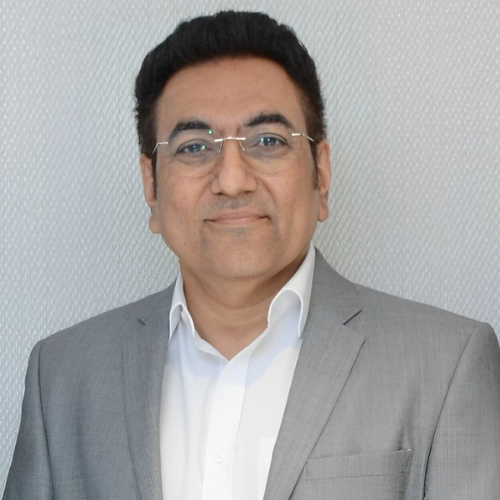
Kamal Singhaniya, Co-Convener, PMI, said: “PMI Goa was where luxury intertwined with business and offered a dynamic blend of innovation and upgrades. The event provided a perfect mix of fun and professionalism, elevating attendees’ experience with premium B2B excellence that they will find significant value in these upcoming events.”










JB Insights
From Customer Intelligence To Autonomous Growth Intelligence: Deepansh Bhargava Senior Vice President & Head Marketing at VBJ
From Customer Intelligence To AI-powered Growth Decisions, The Next-Gen CDP Is Built To Create Measurable Incremental Value.

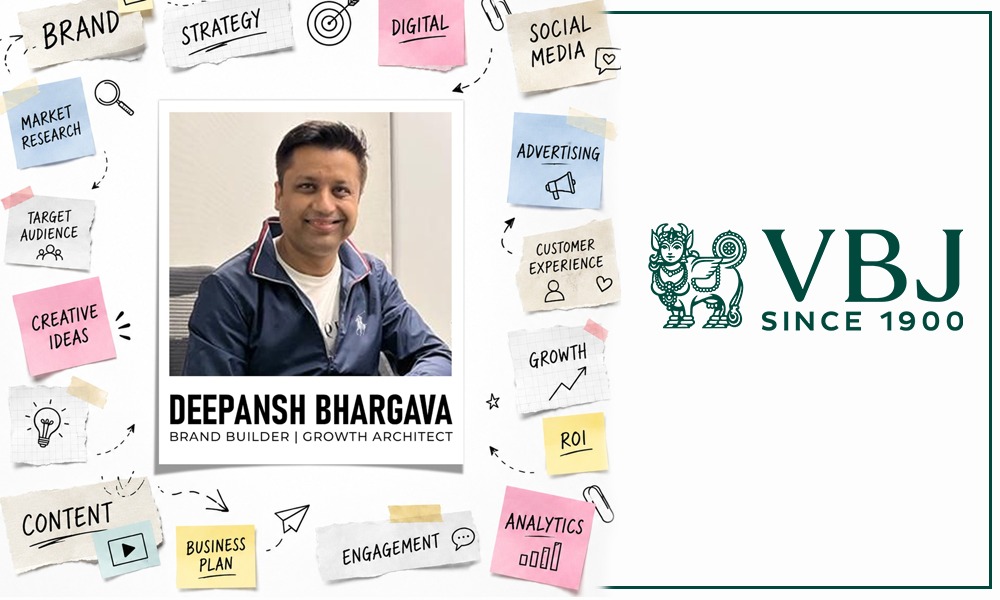
For the last 6 years, Customer Data Platforms have transformed how brands understand their customers. They have brought fragmented data together, created unified customer profiles, enabled segmentation and made personalisation more intelligent. But the next evolution of CDPs will not be defined by how much customer data they can organise. It will be defined by how intelligently AI can convert that data into consumer value and incremental business outcomes.
The shift is from Customer Intelligence to Growth Intelligence.
Businesses today know more about their existing customers than ever before their purchase history, frequency, preferences, lifetime value and likelihood of buying again. Yet the larger opportunity lies in moving beyond what customers did to understanding what they need next, where their behaviour is changing and where the next phase of growth will come from. This also requires a sharper focus on incrementality.
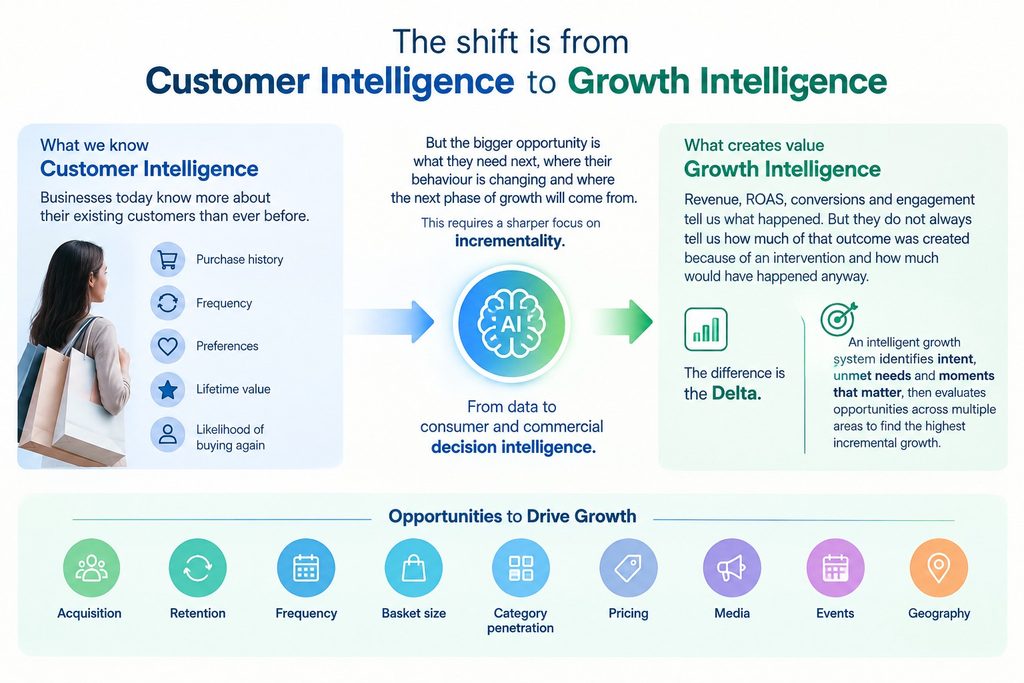
Revenue, ROAS, conversions and engagement tell us what happened. But they do not always tell us how much of that outcome was created because of an intervention and how much would have happened anyway.
That difference is the Delta. AI can help take CDPs beyond systems of customer intelligence and turn them into systems of consumer and commercial decision intelligence. Instead of simply identifying customers with a high propensity to purchase, an intelligent growth system could identify intent, unmet needs and moments that matter then evaluate opportunities across acquisition, retention, frequency, basket size, category penetration, pricing, media, events and geography to identify where the highest incremental growth opportunity lies.
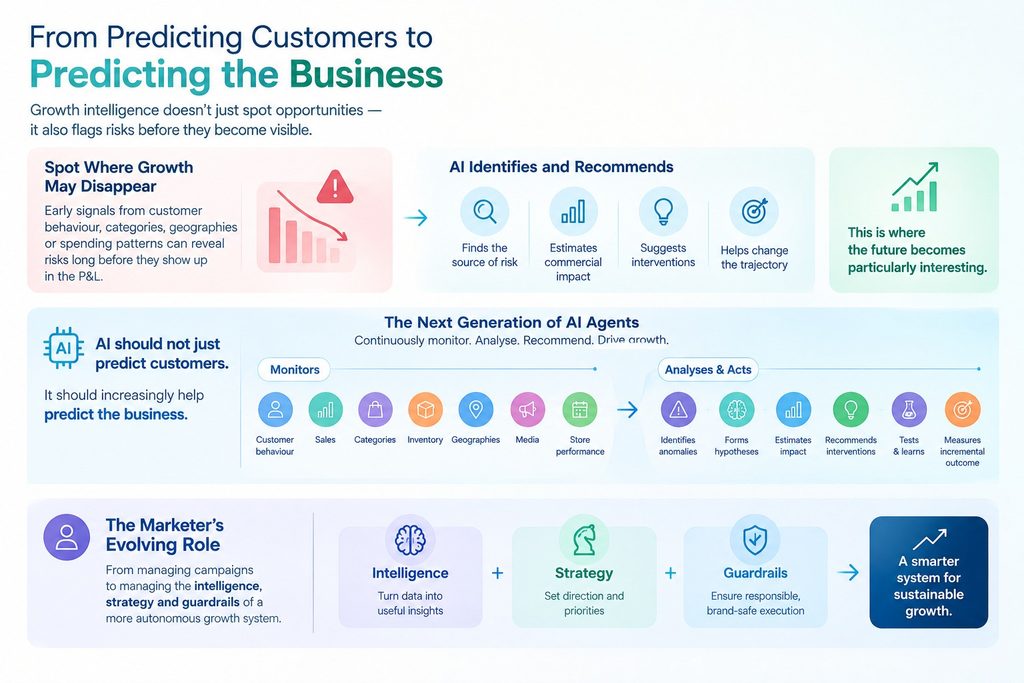
Growth intelligence should also help businesses identify where growth is likely to disappear. Early signals from customer behaviour, categories, geographies or spending patterns could reveal risks long before they become visible in the P&L. AI could identify the source of the risk, estimate its potential commercial impact and recommend interventions to change the trajectory. This is where the future becomes particularly interesting.
AI should not just predict customers. It should increasingly help predict the business.
The next generation of AI agents could continuously monitor customer behaviour, sales, categories, inventory, geographies, media and store performance. They could identify anomalies, form hypotheses, estimate commercial impact, recommend interventions, test them and measure the incremental outcome.
The role of the marketer would evolve from simply managing campaigns to managing the intelligence, strategy and guardrails around a more autonomous growth system.
This evolution can be built around three principles: Anticipate, Act and Account.
1. Anticipate where consumer needs and growth will emerge and where they may disappear.
2. Act by identifying and eventually executing the most relevant intervention for the consumer and the business.
3. Account for whether that intervention genuinely created incremental value.
The CDP of the future, therefore, should move beyond being a platform that simply manages customer data. It should become a Growth Decision Platform one that helps businesses understand consumers better, identify opportunities, detect risks, recommend actions, measure incrementality and continuously learn from every intervention. The ultimate measure of such a platform should not be the volume of data it manages.
It should be much simpler:
Show me the Delta you create.
Because ultimately, consumer centricity is not the opposite of growth. It is where sustainable growth begins.



Adv. S. Abdul Nazar, State General Secretary Of KGSMA, Met With Chief Minister Sri V.D. Satheesan

MCX Gold Futures Traded Flat,Silver Prices Decline

Union Home Minister Shri Amit Shah Graces 52nd India Gems & Jewellery Awards; GJEPC Charts US$100 Billion Export Vision For Indian Gem & Jewellery Industry
Adv. S. Abdul Nazar, State General Secretary Of KGSMA, Met With Chief Minister Sri V.D. Satheesan
Union Home Minister Shri Amit Shah Graces 52nd India Gems & Jewellery Awards; GJEPC Charts US$100 Billion Export Vision For Indian Gem & Jewellery Industry

Limelight Lab Grown Diamonds Inaugurates Showroom In Kalyan, Its 8th Exclusive Store MMR
-
 National News3 hours ago
Adv. S. Abdul Nazar, State General Secretary Of KGSMA, Met With Chief Minister Sri V.D. Satheesan
-
 National News4 hours ago
Union Home Minister Shri Amit Shah Graces 52nd India Gems & Jewellery Awards; GJEPC Charts US$100 Billion Export Vision For Indian Gem & Jewellery Industry
-
 National News4 days ago
Limelight Lab Grown Diamonds Inaugurates Showroom In Kalyan, Its 8th Exclusive Store MMR
-
 National News4 hours ago
MCX Gold Futures Traded Flat,Silver Prices Decline
