
JB Insights
Future of natural diamonds challenging; holds promise of transformation: BCG report


A new report by the Boston Consulting Group (BCG), commissioned by De Beers Group, unveils the critical factors that will shape the future of the natural diamond market.
In an era marked by rapid changes and emerging challenges, the natural diamond industry stands at a pivotal juncture. A recent report by the Boston Consulting Group (BCG), commissioned by De Beers Group, sheds light on the critical factors shaping the future of the natural diamond sector. With primary diamond supply projected to decline and demand dynamics evolving, the industry is poised for a significant transformation, it notes.

The cornerstone of the natural diamond industry’s future is the anticipated decline in primary supply. The report highlights that the primary production of natural diamonds is expected to decrease by approximately 1% CAGR over the next decade. This decline is driven by the diminishing yields from ageing mines, a scarcity of new discoveries, and constrained exploration budgets over the past ten years. While there is potential for some increase through brownfield expansions, the overall outlook suggests a tightening of supply.
Recycled diamonds, often seen as a secondary supply source, are not expected to significantly impact the market within the next ten years. They are projected to contribute less than 10% of the total supply of natural polished diamonds. This limited impact underscores the industry’s reliance on primary sources and the inherent stability provided by constrained supply.
On the demand side, the future of natural diamonds is influenced by global economic factors and changing consumer preferences. The report identifies three key dynamics that will shape demand: the continuing rise of brands, the adoption of lab-grown diamonds (LGDs), and the evolving desires of the growing middle class in Asia.
The report notes that the natural diamond industry has a unique opportunity to catalyse collaboration across the value chain. It calls for industry participants to unite in restoring the desire for natural diamonds, stimulating demand in new demographics, and creating new purchase occasions. This collective effort is seen as essential to maintaining the desirability and value of natural diamonds in a competitive market.
Effective marketing strategies and a clear strategic direction are pivotal for the industry’s future. The report emphasises the need for continuous efforts to build desirability among US consumers and to expand market presence in Asia. By leveraging historical marketing successes and adapting to contemporary consumer trends, the natural diamond industry can navigate the current challenges and secure a bright future.

As the natural diamond industry faces a critical moment, the insights from BCG’s report provide a roadmap for navigating the evolving landscape. With a focus on strategic collaboration, effective marketing, and adapting to shifting demand dynamics, the industry can harness the opportunities presented by constrained supply and changing consumer preferences.
The future of natural diamonds, while challenging, holds the promise of transformation and renewed growth, the BCG report notes.







JB Insights
The New Jewellery Shopper: Why Trust Is Becoming The New Retail Currency
As Shoppers Arrive More Informed and Digitally Connected, Jewellery Retailers Are Shifting From Product-Led Selling To Trust-Led Experiences, Where Transparency, Personalisation and Confident Decision-Making Shape The Path To Purchase.

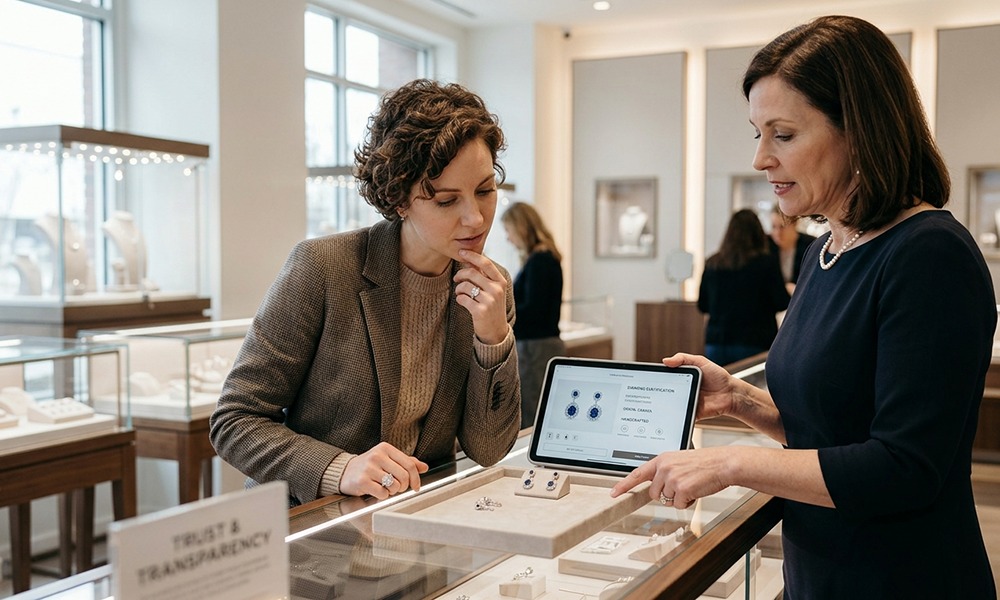
As jewellery consumers become more informed and value-conscious, retailers are discovering that the path from interest to purchase is increasingly shaped by trust, transparency and the quality of the buying experience.
There was a time when a customer walked into a jewellery showroom with a fairly simple expectation: find something beautiful, understand the price and make a purchase.
That equation is changing
The modern jewellery shopper may enter the store only after days or even weeks of digital research. Designs have already been compared, prices explored, brands evaluated and customer reviews considered. By the time the customer meets a salesperson, much of the discovery process may already have taken place online.
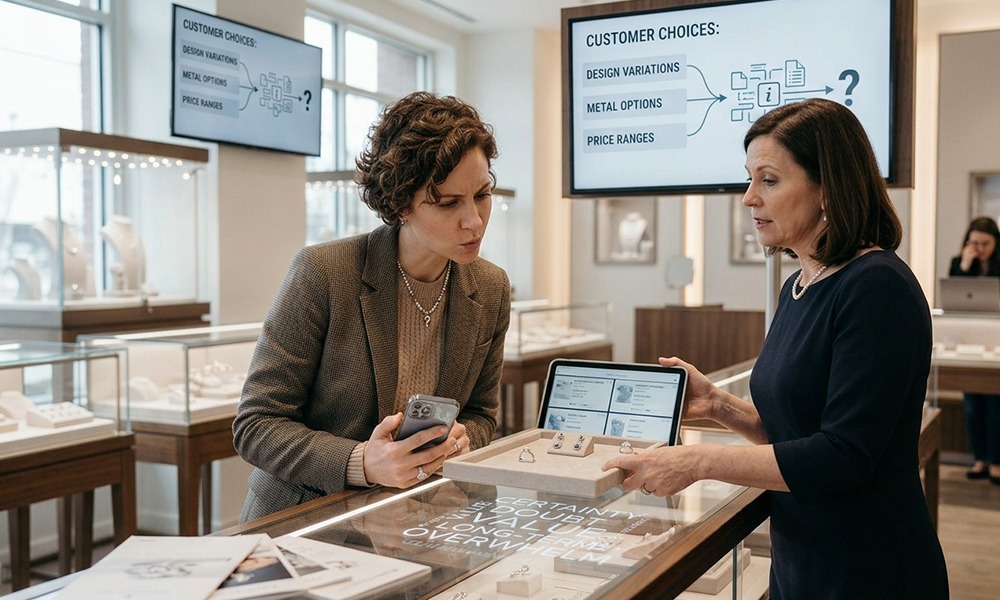
What remains is the more difficult part — making the customer feel certain.
This shift is quietly changing the dynamics of jewellery retail. The competitive advantage is no longer determined only by inventory, location or design assortment. Increasingly, it lies in how effectively a retailer can remove doubt and create confidence during the buying journey.
A Customer Who Arrives Informed
The jewellery customer of today is far more exposed to information than previous generations. Social media, brand websites, digital catalogues and online communities have made it easier to compare designs, materials, prices and brands before making a showroom visit.
But information does not always create certainty.
In fact, having too many choices and too much information can sometimes make the final decision more difficult. A customer may know exactly what they like but still hesitate over whether it represents the right value, the right style or the right long-term choice.
That gap between information and confidence is where the modern jewellery retailer increasingly has to operate.
The Retail Conversation Is Changing
The traditional sales conversation often begins with the product: its weight, design, stones, craftsmanship and price.
The emerging approach begins with the customer.
Why is the jewellery being purchased? Where will it be worn? What style does the customer normally choose? Is versatility important? What level of investment feels comfortable?
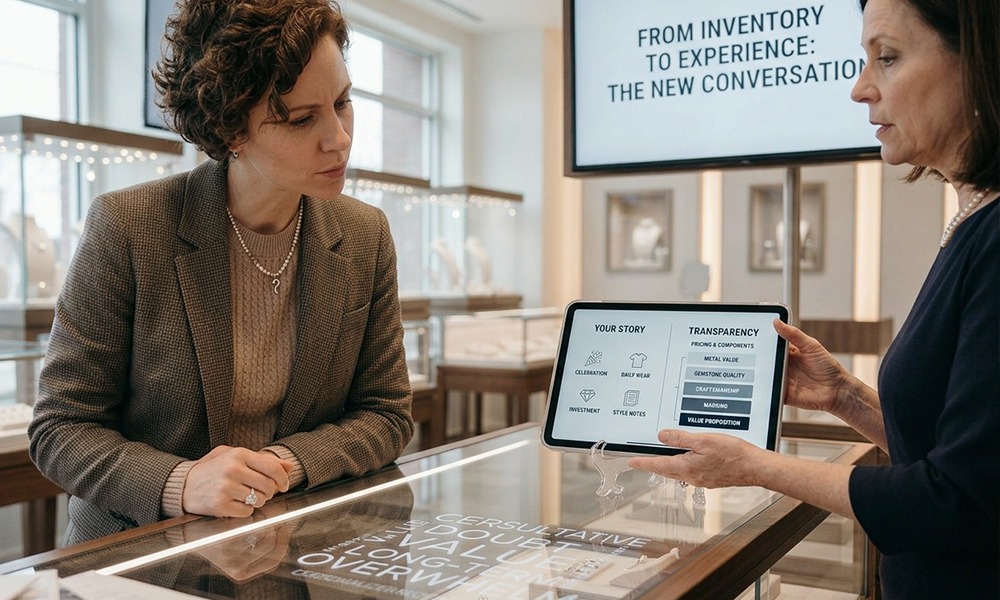
These questions can transform the interaction from a product presentation into a consultative buying experience.
For retailers, this requires sales teams to do more than know their inventory. They need to understand how to listen, curate and recommend.
Trust Has Become Part of the Product
A beautifully designed piece can attract attention, but uncertainty can stop the transaction.
Questions around making charges, gemstone valuation, diamond quality, exchange policies and long-term usability can influence the final decision.
This is why transparency is increasingly becoming a retail differentiator.
When the customer understands the components behind the price and the value attached to the product, the conversation becomes less about defending the price and more about explaining the value proposition.
The Digital Storefront Comes First
For many consumers, the first interaction with a jewellery brand does not happen inside a showroom.
It happens on a smartphone.

Instagram posts, websites, search results, influencer content, reviews and digital campaigns collectively create the first impression. By the time the customer walks into a store, the brand may already have been evaluated against several competitors.
This makes the digital presence an extension of the physical retail experience.
A retailer that promises premium craftsmanship offline but communicates inconsistently online creates a gap in customer confidence.
More Choice Does Not Always Mean More Conversion
Jewellery retailers have traditionally used extensive collections as a way of demonstrating scale and choice.
Yet an overwhelming assortment can create another problem: decision fatigue.
Curated selections based on occasions, lifestyles, price ranges and design preferences can help customers navigate the assortment more comfortably.
The role of the retailer is therefore gradually shifting from showing everything to showing what matters.
The Conversation Continues After the Customer Leaves
One of the most significant opportunities in jewellery retail may begin after the showroom visit.

A customer who leaves without purchasing is not necessarily a lost customer. They may still be comparing options, discussing the purchase with family or simply taking time to decide.
A personalised follow-up featuring shortlisted designs, availability information, new arrivals or relevant styling suggestions can keep the conversation alive without turning it into aggressive selling.
The objective is simple: remain relevant while the customer is still making the decision.
Retail’s Next Competitive Advantage
The jewellery industry is entering an environment where customers can access more information than ever before. This makes the role of the retailer more important — not less.
The winning retail experience will increasingly depend on the ability to combine product expertise with transparency, technology with human interaction, and choice with curation.
Jewellery will always be emotional. But the journey towards owning it is becoming increasingly rational. In that journey, trust may become one of the most valuable assets a jewellery retailer can build.


-

 New Premises8 hours ago
Palmonas Expands UAE Presence With New Retail Outlet At Mall Of The Emirates
-

 International News8 hours ago
Jewelers International Showcase Fall 2026 Returns To Miami Beach This October
-

 National News8 hours ago
Will RBI Rate Hikes Make Gold Loans Costlier?
-

 National News10 hours ago
GJEPC Holds 60th AGM, Reviews FY2025-26 Performance and Industry Priorities
