DiamondBuzz
Dubai Diamond Conference Urges Natural Diamond Industry To Rethink Its Future
DMCC Calls For A Value-Driven Strategy Centred On Rarity, Provenance and Innovation Amid Mine Closures and Growing Lab-Grown Competition.

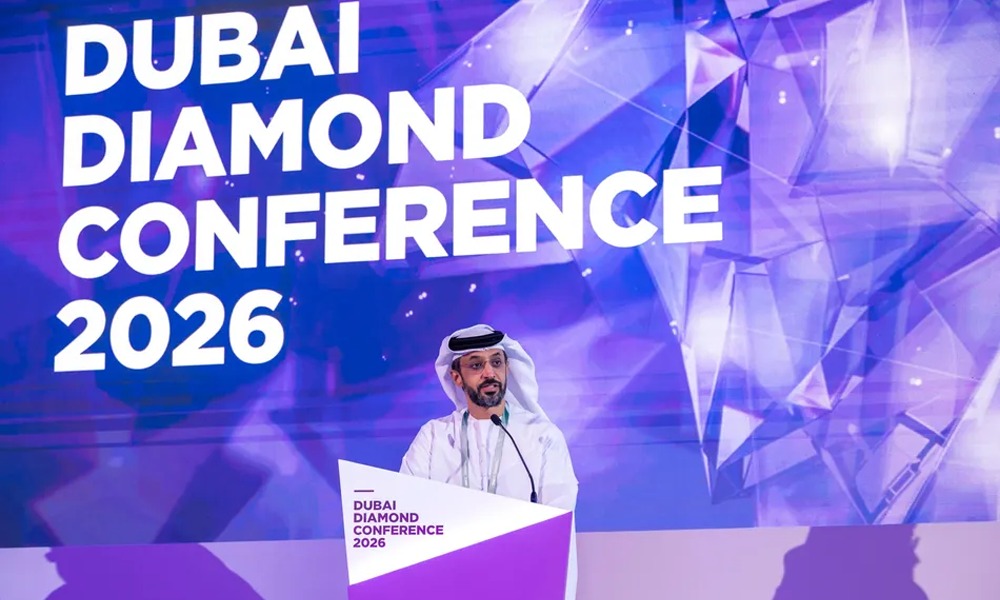
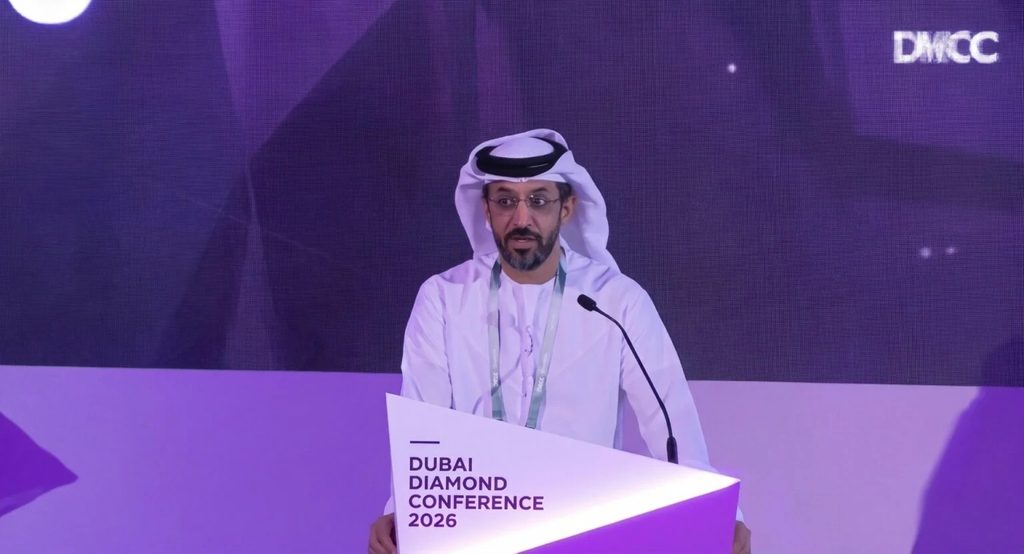
The natural diamond industry needs a fundamental strategic shift to address declining rough supply, changing consumer preferences and mounting competition from lab-grown diamonds, said Ahmed bin Sulayem, Executive Chairman and CEO of Dubai Multi Commodities Centre (DMCC), at the seventh edition of the Dubai Diamond Conference. Held under the theme “Diamonds 2.0: A Strategic Reset,” the conference brought industry leaders together to explore ways to strengthen consumer confidence, protect natural diamond values and build a more sustainable future for the sector.

Declining Mine Output Signals a Structural Change
Addressing delegates, bin Sulayem highlighted the long-term contraction in natural rough diamond supply, pointing to suspended, winding-down or paused mining operations across Canada, South Africa and Botswana. Developments at the Diavik and Ekati mines in Canada, Petra Diamonds’ Koffiefontein mine in South Africa, and Botswana’s Jwaneng and Orapa operations reflect the pressures confronting the mining sector.
He stressed that the industry must move beyond a volume-led approach and concentrate on generating greater value per carat. Stronger provenance systems, transparent sourcing and closer engagement with mining communities, he argued, could help natural diamonds command a premium while ensuring producing nations retain a greater share of the value generated.
Citing Namibia as an example, bin Sulayem emphasised how credible origin information and community partnerships can strengthen consumer trust and support long-term economic benefits for diamond-producing countries.
Dubai Records $41.7 Billion in Diamond Trade
Despite the challenging global environment, Dubai’s diamond trade reached a record $41.7 billion in 2025, according to DMCC, with natural diamonds accounting for 95.8% of the total value. The value of polished diamonds traded through the emirate has also increased by 246% since 2020, underlining Dubai’s growing significance as a global diamond trading hub.
DMCC is home to nearly 1,400 companies dealing in diamonds and precious stones, within a wider free zone business community of approximately 27,000 companies. The Dubai Diamond Exchange, meanwhile, hosted more than 100 tenders and auctions during 2025, reinforcing its role in international rough and polished diamond trading.
However, the broader industry continues to face financial headwinds. According to Rapaport, De Beers’ rough diamond price index declined 25% year-on-year in 2025. Anglo American recorded a $2.3 billion impairment on the business in its 2025 results, taking cumulative writedowns over three years to $6.8 billion.
The competitive landscape is also changing rapidly in key consumer markets. Bin Sulayem noted that lab-grown diamonds accounted for 61% of US bridal purchases by unit volume in 2025, compared with approximately 2% in 2017.
De Beers Ownership Remains a Key Industry Concern
Bin Sulayem identified fragmented supply management and a lack of coordination across the diamond pipeline as major challenges. He also raised questions about the future ownership of De Beers, which Anglo American has been seeking to divest.
He said the industry needs clarity on who will ultimately control the diamond producer and how the interests of potential consortium members would be aligned. Any new ownership structure, he suggested, must be capable of restoring market stability, financial discipline and long-term confidence.
Anglo American CEO Duncan Wanblad has indicated that the company continues to work towards a transaction despite difficult market conditions. A consortium led by former De Beers chief Gareth Penny and backed by Richemont has been reported as the preferred bidder.
The outcome of the sale is expected to remain an important issue for miners, manufacturers and traders seeking greater certainty over future supply and pricing.
Clearer Labelling for Lab-Grown Diamonds
The conference also addressed the continuing debate over the terminology used for lab-grown diamonds. Bin Sulayem expressed support for South Africa’s position within the Kimberley Process, the international certification framework for rough diamonds, which advocates the term “synthetics” for lab-grown stones.
He called for broader agreement among Kimberley Process participants on the terminology, while cautioning against portraying lab-grown diamonds solely as an existential threat to the natural diamond trade.
Instead, he described them as a distinct commercial category serving a specific consumer segment. In his view, natural diamonds must differentiate themselves through geological rarity, heritage, provenance and enduring appeal, rather than attempting to compete directly with lower-priced alternatives.
DMCC Looks to Swiss Watches for a New Strategy
To demonstrate how a traditional luxury category can respond to disruptive competition, bin Sulayem pointed to the Swiss watch industry’s recovery from the quartz revolution. Swiss watchmakers strengthened their market position by emphasising craftsmanship, brand heritage and exclusivity instead of competing primarily on price and volume. The industry recorded a value of $33.3 billion in 2023.
Building on this comparison, DMCC unveiled “The Swiss Parallel,” a study developed in partnership with Original Luxury. The initiative examines how the natural diamond industry could apply similar principles to reinforce its identity, stimulate consumer demand and capture greater value across the supply chain.
The broader strategy calls for a stronger emphasis on storytelling, authenticity and the distinctive qualities of natural diamonds, supported by more coordinated industry initiatives.
Tokenisation and Digital Investment Opportunities
Beyond branding and marketing, DMCC is exploring the tokenisation of verified, high-value natural diamonds to enable fractional digital ownership and attract institutional investment. The proposed approach could help establish more transparent secondary markets and create additional avenues for investors to participate in the asset class.
DMCC also announced that the UAE’s Kimberley Process office would introduce online valuation for rough diamond imports and exports, an initiative aimed at improving transparency and efficiency in the trade.
In another development, DMCC partnered with HRD Antwerp to offer diamond grading, gemology and jewellery design courses in Dubai, supporting skills development and professional education within the sector.
Greater African Representation in Global Diamond Leadership
Bin Sulayem also called for stronger African representation in international diamond industry bodies. After losing the World Federation of Diamond Bourses presidency to India’s Mehul Shah in July, he pledged his support for Molefi Letsiki of South Africa, the federation’s current treasurer, as a potential successor in 2029. If elected, Letsiki would become the federation’s first Black African president.
As chairman of the Dubai Diamond Exchange, bin Sulayem also said he would work towards restoring South Africa’s seat on the federation’s executive committee, arguing that African representation should be a priority at the next congress.
He warned that diamond-producing countries, including Angola, Namibia, the Democratic Republic of Congo and South Africa, are facing mounting fiscal pressures as supply and demand conditions weaken.
The conference’s message was clear: the natural diamond industry cannot depend on market cycles alone to restore growth. A combination of stronger provenance, coordinated supply strategies, renewed consumer engagement, technological innovation and greater value creation will be essential to strengthening the industry’s long-term prospects.
Dubai Diamond Week continues through Thursday, alongside the Jewellery, Gem & Technology in Dubai exhibition, providing further opportunities for international stakeholders to discuss the sector’s evolving commercial priorities.




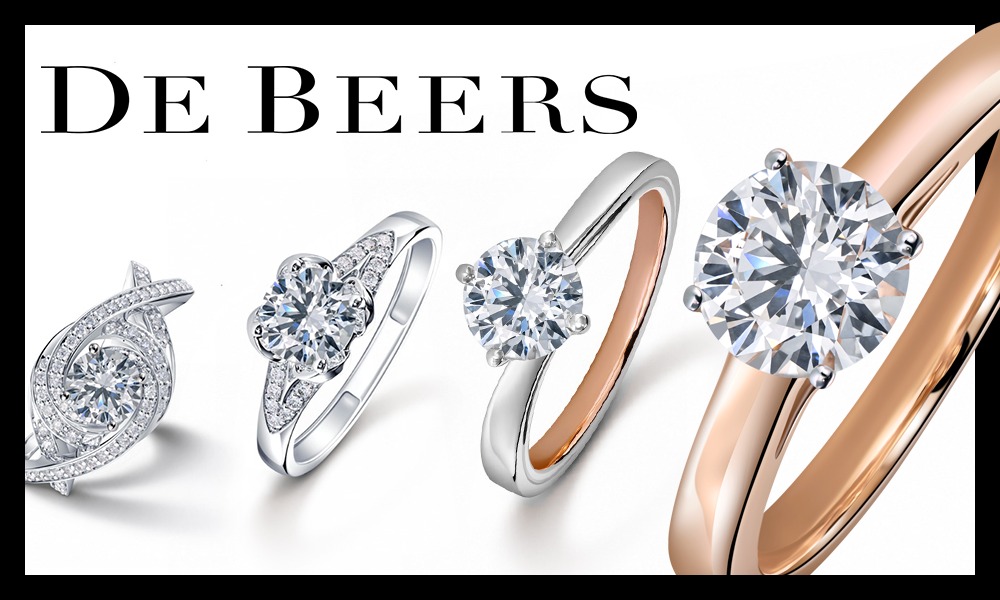
Some love stories only grow stronger with time. Love, From Hubby is a ritual in which a husband celebrates the years shared with his wife by gifting her a natural diamond solitaire, a promise that the story is still being written. The Real Love Solitaire Collection from De Beers is made for this “Second Season of Love.” Each ring features a one-carat centre solitaire, a natural diamond that is rare and each reflects Carat, Cut, Colour and Clarity, offering refined luxury and exceptional fire. Set in an array of precious metals and custom finishes, every design carries its own story of enduring commitment. Rose gold hues add romance to architectural white gold silhouettes, blending classic heritage with a modern eye. Here is a closer look at the key design features that make these four pieces stand out.
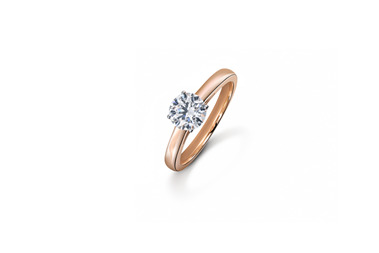
Classic Rose Gold Round
Brilliant Solitaire Ring Some designs just feel right from the first glance, and this is one of them. A classic solitaire ring, the one carat round brilliant natural diamond sits alone at the centre, cradled by four slim prongs in 18k rose gold. The warm tones of the metal soften all that sparkle and gives it a gentle romantic glow. The band narrows slightly toward the base, making it comfortable to wear it all day. Whether you choose to wear it every morning or save it for the proposal, it suits every moment.
Lotus Diamond Solitaire Ring Picture a lotus bud awakening to its full beauty. This is exactly the inspiration behind the frame of this brilliant solitaire with petal motifs in white gold. Micro pave set diamond trace the contours of the floral petals along the shoulders, creating an intricate halo-like shimmer that catches the light from every angle. The architectural artistry around the central real diamond is both unique and delicate, giving the ring a sense of movement while keeping the focus firmly on the centre diamond.
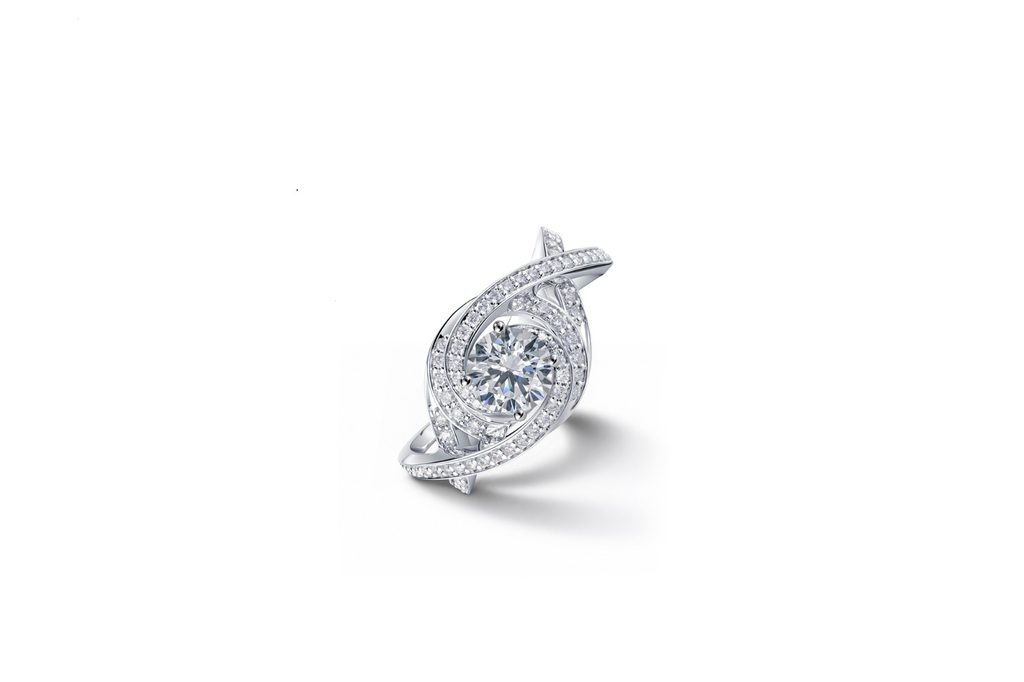
Swirl Solitaire Diamond Ring Movement is the whole point with this Swirl Solitaire diamond ring. Designed to catch the light from every angle and frame of the classic diamond, the graceful arcs of white gold studded with delicate pave diamonds wrap seamlessly around the centre, creating a captivating, continuous swirl. The flowing curves enhance the brilliance of the central diamond, resulting in a modern statement piece that feels both powerful and undeniably graceful.
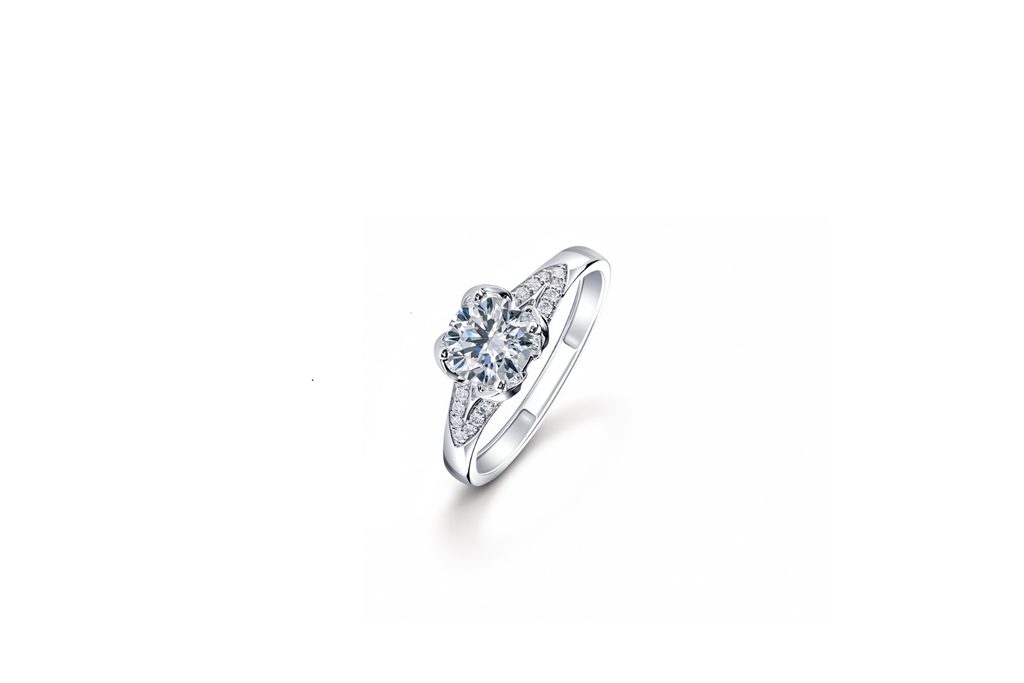
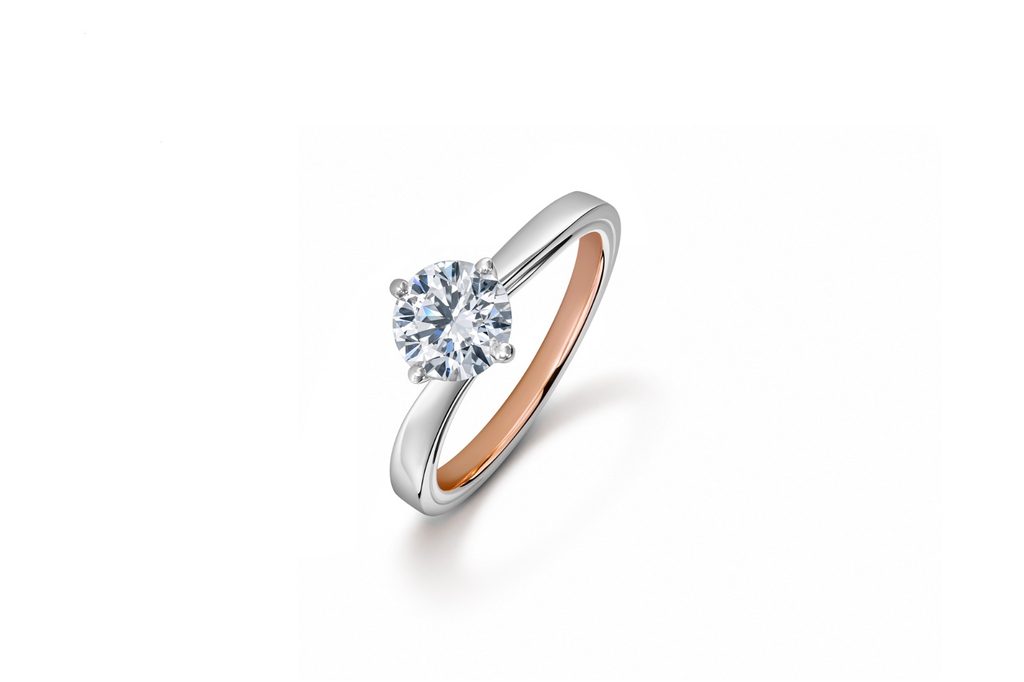
Two Tone Solitaire Ring This one makes a play on your senses with its subtle, yet sophisticated twist on a classic solitaire design. The outside is cool and polished, but inside the band sits a lining of warm rose gold, while a one carat round brilliant real diamond rests above it in a four-prong setting. The precision cut and color grade of the center diamond radiate timeless sophistication, perfect for modern romance with its combination of elegance and an intimacy that comes from a hidden detail known only to the two of you.
Natural diamonds aren’t saved for big occasions anymore, they have become an essential part of modern everyday style. The De Beers Love, From Hubby Real Love Solitaire Collection puts the centre diamond first, celebrating the exceptional brilliance that each one brings with it. From clean minimal lines to romantic floral details and curves with some energy, the collection offers a solitaire for every expression of individuality. At the end of the day, the right ring is the one that feels like your story one that marks a special moment or simply adds a little sparkle to an ordinary day.


Dubai Diamond Conference Urges Natural Diamond Industry To Rethink Its Future

QWEEN Launches Its First Store In Noida With India’s First Self-Discovery Experiential Luxury Jewellery Format

India’s Festive Jewellery Market Eyes Growth As Consumers Shift Towards Lightweight Designs and Value-Led Purchases

Dhanteras Shopping Guide 2026:Gold, Silver, Diamonds & Festive Jewellery Trends To Watch

The Solenne Collection: A Celebration Of Diwali By Bharti Bangur Fine Jewels

Indriya, Aditya Birla Jewellery Unveiled India’s Largest Sustainable Jewellery Rangavalli
-
 JB Insights4 days ago
Dhanteras Shopping Guide 2026:Gold, Silver, Diamonds & Festive Jewellery Trends To Watch
-
 BrandBuzz4 days ago
The Solenne Collection: A Celebration Of Diwali By Bharti Bangur Fine Jewels
-
 National News4 days ago
Indriya, Aditya Birla Jewellery Unveiled India’s Largest Sustainable Jewellery Rangavalli
-
 BrandBuzz4 days ago
From Diya Puja To Diwali Soirées: Jewellery Designed To Go Beyond The Festive Season