
DiamondBuzz
De Beers to Reduce Workforce at Gahcho Kué Mine
Around 5% of employees impacted as joint-venture partners review financial viability and future production plans.

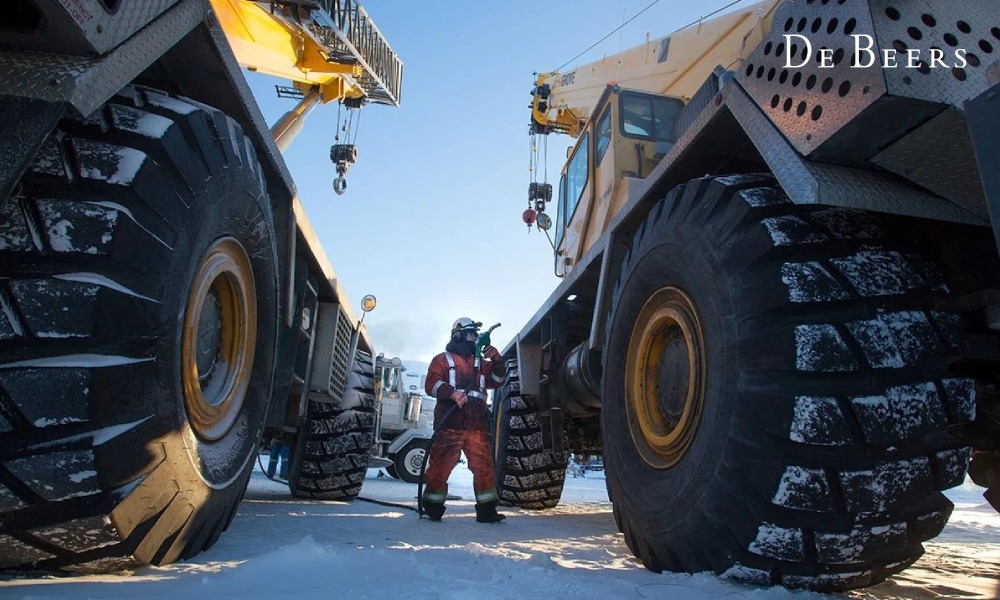
De Beers has initiated discussions to reduce approximately 5% of its workforce at the Gahcho Kué diamond mine in Canada’s Northwest Territories following a joint decision to pause development of the Tuzo expansion project.
The move comes after De Beers and its joint-venture partner, Mountain Province Diamonds, opted to temporarily halt the Tuzo pit extension while conducting a financial assessment in response to ongoing industry challenges. The pause has triggered a review of operational requirements, leading to conversations around potential redundancies.
A company spokesperson stated that internal evaluations are underway to determine appropriate staffing levels. Discussions have begun with a limited number of employees, with efforts focused on minimizing the impact on workers residing in the Northwest Territories.
De Beers holds a 51% stake in the project, while Mountain Province owns the remaining 49%. The mine currently employs between 500 and 1,000 workers, including contractors.
The spokesperson emphasized that the decision was made carefully, acknowledging the strong safety and operational performance delivered by the team over the past two years. The company will continue to assess market conditions and operational needs as it reviews future production plans at Gahcho Kué.
Originally, the Tuzo expansion was expected to extend the mine’s life to 2031. With the project now on hold, the timeline for the mine’s long-term future remains uncertain.




DiamondBuzz
Botswana Looks Beyond Rough Diamond Sales, Eyes U.S. Jewelry Market
The Duty Exemption By US Presents An Opportunity For Domestic Jewelry Manufacturers In Gaborone To Bypass Traditional Middle-Market Hubs and Establish A Direct Pipeline To American Consumers


Grappling with a painful downturn in global rough-diamond demand, Botswana is pivoting its economic strategy: expanding up the supply chain directly into American retail shelves while leveraging its resource wealth to fund conservation and diversification.
Speaking on the sidelines of New York Climate Week, Bogolo Joy Kenewendo, Botswana’s Minister of Minerals and Energy, highlighted the southern African nation’s plan to capitalize on a 0% import-tariff rate to the U.S. market. The duty exemption presents an opportunity for domestic jewelry manufacturers in Gaborone to bypass traditional middle-market hubs and establish a direct pipeline to American consumers.
shift The push into value-added manufacturing comes as the world’s top diamond producer by value navigates a broader structural Diamond revenues have long formed the bedrock of Botswana’s post-independence balance sheet, underwriting universal secondary education and tuition-free university funding. However, recent market volatility has underscored the vulnerabilities of a mono-sectoral economy.
Under the Botswana Economic Transformation Programme (BETP)—an initiative spearheaded directly by President Duma Boko and his vice president—the government is directing resources toward manufacturing, agriculture, and broader mining sectors to reduce its heavy reliance on rough diamond sales.
To support its luxury exports, Botswana is recalibrating its brand narrative around origin, environmental stewardship, and social impact. The country recently announced a five-year extension of the “Okavango Eternal” partnership alongside De Beers Group and the National Geographic Society. The initiative aims to protect the ecological integrity of the Okavango River Basin while tying diamond purchases to conservation efforts.
With De Beers currently facing an impending ownership change, officials remain optimistic that any capital restructuring could bring additional funds into Botswana to accelerate its domestic economic transition.



Kangana Ranaut Unveils PNG Jewellers New Showroom In Ayodhya~

GGJS 2026 Concludes With High-Volume Trade and Strategic Focus On Next-Gen Leadership

The Solitaire Festival Of India Concludes; Bumper Prize Winner At Ranka Jewellers Wins XUV 7XO
GGJS 2026 Concludes With High-Volume Trade and Strategic Focus On Next-Gen Leadership

ABARAN Commemorates The 125th Birth Anniversary Of Founder Shri Burde Sadananda Kamath With Special Gold Coin Launch

MCX Gold Silver Futures See Dip
-
 National News2 hours ago
GGJS 2026 Concludes With High-Volume Trade and Strategic Focus On Next-Gen Leadership
-
 National News6 hours ago
ABARAN Commemorates The 125th Birth Anniversary Of Founder Shri Burde Sadananda Kamath With Special Gold Coin Launch
-
 National News6 hours ago
MCX Gold Silver Futures See Dip
-

 National News3 days ago
P N Gadgil Jewellers Limited – Quarterly Update Q2FY27
