
International News
CIBJO Special Report calls for unified sustainability agenda in jewellery industry


With few weeks to go before the 2025 CIBJO Congress opens in Paris on 27 October, the second pre-congress Special Report has been released. Prepared by the CIBJO Sustainable Development Commission, led by John Mulligan, the report addresses the challenges of creating a unified sustainability framework for a jewellery industry marked by vast geographic, product, and company diversity.
As the global jewellery industry grapples with responsible sourcing, environmental stewardship, stalled socio-economic development, and inequalities of opportunity, the need for a broadly agreed, collaborative approach to sustainability has never been more urgent
He cautioned that fragmentation across geographies and business models, along with politicisation of sustainability issues and short-term thinking, continues to hinder meaningful progress.
To help companies align with international standards, CIBJO announced it will release a series of updated tools free of charge on its website, including:
An updated Responsible Sourcing Blue Book with a revised toolkit aligned with OECD Due Diligence Guidance.
A new Sustainability & ESG Reference Guide covering key aspects of the global agenda as it applies to jewellery.
The ESG Wheel with additional materiality assessment guidance, tailored also for small and medium-sized businesses.
The Commission also introduced a “Sustainability Practice Group,” made up of sustainability experts and advisors from within CIBJO’s membership, to ensure tools remain relevant and effective.








International News
US Holiday Shopping Expected To Top $1 Trillion For The First Time: NRF
While Overall Buying Power Remains High, Ongoing Inflation and Rising Household Costs Mean Some Families Will Have To Watch Their Spending More Carefully Than Others

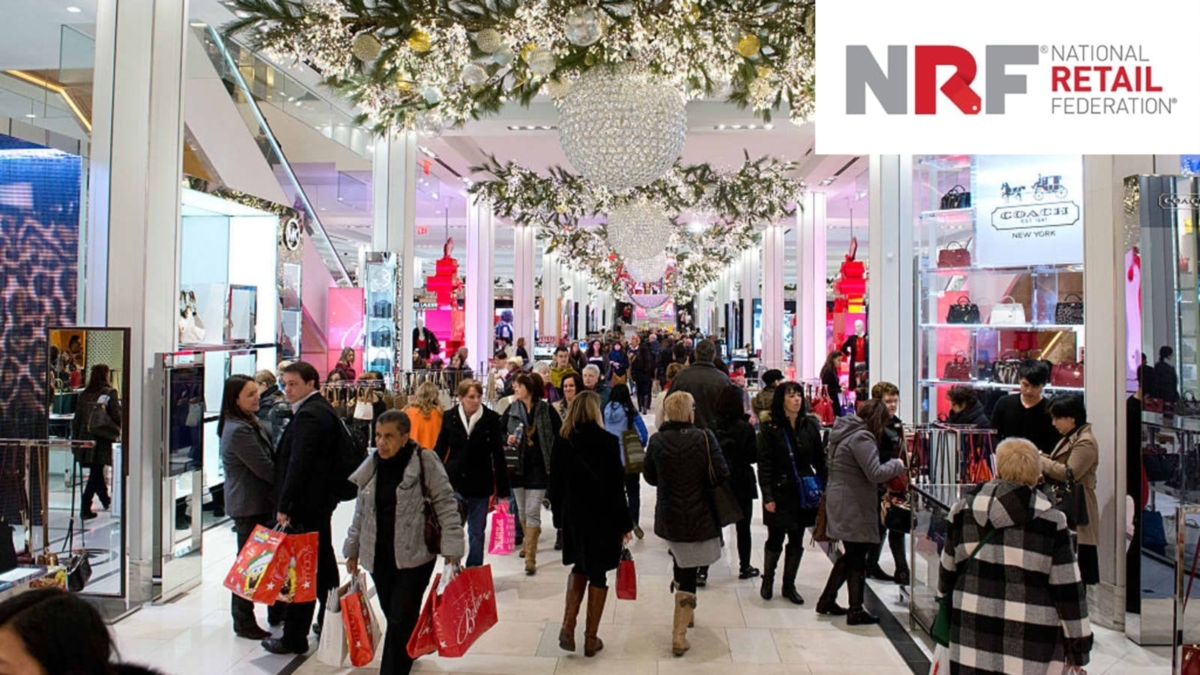
The National Retail Federation (NRF) predicts Americans will spend $1.01 trillion on holiday shopping in November and December. That is a 4.2% jump from $972 billion last year.
NRF said its forecast was based on economic modeling that incorporates consumer spending, employment, wages and historical retail sales data. It excludes automobile, gasoline and restaurant sales
Extra Hiring: To handle the surge in shoppers, stores plan to hire 325,000 to 375,000 temporary holiday workers.
Mixed Budget Impact: Higher gas prices and inflation could still strain some family budgets, affecting low- and high-income shoppers differently.
Retailers expect a strong shopping season because people continue to make holiday spending a priority.
Store owners are ready to attract shoppers by offering competitive prices, deals, and choices for every budget.
While overall buying power remains high, ongoing inflation and rising household costs mean some families will have to watch their spending more carefully than others.



Belgian Consul General H. E. Mr. Pierre Stverlynck Graces BDB Annual Day

Limelight Lab Grown Diamonds Crosses 100 Stores Milestone This Dussehra: Targets 200 In 2027

Joyalukkas Opens Its 2nd Bengaluru Showroom in Jayanagar

US Holiday Shopping Expected To Top $1 Trillion For The First Time: NRF
Belgian Consul General H. E. Mr. Pierre Stverlynck Graces BDB Annual Day
Limelight Lab Grown Diamonds Crosses 100 Stores Milestone This Dussehra: Targets 200 In 2027
-
 International News1 day ago
US Holiday Shopping Expected To Top $1 Trillion For The First Time: NRF
-
 National News22 hours ago
Belgian Consul General H. E. Mr. Pierre Stverlynck Graces BDB Annual Day
-
 National News22 hours ago
Limelight Lab Grown Diamonds Crosses 100 Stores Milestone This Dussehra: Targets 200 In 2027
-
 New Premises23 hours ago
Joyalukkas Opens Its 2nd Bengaluru Showroom in Jayanagar
