

International News
CIBJO Congress 2025: Navigating Challenges, tariffs, and the path to a sustainability
The 2025 CIBJO Congress in Paris convened the global jewellery industry to confront its most urgent challenges, setting the stage for the confederation’s 100th anniversary in 2026.

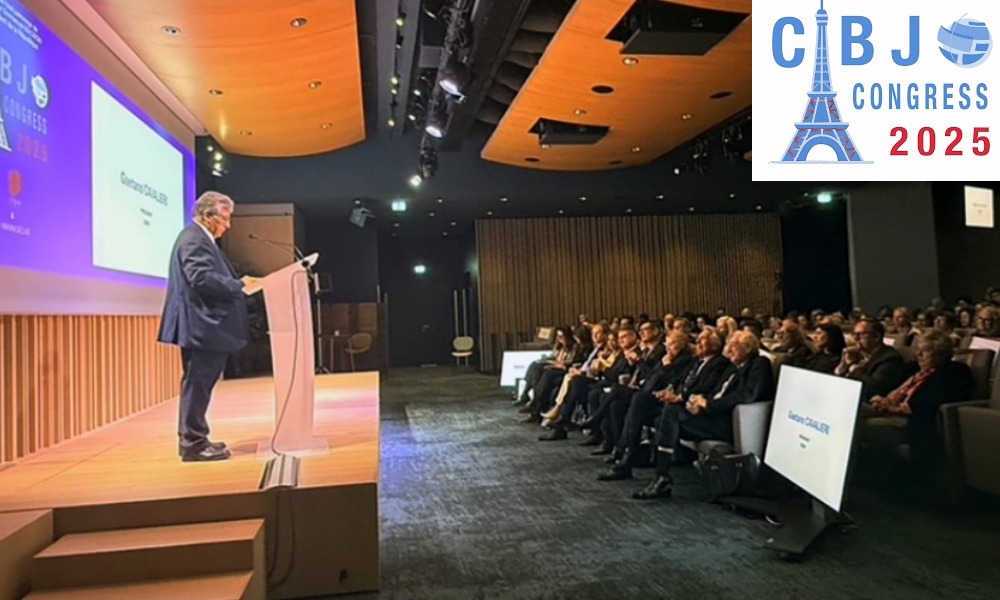
CIBJO President Gaetano Cavalieri opened the “jewellery industry’s parliament” by stressing the need for unity and ethical standards. A central theme was the erosion of consumer confidence due to the persistent confusion between natural and synthetic diamonds. Leaders from De Beers Group and the Natural Diamond Council urged clear storytelling about the provenance and inherent value of natural stones, particularly amid slowing demand in key markets like China.
Panels also grappled with external pressures, including geopolitical tensions, U.S. tariffs, sanctions on Russian diamonds, and tightening ESG regulations. Industry advocates called for collaborative efforts to ensure fair trade and compliance.
The State of the Industry session brought attention to sustainability, shifting consumer preferences, and volatile precious metal prices. Terry Hayman (World Gold Council) pointed to record gold prices driven by central bank demand, while Tim Schlick (Platinum Guild International) identified new opportunities in platinum jewellery as consumers seek alternatives. Designer Roberto Coin called for balance in the face of speculative gold price surges, and several speakers underscored the need for closer partnerships and transparent communication to drive long-term growth..
The Congress reaffirmed CIBJO’s mission as it approaches its centenary, focusing on safeguarding consumer trust through standardized nomenclature and embedding sustainability into the core of the jewellery trade. As CIBJO prepares to celebrate its 100th year in Vicenza in 2026, the Paris Congress reaffirmed the organization’s enduring commitment to promoting unity, ethical practices, and resilience in an industry navigating rapid change.






DiamondBuzz
Rio Tinto’s Diamond Division Posts $79 Million EBITDA Loss in 2025
Higher output from Canada’s Diavik Diamond Mine offsets revenue decline, but end-of-life pressures continue to weigh on performance.

Rio Tinto reported a challenging year for its diamond business in 2025, posting an underlying EBITDA loss of $79 million despite improved revenues. While the loss narrowed compared to the $115 million deficit recorded in 2024, the division remained under pressure amid a global diamond market slowdown and the nearing closure of its last active mine.
Annual revenue rose 19% to $332 million, supported by stronger production at the Diavik mine in Canada, Rio Tinto’s only remaining diamond operation. Output climbed 61% to 4.4 million carats, driven by the ramp-up of mining activities in the underground section of the A21 deposit, which began scaling up in late 2024.
However, the A21 underground ore body is expected to be depleted by the end of the first quarter of 2026, marking the end of Diavik’s operational life. The company plans to spend approximately $1 billion this year on closure activities related to Diavik, as well as rehabilitation work at the former Argyle Diamond Mine, which ceased production in 2020, and other non-diamond projects.


-

 National News2 days ago
GJEPC addresses issue of Termination of IEEPA-Based Reciprocal Tariffs
-

 National News2 days ago
WGC India gold market update: Price strength fuels demand Looking ahead
-
 International News2 days ago
IGI approves an investment of up to $150,000 in Saudi Arabia
-

 National News2 days ago
India’s polished diamond exports dip by 3.6 per cent yoy in January 2026
