International News
Powell raises doubt about easing at the next meeting AUGMONT BULLION REPORT

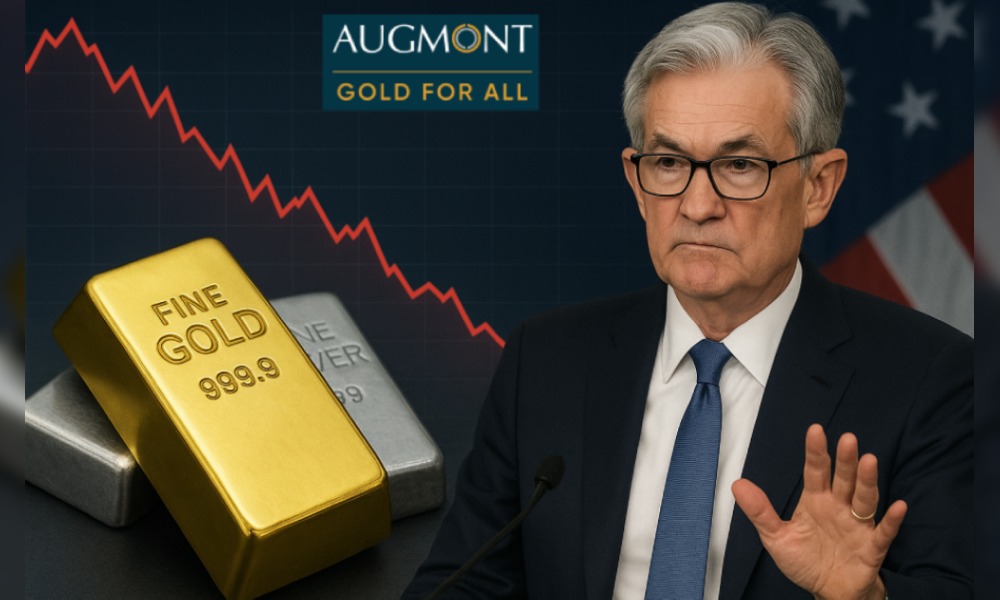
- Gold and Silver reversed their gains and continued their downward trajectory as traders reduced their bets on additional rate cuts in the US.
- Following Wednesday’s anticipated quarter-point cut, Fed Chair Jerome Powell played down the possibility of a second cut in December, pointing to policymaker disagreements and limited federal data due to the government shutdown.
- Prior to the FOMC’s decision, markets had almost complete expectations of another rate cut this year, but now they assign less than 70% possibility.
- Investors are keeping an eye on these US-China trade discussions. As Presidents Donald Trump and Xi Jinping meet in South Korea, they are expected to finalize a trade deal, which would signify a halt to the protracted trade conflict and lower demand for safe-haven assets.
Technical Triggers
- First target achieved in Gold at $3960 (~Rs 119,000), prices could consolidate here and then fall to $3850 (~Rs 117,000).
- First target achieved in Silver at $46 (~Rs 140,000), prices could consolidate here and then fall to 45(~Rs 136,500).
Support and Resistance
| Category | Support Level | Resistance Level |
|---|---|---|
| International Gold | $3,900/oz | $4,045/oz |
| Indian Gold | ₹117,500 /10 gm | ₹122,000 /10 gm |
| International Silver | $45.5/oz | $49/oz |
| Indian Silver | ₹140,000 /kg | ₹150,000 /kg |


International News
Mutual Engagement Ring-Wearing On The Rise, Insurance Lagging: Jewelers Mutual Group 2026 Engagement Ring Study
Jewelers Mutual Group 2026 Engagement Ring Study Finds Mutual Ring-Wearing Has Overtaken Tradition, But Insurance Hasn’t Kept Pace With How Couples Live With Their Rings.

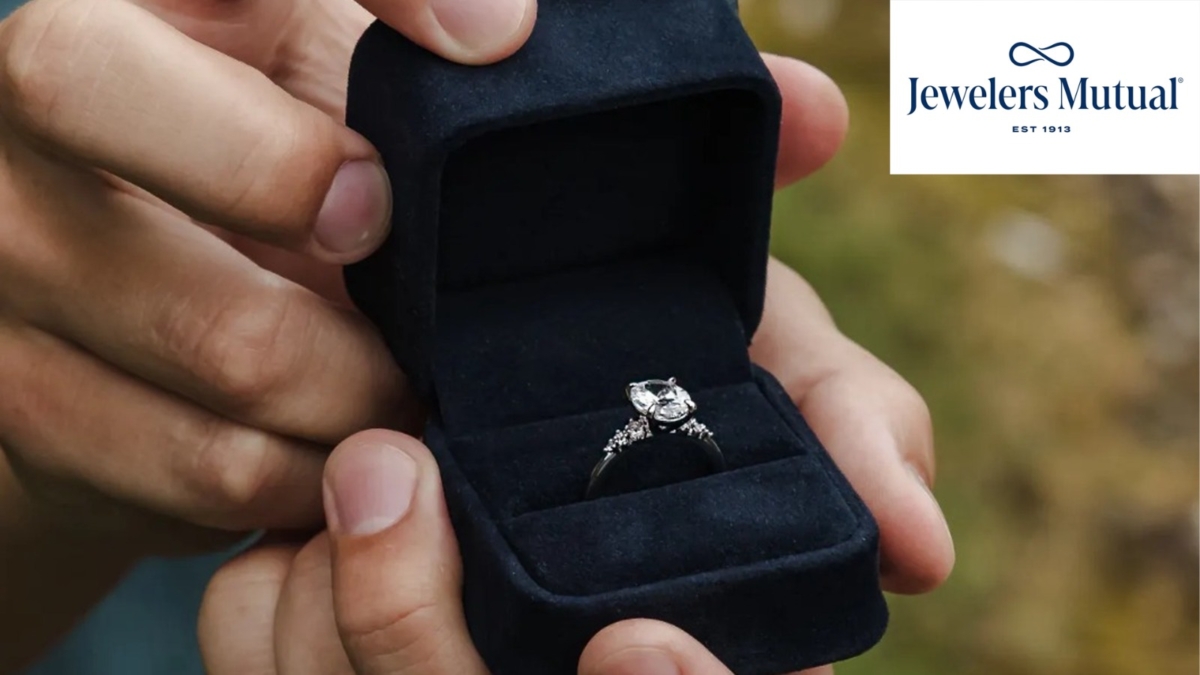
Jewelers Mutual Group 2026 Engagement Ring Study finds mutual ring-wearing has overtaken tradition, but insurance hasn’t kept pace with how couples live with their rings.
Jewelers Mutual® Group, the jewelry insurer backed by more than 100 years of expertise, released new findings from its 2026 Engagement Ring Study, examining how couples shop for, wear and protect one of the most meaningful purchases of their lives, and where coverage often falls short. Results indicated that as ring-wearing norms shift, protection habits haven’t caught up, leaving a growing gap between what couples own and what they cover.
The generational split is wide. More than 80% of couples ages 55 to 64 both wear a ring, compared with just 43% of couples ages 18 to 24, suggesting mutual ring-wearing, while now the norm overall, is still catching on among the couples getting engaged today.
The risk window opens well before anyone gets down on one knee. Forty-one percent of proposers hold onto the ring for more than a month before proposing, and nearly half (45%) store it somewhere unsecured, like a drawer or closet, in the meantime.
Once the ring goes on, it tends to stay on. Ninety percent of wearers travel with their engagement ring, and most don’t take it off for everyday activities that put it at risk, including cooking (60%), sleeping (60%) and hiking (65%).
The financial exposure is real: 62% of respondents count their engagement ring among the three most expensive things they own. Yet among uninsured wearers whose ring was damaged, 55% never had it repaired.
Couples should take a few key steps to protect an engagement ring:
- Purchase insurance before or at the time of the proposal, not after
- Document the ring with photographs and a professional appraisal
- Store the ring in a safe or safety deposit box before the proposal
- Consider specialized jewelry insurance, which covers loss, theft and damage that standard homeowners or renters’ policies may not adequately address
Design or uniqueness remains the top factor in choosing a ring, cited by 52% of respondents, far ahead of price, stone size and brand. Solitaire settings have become the most popular choice since 2024, now making up 37% of rings versus 22% two years ago, and white gold remains the most common metal, though preference in platinum has grown considerably.
Budget confidence tracks with intention, not price point: respondents who set a ring budget based on personal comfort, rather than an external benchmark, report the highest confidence in their purchase and the lowest financial stress about it. That deliberateness carries past the purchase, too.
Among wearers who don’t yet own their final ring, 84% say they’re still actively researching options, a sign that even once a ring is on, the decision-making isn’t necessarily over. When couples do seek guidance on insuring what they’ve chosen, they turn to people they trust: jewelers rank as the second most trusted source for jewelry care recommendations, behind only family.


Mutual Engagement Ring-Wearing On The Rise, Insurance Lagging: Jewelers Mutual Group 2026 Engagement Ring Study

GJEPC Partners With The Leela To Offer Exclusive Hospitality Benefits To Members

MCX Gold, Silver Surge Ahead On US Inflation Data, Crude Price Dip
-
 National News1 hour ago
GJEPC Partners With The Leela To Offer Exclusive Hospitality Benefits To Members
-

 JB Insights2 hours ago
CIBIL Score Plays A Key Role In Festive Financing
-

 DiamondBuzz2 hours ago
Richemont and Signet Jewelers Could Join Global Diamond Consortium In Bid For De Beers
-
 National News1 hour ago
MCX Gold, Silver Surge Ahead On US Inflation Data, Crude Price Dip