
National News
Centre Tightens Duty-Free Gold Import Rules Under Advance Authorisation Scheme
100 Kg Import Cap, Mandatory Factory Inspections, Stricter Export Compliance and Fortnightly Reporting Introduced To Curb Misuse and Protect Forex Reserves


The Centre has imposed fresh restrictions on duty-free gold imports by exporters under the Advance Authorisation (AA) Scheme in an effort to curb the diversion of imported gold into the domestic market and reduce pressure on India’s foreign exchange reserves.
Under the revised rules issued by the Directorate General of Foreign Trade (DGFT), exporters will now be allowed to import a maximum of 100 kilograms of gold per licence under the scheme.
The move comes amid growing concerns over India’s rising import bill, particularly as soaring crude oil prices linked to the ongoing West Asia crisis continue to put pressure on the country’s foreign exchange reserves.
Officials said the tighter rules are aimed at improving monitoring of duty-free gold imports that are meant exclusively for export-oriented jewellery manufacturing.
First-time applicants to face mandatory inspections
As part of the revised framework, first-time applicants seeking permission to import gold under the scheme will now have to undergo mandatory physical inspections of their manufacturing facilities by DGFT officials before licences are approved.
The government has also linked future import permissions to export performance.
According to the updated guidelines, exporters will only become eligible for fresh authorisations after fulfilling at least 50 per cent of their export obligations under previous licences.

The new conditions are intended to ensure that imported gold is used strictly for export production rather than being diverted into the domestic market for profit.
Authorities believe the stricter compliance measures will help reduce misuse of the scheme and improve transparency in the gold trade.
Exporters asked to submit regular performance reports
The DGFT has also introduced enhanced monitoring requirements for exporters importing gold under the Advance Authorisation Scheme.
Companies will now be required to submit performance reports every fortnight detailing imports, exports and utilisation of gold.
In addition, DGFT regional offices across the country have been instructed to send monthly reports to headquarters to facilitate centralised monitoring of gold imports and export activity.
Officials said the move would allow closer scrutiny of the movement of precious metals and help authorities quickly identify irregularities or possible violations of import conditions.
The government’s latest measures are being viewed as part of a broader effort to tighten oversight of India’s precious metals trade amid economic uncertainty and volatile global commodity prices.
Customs duty on gold and silver recently increased

The latest restrictions come shortly after the Centre increased customs duties on imports of gold, silver and platinum.
On Wednesday, the government raised import duties on gold and silver to 15 per cent from the earlier 6 per cent. Import duty on platinum was also increased to 15.4 per cent from 6.4 per cent.
Under the revised structure, gold and silver imports now attract a 10 per cent basic customs duty along with a 5 per cent Agriculture Infrastructure and Development Cess (AIDC), taking the total effective duty to 15 per cent.
The government said the duty hike was aimed at discouraging excessive imports of precious metals, which are among the major contributors to foreign exchange outflows.
Officials also expect the move to support macroeconomic stability at a time when rising oil prices and geopolitical tensions are increasing pressure on the Indian economy.
Gold demand remains strong despite policy tightening

The government’s latest actions follow Prime Minister Narendra Modi’s recent appeal urging citizens to avoid non-essential gold purchases for at least a year and adopt austerity measures to help conserve foreign exchange reserves.
India remains one of the world’s largest consumers of gold, with strong demand driven by jewellery purchases, investment demand, weddings and festivals.



National News
GJEPC Conducts Retailers’ Connect and Export Awareness Seminar In Ahilyanagar
The Programme Aimed To Strengthen The Region’s Participation In International Trade Under The Districts As Export Hubs (DEH) Initiative.
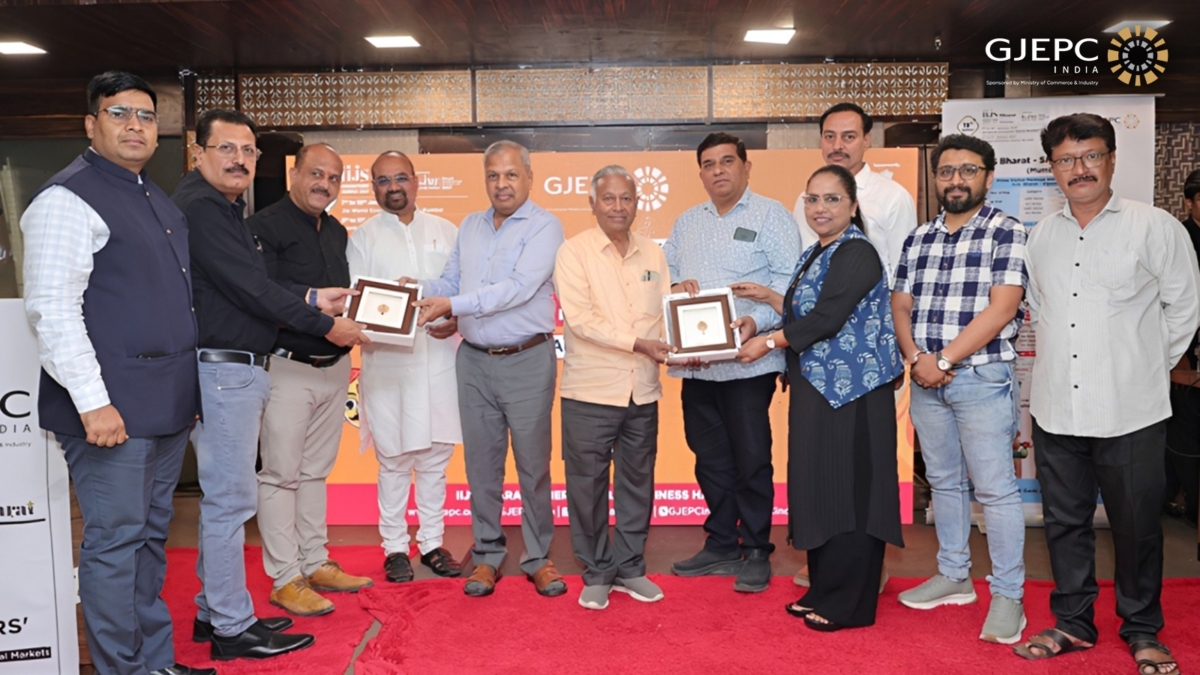
GJEPC, in association with the Ahilyanagar Gold Jewellers Council and Gold Cluster, organised an IIJS Retailers’ Connect and Export Awareness Seminar in Ahilyanagar, Maharashtra, on 29 September 2026.
The programme aimed to strengthen the region’s participation in international trade under the Districts as Export Hubs (DEH) initiative. Ahilyanagar has a long-standing base of skilled karigars and traditional jewellery manufacturing and was among the early regions in Maharashtra to be formally developed as an MSME Gold Jewellery Cluster under the DEH and Micro & Small Enterprises – Cluster Development Programme (MSE-CDP).
During the IIJS Retailers’ Connect session, Naheed Sunke, Assistant Director, GJEPC, introduced IIJS Signature 2027 as a major B2B sourcing platform for jewellery designs, technology and business networking. She encouraged jewellers from Ahilyanagar to participate through an official delegation.
The export awareness session was led by Mithilesh Pandey, Senior Director, GJEPC, who outlined export opportunities available to local manufacturers and retailers, along with government schemes and policy mechanisms that can support their entry into international markets.
The session covered export benefits available under the DEH initiative and preferential trade opportunities through India’s free trade agreements, including the UAE CEPA, India-Australia ECTA and India-EFTA TEPA. Participants were also briefed on simplified procedures for courier-based e-commerce exports, collateral-free loans under PM Vishwakarma, and grants available for Common Facility Centres (CFCs).
GJEPC also highlighted its support ecosystem for businesses seeking to expand internationally. This included the benefits of Registration-Cum-Membership Certificate (RCMC), exporter mentorship programmes such as Niryat Disha and Niryat Protsahan, international showcasing opportunities through IJEX Dubai, access to the India Jewellery Park Mumbai (IJPM) ecosystem, and Parichay Cards for artisans.



GJEPC Conducts Retailers’ Connect and Export Awareness Seminar In Ahilyanagar

Inadequate Ease Of Doing Business Eroding Global Competitiveness Of India’s GJ Exports: K. Srinivasan

Festive Season Jewellery Sales: Consumers Display Heightened Selectivity and Caution

Royal Chain Files Draft Papers For Rs 1,000-Crore IPO
Inadequate Ease Of Doing Business Eroding Global Competitiveness Of India’s GJ Exports: K. Srinivasan
GJEPC Conducts Retailers’ Connect and Export Awareness Seminar In Ahilyanagar
-
 National News23 hours ago
Royal Chain Files Draft Papers For Rs 1,000-Crore IPO
-

 ShowBuzz2 hours ago
GJIIF 2026 Concludes In Chennai After Three Days Of High-Powered B2B Networking
-

 National News1 hour ago
MCX Futures Surge On Sharp Retreat In Crude Oil Prices and Cooling U.S. Inflation Data
-
 National News1 hour ago
Inadequate Ease Of Doing Business Eroding Global Competitiveness Of India’s GJ Exports: K. Srinivasan
