
International News
Cash transaction curbs hit Hong Kong diamond trade, impacting its competitiveness.


Cash transaction curbs hit Hong Kong diamond trade, impacting its competitiveness.
Hong Kong’s jewellery trade shows, historically significant hubs for diamond and gemstone transactions, are undergoing a period of significant transformation. Recent regulatory changes, particularly the elimination of cash transactions for diamond dealers, have fundamentally altered the market dynamics. This analysis examines the impact of these changes, the resulting challenges, and potential future implications for the industry.
Hong Kong has long been a vital center for the global jewellery trade, renowned for its strategic location, established infrastructure, and vibrant trade shows. Historically, the city’s appeal lay in its status as a cash market, facilitating swift and discreet transactions, particularly in diamonds.
Hong Kong’s position as a prominent cash market has been compromised, impacting its competitiveness. This has caused a decrease in some of the revenue that was historically generated at the trade shows. Compounding the challenges posed by regulatory changes is the simultaneous decline in Chinese diamond demand.
The implementation of regulations prohibiting cash transactions for diamond dealers two years ago has significantly disrupted the traditional trading practices. This change has eliminated a key attraction for dealers who relied on the anonymity and speed of cash transactions. This regulatory change was likely implemented to increase transparency, prevent money laundering, and adhere to international financial standards.
Exhibitors are now required to display regulatory certifications, indicating a heightened focus on compliance. The presence of Hong Kong’s Customs and Excise Department representatives at trade shows underscores the government’s commitment to enforcing cash rules. This has increased the level of trust in the market, for legitimate businesses.
Hong Kong’s jewellery trade shows are navigating a period of significant change driven by regulatory adjustments and evolving market dynamics. While the elimination of cash transactions has posed challenges, it also presents an opportunity to strengthen the industry’s integrity and long-term sustainability. By embracing digital innovation, diversifying market focus, and maintaining a strong regulatory framework, Hong Kong can solidify its position as a leading global jewellery trading hub.
• Increased Compliance and Transparency
• Decline in Cash Market Status
• Weakened Chinese Diamond Demand
This external factor further exacerbates the difficulties faced by the Hong Kong jewellery trade.
Challenges and Implications:
• Reduced Transactional Volume:
The elimination of cash transactions may have led to a decrease in the overall volume of transactions at trade shows, as some dealers may have shifted to alternative markets.
• Shift in Market Dynamics:
The industry is adapting to a new era of transparency and compliance, requiring adjustments in business practices and strategies.
• Competitive Pressure:
Hong Kong faces increased competitive pressure from other jewellery trading hubs that may offer more flexible transaction options.
Impact on Small and Medium-Sized Enterprises (SMEs):
Smaller businesses that relied on cash transactions may be disproportionately affected by the regulatory changes.
Need for Digital Adaptation:
The industry must embrace digital transaction methods and technologies to remain competitive.
Potential Future Strategies
Enhancing Digital Infrastructure:
Investing in secure and efficient digital payment systems to facilitate seamless transactions.
Diversifying Market Focus:
Exploring new markets and diversifying product offerings to mitigate the impact of declining Chinese demand.
Strengthening Regulatory Framework:
Maintaining a strong and transparent regulatory framework to build trust and attract reputable businesses.
Promoting Hong Kong’s Strengths:
Highlighting Hong Kong’s strengths, such as its established infrastructure, skilled workforce, and strategic location, to attract international buyers.
Focus on high end goods:
Hong Kong could focus on becoming the high end market for very expensive and rare stones, where the added security and regulations are a positive.






International News
Indian Consulate In New York Hosts India-USA Virtual Jewellery Exhibition; Facilitated By GJEPC
The Exhibition Brought Together 35 Indian Companies, Many Of Them Micro, Small and Medium Enterprises (MSMEs), Offering US Buyers An Opportunity To Explore Indian Jewellery Collections and Establish Direct Business Connections.

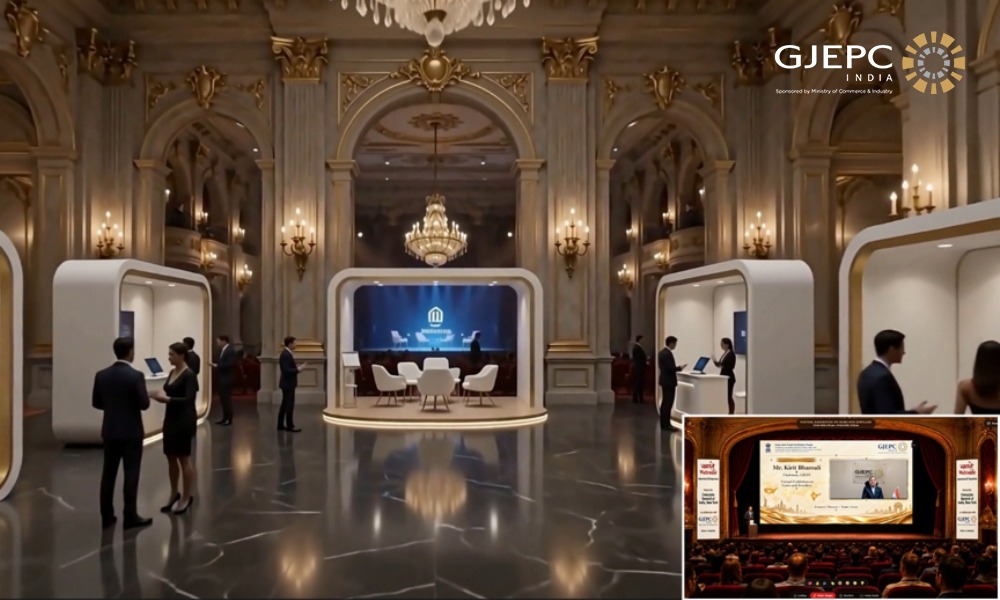
The Consulate General of India in New York, in collaboration with the Gem & Jewellery Export Promotion Council (GJEPC), organised the India-USA Virtual Exhibition on Gems & Jewellery on 23 October 2026, connecting Indian exporters with American buyers through a digital platform.
The inaugural ceremony featured welcome remarks by Ambassador HE . Binaya S. Pradhan, Consul General of India in New York, an inaugural address by Kirit Bhansali, Chairman, GJEPC, and closing remarks by Rajlakshmi Kadam, Consul (Trade), Consulate General of India, New York.
The exhibition brought together 35 Indian companies, many of them micro, small and medium enterprises (MSMEs), offering US buyers an opportunity to explore Indian jewellery collections and establish direct business connections. The event was designed to help exporters reach new customers and develop partnerships in one of India’s most important markets.
Addressing participants, Kirit Bhansali, Chairman, GJEPC, highlighted the importance of the US market, which accounted for around 30% of India’s gem and jewellery exports, worth nearly US$10 billion, in FY2024-25. He noted that tariff uncertainty had affected trade significantly, with India’s gem and jewellery exports to the US falling by more than 44% between April and December 2025.
However, trade has begun to recover. Between April and September 2026, India’s gem and jewellery exports to the US grew nearly 6% year-on-year to almost US$3 billion, compared with US$2.77 billion in the corresponding period of 2025.
Kirit Bhansali also referred to progress on the proposed India-US Bilateral Trade Agreement, expressing hope that it would provide greater clarity and predictability for exporters and buyers once its terms are finalised.
With the US holiday season approaching, followed by Valentine’s Day and retailers’ sourcing plans for 2027, he urged American buyers to explore India’s manufacturing capabilities across diamonds, coloured gemstones and gold jewellery. He also encouraged buyers to engage directly with participating MSMEs, highlighting their skills, flexibility and ability to meet varied sourcing requirements.



Jos Alukkas Unveils New Website For A Seamless Online Jewellery Shopping Experience

Mavitrra Launches Karwa Chauth Fine Jewellery Collection, Celebrating Love and Festive Elegance

Malabar Gold & Diamonds Relaunches Its Showroom In South Extension, New Delhi

Dhanteras Shopping Guide 2026:Gold, Silver, Diamonds & Festive Jewellery Trends To Watch

The Solenne Collection: A Celebration Of Diwali By Bharti Bangur Fine Jewels

From Diya Puja To Diwali Soirées: Jewellery Designed To Go Beyond The Festive Season
-
 JB Insights4 days ago
Dhanteras Shopping Guide 2026:Gold, Silver, Diamonds & Festive Jewellery Trends To Watch
-
 BrandBuzz4 days ago
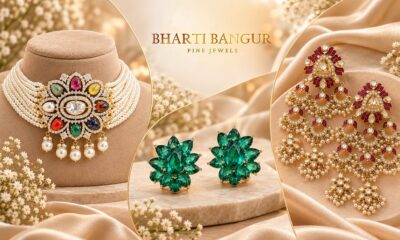
The Solenne Collection: A Celebration Of Diwali By Bharti Bangur Fine Jewels
-
 BrandBuzz4 days ago
From Diya Puja To Diwali Soirées: Jewellery Designed To Go Beyond The Festive Season
-
 National News4 days ago
Indriya, Aditya Birla Jewellery Unveiled India’s Largest Sustainable Jewellery Rangavalli
