
International News
Cartier Reimagines an Icon: The Ruby-Set ‘Juste un Clou’ Debuts for Lunar New Year
A Fusion of Industrial Rebellion and Festive Elegance Marks a Limited-Edition Celebration of Luck and Prosperity.

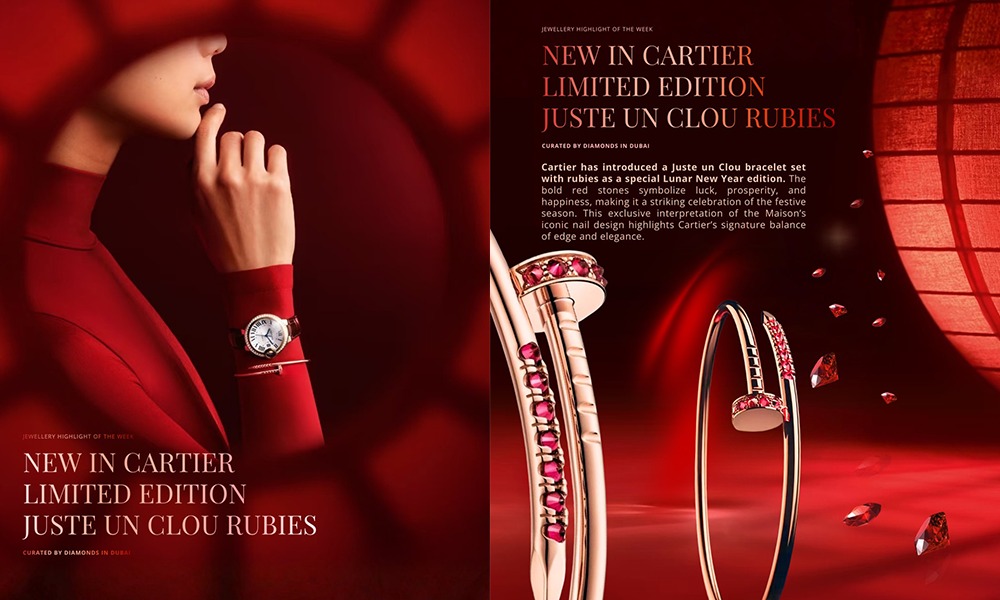
In a bold intersection of high-fashion defiance and cultural tradition, Cartier has unveiled a limited-edition interpretation of its legendary Juste un Clou collection. This special release sees the iconic “nail” silhouette transformed with a festive row of vivid red rubies, launched specifically to commemorate the Lunar New Year.
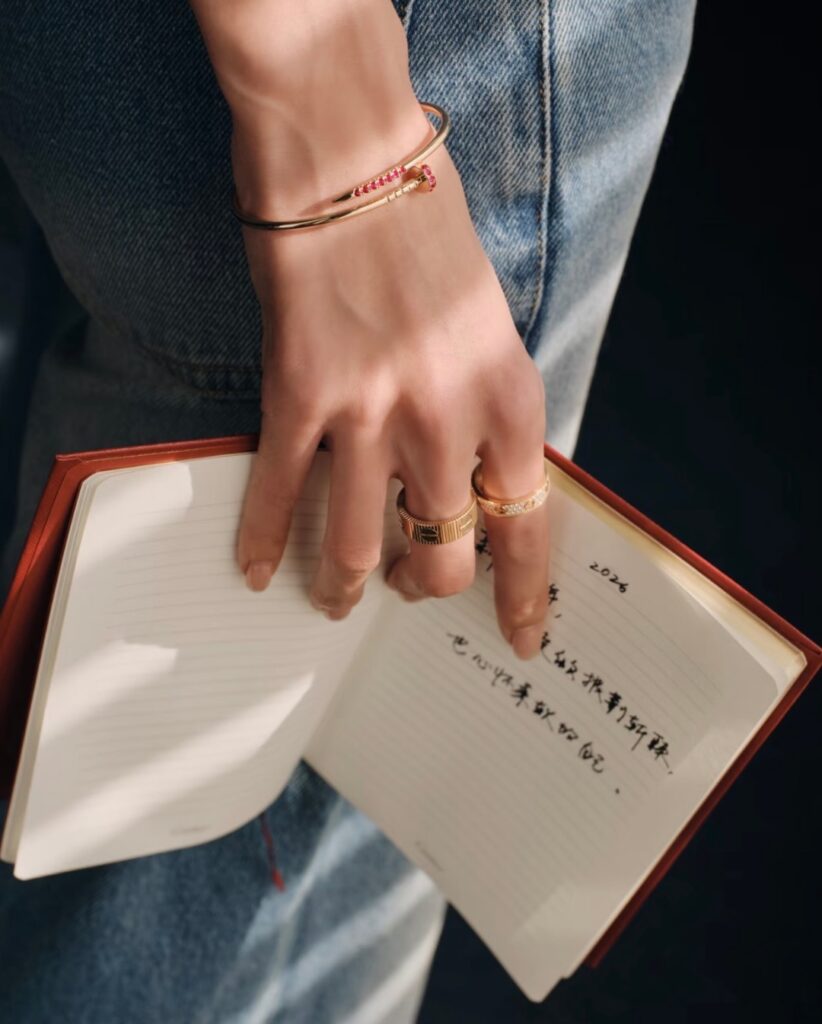
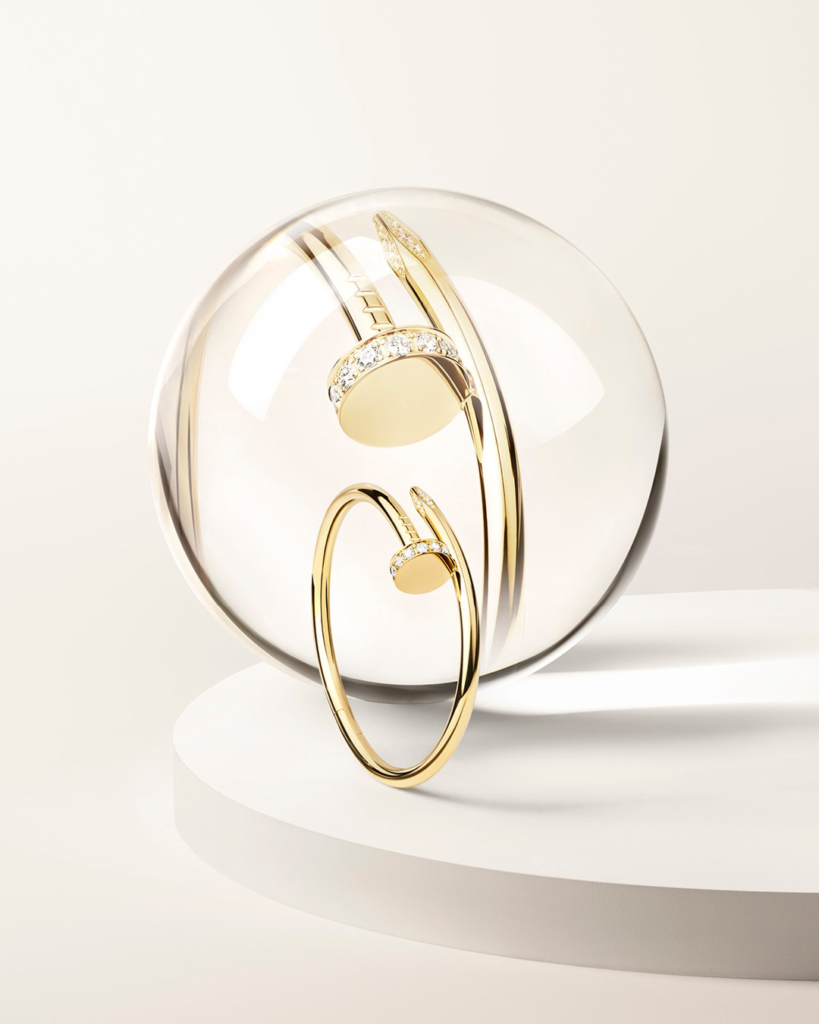
Originally conceived in 1970s New York by designer Aldo Cipullo, the Juste un Clou has long been a symbol of the “rebellious spirit” and the elevation of the ordinary into the extraordinary. By integrating rubies—stones that traditionally symbolize luck, vitality, and renewal—Cartier effectively bridges its radical Western design heritage with the deep-rooted values of the East.
The collection features the signature wrap-around nail design in gold in bracelets, necklaces, earrings & rings with the “head” and “point” of the nail meticulously pavé-set with high-quality rubies. Industry experts view this move as a strategic masterstroke, as the “festive red” aesthetic continues to be a primary driver for luxury consumption during the spring transition.




International News
Indian Consulate In New York Hosts India-USA Virtual Jewellery Exhibition; Facilitated By GJEPC
The Exhibition Brought Together 35 Indian Companies, Many Of Them Micro, Small and Medium Enterprises (MSMEs), Offering US Buyers An Opportunity To Explore Indian Jewellery Collections and Establish Direct Business Connections.


The Consulate General of India in New York, in collaboration with the Gem & Jewellery Export Promotion Council (GJEPC), organised the India-USA Virtual Exhibition on Gems & Jewellery on 23 October 2026, connecting Indian exporters with American buyers through a digital platform.
The inaugural ceremony featured welcome remarks by Ambassador HE . Binaya S. Pradhan, Consul General of India in New York, an inaugural address by Kirit Bhansali, Chairman, GJEPC, and closing remarks by Rajlakshmi Kadam, Consul (Trade), Consulate General of India, New York.
The exhibition brought together 35 Indian companies, many of them micro, small and medium enterprises (MSMEs), offering US buyers an opportunity to explore Indian jewellery collections and establish direct business connections. The event was designed to help exporters reach new customers and develop partnerships in one of India’s most important markets.
Addressing participants, Kirit Bhansali, Chairman, GJEPC, highlighted the importance of the US market, which accounted for around 30% of India’s gem and jewellery exports, worth nearly US$10 billion, in FY2024-25. He noted that tariff uncertainty had affected trade significantly, with India’s gem and jewellery exports to the US falling by more than 44% between April and December 2025.
However, trade has begun to recover. Between April and September 2026, India’s gem and jewellery exports to the US grew nearly 6% year-on-year to almost US$3 billion, compared with US$2.77 billion in the corresponding period of 2025.
Kirit Bhansali also referred to progress on the proposed India-US Bilateral Trade Agreement, expressing hope that it would provide greater clarity and predictability for exporters and buyers once its terms are finalised.
With the US holiday season approaching, followed by Valentine’s Day and retailers’ sourcing plans for 2027, he urged American buyers to explore India’s manufacturing capabilities across diamonds, coloured gemstones and gold jewellery. He also encouraged buyers to engage directly with participating MSMEs, highlighting their skills, flexibility and ability to meet varied sourcing requirements.



Mia By Tanishq Launches “Lightscapes”: A Jewellery Collection Inspired By The Magic Of Festive Lights

GJEPC Marks Commencement Of Construction Of India Jewellery Park Mumbai, A Landmark Project In Presence Of Hon’ble CM Devendra Fadnavis

Joyalukkas Breaks Two Guinness World Records Titles With The World’s Heaviest and Largest Pair Of Gold Earrings

Dhanteras Shopping Guide 2026:Gold, Silver, Diamonds & Festive Jewellery Trends To Watch

Indriya, Aditya Birla Jewellery Unveiled India’s Largest Sustainable Jewellery Rangavalli

From Diya Puja To Diwali Soirées: Jewellery Designed To Go Beyond The Festive Season
-
 JB Insights3 days ago
Dhanteras Shopping Guide 2026:Gold, Silver, Diamonds & Festive Jewellery Trends To Watch
-
 National News3 days ago
Indriya, Aditya Birla Jewellery Unveiled India’s Largest Sustainable Jewellery Rangavalli
-
 BrandBuzz3 days ago
From Diya Puja To Diwali Soirées: Jewellery Designed To Go Beyond The Festive Season
-
 BrandBuzz3 days ago
The Solenne Collection: A Celebration Of Diwali By Bharti Bangur Fine Jewels
