
TechBuzz
C4i4 Team Explores AI, Industry 4.0 Applications At IIGJ, Mega CFC
The Visit Focused On Identifying Opportunities To Apply AI and Industry 4.0 Technologies Across Jewellery Manufacturing, Skills Development and Cluster Infrastructure

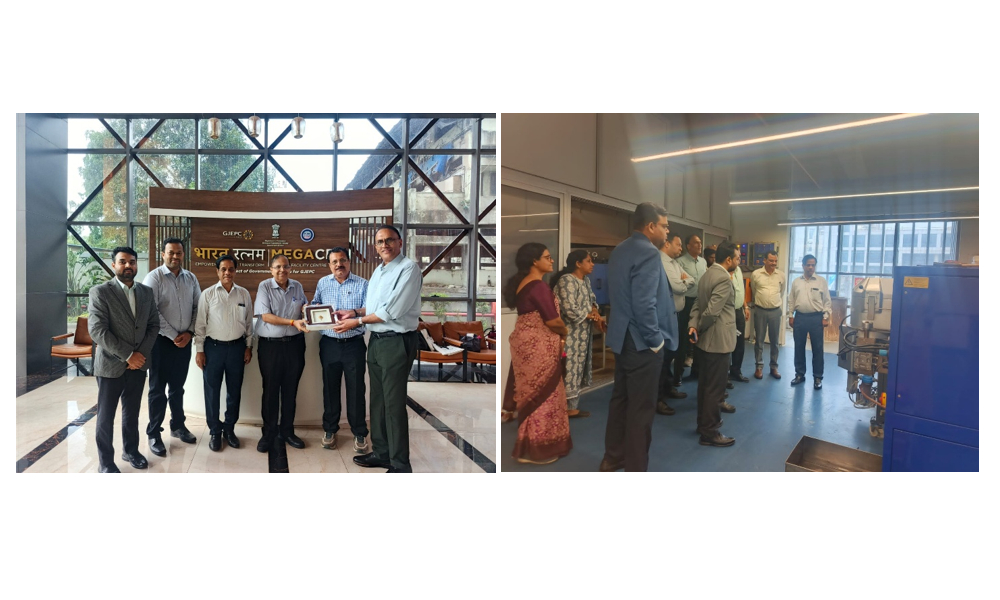
The Centre for Industry 4.0 (C4i4), Pune, which works with Indian manufacturers to support the adoption of advanced digital and smart manufacturing technologies, visited the Indian Institute of Gems & Jewellery (IIGJ) and Mega Common Facility Centre (Mega CFC), Mumbai, on 8 September to explore applications of Artificial Intelligence (AI) and Industry 4.0 in jewellery manufacturing and skilling.
The C4i4 team comprised Dattatraya Navalgundkar, Bilal Ahmed and Sunil Bhatambrekar. At IIGJ, Siddhartha H., COO, GJEPC, provided an overview of the institute, while Dr. Anju Singh, Dean (Academics), IIGJ Mumbai, briefed the team on its curriculum and academic programmes. Koushik S.V., Head – Skill Development Division, IIGJ Udupi, shared details of skilling initiatives, including the PM Vishwakarma scheme and its relevance to artisans and traditional skills. Discussions also covered jewellery valuation programmes conducted for Customs and GST officials.
Ravi Menon, CEO, Mega CFC, outlined the centre’s establishment and facilities, while Mithilesh Pandey, Senior Director, GJEPC, briefed the delegation on cluster development initiatives and the role of common facilities in strengthening the jewellery manufacturing ecosystem.
The visit focused on identifying opportunities to apply AI and Industry 4.0 technologies across jewellery manufacturing, skills development and cluster infrastructure.


JB Insights
Titanium Jewellery Manufacturing: Convergence Of Advanced Manufacturing, AI, and Surface Chemistry
For Trade Professionals, Understanding The Tech Powering This Trend Isn’t Just Academic—It’s The Key To Navigating The Next Decade Of Luxury Design.
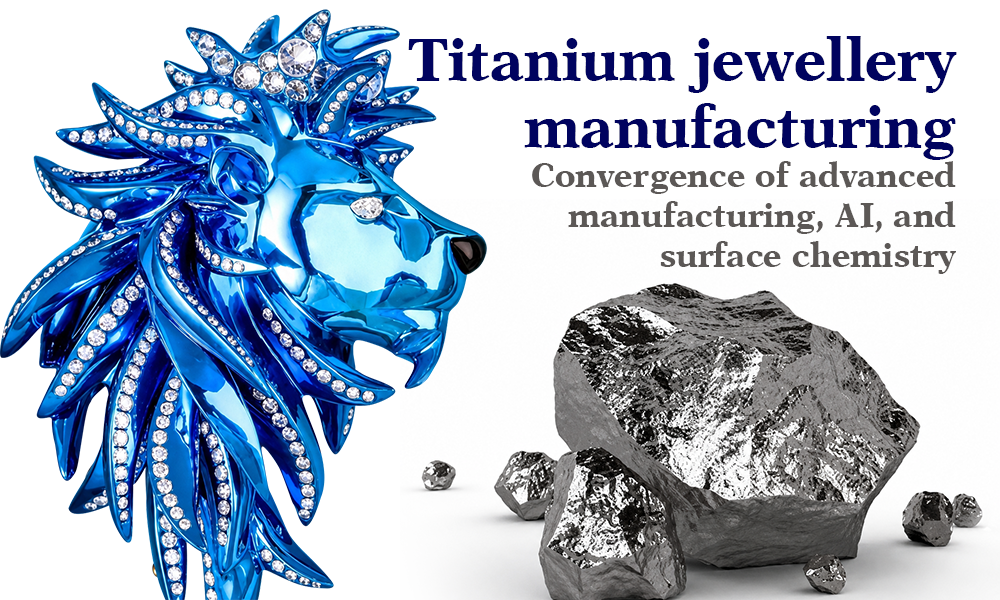
Titanium has officially broken free from its industrial roots. Long reserved for aerospace engineering and medical implants, this ultra-tough metal has been repositioned at the pinnacle of luxury watchmaking and high jewelry. Driven by a convergence of advanced manufacturing, AI, and surface chemistry, titanium is giving traditional precious metals a run for their money.
For trade professionals, understanding the tech powering this shift isn’t just academic—it’s the key to navigating the next decade of luxury design. Here are the core innovations driving the titanium revolution.
1. 3D Printing & Direct Metal Laser Sintering (DMLS)
Working with titanium presents a notorious metallurgical hurdle: its extreme melting point () makes traditional casting and soldering nearly impossible. Enter Direct Metal Laser Sintering (DMLS).
By using high-powered lasers to fuse microscopic titanium powder layer by layer, designers can bypass traditional workbench limitations entirely. This additive manufacturing capability allows ateliers to produce complex, hollow, and lattice-like organic structures. The result? Massively oversized, avant-garde statement pieces that remain remarkably lightweight and structurally indestructible.
2. Precision via AI-Driven CNC Machining
Titanium’s legendary hardness routinely destroys standard bench tools, making traditional hand-carving or standard machining painfully slow and cost-prohibitive. To solve this, forward-thinking manufacturers are deploying AI-driven Computer Numerical Control (CNC) machining.
AI algorithms optimize tool paths in real-time, reducing tool wear while carving intricate geometries at unprecedented speeds. Furthermore, these smart CNC systems achieve an ultra-refined grain size on the metal’s surface—a crucial prerequisite for achieving a flawless, mirror-like finish and vibrant color differentiation.
3. Electrochemical Anodization: Painting with Electricity
One of titanium’s most disruptive luxury features is its ability to take on vivid coloration without the use of fragile paints, platings, or enamels. Through electrochemical anodization, jewelers submerge the metal in an electrolytic bath and apply precise electrical currents.
Rather than adding a pigment, this process alters the thickness of the titanium’s natural oxide layer, changing how light refracts off the surface. Ateliers can consistently achieve fade-resistant, biocompatible hues ranging from deep electric blues and magentas to striking rainbow gradients.
[Electric Current Applied] ➔ [Oxide Layer Thickens/Shifts] ➔ [Light Refraction Alters] ➔ [Vibrant, Fade-Resistant Color]
4. Next-Gen Wearable Tech Integration
The booming smart jewelry sector demands materials that are bio-friendly, exceptionally durable, and featherlight. Aerospace-grade titanium has become the gold standard for this niche.
Market leaders like Ultrahuman utilize titanium chassis to house highly sensitive, medical-grade sensors. Because titanium acts as a rugged, hypoallergenic shield, it seamlessly protects internal components tracking Heart Rate Variability (HRV), skin temperature, and sleep cycles, all while offering the comfort of a traditional wedding band.
5. High-Jewelry’s “Stealth Wealth” Aesthetic
In the high-jewelry circuit, “heavy” no longer automatically equates to “valuable.” Elite international ateliers are embracing raw and black titanium as the ultimate canvas for haute joaillerie.
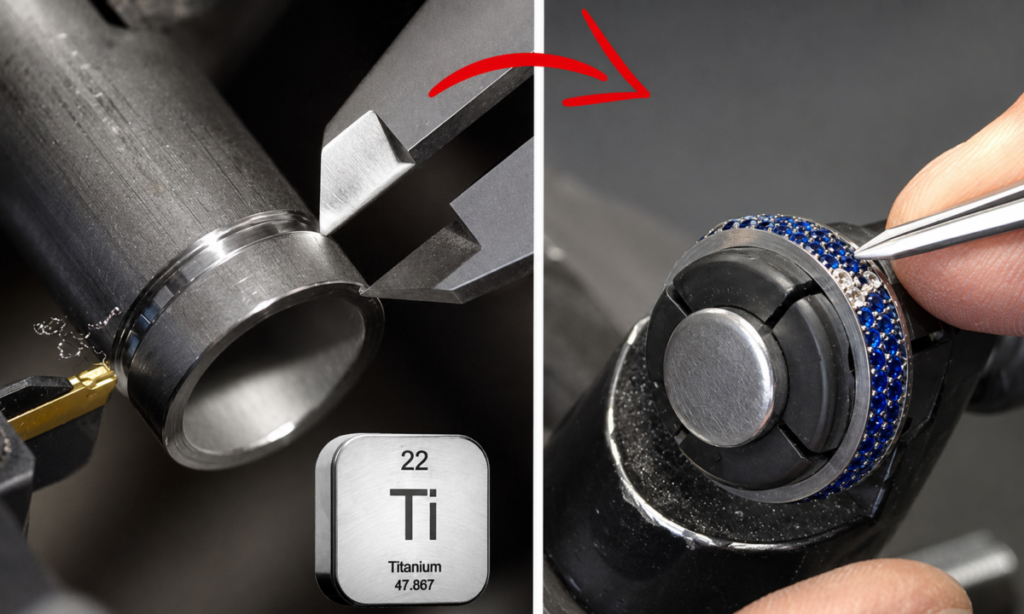
Weighing 45% lighter than stainless steel and a fraction of the weight of platinum, titanium allows designers to set massive, multi-carat precious gemstones into expansive designs without weighing down the wearer. Its deep, muted tones offer a stark, contemporary contrast to diamonds and colored gems, perfectly capturing the minimalist, “stealth wealth” aesthetic coveted by modern collectors.



-
 DiamondBuzz15 minutes ago
India LGD Sector Is Pushing Back Against Aggressive Discounting
-

 National News9 minutes ago
Deepa Jewellers Lists At Rs 221, A 25% Premium
-

 National News53 minutes ago
Gold Loans Emerge As India’s Second-Largest Retail Credit Segment: TransUnion CIBIL
-

 DiamondBuzz23 minutes ago
Angola and Botswana Agree To Deepen Cooperation To Bolster Natural Diamonds Demand
