

National News
BIS launches pilot project to digitally capture hallmarked jewellery details

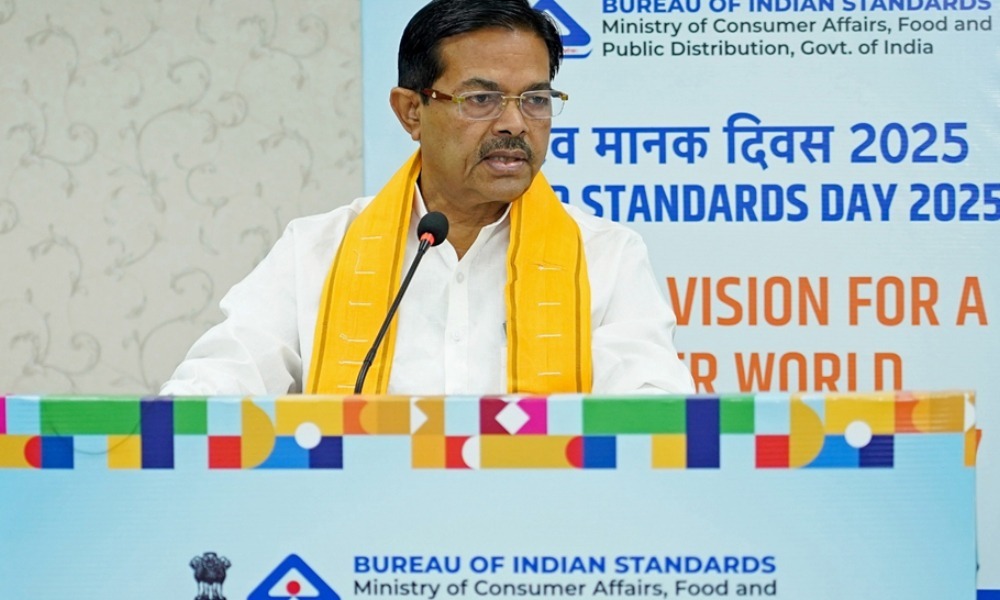
On the occasion of World Standards Day 2025 on 14 October, the Bureau of Indian Standards (BIS) launched a pilot project to digitally capture the weight and photograph of hallmarked jewellery across 25 Assaying and Hallmarking Centres (AHCs). The initiative aims to boost transparency in the hallmarking process by recording each jewellery item’s image and weight directly on the BIS portal.
Under the system, cameras will capture clear images of the jewellery and its unique HUID number, while integrated weighing balances will automatically upload the weight, eliminating manual errors. Consumers can verify the authenticity of hallmarked jewellery by viewing these details on the BIS Care mobile app, ensuring greater transparency and informed buying.The pilot will run for one month across the selected AHCs before being expanded nationwide.
A key component of the project is consumer accessibility. Through the BIS Care mobile app, buyers will be able to verify the authenticity and specifications of any hallmarked jewellery item by simply entering the HUID number. The app will display the corresponding photograph and weight details, empowering consumers to make informed and confident purchasing decisions.
Pilot Implementation and Next Steps
The project will operate on a pilot basis for one month across the 25 participating AHCs. BIS will monitor system performance, data accuracy, and consumer response during this period. Based on the outcomes and feedback, the initiative will be scaled up nationwide, covering all BIS-recognised hallmarking centres.
According to BIS officials, this initiative is a major milestone in aligning India’s hallmarking process with global best practices in standardisation and traceability. It supports the government’s ongoing efforts to ensure trust, transparency, and technology-driven oversight in the gems and jewellery industry.
Driving Digital Transformation in Hallmarking
The pilot also reflects BIS’s broader digital transformation strategy, which leverages technology to improve service delivery and consumer engagement. By combining data-driven systems, real-time verification, and digital recordkeeping, BIS aims to strengthen the integrity of hallmarking — a cornerstone of quality assurance in precious metals.
As India continues to witness rising consumer demand for hallmarked gold and silver jewellery, this initiative promises to set a new benchmark for authenticity and accountability in the marketplace.




India’s appetite for borrowing against gold is reshaping the country’s credit landscape. Outstanding gold-backed loans have surged 128% from a year earlier, crossing Rs.4 lakh crore ($48 billion) for the first time, according to data from the Reserve Bank of India. As of Jan. 31, loans secured by gold jewellery stood at Rs.4,00,517 crore, marking one of the fastest expansions in retail credit in recent years.
The boom in gold loans has helped propel overall non-food bank credit growth to 14.4% year-on-year. Personal loans now account for 34.5% of total bank lending, outpacing other segments and underscoring a broader shift toward consumer-driven credit expansion
Gold loans alone contributed roughly 9% of incremental bank credit during the period. Between January 2024 and January 2026, outstanding gold-backed credit rose by nearly Rs.3.1 lakh crore—an increase of about 338% over two years—more than quadrupling the size of the portfolio.
Two factors are driving the surge. First, gold prices have climbed roughly 152% over the past two years, increasing the collateral value of household holdings. Second, regulatory guidance requiring banks to classify loans secured by gold explicitly as gold loans has sharpened reporting and accelerated balance-sheet growth in the segment.
The trend highlights a distinctive feature of India’s financial system: households’ vast stock of physical gold, long viewed primarily as a store of wealth, is increasingly being mobilized as collateral for formal credit.
While personal lending and credit to nonbank financial companies within the services sector continue to expand rapidly, industrial credit remains uneven. Loans to micro, small and medium enterprises are growing steadily, but borrowing by large corporations has stayed relatively muted.
Since March 21, 2025, banks have added Rs.21.8 lakh crore to their non-food loan books, translating into 12% growth for the financial year to date. Yet it is gold—rather than factories or infrastructure—that is emerging as one of the most dynamic engines of India’s current credit cycle.



#ViRosh Ki Shaadi: Rashmika Mandanna & Vijay Deverakonda Celebrate Love with Temple Gold & Timeless Tradition

Outstanding gold-backed loans surge by 128% from a year earlier

Indriya, Aditya Birla Jewellery, crosses 50 Stores Nationwide

IIBS-11: Navigating the ‘New Gold Rush’ in a fragmenting global economy

Oroarezzo 2026, with Italian Exhibition Group, Manufacturing Explores New Markets
#ViRosh Ki Shaadi: Rashmika Mandanna & Vijay Deverakonda Celebrate Love with Temple Gold & Timeless Tradition
-
 National News4 days ago
IIBS-11: Navigating the ‘New Gold Rush’ in a fragmenting global economy
-
 International News4 days ago
Oroarezzo 2026, with Italian Exhibition Group, Manufacturing Explores New Markets
-
 GlamBuzz6 hours ago
#ViRosh Ki Shaadi: Rashmika Mandanna & Vijay Deverakonda Celebrate Love with Temple Gold & Timeless Tradition
-
 National News10 hours ago
Outstanding gold-backed loans surge by 128% from a year earlier
