

DiamondBuzz
BAFTA 2026: De Beers Group- Desert Diamonds Emerged as the Jewellery Story of the Night
At this year’s BAFTAs, the red carpet was illuminated with natural diamonds in warm champagne tones, as Desert diamonds became the most consistent jewellery signature of the evening.


At this year’s British Academy Film Awards, the red carpet was illuminated with natural diamonds worn by some of the acting world’s most beloved stars, with Desert Diamonds by De Beers emerging as one of the evening’s most consistent jewellery signatures. Nathalie Emmanuel, Gillian Anderson, Audrey Nuna, Archie Madekwe and Regé-Jean Page all stepped out wearing Desert Diamonds, marking a rare moment when multiple personalities aligned around the same diamond aesthetic.
When five influential figures lean into a shared jewellery direction in a single evening, it signals more than styling coincidence — it signals a shift. This year’s BAFTA jewellery mood moved away from classic icy white brilliance toward warmer champagne-toned natural diamonds that photographed with softness, glow and depth under flash photography.
At the 79th British Academy Film Awards in London, the jewellery story arrived not with spectacle but with tone — champagne, honey, cognac, brown and whiskey hues defining the visual language of the carpet. Across appearances, Desert Diamonds emerged as a consistent signature, favouring warmth and dimensionality over high-contrast sparkle.

Gillian Anderson
Gillian Anderson led this direction wearing asymmetric brown and white diamond earrings by Ara Vartanian, paired with sculptural rings that complemented rather than dominated her look. Nathalie Emmanuel followed in elongated drop earrings punctuated with brown diamonds, styled alongside a bracelet and rings within the same tonal family, creating a cohesive and deliberate aesthetic.

Audrey Nuna
K-Pop Demon Hunter star Audrey Nuna introduced a sharper contemporary energy in Desert diamond ear climbers by ANANYA, leaning into structure and precision rather than excess. The brooch revival continued as Rising Star nominee Archie Madekwe paired his custom Dior suit with a white diamond brooch and Desert diamond vintage rings by Ara Vartanian.

Regé-Jean Page
Regé-Jean Page selected a fauna-inspired dragonfly brooch in warm-toned diamonds by Hirsh London, reinforcing the evening’s understated yet intentional jewellery narrative. The message was clear: natural diamonds did not shout — they held the room.
Desert Diamonds are not treated colour stories; their champagne, cognac and honey hues occur naturally, shaped by trace elements and geological conditions deep within the earth. As explored through A Diamond Is Forever, these stones celebrate natural origin and individuality rather than laboratory uniformity.
For years, diamond conversations have been framed through comparison — natural versus lab-grown, tradition versus innovation. What unfolded at BAFTA felt different: less defensive and more culturally embedded. Natural diamonds were not positioned as spectacle but integrated seamlessly into moments audiences were already watching.
Award season traditionally rewards scale — larger silhouettes, brighter stones and louder sparkle — but BAFTA 2026 suggested a new direction defined by precision over excess, tone over glare and architecture over abundance.
Natural diamonds today are increasingly worn not as ceremonial heirlooms but as personal markers, styled with tailoring and integrated into fashion narratives with intention. The philosophy behind A Diamond Is Forever has long centred on rarity, provenance and emotional permanence, and the prominence of warm-toned Desert Diamonds suggests individuality and geological authenticity are becoming the new markers of luxury.
At the BAFTAs, the brilliance remained. It simply did not need to dominate. It held the room.


DiamondBuzz
GIA Celebrates World Diamond Day Highlighting Iconic Gems
Institute Spotlights Historic Diamonds Like the Hope, Dresden Green, Winston Red, Taylor Burton, Motswedi

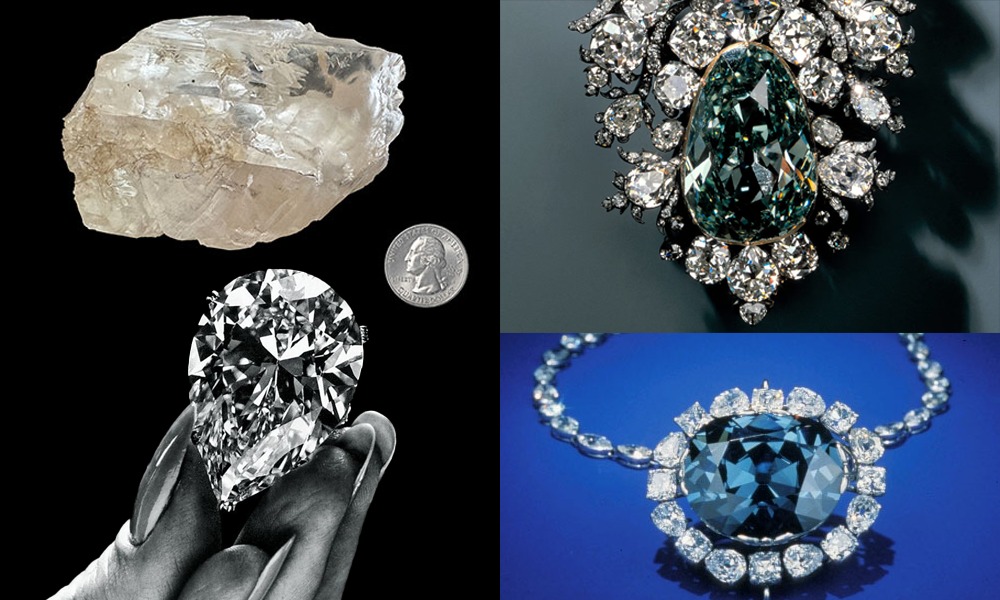
The Gemological Institute of America (GIA) marked World Diamond Day on 8th April by highlighting a selection of historically significant precious stones it has examined, underscoring their rarity, scientific importance and cultural legacy.
Below is a concise analytical breakdown of the stones and their significance from a trade, scientific, and storytelling angle:
Key diamonds highlighted
- Hope Diamond (45.52 ct, Fancy Deep greyish blue)
Traced to Golconda‑type deposits in India, this stone passed through French royalty before entering private and then museum collections, and today sits at the Smithsonian. Its combination of intense blue colour, provenance, and storied “curse” lore has made it one of the most‑recognised diamonds in the world, frequently used as a reference point in colour‑diamond marketing and exhibitions. - Dresden Green (~41 ct natural green)
The largest known natural green diamond, with an even green hue produced by natural ionising radiation in the crust. Its high purity and Saxon–European royal‑court history make it a benchmark for both rarity and the link between gemstones and political‑dynastic symbolism. - Winston Red (2.33 ct Fancy red)
A rare old‑mine‑cut Fancy red stone, of which only about 0.04% of fancy colour diamonds attain such a grade. As the only Fancy red diamond on public display, it is a key reference for dealers and collectors benchmarking the value of red‑dominant fancy colours. - Taylor‑Burton Diamond
A 68‑carat pear‑shaped D‑colour stone cut from a 240‑carat rough from South Africa’s Premier‑type deposit, later made famous by Richard Burton and Elizabeth Taylor. Its celebrity‑driven glamour elevated high‑colour‑clarity white diamonds into pop‑culture icons, reinforcing the “diamond as romance” narrative that still dominates bridal jewellery advertising. - Motswedi Diamond (2,488.32 ct rough)
Recovered in Botswana in 2024, this is the second‑largest gem‑quality diamond ever discovered and a high‑purity Type IIa crystal. Its size and purity allow scientists to study how carbon crystallises under extreme pressures deep in the Earth, making it a research‑grade specimen as well as a commercial headline‑maker. - Several stones—Hope, Dresden Green, Taylor Burton, and Winston Red—carry strong narratives of royalty, curses, Hollywood romance, and extreme rarity.
- GIA’s highlighting of these gems on World Diamond Day is a strategic blend of education and soft branding:
- It positions diamonds as objects of history and art, not just commodities.
- It reminds buyers, retailers, and media that GIA sits at the centre of authenticating and contextualising these legendary stones.gia+1
Beyond these diamonds, GIA has documented historic and royal artefacts such as the Marie Thérèse Pink diamond and the Mughal era “Mughal Spectacles,” helping to codify their gemmological and provenance data. This work reinforces its positioning as both a research institute and a preserver of the cultural heritage layer of gemmology, bridging ancient craftsmanship with modern scientific verification.

-

 International News2 days ago
Precious Metals Rally On US-Iran Ceasefire: Gold Tops $4,850, Silver Jumps To $76
-
 National News6 hours ago
KISNA Diamond and Gold Jewellery Unveils Akshaya Tritiya Campaign
-

 National News16 hours ago
Gargi by P. N. Gadgil & Sons Posts 30.27% Revenue Growth in Q4FY26
-

 National News12 hours ago
P N Gadgil Jewellers Limited – Quarterly Update Q4 FY26