

By Invitation
AI, Identity, and The New Intellectual Property Crisis In Jewellery
Why Design, Ownership, and Protection Must Evolve

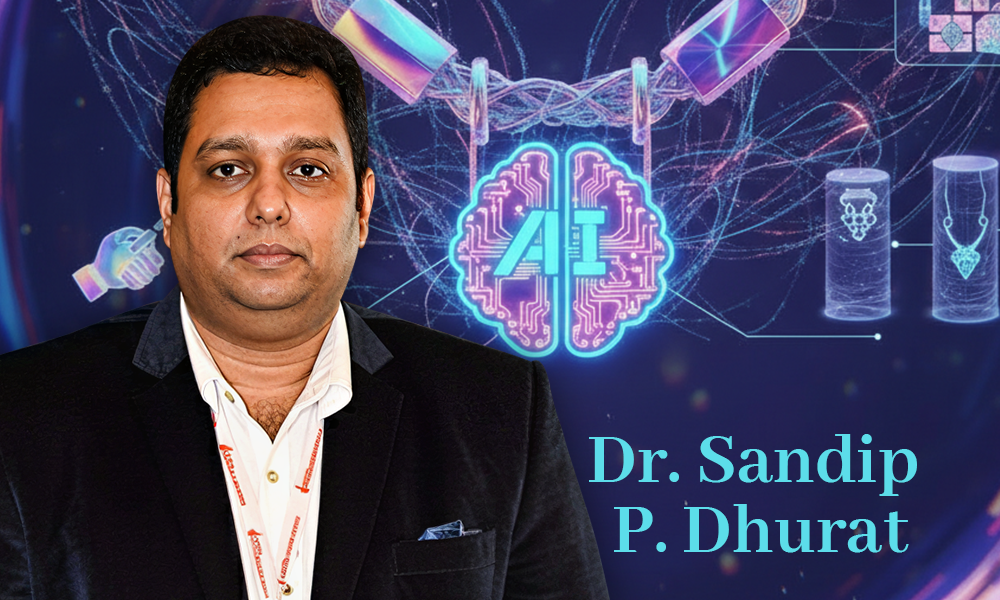
By Dr. Sandip P. Dhurat
When Emotional Displacement Becomes a Legal Challenge
AI is not only altering how jewellery is experienced. It is beginning to challenge how jewellery is protected.
When AI systems can generate: Infinite variations of existing designs, Near-identical lookalikes of signature styles, “Inspired” forms that blur originality
Rapid remixing of motifs, geometry, and proportions
The boundary between inspiration and replication becomes dangerously thin.
This creates a new intellectual property reality that the jewellery industry is largely unprepared for.
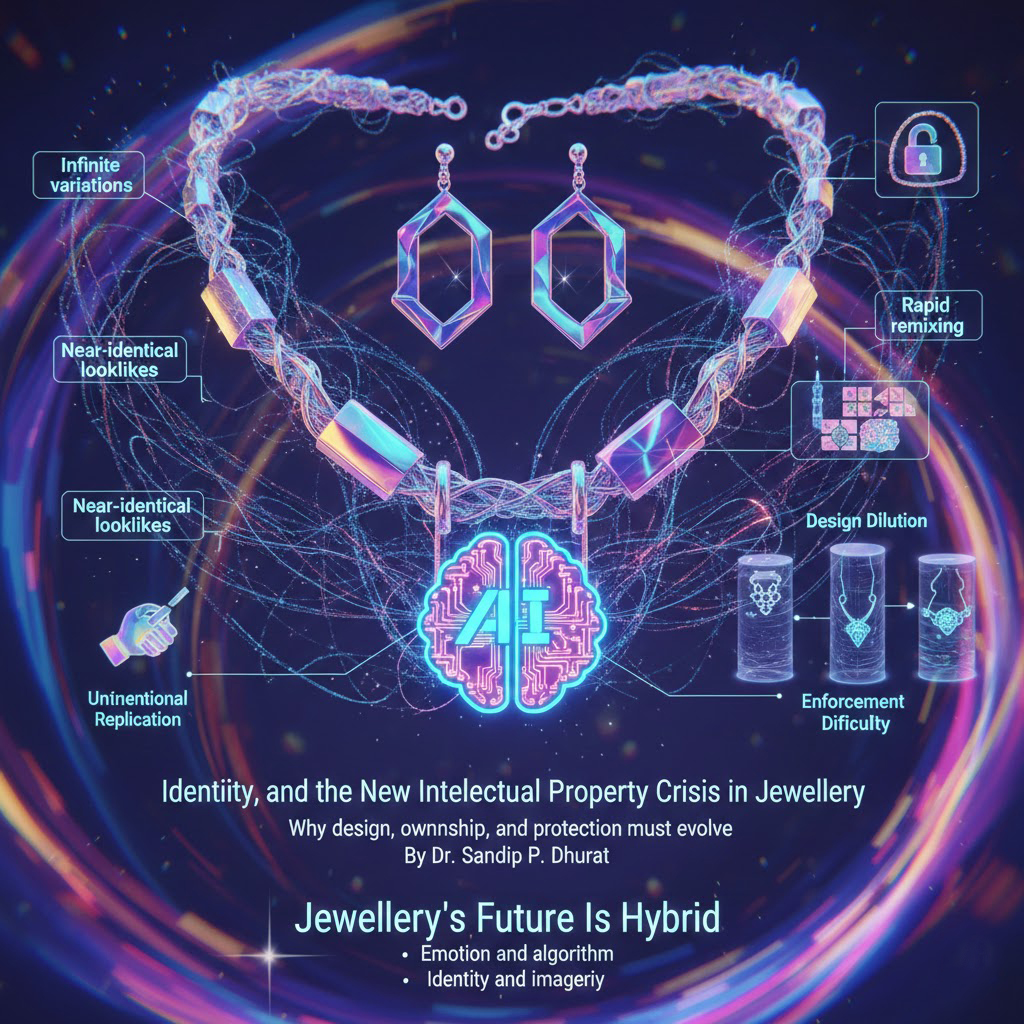
The Three Emerging IP Risks
First, design dilution. Distinctive design languages risk becoming generic AI outputs.
Second, unintentional replication. Users may unknowingly generate jewellery imagery that closely mirrors protected designs.
Third, enforcement difficulty. As AI-generated designs proliferate, proving authorship and originality becomes increasingly complex.
In a world where visuals can be replicated instantly, legal protection must extend beyond surface aesthetics to structure, concept, and category.
Why Structural Innovation Matters More Than Ever
This is why innovation that goes beyond styling — into categorisation, form logic, and system-level design — becomes critical.
AI can copy visuals.It cannot bypass legally protected structural innovation.That distinction will define which brands retain identity and which fade into algorithmic sameness.
What Jewellery Brands Must Do Now
First, integrate AI into the customer journey rather than resisting it. Let digital exploration happen — but within brand-controlled environments.
Second, reconnect digital emotion to physical desire. Use AI engagement as a gateway to exclusivity, craftsmanship, and ownership.
Third, rethink intellectual property strategy. Protect not just designs, but design thinking itself.
Jewellery’s Future Is Hybrid
Jewellery is no longer purely physical. It now exists at the intersection of:
- Material and digital
- Emotion and algorithm
- Identity and imagery
The brands that thrive will not fight this shift. They will design it.
AI is not replacing jewellery. It is replacing part of what jewellery used to do emotionally, while simultaneously forcing the industry to rethink how creativity and ownership are protected.
This moment demands clarity, not fear. Because in a world where desire itself is changing, the future of jewellery belongs to those who understand not just what they sell — but why people once needed to buy it.



By Invitation
India’s Next Decade in Jewellery Exports: Scale, Discipline & Global Positioning
By Darshan Chauhan, Director –
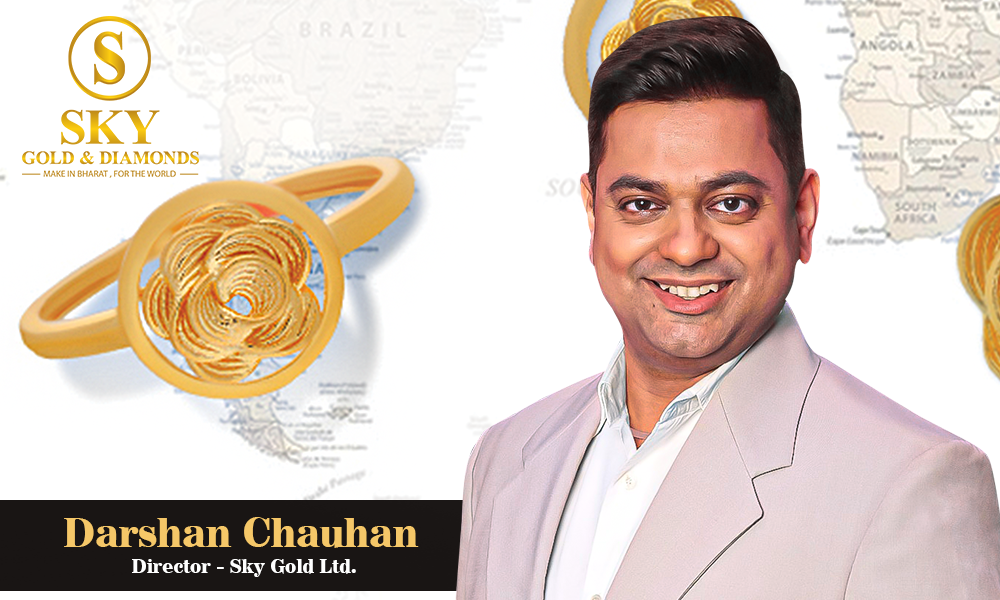
Sky Gold Ltd.
India’s jewellery export journey has been built on generations of craftsmanship, entrepreneurial resilience and an unmatched manufacturing ecosystem. From artisan-led workshops to technologically advanced facilities, the country has steadily earned global recognition as a reliable sourcing destination. Yet the coming decade represents a transition. The conversation is no longer only about producing more; it is about exporting smarter, operating with discipline and positioning India as a structured global partner rather than merely a manufacturing base.
The global jewellery trade itself is undergoing a quiet transformation. International buyers today evaluate suppliers through a wider lens. Design capability and competitive pricing remain important, but equal weight is now given to compliance, transparency, delivery consistency and financial stability. Export relationships are becoming long-term strategic partnerships rather than transactional buying arrangements.
For Indian exporters, this shift presents both an opportunity and a responsibility.
One of the most significant changes ahead will be market diversification. The United States has historically driven a substantial share of India’s jewellery exports, and it will continue to remain a vital market. However, concentration in a single geography exposes businesses to currency fluctuations, economic cycles and regulatory shifts. The Middle East has emerged as a strong growth corridor, supported by trade agreements, logistical advantages and evolving consumer demand. At the same time, regions such as Australia and parts of Europe are opening opportunities for exporters willing to meet higher compliance standards.
Diversification, therefore, is not about expanding aggressively into every market. It is about building balanced exposure that enhances stability while protecting margins.
Alongside geographic expansion, compliance is becoming a defining factor in global positioning. Responsible sourcing practices, traceability systems and governance standards are increasingly shaping procurement decisions. International brands are consolidating supplier networks and partnering with exporters who demonstrate reliability beyond production capability. In this environment, compliance should not be viewed as an external obligation. It strengthens credibility and enables access to premium markets where trust carries measurable value.
Equally important is capital discipline. Jewellery exports operate within a high-value commodity framework where gold price volatility directly impacts profitability. Elevated gold prices amplify the cost of inefficiencies, whether through excess inventory, unhedged exposure or extended payment cycles. Export growth in the coming decade will depend on closer alignment between procurement, treasury management and production planning. Structured hedging practices, bullion banking relationships and disciplined working capital management will increasingly separate stable exporters from vulnerable ones.
Manufacturing evolution will also play a central role. India already possesses scale; the next step is precision. Technology adoption, including CNC manufacturing, advanced prototyping and integrated digital production systems, enhances consistency while reducing wastage. Global buyers value predictability as much as creativity. When craftsmanship is supported by
process-driven manufacturing, India’s competitive advantage becomes far more compelling.
At the same time, India must gradually move beyond being perceived solely as a cost-competitive supplier. Countries that have successfully strengthened their global positioning have invested in design identity, innovation and long-term brand perception. Indian exporters have the opportunity to shift the narrative toward reliability, creativity and manufacturing excellence. Building deeper partnerships with international buyers, rather than focusing only on order volumes, will help achieve this transition.
Sustainability is emerging as another critical dimension of export strategy. Renewable energy adoption, responsible sourcing and environmental accountability are becoming key evaluation criteria in developed markets. These initiatives are not merely ethical considerations; they are risk-management tools that safeguard long-term market access. Exporters who align early with global sustainability expectations will find themselves better positioned as international standards continue to evolve.
Domestic retail trends are also influencing export direction more than before. The growing demand for lightweight, versatile jewellery in India mirrors changing consumer preferences globally. Faster design cycles and data-led product planning are reshaping manufacturing strategies. Exporters who remain closely connected to consumer behaviour both domestically and internationally gain stronger foresight into demand patterns.
The next decade of Indian jewellery exports will therefore be defined by alignment: scale supported by systems, creativity supported by discipline and growth supported by governance. India already has the foundation, skilled artisans, manufacturing depth and strong global relationships. The opportunity now lies in strengthening operational maturity.
If approached with clarity and intention, India can transition from being viewed primarily as the world’s jewellery workshop to being recognised as a trusted global partner in design, manufacturing and supply chain excellence. The future of exports will not depend solely on how much we produce, but on how confidently global markets rely on us.
In that shift lies the true potential of India’s next decade in jewellery exports.


Svariya Introduces a New Era of Everyday Jewellery with ‘Unleash Jewellery. Not Rules.’ Philosophy

GJEPC Highlights Industry Priorities in Meeting with Hon’ble FM Nirmala Sitharaman

India’s Next Decade in Jewellery Exports: Scale, Discipline & Global Positioning

IIJS Bharat Tritiya 2026 Wraps Up Triumphant 4th Edition, Connecting 15,000 Buyers with India’s Top Jewellery Manufacturers
India’s Next Decade in Jewellery Exports: Scale, Discipline & Global Positioning

Bhima Jewellery’s Theni Showroom Relaunched By Actress Aishwarya Lekshmi
-
 ShowBuzz1 hour ago
IIJS Bharat Tritiya 2026 Wraps Up Triumphant 4th Edition, Connecting 15,000 Buyers with India’s Top Jewellery Manufacturers
-
 By Invitation1 hour ago
India’s Next Decade in Jewellery Exports: Scale, Discipline & Global Positioning
-
 GlamBuzz2 hours ago
Bhima Jewellery’s Theni Showroom Relaunched By Actress Aishwarya Lekshmi
-

 By Invitation2 hours ago
Competition – Darr Ya Discipline Ki Kami?