
TechBuzz
Additive Manufacturing in Jewellery: How 3D Printing is Shaping the Future
Discover how additive manufacturing (3D printing) is revolutionizing the jewellery industry with rapid prototyping, precision design, and sustainable production techniques.


What is Additive Manufacturing?
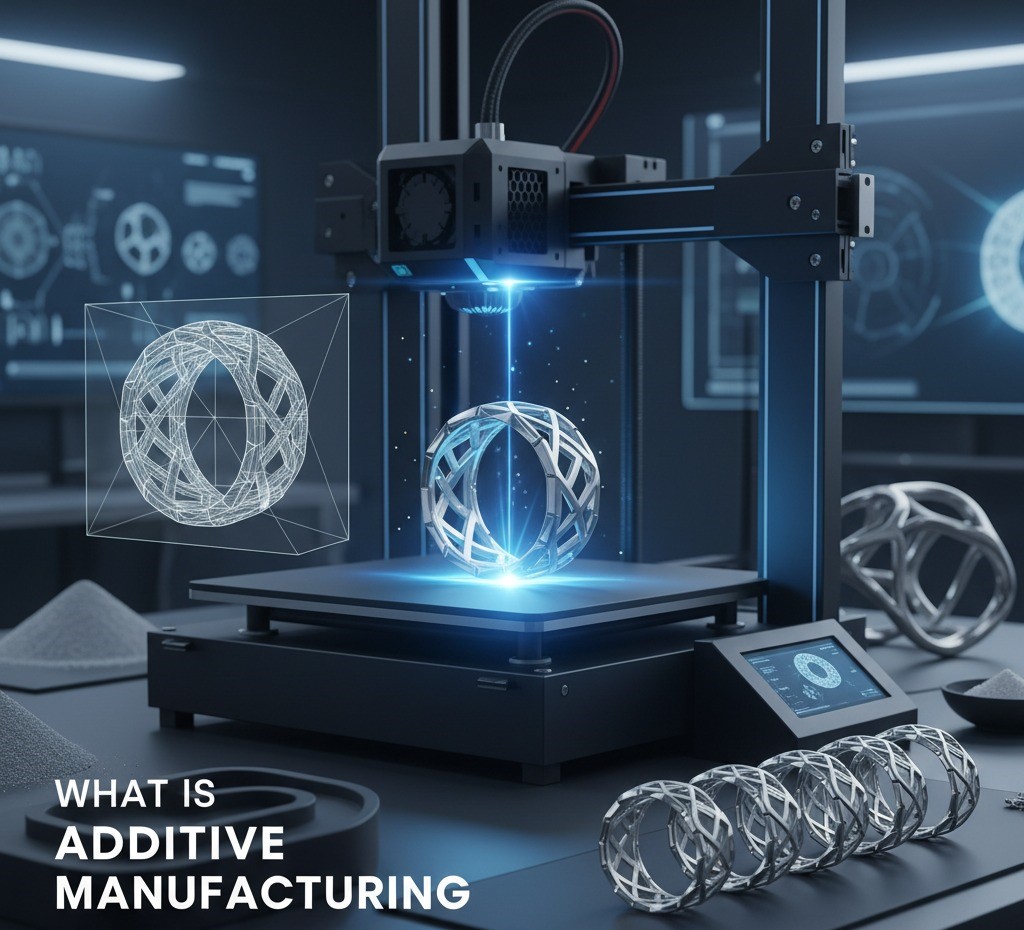
Additive manufacturing (AM), commonly known as 3D printing, is the process of building objects layer by layer directly from a 3D CAD model. Unlike traditional methods, AM doesn’t require cutting tools or molds, enabling designers and manufacturers to create intricate, customized, and functional parts efficiently.
Applications in Jewellery and Beyond
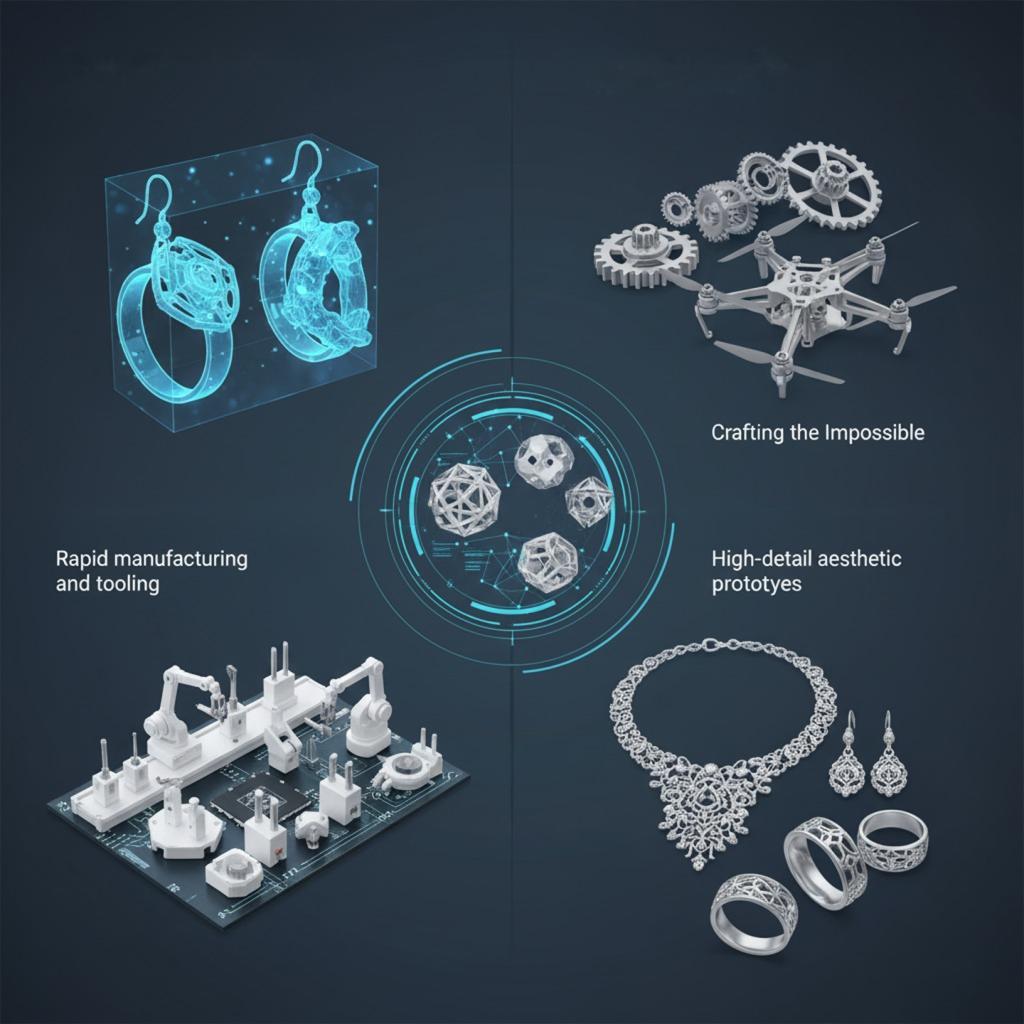
Additive manufacturing is widely used for:
- Rapid prototyping and concept models
- Production of functional parts and spare components
- Rapid manufacturing and tooling
- High-detail aesthetic prototypes
In jewellery, AM allows designers to craft complex motifs and precise structures that are otherwise impossible with traditional methods.
Popular Additive Manufacturing Processes
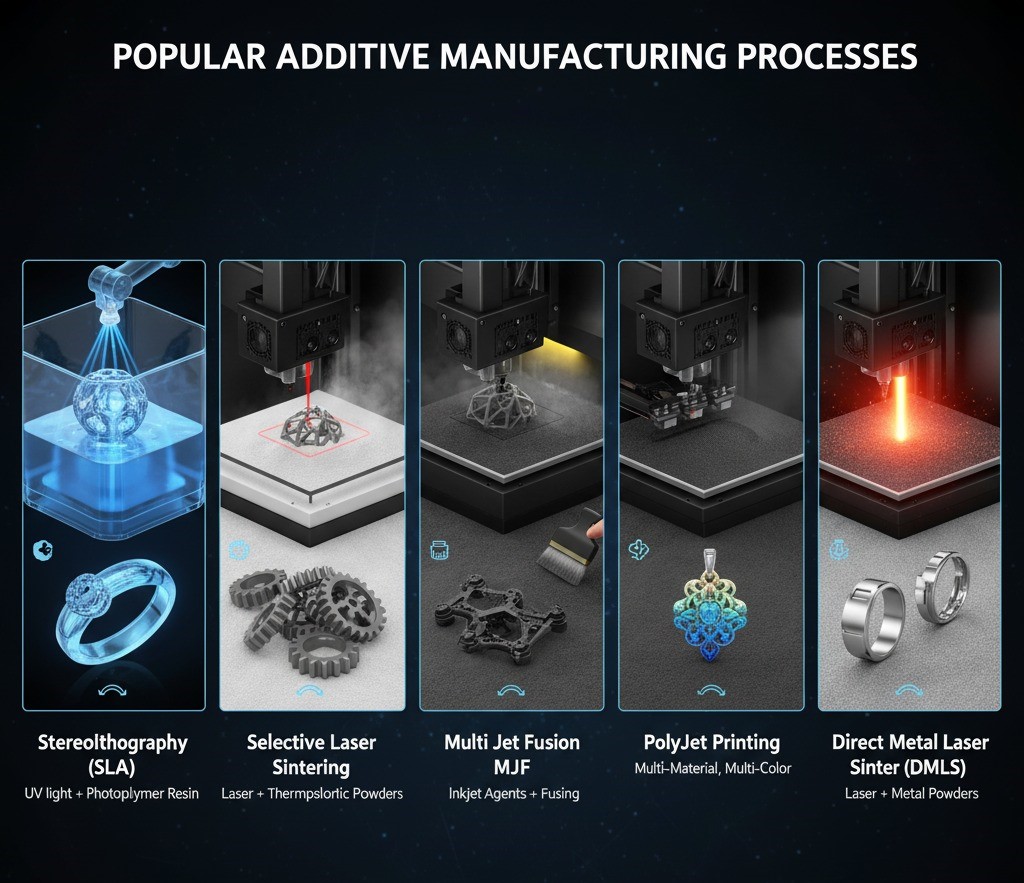
- Stereolithography (SLA) – Uses UV light to cure photopolymer resin, producing highly detailed, smooth-finish prototypes.
- Selective Laser Sintering (SLS) – Sintered thermoplastic powders create durable, functional parts with complex geometries.
- Multi Jet Fusion (MJF) – Offers fast, accurate, and cost-effective production of functional parts using inkjet fusing agents.
- PolyJet Printing – Enables multi-material, multi-color parts with fine detail, ready for immediate use.
- Direct Metal Laser Sintering (DMLS) – Fuses metal powders like stainless steel, aluminum, and titanium for strong, precise, and lightweight components.
Materials Used in Additive Manufacturing
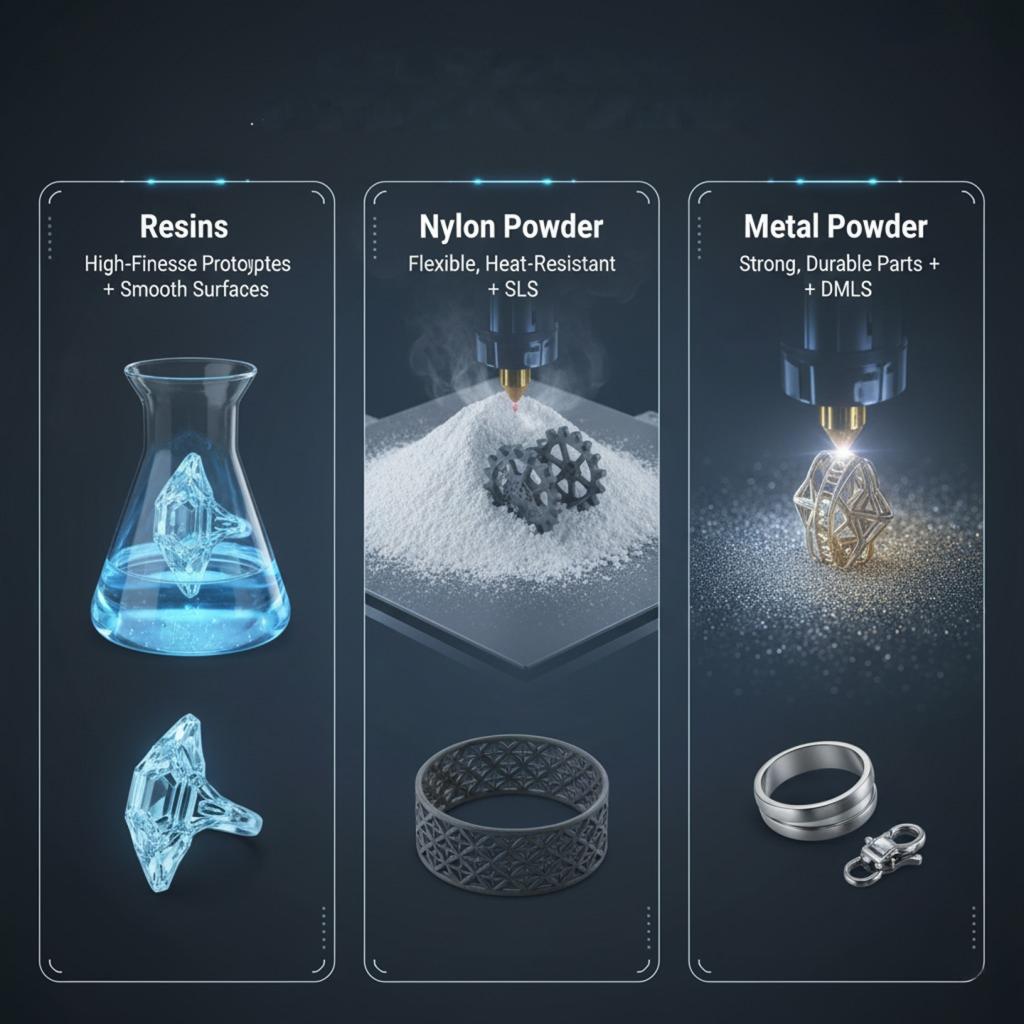
- Resins: High-finesse prototypes with smooth surfaces
- Nylon Powder: Flexible, heat-resistant, ideal for SLS
- Metal Powder: Strong and durable parts for DMLS applications
Why Additive Manufacturing is Transforming Jewellery
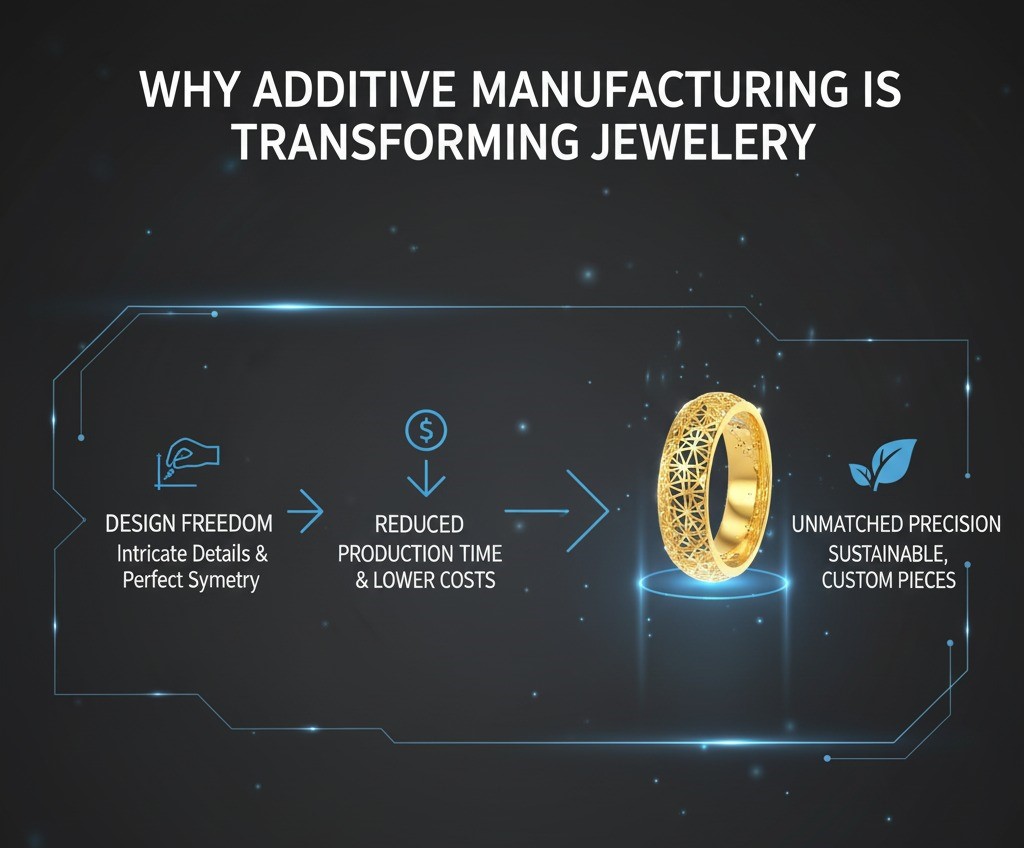
AM reduces production time, lowers costs, and enhances design freedom, allowing jewellery brands to innovate faster. Designers can experiment with intricate details, achieve perfect symmetry, and create custom, sustainable pieces with unmatched precision.
The Future of Jewellery and Manufacturing
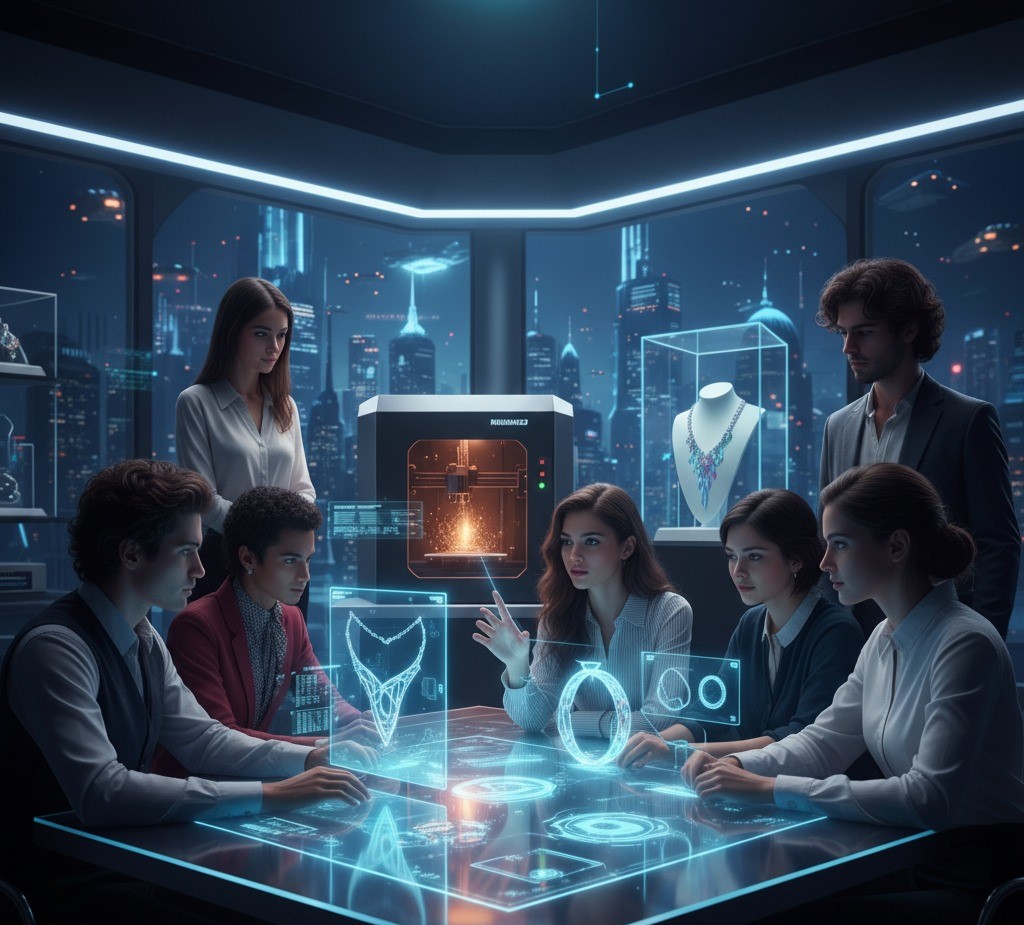
Additive manufacturing is not just a tool—it’s a creative revolution. By combining digital design, precision engineering, and material innovation, AM is enabling the next generation of jewellery designers and manufacturers to dream bigger and create smarter.


TechBuzz
C4i4 Team Explores AI, Industry 4.0 Applications At IIGJ, Mega CFC
The Visit Focused On Identifying Opportunities To Apply AI and Industry 4.0 Technologies Across Jewellery Manufacturing, Skills Development and Cluster Infrastructure

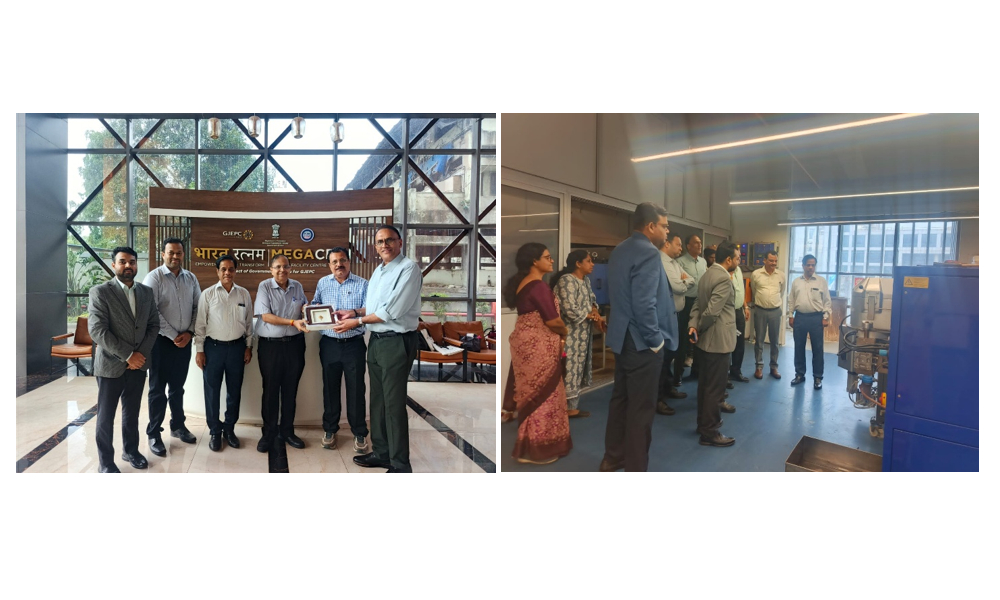
The Centre for Industry 4.0 (C4i4), Pune, which works with Indian manufacturers to support the adoption of advanced digital and smart manufacturing technologies, visited the Indian Institute of Gems & Jewellery (IIGJ) and Mega Common Facility Centre (Mega CFC), Mumbai, on 8 September to explore applications of Artificial Intelligence (AI) and Industry 4.0 in jewellery manufacturing and skilling.
The C4i4 team comprised Dattatraya Navalgundkar, Bilal Ahmed and Sunil Bhatambrekar. At IIGJ, Siddhartha H., COO, GJEPC, provided an overview of the institute, while Dr. Anju Singh, Dean (Academics), IIGJ Mumbai, briefed the team on its curriculum and academic programmes. Koushik S.V., Head – Skill Development Division, IIGJ Udupi, shared details of skilling initiatives, including the PM Vishwakarma scheme and its relevance to artisans and traditional skills. Discussions also covered jewellery valuation programmes conducted for Customs and GST officials.
Ravi Menon, CEO, Mega CFC, outlined the centre’s establishment and facilities, while Mithilesh Pandey, Senior Director, GJEPC, briefed the delegation on cluster development initiatives and the role of common facilities in strengthening the jewellery manufacturing ecosystem.
The visit focused on identifying opportunities to apply AI and Industry 4.0 technologies across jewellery manufacturing, skills development and cluster infrastructure.



Belgian Prime Minister Bart De Wever opens expanded HRD Antwerp laboratory in Mumbai

Verlas Introduces the ‘Alyssa’ Collection in India, Bringing Modern Luxe Floral-Inspired Design to Lab-Grown Diamond Jewelry Crafted in Fine Gold

Gold rebounds,Silver reclaims Rs 2.33 lakh mark

Limelight Lab Grown Diamonds Inaugurates Showroom In Kalyan, Its 8th Exclusive Store MMR
Verlas Introduces the ‘Alyssa’ Collection in India, Bringing Modern Luxe Floral-Inspired Design to Lab-Grown Diamond Jewelry Crafted in Fine Gold
Belgian Prime Minister Bart De Wever opens expanded HRD Antwerp laboratory in Mumbai
-
 National News2 days ago
Limelight Lab Grown Diamonds Inaugurates Showroom In Kalyan, Its 8th Exclusive Store MMR
-
 BrandBuzz1 day ago
Verlas Introduces the ‘Alyssa’ Collection in India, Bringing Modern Luxe Floral-Inspired Design to Lab-Grown Diamond Jewelry Crafted in Fine Gold
-
 DiamondBuzz1 day ago
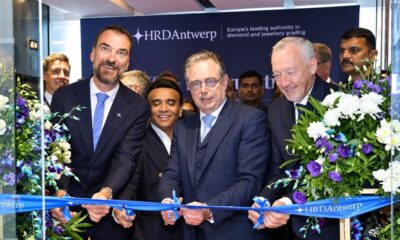
Belgian Prime Minister Bart De Wever opens expanded HRD Antwerp laboratory in Mumbai
-
 National News1 day ago
Gold rebounds,Silver reclaims Rs 2.33 lakh mark
