
International News
THE VICENZA SYMPOSIUM :Technology, innovation, and the future of the industry
The goldsmith and jewellery industry is ready to take a decisive step into the future with the debut of The Vicenza Symposium, taking place from September 2 to 4, 2025, in the exclusive setting of the Palladian Basilica, in the heart of Vicenza.

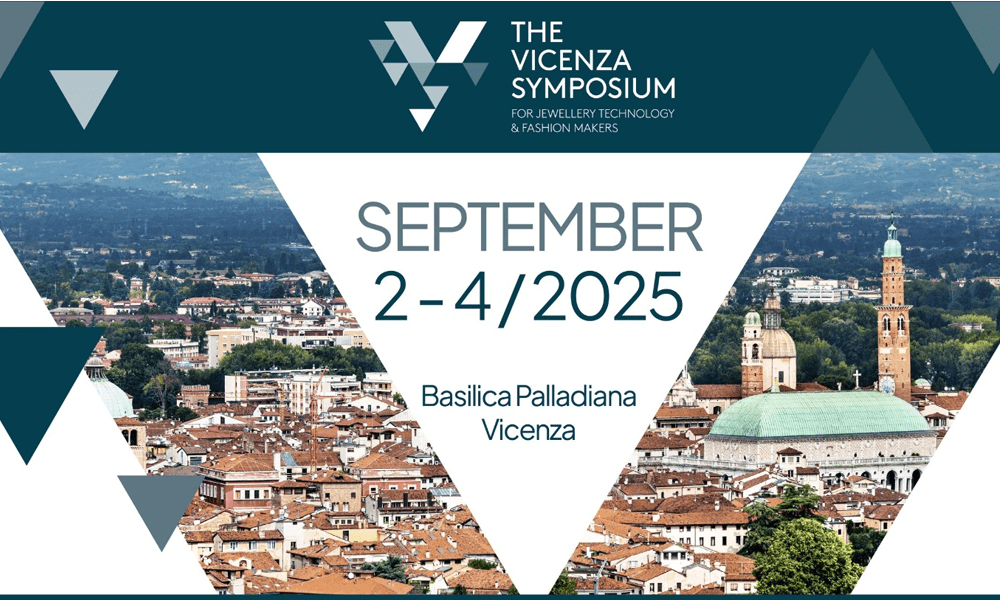
This international platform, designed for professionals, academics, and industry leaders, will focus on technological evolution and the new production paradigms transforming the jewellery and goldsmith sectors. From its very first edition, it positions itself as a driving force for innovation. The symposium will serve as a key moment for discussing the changes and innovations reshaping the world of jewellery and fashion accessories, effectively acting as a prelude to the September edition of Vicenzaoro (September 5–9). The event will revolve around three main thematic areas: “Innovation and Advanced Processes,” “Quality and Finishing Processes,” and “Sustainability and Regulations”.
One of the key topics of the 2025 edition is Artificial Intelligence (AI), a technological pillar underpinning the entire sector’s transformation. The uses of AI in jewellery are many and rapidly evolving: from automated design and predictive defect management to production flow optimization and data-driven quality control. A particularly innovative case study will focus on a new generation of intelligent machines for gemstone setting, capable of learning and replicating artisans’ gestures with extreme precision. Rather than replacing the human touch, this technology is meant to complement it, automating repetitive tasks to free up time for creativity and the uniqueness of manual craftsmanship.
Another major highlight will be 3D printing, which is increasingly central in production processes due to its ability to combine customization, sustainability, and waste reduction. The benefits of Selective Laser Melting (SLM) and Binder Jetting technologies, when applied to precious metals like gold and 950 platinum, will be analyzed in detail and compared with traditional techniques such as investment casting.
These advanced methods now make it possible to produce semi-finished products with complex geometries and top-quality finishes, reducing production time and enhancing final product quality. Research presented
at the Symposium will also highlight 3D printing’s role in lowering environmental impact, a key concern for both consumers and global markets.
Beyond the main themes, significant advancements will also be presented in the field of advanced optical solutions for 3D printing of reflective alloys, with new laser technologies that improve surface finish and reduce the need for post-processing.
In terms of quality control, the integration of data-driven and AI-based tools now allows even small businesses to predict production issues and take targeted actions—optimizing resources and improving product reliability. The outcome: greater operational efficiency, lower costs, and improved competitiveness.
Three Days Dedicated to an International Community of Experts and Innovators The Vicenza Symposium is a technical and cultural knowledge-sharing network spread over three days, featuring 21 international speakers presenting the latest research and innovations across 7 daily sessions, tailored to a highly qualified audience.
Each session will be followed by interactive Q&A opportunities, enabling direct engagement with speakers and the exchange of practical experiences and solutions.
With a content-rich program and a strong future-oriented vision, The Vicenza Symposium aims to position itself as a global platform where technical culture meets strategic foresight—and where craftsmanship finds a powerful ally in technology.







International News
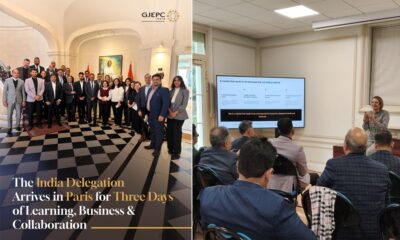
India Delegation Arrives In Paris For Three Days Of Learning, Business & Collaboration
Buyers, Institutional Investors, and Jewelers Are Guaranteed Strict Adherence To Exact Quality, Testing, and Traceability Standards. Silver From Any BIS-Approved Refinery Ensures A Verified Fineness and Purity

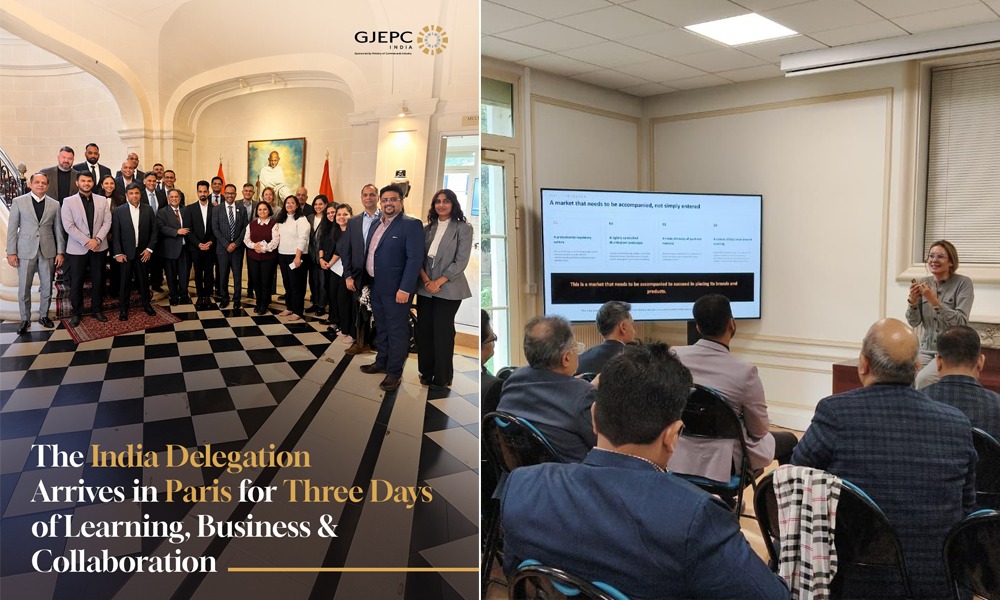
GJEPC has brought a delegation of 17 leading Indian jewellery manufacturers to Paris for an intensive three-day programme aimed at building business, design collaboration, and long-term partnerships with French buyers, retailers, designers, and luxury brands.The delegationwas led by Shaunak Parikh Vice Chairman, GJEPC
The strategic trade mission comes as India’s gem and jewellery exports to France surged 19.72% year-on-year, reaching US$ 478.78 million in FY 2025–26 (up from US$ 399.93 million in FY 2024–25). Key drivers of this growth include:
- Gold Jewellery Exports: US$ 159.53 million (+18.69%)
- Cut & Polished Diamonds: US$ 204.07 million (+4.69%)
Despite rapid growth, India currently holds a 3.8% share of France’s total US$ 12.61 billion gem and jewellery import market, highlighting significant untapped potential for Indian exporters.
Strategic Briefing at the Embassy of India
The delegation’s engagement commenced on 13 October with an expert briefing at the Embassy of India in Paris on “The French Market & the Marketing of Desirability.” The session focused on French consumer trends, luxury brand positioning, sustainability, and market entry strategies. Key insights were delivered by:
- Anish Kumar Singh, GJEPC Representative for France & Founder, Bhartiya Paris Club
- Dr. Marta Marcheva, Executive Director, Institut Sup de Luxe
- Céline Dassonville, CEO, ethiwork
The three-day initiative includes market visits, knowledge sessions, and high-level networking, culminating in an exclusive Buyer-Seller Meet (BSM) on 15 October 2026 at the Marriott Champs-Élysées, Paris.
Participating Indian Companies
The 17 Indian manufacturers representing the country’s high-end craftsmanship and design capabilities are: Asian Star Co. Ltd, DNJ Creation LLP, Fine Jewellery Manufacturing Ltd, Goldstar Jewellery Pvt. Ltd., KGK Creations (India) Pvt. Ltd., Malya Jewel Craft, Neysa Jewellery Ltd, NTS Navrattan Jewellers Pvt. Ltd., Patdiam Jewelry Ltd, Priority Jewels Ltd, Renaissance Global Ltd, S. Vinod Kumar Diamonds Pvt. Ltd., Sunjewels Pvt. Ltd., Supergems Jewellery, Tanvirkumar & Company, UniDesign Jewel, and Walking Tree Atelier Pvt. Ltd.



India Delegation Arrives In Paris For Three Days Of Learning, Business & Collaboration

BIS Introduces The Silver Refinery Certification Scheme; Framework Introduces “India Good Delivery For Silver”

Navratri Edit By DAIMANTÉ: 9 Pendants, 9 Expressions Of Intention
BIS Introduces The Silver Refinery Certification Scheme; Framework Introduces “India Good Delivery For Silver”

Aspect Bullion & Refinery Launches “India’s Biggest Gold Fest” With Zero Making Charges On Gold Coins and Bars

GJEPC, ECGC Programme Underlines Recent Changes In Export Credit Insurance For The GJ Sector.
-
 National News16 hours ago
BIS Introduces The Silver Refinery Certification Scheme; Framework Introduces “India Good Delivery For Silver”
-
 National News17 hours ago
Aspect Bullion & Refinery Launches “India’s Biggest Gold Fest” With Zero Making Charges On Gold Coins and Bars
-
 National News17 hours ago
GJEPC, ECGC Programme Underlines Recent Changes In Export Credit Insurance For The GJ Sector.
-
 International News15 hours ago
India Delegation Arrives In Paris For Three Days Of Learning, Business & Collaboration
