
International News
The Next Generation Metal In Jewelry Collections Yuliya Kutovaya Jewelry
A Rare Fusion Of Eastern Heritage and Cutting-Edge Metallurgy, The Lagan Osmium Collection Redefines Contemporary Jewelry Design

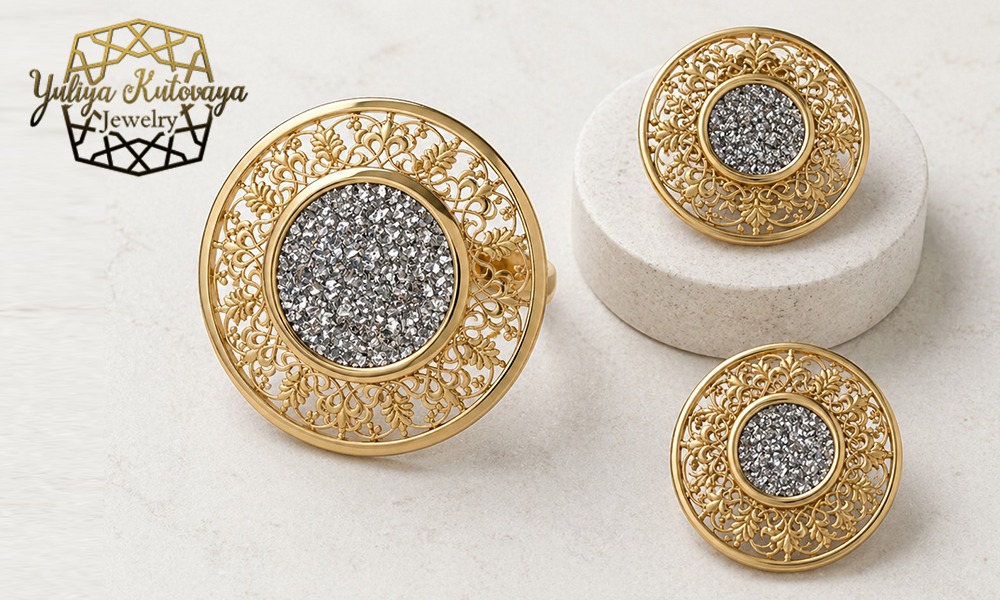
Jewelry designer Yuliya Kutovaya presents the new Lagan Osmium collection, created in collaboration with the Osmium Institute. The collection embodies a contemporary approach to design, merging tradition with innovation.
At the core of the concept lies the aesthetic of traditional Eastern culture combined with the uniqueness of osmium as an innovative jewelry material.
–Yuliya Kutovaya Said:

“The idea for the collection originated from the image of the Uzbek lagan — a round, decorated serving plate traditionally placed at the center of the table, around which guests gather. In my imagination, I sought to unite this symbol of Eastern hospitality with a material that represents something truly unique and captivating. Osmium became a metaphor for the central element around which form and ornament are built.”
Crystalline osmium is an innovative platinum group metal — the rarest and densest precious metal in the world. It is highly resistant to external influences, and its natural structure does not require cutting.
The Lagan Osmium pieces are adorned with the refined vegetal “Islimi” pattern — a traditional Eastern ornament commonly found in wood carving. The tactile relief of the jewelry conveys the sensation of natural surfaces, while the contemporary interpretation of the ornament reflects the artistic heritage of Uzbekistan.
The design allows for transformation: the central osmium element can be easily removed.
The collection already has its own story. Last year, Yuliya Kutovaya presented her design at the Osmium Visionary Contest in Germany and subsequently continued her creative collaboration with the Osmium Institute. The collection will be showcased in May at the international exhibition GemGenève in Switzerland.


International News
Resale Concerns Weigh On China Diamond Market
Declining Prices, Rising Gold Values and Limited Resale Options Are Contributing To Growing Caution Among Chinese Diamond Consumers Especially The Younger Consumers Cohort

Diamond demand in China has reportedly fallen by as much as 50% from pre-pandemic levels, with declining consumer confidence emerging as a key challenge for the natural diamond market.
The shift is particularly visible among younger Chinese consumers, who are increasingly comparing the performance of diamonds with gold. While gold prices have reached record levels, diamond prices have declined, prompting discussions across social media about the long-term value and investment potential of diamonds.
Unsold Inventory Adds to Market Pressure
The decline in demand has also affected the diamond trade. During 2024 and 2025, weaker consumer demand reportedly led some Chinese retailers to sell unsold diamond inventory back to wholesalers. The movement contributed to additional supply entering the wider market and added pressure to an already challenging global diamond environment.
At the consumer level, lower diamond prices have not necessarily translated into stronger demand. Instead, some buyers remain hesitant, concerned that prices could decline further after their purchase.
Resale Remains a Key Concern
Another challenge is the limited availability of structured and transparent resale channels for diamond jewellery. Unlike gold, which has an established resale ecosystem in many markets, consumers often find it difficult to sell diamonds at a price they consider fair.
Historically, the industry has experimented with mechanisms designed to address this concern. Between 2014 and 2019, De Beers operated the International Institute for Diamond Valuation (IIDV), a service intended to provide consumers with a more defined route for reselling diamond jewellery. In one reported test case, the customer received approximately 65% of the original purchase value, illustrating both the potential and limitations of such a model.
Industry Faces Need for Greater Consumer Confidence
The current market environment has renewed discussion around the need for jewellery companies to develop formal resale and buyback programmes. Such initiatives could provide consumers with greater clarity around the secondary market and potentially reduce concerns about purchasing natural diamonds.
Models involving structured resale services, could offer a reference point for the industry. While resale programmes may not always deliver direct profitability, proponents argue that they can strengthen consumer trust, transparency and confidence over the longer term.
As the Chinese market continues to evolve, the ability of the diamond industry to address concerns around value retention, resale and price transparency is likely to remain an important factor in rebuilding consumer confidence.



Gold Prices Hold Steady In India, Limited Movement In Domestic Retail Gold Prices

Resale Concerns Weigh On China Diamond Market

ORIGEM Launches “First-In-India” 110% Lifetime Exchange Value, Disrupts The Lab-Grown Diamond Jewellery Market
ORIGEM Launches “First-In-India” 110% Lifetime Exchange Value, Disrupts The Lab-Grown Diamond Jewellery Market
Gold Prices Hold Steady In India, Limited Movement In Domestic Retail Gold Prices

KISNA Launches Vienna Collection Ahead Of The Wedding Season, Expanding Its Premium Natural Diamond Jewellery Portfolio
-
 National News2 hours ago
ORIGEM Launches “First-In-India” 110% Lifetime Exchange Value, Disrupts The Lab-Grown Diamond Jewellery Market
-
 National News43 minutes ago
Gold Prices Hold Steady In India, Limited Movement In Domestic Retail Gold Prices
-
 BrandBuzz23 hours ago
KISNA Launches Vienna Collection Ahead Of The Wedding Season, Expanding Its Premium Natural Diamond Jewellery Portfolio
-
 International News1 hour ago
Resale Concerns Weigh On China Diamond Market
