By Invitation
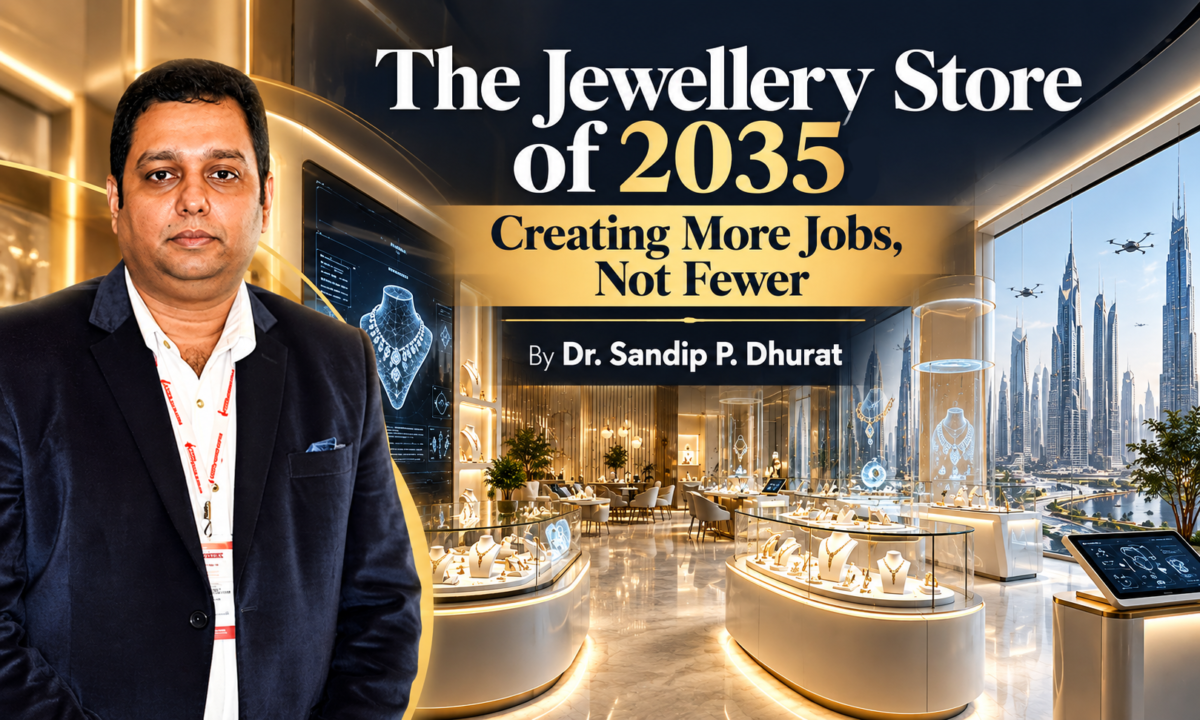
The Jewellery Store Of 2035: Creating More Jobs, Not Fewer By Dr. Sandip P. Dhurat
Every Major Technological Revolution Has Been Accompanied By The Same fear.

When computers entered offices, people believed clerical jobs would disappear. When online banking became popular, many predicted the end of bank branches. When e-commerce emerged, traditional retail was expected to collapse.
Yet history tells a more nuanced story.
Technology certainly changes jobs. Some tasks become automated. Others become faster. But at the same time entirely new professions emerge, industries expand, and customer expectations evolve. Employment doesn’t simply disappear—it transforms.
Today, the jewellery industry finds itself at a similar crossroads.
Artificial Intelligence has become one of the most discussed technologies in business. Some jewellers see immense opportunity, while others wonder whether machines will eventually replace designers, craftsmen or sales professionals.
I believe we are asking the wrong question.The question should not be, “Will AI replace jobs?”
The better question is, “How can AI help the jewellery industry create more value?”
Because wherever businesses create more value, employment follows.
This is particularly relevant for jewellery because it has never been a commodity business.A customer buying cement compares price.A customer buying steel compares specifications.
A customer buying jewellery compares emotions.
Every ornament carries a story. It may celebrate an engagement, commemorate an anniversary, become part of a daughter’s wedding, or preserve the memory of a loved one. Jewellery is purchased during some of life’s most meaningful moments. The transaction may involve gold, diamonds or gemstones, but the purchase is ultimately based on confidence and trust.
This is where human expertise remains irreplaceable.
Artificial Intelligence can suggest hundreds of pendant designs within minutes.It cannot understand why one customer rejects every design until it resembles the necklace worn by her grandmother.
It cannot recognise the hesitation of a young groom who is quietly trying to stay within his budget while wanting to impress his fiancée.It cannot appreciate why an elderly customer wants an old family ornament repaired rather than replaced.
These moments define the jewellery business.
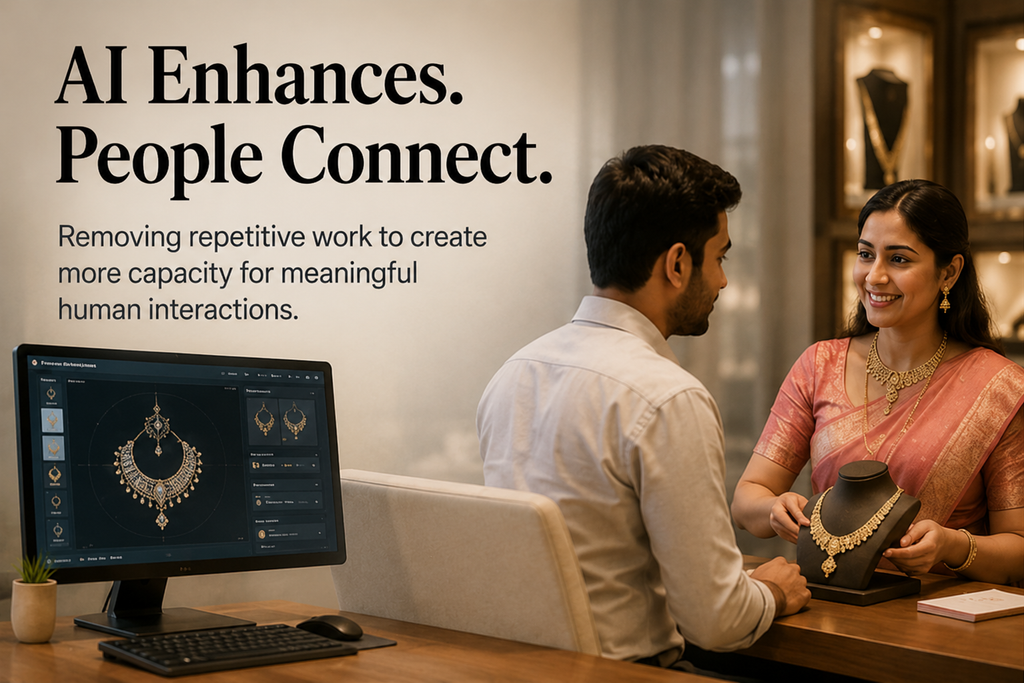
They also explain why employment in this industry will continue to depend on people.Where AI makes the biggest difference is not in replacing these human interactions but in removing the repetitive work that surrounds them.
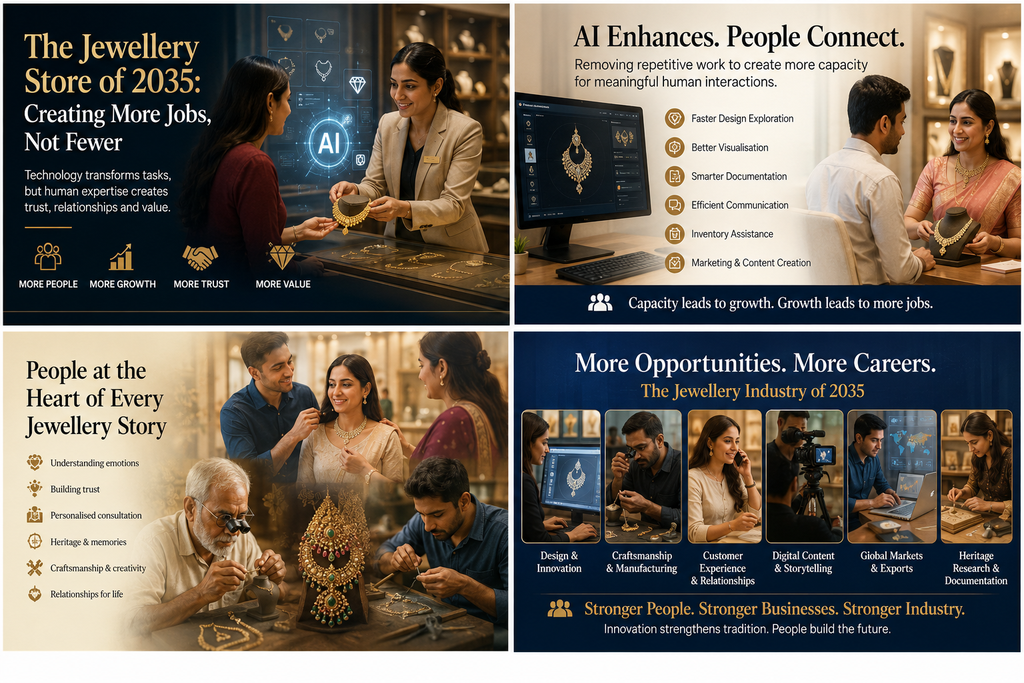
Design exploration, visualisation, documentation, customer communication, inventory assistance, multilingual content generation, catalogue preparation, marketing drafts and administrative activities can all become significantly faster.
This improvement in productivity creates something extremely valuable for every business—capacity.
Capacity is often misunderstood.
When a jeweller spends less time preparing design variations, that time does not simply disappear. It becomes available for meeting additional customers, developing personalised collections, exploring export markets, strengthening after-sales services and creating stronger relationships with existing clients.
Growth begins with capacity.Employment begins with growth.
Economists have long recognised that productivity improvements often create what is known as the “expansion effect.” As businesses become more efficient, they frequently serve larger markets rather than merely reducing their workforce. This has been observed across manufacturing, banking, healthcare, software and retail.
The jewellery industry is well positioned to experience the same phenomenon.Consider India’s thousands of family-owned jewellery businesses.
Many possess exceptional craftsmanship but operate with limited manpower. Owners often perform multiple roles simultaneously—meeting customers, reviewing designs, coordinating with artisans, managing suppliers, overseeing marketing and handling administrative responsibilities.
Technology can reduce this burden.But reducing workload should not be mistaken for reducing employment.Instead, it allows businesses to redirect human effort toward activities that generate greater value.
For example, personalised consultation is likely to become one of the fastest-growing services in premium jewellery retail.
Customers increasingly expect jewellery designed around their personalities, family stories, cultural preferences and occasions rather than selecting products directly from a showcase.
Meeting these expectations requires people.It requires consultants who understand customer psychology.It requires designers capable of refining ideas into wearable creations.It requires craftsmen who transform concepts into reality.It requires professionals who communicate effectively across languages and cultures as Indian jewellers expand globally.
These are not disappearing professions.They are becoming more important.
Another significant opportunity lies in preserving India’s extraordinary jewellery heritage.
Our country possesses centuries of craftsmanship—from Temple Jewellery of South India to Kundan and Meenakari of Rajasthan, Jadau of Gujarat, Filigree work from Odisha and countless regional traditions.
As experienced artisans retire, there is a genuine risk that specialised knowledge may gradually disappear.
Digital technologies can help document these styles, organise historical references, preserve manufacturing techniques and make traditional inspiration accessible to future generations.
This itself creates employment for researchers, designers, historians and digital archivists working alongside master craftsmen.
Similarly, jewellery marketing is entering an entirely new era.Customers no longer discover jewellery exclusively through showroom visits.
They encounter brands through educational videos, personalised communication, virtual consultations, interactive catalogues and digital storytelling.
Behind every one of these customer experiences stands a skilled professional.
Content creators.Visual communication specialists.Customer relationship managers.Digital merchandising experts.Community engagement professionals.
None of these roles were common in the jewellery industry twenty years ago.Many will become essential during the next decade.
Perhaps the greatest opportunity lies in India’s MSME ecosystem.Unlike many industries dominated by multinational corporations, jewellery remains deeply rooted in family enterprises.
Technology has the potential to level the playing field.
A jeweller in Kolhapur, Rajkot, Thrissur, Jaipur or Coimbatore can now reach customers across India and internationally without establishing expensive physical showrooms.
This democratisation of opportunity enables smaller businesses to compete through craftsmanship, personalisation and service rather than advertising budgets alone.
When small businesses become competitive, they expand.When they expand, they recruit.
Employment grows.The responsibility now extends beyond businesses.
Educational institutions, jewellery associations and skill development organisations must prepare the next generation for careers that combine traditional craftsmanship with digital capabilities.
The future jewellery professional will require knowledge that extends beyond gemology and manufacturing.
They will need to understand customer behaviour, intellectual property, digital commerce, sustainability, international markets, visual communication and the responsible use of emerging technologies.
This is not because jewellery is becoming less human.It is because customers are expecting more human attention than ever before.
The future jewellery store will still be built upon trust.It will still depend upon relationships nurtured over decades.
It will still celebrate craftsmanship passed from one generation to the next.The difference is that technology will increasingly work behind the scenes, allowing people to spend less time on routine activities and more time doing what has always made the jewellery industry exceptional—building relationships, creating memories and earning trust.
The jewellery store of 2035 will therefore not be defined by fewer people.
It will be defined by more capable people.More specialised careers.More opportunities for young professionals.More global customers.
And a stronger ecosystem where innovation strengthens tradition rather than replacing it.
That, in my view, is the true promise of the future—not artificial intelligence replacing jewellers, but human intelligence creating new opportunities because of it.



Keyur Shah, CEO of Muthoot Exim
For years, gold in Indian households followed a simple rule: buy it, store it and don’t touch it unless there’s an emergency. That mindset is now changing – and quite fast.
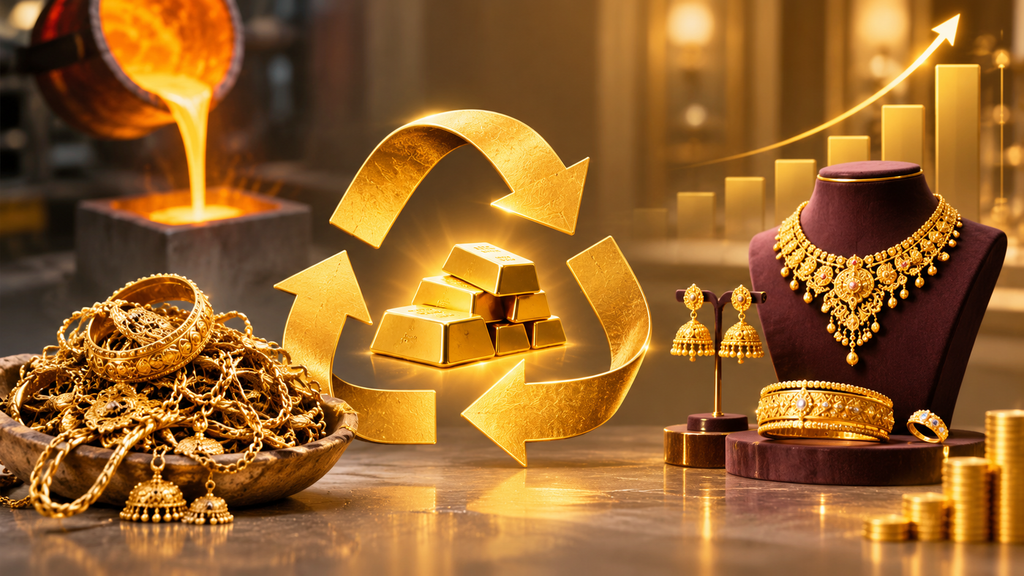
Across the country, old jewellery is no longer sitting quietly in lockers. It is coming back into the system. It is being mortgaged, sold, exchanged, melted and reused. What was once considered “untouchable family gold” is now being treated as active financial wealth.
This is not just a behavioural shift. It is quietly reshaping India’s gold market.

Old Gold Is No Longer Dead Investment
Earlier, a large part of India’s gold stock was inactive. People owned gold, but it didn’t move. It didn’t generate value unless sold under pressure. Today, that same gold is being used more intelligently. Organized Sector Gold Loan Companies have managed to bring out a lof of this gold for productive use
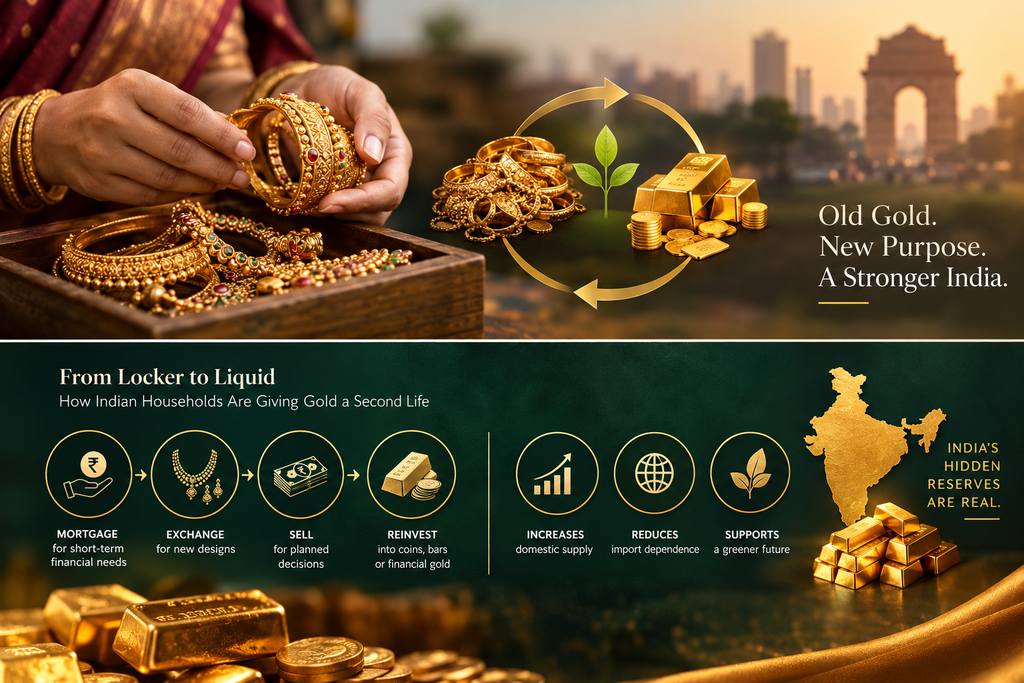
Families are:
- Mortgaging gold for short terms financial needs
- Exchanging old jewellery for new designs
- Selling gold for planned financial decisions
- Reinvesting into coins, bars or financial gold
This shift is turning gold from a stored asset into a circulating asset. And that is a big change.
What’s Driving This Boom? It’s Not Just Price – It’s Awareness
Yes, rising gold prices have played a role. When prices go up, people naturally look at their old jewellery and see an opportunity. But this is not just about price. The bigger driver is awareness.
So instead of holding on to outdated pieces, they are making smarter choices. This is especially visible among younger buyers, who are less emotionally attached to old designs and more focused on value.
A Silent but Strong Supply Source for India
India does not mine much gold. It depends heavily on imports. That creates a constant pressure on Foreign exchange, Trade balance and overall economic stability.
Now here’s where recycling becomes powerful. Every gram of gold that is recycled within India is:
- One gram less that needs to be imported
- One step towards reducing external dependence
- Also, recycling helps reduce the mining required and hence is environment friendly
This is why gold recycling is not just a consumer trend – it is becoming an economic necessity. Instead of relying only on global markets, India is slowly unlocking its own hidden reserves – gold already lying inside homes.
Better Systems Are Building Trust
Earlier, many people avoided selling or recycling gold because they didn’t trust the process. That hesitation is now reducing because the system has improved:
- Purity testing is more accurate and transparent
- Refining processes are more standardised
- Organised players have entered the market
- Pricing is clearer and closer to market rates
This growing trust is a big reason why more households are willing to bring their gold back into circulation.
The Bigger Picture: From Emotion to Strategy
Gold in India will always have emotional value. That will not change. But what is changing is how people use gold.
Earlier:
- Buy for weddings
- Store for years
- Sell only in crisis
Now:
- Buy with awareness
- Upgrade when needed
- Use as part of financial planning
This shift from emotion to strategy is what defines the recycling boom.
A Strong Reality: India Is Sitting on a Gold Mine – At Home
India already has thousands of tonnes of gold in private hands. For years, this gold was locked away. Now, it is slowly entering the market.
And that changes everything:
- It improves supply without mining
- It reduces pressure on imports
- It supports a more stable gold ecosystem
- It gives households more financial flexibility
This is not just recycling. This is unlocking a national asset.
Conclusion
India’s gold recycling boom is not a passing phase. It is a clear sign that the country’s relationship with gold is maturing. People are no longer just owning gold. They are using it, moving it and managing it better.
Old jewellery is no longer emotional baggage sitting in lockers. It is becoming a tool for smarter decisions. And that’s the real shift: Gold in India is no longer idle wealth. It is active, aware and working harder than ever.



U.S. Customs Intercept Counterfeit Luxury Jewellery; Suggested Retail Value Of Over US$2.4 mn

BDB Commemorates Martyrs At Solemn Function On 18th Anniversary Of 26/11

APX International Electropolishing Machines: Perfected Through Technology, Innovation and Excellence
APX International Electropolishing Machines: Perfected Through Technology, Innovation and Excellence
BDB Commemorates Martyrs At Solemn Function On 18th Anniversary Of 26/11

INDIE Collection From Palmonas; Inspired By Shraddha Kapoor’s Upcoming Movie Eetha
-
 JB Insights8 hours ago
APX International Electropolishing Machines: Perfected Through Technology, Innovation and Excellence
-
 National News7 hours ago
BDB Commemorates Martyrs At Solemn Function On 18th Anniversary Of 26/11
-

 By Invitation15 hours ago
What Global Buyers Expect From Indian Jewellery Manufacturers Today
-
 BrandBuzz10 hours ago
INDIE Collection From Palmonas; Inspired By Shraddha Kapoor’s Upcoming Movie Eetha