
International News
Silver prices hit record high, surges over 4 % on MCX

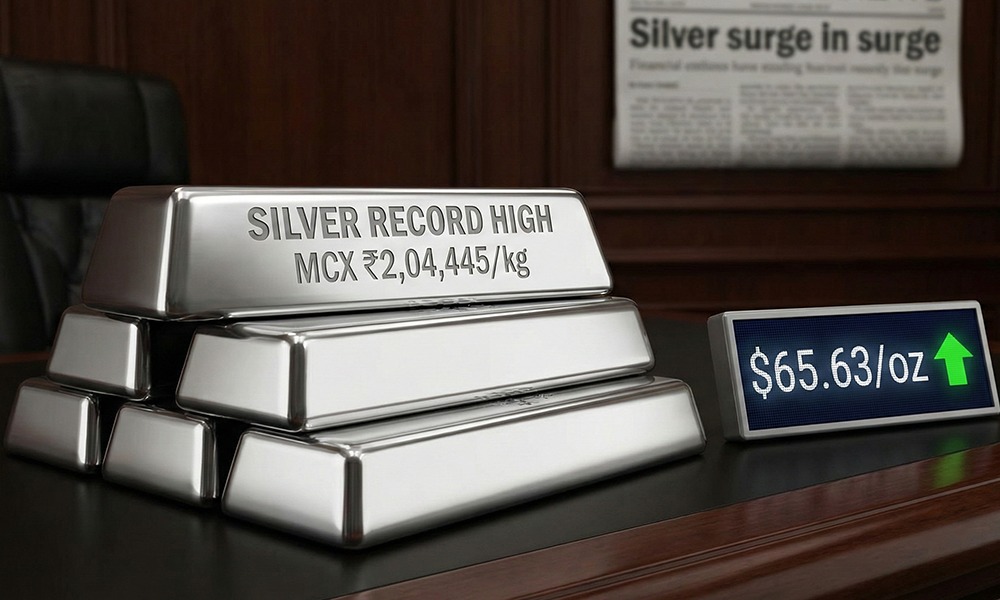
On December 17, 2025, silver prices shattered records, surging over 4% on India’s Multi Commodity Exchange (MCX) to above ₹2 lakh per kg and crossing $65 per ounce globally for the first time. This dramatic rally, amid weaker U.S. labor data and escalating geopolitical tensions, has sparked debate: Is this the right moment for investors to buy silver as a safe-haven asset?
The surge began with disappointing U.S. economic indicators. November’s jobs report revealed an unemployment rate climbing to 4.6%, despite adding 64,000 jobs—slightly above expectations but clouded by a 43-day government shutdown. This data reignited hopes for Federal Reserve rate cuts, with markets pricing in about 59 basis points of easing in 2026. A dovish Fed stance from its recent quarter-point cut further weakened the dollar index to a two-month low, making dollar-denominated silver cheaper for international buyers. MCX silver traded 3.38% higher at Rs.2,04,445 per kg, while spot silver hit $65.63 (and briefly $66, or ~Rs.2,05,000) per ounce—a historic milestone. In contrast, MCX gold dipped 0.21% to ₹1,34,129 per 10 grams, highlighting silver’s outperformance.
Geopolitical risks amplified the momentum. President Donald Trump’s order for a blockade on sanctioned Venezuelan oil tankers escalated tensions with President Nicolas Maduro, boosting military activity in the region. Investors flocked to precious metals as hedges against uncertainty. A Singapore-based currency trader observed, “The unemployment data has weakened the dollar, prompting a shift to assets like silver for higher yields and risk mitigation.” Benchmark 10-year U.S. Treasury yields also fell, supporting non-yielding bullion.
Several factors underpin silver’s appeal. Unlike gold, silver benefits from dual demand: industrial uses (solar panels, electronics) and investment. The dollar’s slide enhances affordability, while upcoming Fed speeches and Thursday’s November consumer inflation report could sustain the rally. However, gold’s milder 0.4% gain to $4,321.56 per ounce signals caution—silver’s volatility often leads sharp corrections.
For long-term investors in India’s jewellery sector or precious metals enthusiasts, this dip in the dollar and safe-haven demand presents opportunity, especially with silver’s industrial upside. Yet, timing matters. Track signals like profit-booking levels (e.g., above $66) or fading geopolitical fears, as advised in related analyses. Short-term traders might wait for Fed clarity to avoid overbought risks.
In conclusion, silver’s record highs reflect macroeconomic shifts and global instability, positioning it as a compelling hedge. While not without risks, current trends favor strategic buying for diversified portfolios—provided investors monitor inflation data and rate expectations closely.



International News
GJEPC Promotes Key Trade Events At IGI Dubai Event
The Dubai Event Created Opportunities For Participating Indian Exporters To Connect Directly With Potential Buyers.

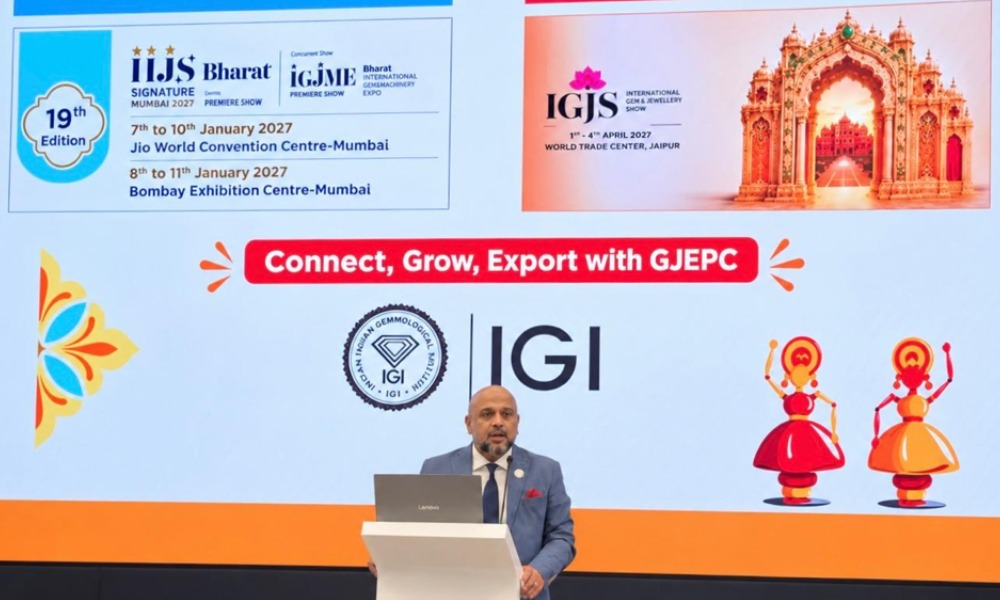
GJEPC stepped up its international buyer outreach for IIJS Bharat – Signature 2027, IGJS Jaipur and IJEX at an industry event organised by the International Gemological Institute (IGI) in Dubai.
Held at the Almas Tower Ballroom in Jumeirah Lake Towers, the IGI Ornamental QC Seminar brought together an audience of more than 70 jewellers, with leading retailers including Jawhara, Joyalukkas, Tajvi, Vinsmera, La Marquise, Bhima and Cara among the expected participants.
Ashish Sakhardande, Head – IJEX, GJEPC, represented the Council and delivered a presentation on its upcoming exhibitions and initiatives, placing particular emphasis on IIJS Bharat – Signature 2027, IGJS Jaipur and IJEX, highlighting its new features and inviting UAE buyers to register for the Mumbai and Jaipur shows.
The UAE remains an important market for Indian jewellery exporters, making direct engagement with retailers and jewellery companies a key part of the buyer mobilisation strategy.
The Dubai event created opportunities for participating Indian exporters to connect directly with potential buyers. Business meetings and networking interactions were facilitated with several UAE-based companies, allowing exporters participating through IJEX to develop new commercial contacts.



Kangana Ranaut Unveils PNG Jewellers New Showroom In Ayodhya~

GGJS 2026 Concludes With High-Volume Trade and Strategic Focus On Next-Gen Leadership

The Solitaire Festival Of India Concludes; Bumper Prize Winner At Ranka Jewellers Wins XUV 7XO
GGJS 2026 Concludes With High-Volume Trade and Strategic Focus On Next-Gen Leadership

ABARAN Commemorates The 125th Birth Anniversary Of Founder Shri Burde Sadananda Kamath With Special Gold Coin Launch

MCX Gold Silver Futures See Dip
-
 National News2 hours ago
GGJS 2026 Concludes With High-Volume Trade and Strategic Focus On Next-Gen Leadership
-
 National News7 hours ago
ABARAN Commemorates The 125th Birth Anniversary Of Founder Shri Burde Sadananda Kamath With Special Gold Coin Launch
-
 National News6 hours ago
MCX Gold Silver Futures See Dip
-
 National News43 minutes ago
Kangana Ranaut Unveils PNG Jewellers New Showroom In Ayodhya~
