

International News
Physical Silver investment increasingly important to global silver demand
Market Trend Report on the Key Physical Silver Investment Markets report examines the leading global physical silver markets: the United States, India, Germany, and Australia.

Physical investment is a structurally important part of global silver demand, and the most volatile. Notably, over the past 15 years, physical silver investment has ranged between a low of 157.2 million ounces (Moz) in 2017 and a record high of 337.6 Moz, established in 2022. With growing geopolitical tensions, rising government debt, and an increasing investor perception that silver is undervalued compared to gold, the silver price has experienced a 34 percent year-to-date increase. By comparison, the white metal is outperforming gold, which is up 28 percent, and Bitcoin, rising 18 percent year-to-date.
To gain a deeper understanding of this critical demand center, the Silver Institute commissioned Metals Focus, a leading precious metals consultancy based in London, to produce a new Market Trend Report on the “Key Physical Silver Investment Markets.” The report examines the leading global physical silver markets: the United States, India, Germany, and Australia.
Key points from the report include:
The United States
- The scale of US buying has been astounding, with a combined total of 1.5 billion ounces (Boz) of silver purchased by retail investors between 2010 and 2024.
- The value of US silver physical investment has averaged around 70% of the value of gold investment purchases, compared to just 6% in the rest of the world.
- Investment in Individual Retirement Accounts (IRAs) remains a significant part of US physical silver investment. However, precious metals account for a small share of the total IRA market, offering considerable room for IRA silver demand to grow further.
- Through late 2023, there was an exceptionally low level of retail liquidations, but these have increased since then. Even so, US investors still hold much of the 1.5 Boz acquired over the last 15 years.
India
- India is the second-largest physical silver investment market, but it has occasionally eclipsed the US, which has traditionally been the largest physical silver market.
- The country has a long-standing tradition of owning physical silver, typically in the form of silver bars, which in 2024 comprised 70% of total retail demand.
- Attractive local prices helped boost retail silver investment up 21% in 2024
- Between 2010 and 2024, the cumulative demand for Indian bars and coins totaled 840 million ounces. Even at today’s higher and sometimes record-setting rupee prices, the scale of selling back has been surprisingly modest.
Germany
- Germany has long held the position of the third-largest market for retail silver bar and coin investment, a market that has been volatile in recent years, with physical investment averaging 48.5 million ounces (Moz) from 2020 to 2022.
- The German physical silver market has long been dominated by bullion coins, accounting for roughly 80% of the market.
- However, the end of favorable tax treatment at the end of 2022 has weighed on the German physical silver market, with German net silver demand slumping by 39 million ounces (Moz) since 2023, and the gold market also seeing a sharp decline.
- This year has seen a partial recovery supported by ongoing economic and geopolitical uncertainties, with a forecasted 25 percent year-over-year increase in physical silver investment demand in Germany.
Australia
- Australia has emerged as the world’s fourth-largest physical silver market in recent years.
- As recently as 2019, Australian silver coin and bar demand stood at just under 3.5 million ounces. By 2022, it had surged to a record high of 20.7 Moz.
- Two factors have contributed to the growth of the Australian market: the increasing popularity of investing in silver in retirement accounts and the favorable tax structure applicable to physical silver investment products.
- Australian physical silver demand is forecast to rise by 11 percent this year as cost-of-living-related selling of precious metals eases, with inflation edging lower and interest rates falling.







DiamondBuzz
Diamond Slump forces Debswana to diversify into copper, platinum and solar
Diamond-centric mining models is giving way to broader resource portfolios
Debswana Diamond Company, the 50–50 joint venture between the Botswana government and De Beers, is moving to diversify into copper, platinum and renewable energy as the prolonged downturn in natural diamond demand pressures earnings and forces the industry to rethink its growth strategy.
The company’s board has approved plans to invest in a portfolio of non-diamond projects after revenue fell 46% in 2024, the latest available financial year, highlighting the scale of the downturn in the global diamond market.
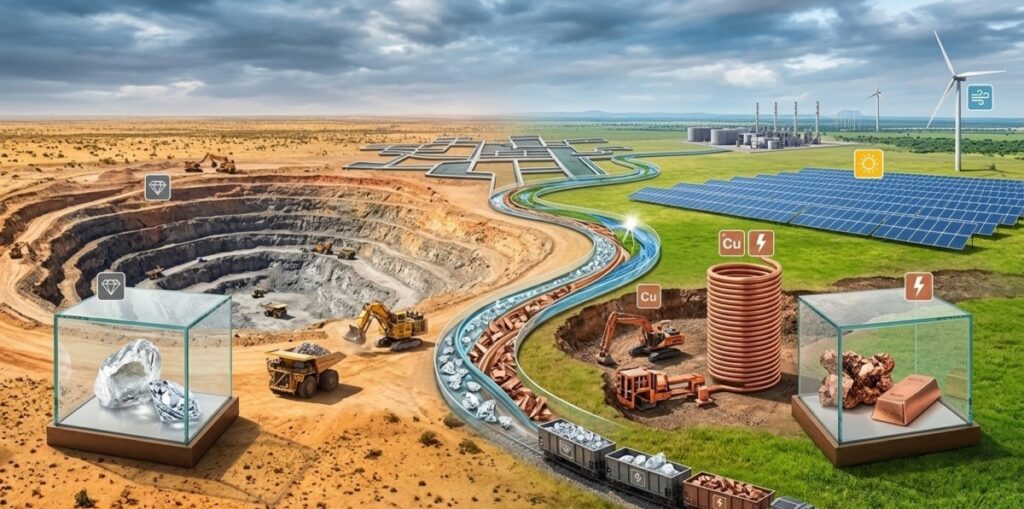
The move signals a strategic shift toward commodities with stronger long-term demand fundamentals, particularly copper, which is central to global electrification and energy-transition infrastructure.
Debswana’s diversification reflects a broader industry pivot as diamond producers confront weak consumer demand, rising competition from lab-grown stones and elevated inventories across the supply chain.
The shift is also visible among smaller exploration companies. Botswana Diamonds recently rebranded as Botswana Minerals, signalling its own strategic focus on copper exploration rather than diamonds.
Together, these moves underscore a growing consensus across the sector: the era of diamond-centric mining models is giving way to broader resource portfolios anchored in energy-transition metals.


-

 BrandBuzz16 hours ago
The Pearl Edit: Thoughtful Women’s Day Gifting by GIVA
-
 BrandBuzz17 hours ago
Augmont Launches SPOT 2.0: One Platform. Every Product. Efficient Business
-

 BrandBuzz20 hours ago
Senco Gold & Diamonds Launches “SHAPE OF YOU”- AI Application for Women’s Day Celebration
-

 National News21 hours ago
Kushals Fashion Jewellery Curates Special Women’s Day Edit Celebrating Strength, Style and Self-Expression
