
DiamondBuzz
Mexico enacts 50% tariff on Indian diamond imports, closing USMCA loophole

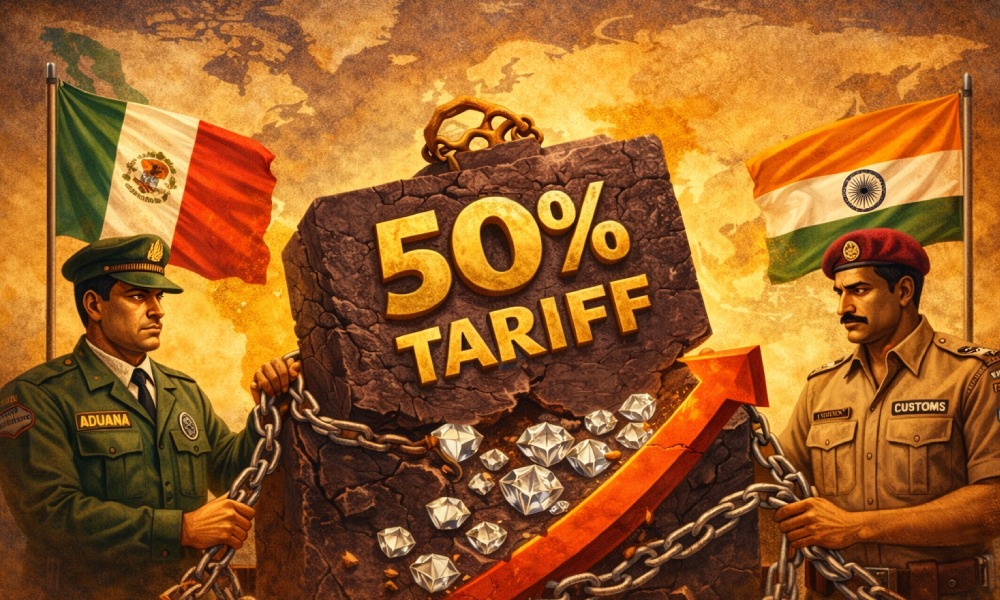
Mexico has implemented tariffs reaching 50% on diamond imports from India, effectively eliminating a strategic workaround under the United States-Mexico-Canada Agreement (USMCA). The 50 per cent tariff is likely to impact small and medium-sized enterprises, rather than larger ones.
Mexico’s Senate ratified the tariff structure on December 10, applicable to imports from India, China, South Korea, Thailand, and Indonesia. The policy takes effect January 1, 2026. Comprehensive tariff schedules remain unpublished.
The measure targets Indian diamond manufacturers utilizing Mexico as a transshipment hub—importing rough or semi-processed stones, conducting minimal polishing operations to establish Mexican origin, then accessing the U.S. market duty-free under USMCA provisions.
The tariff regime nullifies Indian manufacturers’ planned Mexican manufacturing investments. While not legally prohibited, such operations become economically unviable. Small and medium-sized enterprises face disproportionate exposure compared to larger industry players.
The tariffs represent Mexico’s broader trade policy realignment, pressuring Asian trading partners lacking formal free trade agreements toward bilateral negotiations. India maintains a $2.8 billion trade surplus with Mexico.



DiamondBuzz
Richemont and Signet Jewelers Could Join Global Diamond Consortium In Bid For De Beers
Richemont, Signet Would Connect The Consortium To Key Global Growth Vectors Spanning Luxury High Jewelry and Mass-Market Retail.


The Global Diamond Consortium (GDC)
Richemont and Signet Jewelers are reported to be in talks about joining the Global Diamond Consortium (GDC), the preferred bidder for De Beers according to a Bloomberg News report.
GDC was selected in July 2026 as one of Anglo American’s preferred bidders for De Beers as part of Anglo American’s ongoing corporate restructuring.
The potential inclusion of Richemont—owner of luxury Maisons including Cartier and Van Cleef & Arpels—and Signet Jewelers—the world’s largest retailer of diamond jewelry, operating brands such as Kay Jewelers, Zales, and Jared—would connect the consortium to key global growth vectors spanning luxury high jewelry and mass-market retail.
Strengthening the Natural Diamond Ecosystem: Participation by major luxury brands and global retail leaders reinforces commitment across the entire value chain—from responsible mining and manufacturing to consumer engagement.
Balanced Governance Structure: Discussions center on potential minority equity positions that would support long-term category growth while maintaining appropriate separation between ownership and commercial strategy.
Broad Stakeholder Participation: The consortium continues to advance talks with host governments, including discussions with the Government of Botswana regarding a potential increase in its equity share in De Beers from 15% to approximately 25%, alongside participation from private investors and southern African host nations.
Discussions between GDC, Richemont, Signet, and participating government stakeholders remain ongoing. Terms of any potential participation, including the size of equity interests, have not been finalized and remain subject to regulatory approvals and definitive documentation.



Mutual Engagement Ring-Wearing On The Rise, Insurance Lagging: Jewelers Mutual Group 2026 Engagement Ring Study

GJEPC Partners With The Leela To Offer Exclusive Hospitality Benefits To Members

MCX Gold, Silver Surge Ahead On US Inflation Data, Crude Price Dip
-
 National News1 hour ago
GJEPC Partners With The Leela To Offer Exclusive Hospitality Benefits To Members
-

 JB Insights2 hours ago
CIBIL Score Plays A Key Role In Festive Financing
-

 DiamondBuzz2 hours ago
Richemont and Signet Jewelers Could Join Global Diamond Consortium In Bid For De Beers
-
 National News2 hours ago
MCX Gold, Silver Surge Ahead On US Inflation Data, Crude Price Dip
