
National News
Kataria Jewellers moves up the value chain with in-house manufacturing

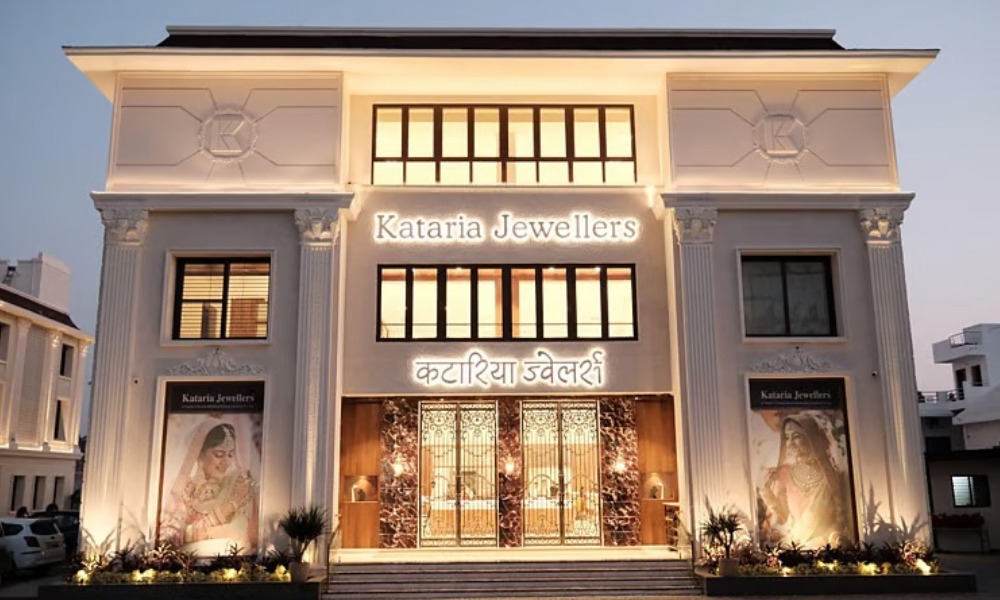
For over a hundred years, Kataria Jewellers has operated on a foundational promise common to India’s fragmented luxury market: the trust of the local consumer. But in an era where global giants and national chains are squeezing margins, the legacy retailer is betting that the key to its next century lies not just in selling jewelry, but in making it.
The company announced the launch of a fully integrated manufacturing facility in Ratlam, MP. The move marks a pivot toward vertical integration—a “full-stack” model that allows the firm to bypass the third-party workshops that have long dominated the Indian jewelry trade.
The Control Play
The strategic shift, spearheaded by Director Yash Kataria, is designed to solve a perennial headache for high-end retailers: the “design-to-market” lag. Traditionally, Indian jewelers rely on a complex network of external artisans and outsourced vendors, a process that can stretch production cycles over several months and dilute quality control.
By bringing design, prototyping, stone setting, and finishing under one roof, Kataria aims to slash lead times.
The move reflects a broader trend in the global luxury sector, where brands from LVMH to local incumbents are seeking greater supply-chain sovereignty to cater to a more demanding and trend-conscious buyer. For Kataria, this means the ability to launch limited-edition collections and execute bespoke commissions with greater precision than third-party contractors typically allow.
Efficiency as a Competitive Moat
Beyond the creative upside, the move is a play for better unit economics. By eliminating intermediaries, Kataria expects to reduce making charges—the labor costs typically passed on to consumers—thereby enabling more competitive pricing in a price-sensitive market without eroding margins.
The Ratlam facility also serves as a hedge against market volatility. Key advantages include:
- Inventory Control: Real-time production adjustments based on retail demand.
- Transparency: Internal tracking of gold purity and stone sourcing aligned with rising ESG (Environmental, Social, and Governance) expectations among younger HNI clients.
- Scalability: Infrastructure designed to support a broader retail expansion across India.
A Regional Manufacturing Bet
Choosing Ratlam as the hub is a calculated nod to the region’s historical jewelry craftsmanship. While many firms pursue low-cost automated hubs, Kataria is attempting to combine traditional artisanal skill with modern industrial systems.
Industry analysts suggest the move could provide a blueprint for regional legacy players. As the Indian jewelry market formalizes, the divide is widening between “curators” (buy-and-sell retailers) and “creators” (brands that own IP, design, and production).
By claiming ownership of its craft, Kataria Jewellers is signaling that it no longer wants to be just a storefront in Central India, but a vertically integrated powerhouse capable of competing on a national stage.


National News
GJEPC Launches UNNATI: Powering Women In GJ Sector To Drive Industry Growth Towards Viksit Bharat

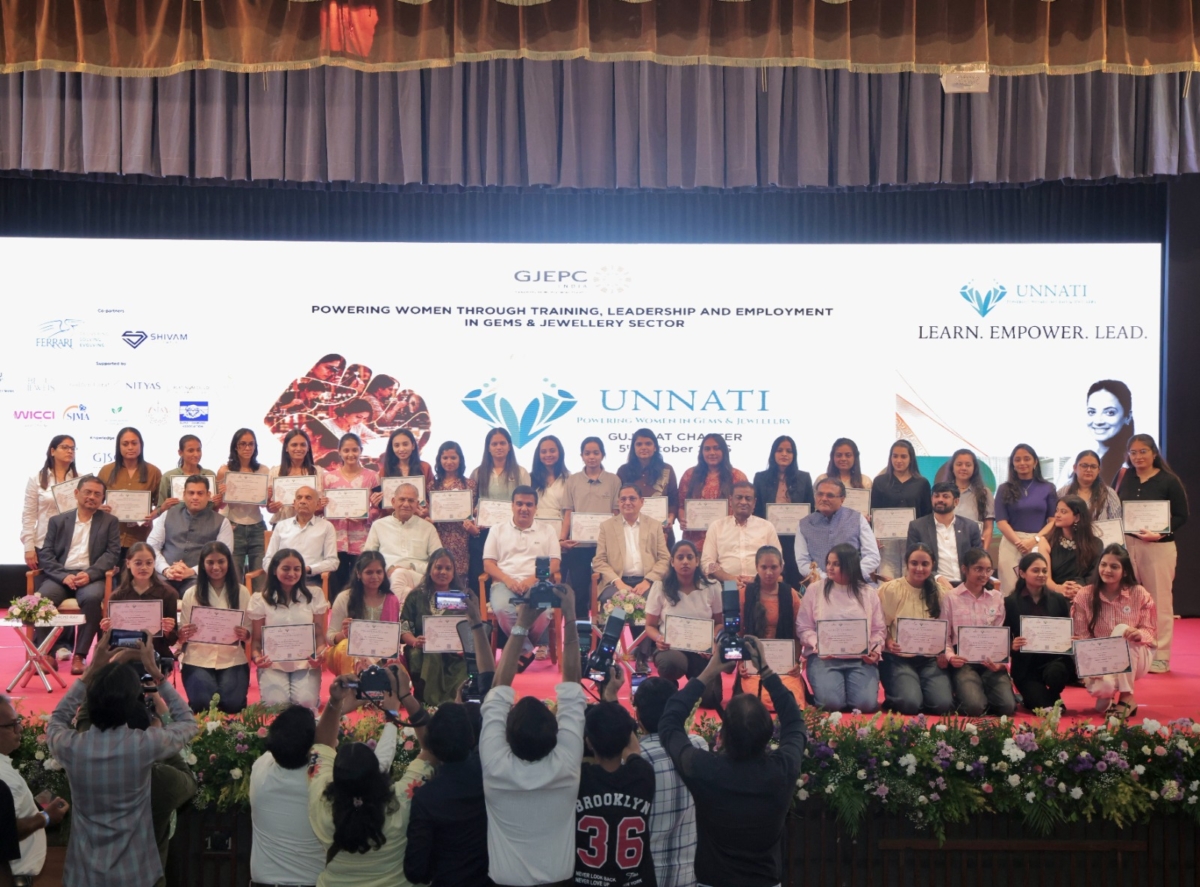
- Chief Guest Hon’ble Deputy Chief Minister of Gujarat Shri Harsh Sanghavi and Guest of Honour Rajya Sabha MP Shri Govind Dholakia grace the launch of GJEPC’s national mission, UNNATI in Gujarat
- Aligned with the Hon’ble Prime Minister’s vision of Viksit Bharat @ 2047, UNNATI aims to strengthen women’s participation and leadership as the industry works towards US$100 billion in exports by 2040.
- A national mission to build women leaders, entrepreneurs and skilled professionals across the gem and jewellery value chain, from the workshop floor to the boardroom
- More than 1,100 women from the industry, homemakers and students take part in the Surat, Gujarat launch; first phase aims to register at least 200 women for skilling courses
- GJEPC announces free Rs 1 lakh medical insurance for 1,000 women Ratnakalars under the Ratnakalar Parichay Card initiative.
- Inaugural UNNATI Awards honour companies creating opportunities for women and celebrate women achievers; women nominated by 50 companies for their skills recognised on stage
GJEPC, the apex body of India’s gem and jewellery industry, today launched ‘UNNATI – Powering Women in Gems & Jewellery’, a national mission to drive women in the sector learn, lead and grow as skilled professionals, entrepreneurs and future leaders. Beginning with its Gujarat chapter at Sardar Patel Smruti Bhavan, Surat, UNNATI seeks to strengthen women’s participation and leadership in the industry, in step with the national vision of a Viksit Bharat by 2047.
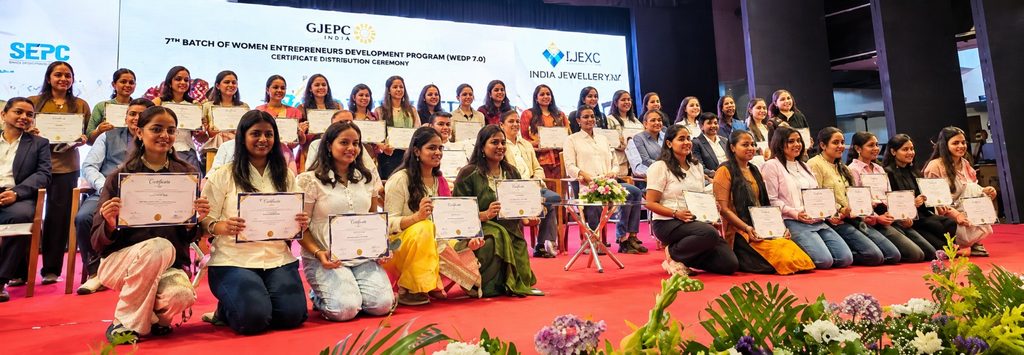
UNNATI rests on five pillars that take women from aspiration to achievement:
- Inspire & Engage: recognising and celebrating women’s contribution to the industry
- Develop & Empower: leadership, skills training and lifelong learning
- Connect & Collaborate: mentors, peer networks and a community to grow with
- Enable & Accelerate: support for business, access to funding and market opportunities
- Transform & Lead: safer, more progressive workplaces for every woman in the industry
The programme showcased training opportunities across specialised job roles: Diamond Assorter, Diamond Polisher, Diamond Planner, Jewellery Designer – Hand Sketch, Jewellery Designer – CAD, Wax Setter, Filer and Assembler, Metal Setter, Jewellery Polisher and Cleaner, and Jewellery Retail Sales Associate.
The launch was graced by Harsh Sanghavi, Hon’ble Deputy Chief Minister of Gujarat, and Govind Dholakia, Member of Parliament, Rajya Sabha, along with senior representatives of GJEPC and industry stakeholders, including Kirit Bhansali, Chairman, GJEPC; Jayantibhai Savaliya, Regional Chairman – Gujarat, GJEPC; Anil Virani, Convener, Audit & Finance, GJEPC; Ashish Borda, Convener, Promotions, Marketing & Business Development, GJEPC; Sevantibhai Shah Chairman, Founder- Venus Jewel; Mukesh Patel, Chairman, Greenlab Diamonds; Sabyasachi Ray, Executive Director, GJEPC; and Forum Marfatia, President, WICCI Surat Chapter. Their presence added significance to the launch and reflected the strong industry-wide support for UNNATI and its vision of creating greater opportunities for women.
The programme saw participation from more than 1,100 women from across the gem and jewellery industry in Gujarat, including homemakers, students and other aspiring professionals. In its first phase, UNNATI aims to register at least 200 women for skilling across a range of courses, opening pathways to careers and entrepreneurship in the sector.
India’s journey to a developed nation will be carried forward by its women, and nowhere is this more visible than in gems and jewellery. From the workshop floor to the boardroom, women are already the backbone of the sector, as artisans, designers, professionals, entrepreneurs and business leaders. UNNATI exists to make sure that contribution is recognised, supported and given every opportunity to grow.
Conceived not as a welfare scheme but as an investment in the industry’s future strength and competitiveness, UNNATI supports GJEPC’s ambition of reaching US$100 billion in exports by 2040 by ensuring that this future is built on the talent, aspirations and leadership of women across the value chain. When women learn, lead and grow, the industry grows with them, and so does Brand India.
Harsh Sanghavi, Hon’ble Deputy Chief Minister of Gujarat, said:
“Unnati is an important initiative that is creating meaningful opportunities for women in the gem and jewellery industry. Today, more than 1,000 women are being connected with employment and business opportunities, but the potential is far greater. We should look at taking these opportunities beyond Surat and into Gujarat’s rural and tribal areas, where greater participation by women can create a strong social and economic impact for their families and communities. I urge GJEPC to develop more initiatives that bring women into the industry and expand their participation across Gujarat. Unnati should not stop at 1,000 or 2,000 women. We should work towards reaching 10,000 women in the coming year.
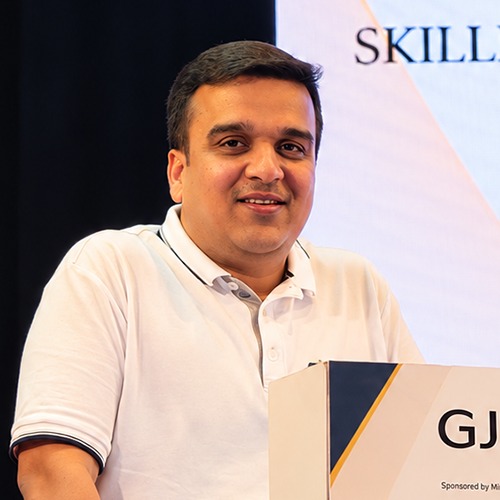
The women who have achieved success should also become role models for others, helping more women gain confidence, build careers and realise their ambitions.”
Govind Dholakia, Member of Parliament, Rajya Sabha, said:
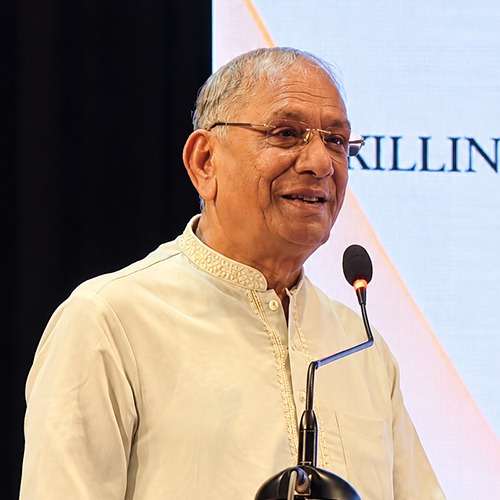
“UNNATI gives us the platform and the direction, but the real work begins with us. We must take this opportunity and create our own growth. I encourage young entrepreneurs, especially women, to have the confidence to step forward, take risks and build something of their own. There is tremendous opportunity in the gem and jewellery sector, and we need more women not only to participate in the industry, but to lead businesses, create employment and contribute to society. That is the kind of leadership and inclusive growth we need for the future.”
Kirit Bhansali, Chairman, GJEPC, said:
“Hon’ble Prime Minister Shri Narendra Modi’s vision of Viksit Bharat @ 2047 places Nari Shakti at the heart of India’s journey towards a stronger and more developed nation. As an industry, we have set ourselves an ambitious goal of achieving US$100 billion in gem and jewellery exports by 2040, and we cannot achieve this without fully harnessing the talent, skills and leadership of women. UNNATI is a step in that direction—to move women from participation to leadership, from skills to careers, and from employment to entrepreneurship. When women grow, our industry grows; and when women lead, they can accelerate our collective journey towards US$100 billion by 2040.”
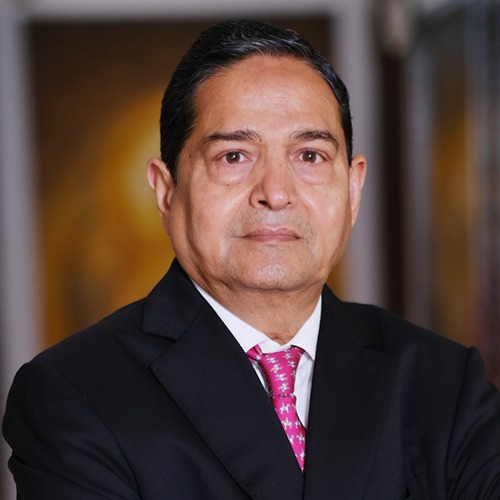
On the occasion, GJEPC also announced a special initiative for women Ratnakalars under its Ratnakalar Parichay Card initiative. In the first phase, 1,000 women Ratnakalars will be provided Parichay Cards along with free medical insurance coverage of up to ₹1 lakh, enabling them to access treatment at leading hospitals. The initiative is aimed at recognising the contribution of women artisans and providing them with greater health security. GJEPC urged eligible Ratnakalar sisters to come forward, register for the Parichay Card and avail themselves of the benefits.
Jayantibhai Savaliya, Regional Chairman – Gujarat, GJEPC, said:

“Gujarat has been at the heart of India’s gem and jewellery story, and the strength of this industry has always come from its people, their skills and their enterprise. Today, women are contributing across the entire value chain—from manufacturing and design to technology, management, business and entrepreneurship. Through UNNATI, our aim is to create stronger pathways for women to learn, upskill, connect with the industry and build successful careers. This is not just about bringing more women into the industry; it is about creating opportunities for them to grow, take leadership and shape the industry’s future. We want the Surat chapter to be the beginning of a much larger movement that reaches women across every major gem and jewellery cluster in India.”
Shri Ashish Borda, Convener, Promotions & Marketing, GJEPC said:
“UNNATI is about turning intent into opportunity—connecting women with the skills, networks and pathways they need to build their futures in our industry. What we have begun today in Gujarat is a platform we hope will grow across India, creating a stronger and more inclusive gems and jewellery ecosystem. When women progress, the industry moves forward with them.”

The inaugural UNNATI Awards recognised companies and women contributing to a more inclusive and progressive gems and jewellery industry. The UNNATI Company Awards recognised excellence across five categories: Women Workforce Champion – House of Shah; Women Career Advancement – DEREWALA INDUSTRIES LTD; Women Skilling & Development – Greenlab Diamonds LLP; Women Work-Life Support – DESIGN CREATION; and Women Leadership Excellence – House of Shah.
The UNNATI Woman Achiever Awards recognised Nisha Jariwala for Woman Entrepreneur & Business Leader; Priti Bhatia and Neha Kochar for Woman Jewellery Designer; Rajvi Kotak and Anshu Singhania for Woman Retail Leader; Sorathiya Kajal Ramnikbhai for Woman Artisan Excellence; Misbah Mansuri for Woman Leader in Marketing & Business Development; and Tanvi Viradiya for Emerging Woman Leader of the Year.
Additionally, in a special moment, women from 50 companies, nominated by their employers for their skills in jewellery design and other areas of the industry, were presented with certificates of recognition, acknowledging their contribution and potential.
UNNATI is organised by GJEPC with the support of its Partners on Board: Women’s Indian Chamber of Commerce & Industry (WICCI), Surat Jewellery Manufacturers Association (SJMA), the Lab Grown Diamond Association, the Surat Jewellery Association and the Surat Diamond Industry; Co-Partners AF Ferrari and Shivam Jewels; and Supported By Partners Nityas Gems & Jewellery, Sky Gold, PGI, Golden Carat, Beau Jewels and Anand Shah. The Gem & Jewellery Skill Council of India (GJSCI) is the Knowledge Partner.
The pilot in Surat, Gujarat is only the beginning. GJEPC’s vision is to take UNNATI to major gem and jewellery clusters across India and build a wider ecosystem that supports women in realising their potential. Women interested in training programmes and the UNNATI mentor network can register at unnati.gjepc.org.



GJEPC Launches UNNATI: Powering Women In GJ Sector To Drive Industry Growth Towards Viksit Bharat

Divine Solitaires and SGL Launch The Know Your Diamond Zone At GJS Diwali Edition 2026

KEYA By Adbhut Brings Wearable Art and Indian Craftsmanship To Delhi Art Weekend 2026
GJEPC Launches UNNATI: Powering Women In GJ Sector To Drive Industry Growth Towards Viksit Bharat
Divine Solitaires and SGL Launch The Know Your Diamond Zone At GJS Diwali Edition 2026
KEYA By Adbhut Brings Wearable Art and Indian Craftsmanship To Delhi Art Weekend 2026
-
 National News2 hours ago
GJEPC Launches UNNATI: Powering Women In GJ Sector To Drive Industry Growth Towards Viksit Bharat
-
 National News3 hours ago
KEYA By Adbhut Brings Wearable Art and Indian Craftsmanship To Delhi Art Weekend 2026
-
 National News2 hours ago
Divine Solitaires and SGL Launch The Know Your Diamond Zone At GJS Diwali Edition 2026
-
 National News5 hours ago
Titan, Kalyan, Malabar, Senco and Indriya Lead 54 Champions Crowned At The First India International Jewellery Awards
